
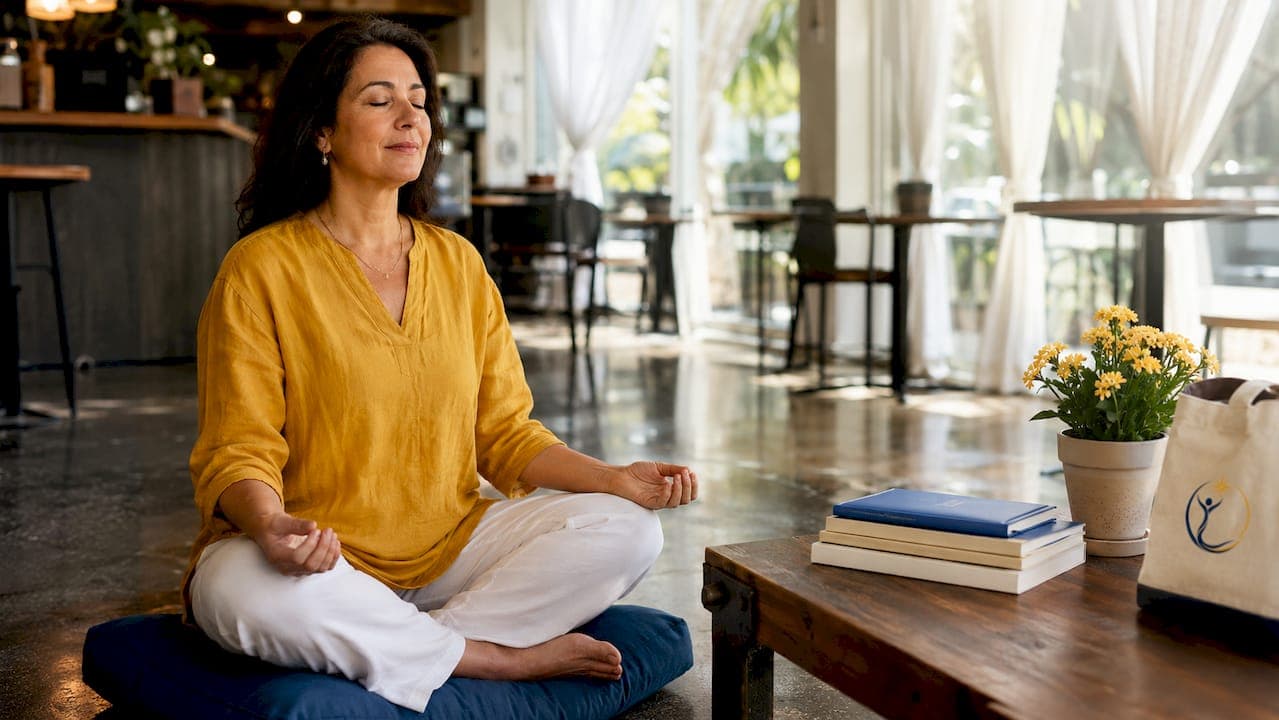
Spiritual practice is defined as any intentional activity that cultivates meaning, connection, and inner calm, and research confirms it directly strengthens both mental and physical health. Understanding why spiritual practice improves health means looking at three clear pathways: positive emotions, social bonds, and healthier daily habits. A 2026 Harvard-led analysis of 55 long-term studies covering 540,712 adults found that regular spiritual practice reduces substance misuse by about 13%. Experts at the American College of Lifestyle Medicine (ACLM) now treat spirituality as a foundational element of clinical wellness, not an optional add-on.
What scientific evidence supports the health benefits of spiritual practice?
The science behind spirituality and physical health is more solid than most people realize. A review of 1,069 studies covering 15 physical health measures found that positive health outcomes from spiritual and religious involvement exceed negative outcomes by a 7:1 ratio for physical health and 10:1 for mental health. That ratio means the benefits are not marginal. They are consistent and wide-ranging.

Cardiovascular health, immune function, cancer outcomes, anxiety, and depression all show measurable improvement with regular spiritual engagement. A 2026 study of 337 participants found that higher spiritual engagement correlates with healthier lifestyle habits and lower anxiety and depression symptoms, with statistical significance at p<.001 after adjusting for confounders. That level of significance means the relationship holds even when researchers account for age, income, and other lifestyle factors.
The Harvard analysis adds another layer. When participants attended weekly community services, the substance misuse reduction climbed from 13% to 18% with weekly attendance. Community involvement amplifies the individual benefit. That finding alone challenges the idea that spirituality is purely a private matter.
| Health Area | Observed Benefit |
|---|---|
| Substance misuse | 13–18% reduction with regular practice and community attendance |
| Mental health outcomes | Positive outcomes exceed negative by 10:1 ratio |
| Physical health outcomes | Positive outcomes exceed negative by 7:1 ratio |
| Anxiety and depression | Lower symptoms with higher spiritual engagement |
| Lifestyle habits | Healthier behaviors correlated with spiritual involvement |
"Meaning, purpose, and spirituality empower patients to sustain healthy behaviors and thrive beyond survival." — American Journal of Lifestyle Medicine, 2026 special issue
How do different types of spiritual practices affect your health?
Not all spiritual practices produce the same results. The type of practice, the quality of your engagement, and whether you practice alone or with others all shape the outcome.
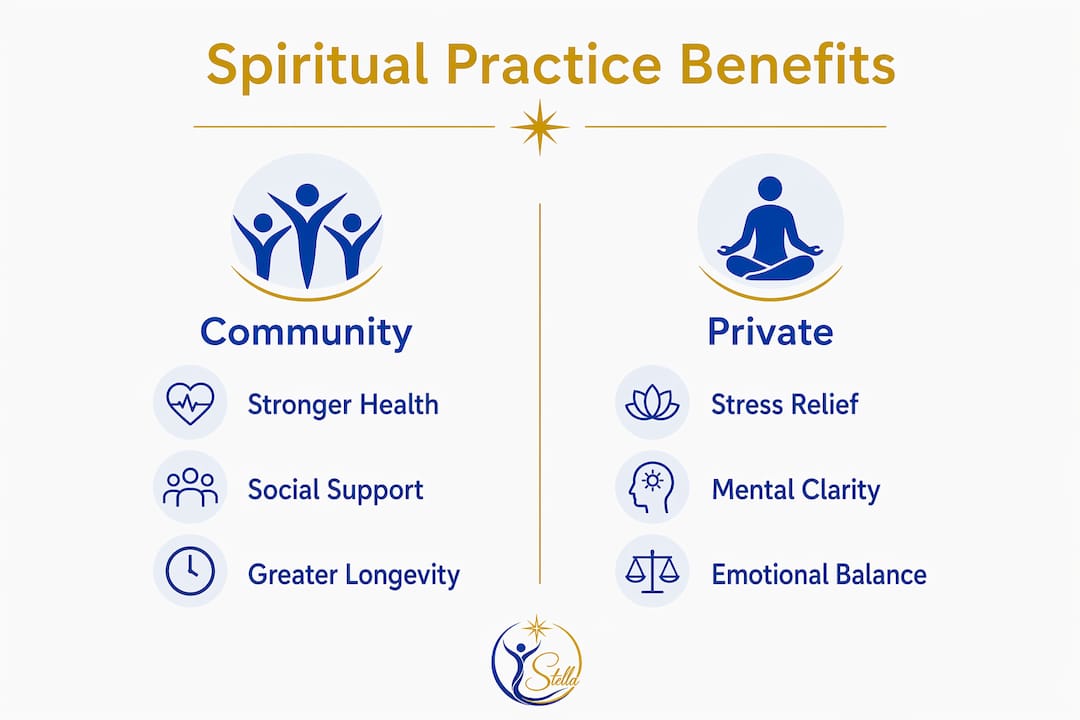
Community religious participation produces stronger physical health benefits than solitary practice alone. Community involvement mediates many of the protective effects of spirituality through social support and shared meaning-making. When you gather with others around a shared purpose, you gain accountability, belonging, and routine. Those three elements independently support better health.
Private practices like meditation, prayer, gratitude journaling, and qigong still deliver real benefits. They calm the nervous system, build self-awareness, and create a daily anchor for reflection. Qigong, rooted in Chinese Medicine, combines breath regulation, gentle movement, and mindful intention. Practices like White Tiger Qigong directly target stress reduction and vitality by working with the body's energy pathways.
The quality of your spiritual engagement matters as much as the type. Negative religious coping involving guilt, shame, or a sense of spiritual abandonment can harm health rather than support it. Spirituality that generates fear or conflict elevates stress and undermines both mental and physical wellbeing.
| Practice Type | Key Mechanism | Primary Health Benefit |
|---|---|---|
| Community worship or service | Social support, shared meaning | Reduced substance misuse, stronger resilience |
| Meditation and prayer | Nervous system regulation | Lower anxiety, improved sleep |
| Qigong and mindful movement | Breath, energy flow, body awareness | Stress relief, improved vitality |
| Gratitude practice | Positive emotion cultivation | Reduced depression, better mood |
| Negative religious coping | Shame, guilt, spiritual conflict | Elevated stress, worse outcomes |
- Choose practices that leave you feeling calm and connected, not guilty or fearful.
- Combine private practice with at least one form of community involvement.
- Consistency matters more than intensity. A short daily practice outperforms an occasional intense session.
Pro Tip: If a spiritual practice consistently leaves you feeling worse, that is a signal to find a different approach. Nourishing spiritual engagement should feel like relief, not pressure.
Why is spirituality a foundational element in lifestyle medicine?
Spirituality is not a soft supplement to health. The ACLM's 2026 special issue in the American Journal of Lifestyle Medicine positions meaning, purpose, and spirituality as foundational lifestyle medicine elements that drive adoption of other healthy behaviors. That framing matters. Spirituality does not just sit alongside diet and exercise. It motivates them.
When you have a clear sense of meaning and purpose, you are more likely to sleep well, eat mindfully, exercise regularly, and avoid harmful substances. Spirituality creates the psychological foundation that makes other healthy choices feel worth making. Without that foundation, behavior change tends to be short-lived.
The physiological mechanism is equally clear. Spirituality buffers stress physiology by promoting gratitude and shifting the body away from chronic fight-or-flight activation. Chronic stress keeps cortisol elevated, suppresses immune function, and strains the cardiovascular system. Spiritual practices that cultivate gratitude and connection interrupt that cycle at the root.
Consistent spiritual practices also predict resilience, prosocial behavior, and life satisfaction by embedding transcendent meaning into daily life. That is not abstract. It means you recover faster from setbacks, maintain stronger relationships, and report higher overall wellbeing.
Pro Tip: Treat your spiritual practice the way you treat physical exercise. Schedule it, show up consistently, and track how you feel over time. You can use a wellness progress tracker to notice shifts in mood, energy, and stress levels.
What practical steps can you take to build a spiritual wellness routine?
Building a spiritual wellness routine does not require a dramatic life change. Small, consistent practices compound into meaningful health benefits over weeks and months.
The most effective starting point is choosing one practice you can do daily for five to ten minutes. Meditation, breathwork, gratitude journaling, and gentle qigong movement all qualify. The goal is to create a reliable moment of inward attention each day. That moment trains your nervous system to shift out of reactive stress and into calm awareness.
Here are five beginner-friendly steps to get started:
- Start with breath. Spend three minutes each morning breathing slowly and intentionally. Inhale for four counts, hold for four, exhale for six. This activates the parasympathetic nervous system and sets a calm tone for the day.
- Add a gratitude practice. Write down three specific things you are grateful for each evening. Research links gratitude to lower depression and stronger social bonds.
- Join a community. Find a group that shares your values, whether a qigong class, a meditation circle, or a place of worship. Community supports wellness in ways that solo practice cannot replicate.
- Explore mindful movement. Practices like Five Animal Qigong or White Tiger Qigong combine physical movement with breath and intention. They are gentle enough for beginners and effective for stress relief.
- Reflect weekly. Set aside ten minutes each week to review how your practice is affecting your mood, energy, and relationships. Reflection deepens the benefit and keeps you motivated.
Daily stress reduction practices that combine breath, movement, and mindful attention produce the most consistent results. Variety within a consistent routine prevents stagnation and keeps your practice alive.
Key takeaways
Spiritual practice improves health through three clear pathways: positive emotions, social connection, and healthier lifestyle behaviors, with research showing benefits across physical, mental, and behavioral health outcomes.
| Point | Details |
|---|---|
| Science is clear | Studies covering over 540,000 adults confirm spiritual practice reduces substance misuse and improves mental health. |
| Community amplifies benefits | Weekly community participation raises substance misuse reduction from 13% to 18% compared to private practice alone. |
| Quality of practice matters | Negative religious coping involving guilt or shame harms health; choose practices that feel nourishing and connecting. |
| Spirituality drives behavior change | Meaning and purpose motivate healthier eating, exercise, and sleep, making spirituality a foundation for wellness. |
| Consistency beats intensity | A short daily practice of breath, movement, or gratitude produces stronger long-term results than occasional sessions. |
Why spirituality as active practice changed how I think about health
Most people treat spirituality as something they believe, not something they do. That distinction is where most wellness routines quietly fall apart.
What I have seen, both in my own practice and in working with students, is that passive belief produces very little measurable change. The people who genuinely shift their health are the ones who show up daily. They breathe with intention. They move their bodies with awareness. They connect with others around shared meaning. Spirituality, practiced that way, is not separate from physical health. It is the engine behind it.
The research backs this up. Viewing spirituality as an active lifestyle framework with integrated health behaviors yields better outcomes than passive belief alone. That is not a subtle finding. It is a direct instruction for how to approach your own wellness.
The one pitfall I see most often is spiritual isolation. People practice alone, avoid community, and wonder why the benefits feel thin. Building stress resilience with qigong or any other practice deepens when you do it alongside others. Community is not a bonus feature. It is a core mechanism.
If your current spiritual practice feels like a chore or leaves you feeling worse, change it. The goal is a practice that genuinely soothes, grounds, and connects you. When you find that, health tends to follow naturally.
— Stella
Qigongstar courses for spiritual health and stress relief
If you are ready to put these principles into practice, Qigongstar offers a clear, gentle path forward.
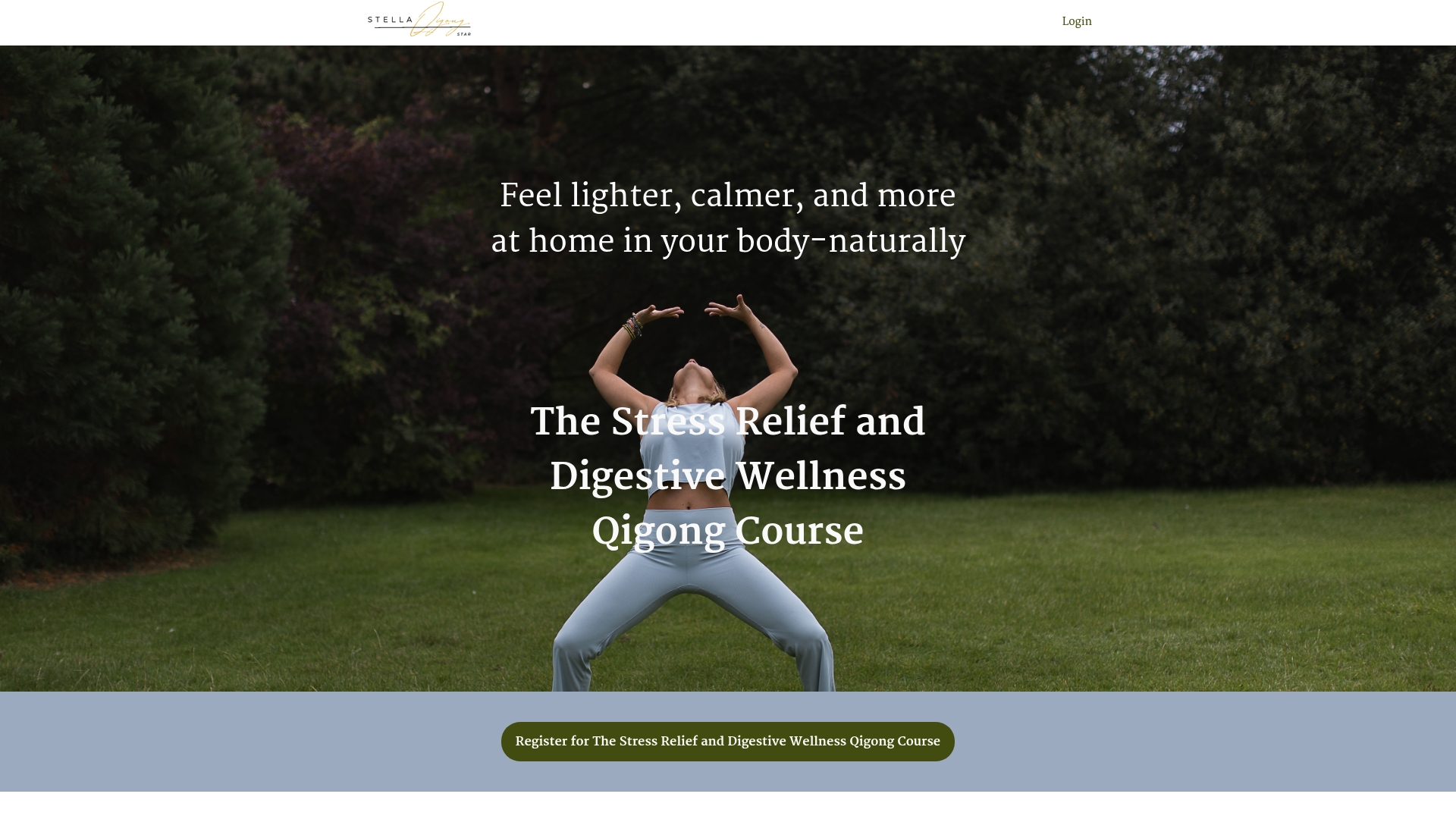
Stella's online courses blend mindful movement, breath regulation, and spiritual awareness rooted in Chinese Medicine. The 5 Animal Qigong course is a beginner-friendly program that targets stress relief, digestive wellness, and vitality through five distinct movement forms. Each form awakens a different energy in the body, releasing deep-held tension and restoring natural flow. Courses are available on demand, so you can practice at your own pace from anywhere. Stella is certified by the White Tiger Qigong School and Yoga Alliance, bringing professional depth to every session. Explore the full range of online qigong classes and find the practice that fits your life.
FAQ
Does spirituality actually improve physical health?
Yes. A review of 1,069 studies found positive physical health outcomes from spiritual involvement exceed negative outcomes by a 7:1 ratio, covering areas like cardiovascular health, immune function, and cancer outcomes.
What types of spiritual practice are most beneficial?
Community-based practices produce the strongest physical health benefits, but private practices like meditation, gratitude, and qigong also reduce anxiety and support healthy lifestyle habits when practiced consistently.
How does spirituality reduce stress?
Spiritual practice promotes gratitude and shifts the body away from chronic fight-or-flight activation, lowering cortisol and supporting immune and cardiovascular function over time.
Can spirituality help with mental health?
Research shows positive mental health outcomes from spiritual engagement exceed negative outcomes by a 10:1 ratio, with higher spiritual involvement linked to lower anxiety and depression symptoms.
How often should I practice for health benefits?
Weekly community participation and daily private practice together produce the strongest results. The Harvard analysis found that weekly service attendance raised substance misuse reduction from 13% to 18% compared to less frequent engagement.