
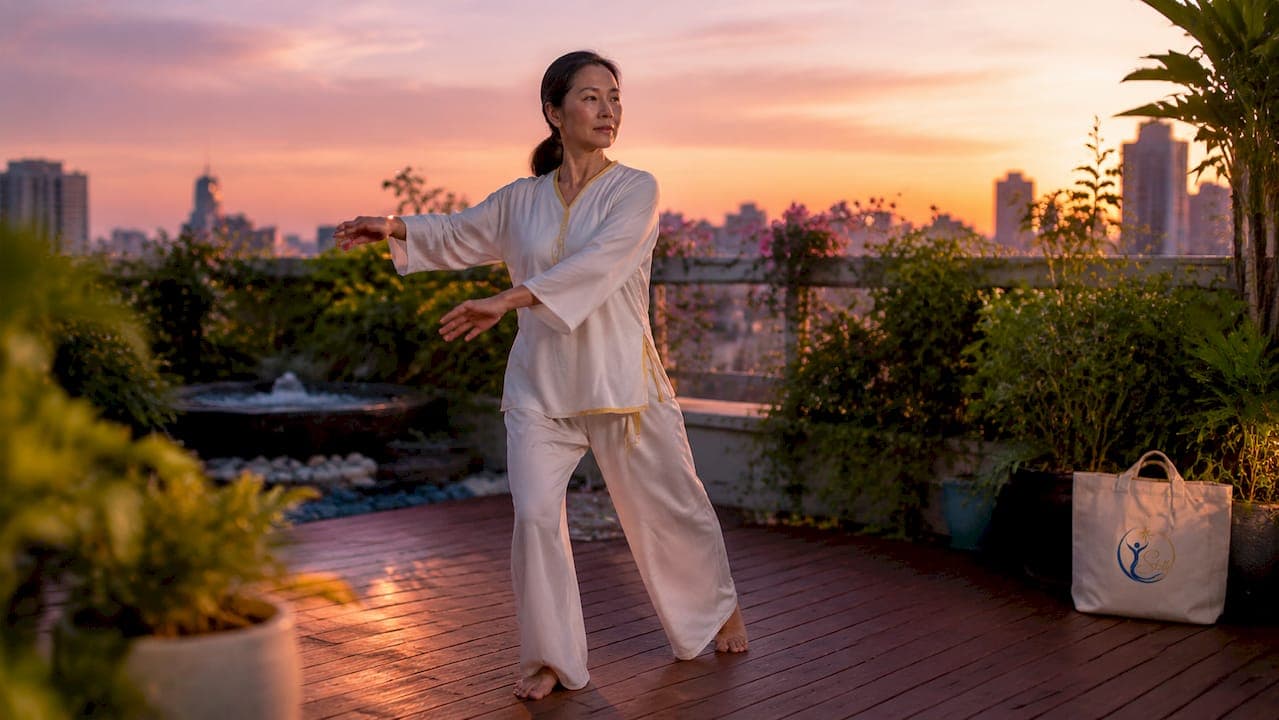
Qigong is defined as a Chinese Medicine practice that coordinates gentle movement, breath regulation, and focused awareness to modulate the autonomic nervous system and build lasting stress resilience. To build stress resilience with qigong, you need more than occasional relaxation sessions. You need a consistent practice that rewires how your nervous system responds to pressure. Research using the State–Trait Anxiety Inventory shows that anxiety scores drop from 37.4 to 26.5 after a single 15-minute session of Shuai Shou and Standing Meditation. That kind of immediate shift points to something deeper: qigong does not suppress stress. It trains your body to recover from it faster and more completely over time.
How to build stress resilience with qigong: the core practices
The most clinically validated qigong practices for stress resilience are Shuai Shou (arm swinging), Standing Meditation (Wuji posture), and abdominal resonance breathing. Each targets a different layer of the stress response, and together they create a complete nervous system reset.
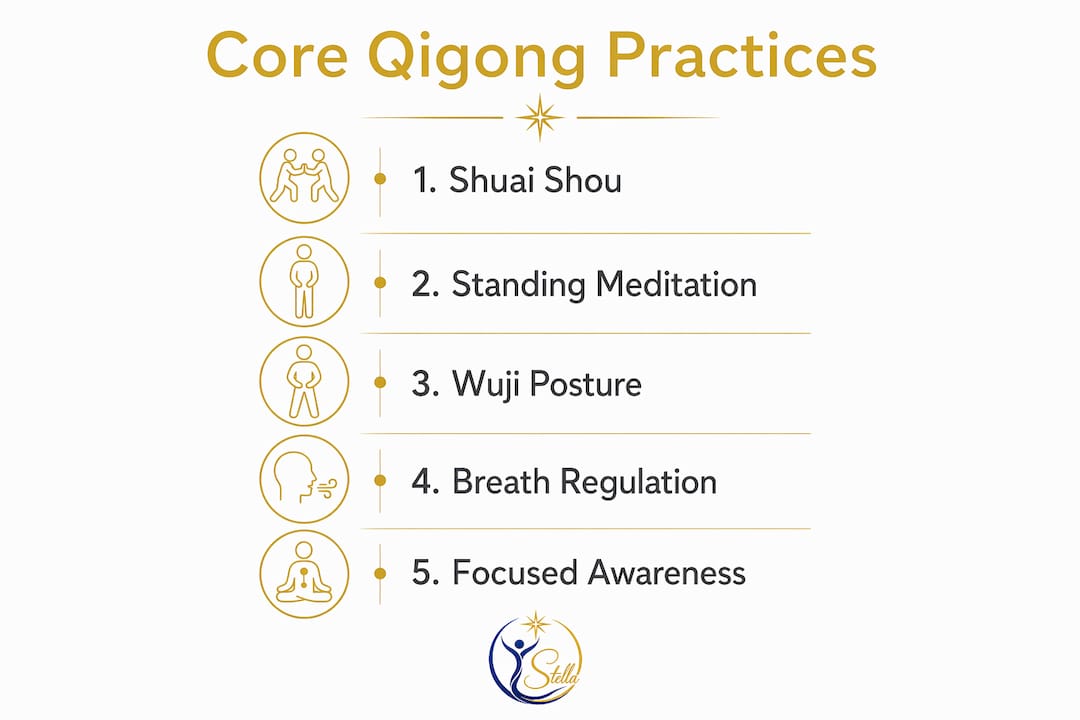
Shuai Shou and Standing Meditation are the entry points. The single-session anxiety reduction documented with these two forms makes them ideal for beginners who need quick, tangible proof that the practice works. Shuai Shou uses rhythmic arm swinging to release tension held in the shoulders and upper back, areas where most people store chronic stress. Standing Meditation, or Wuji, trains the body to stay calm without distraction.
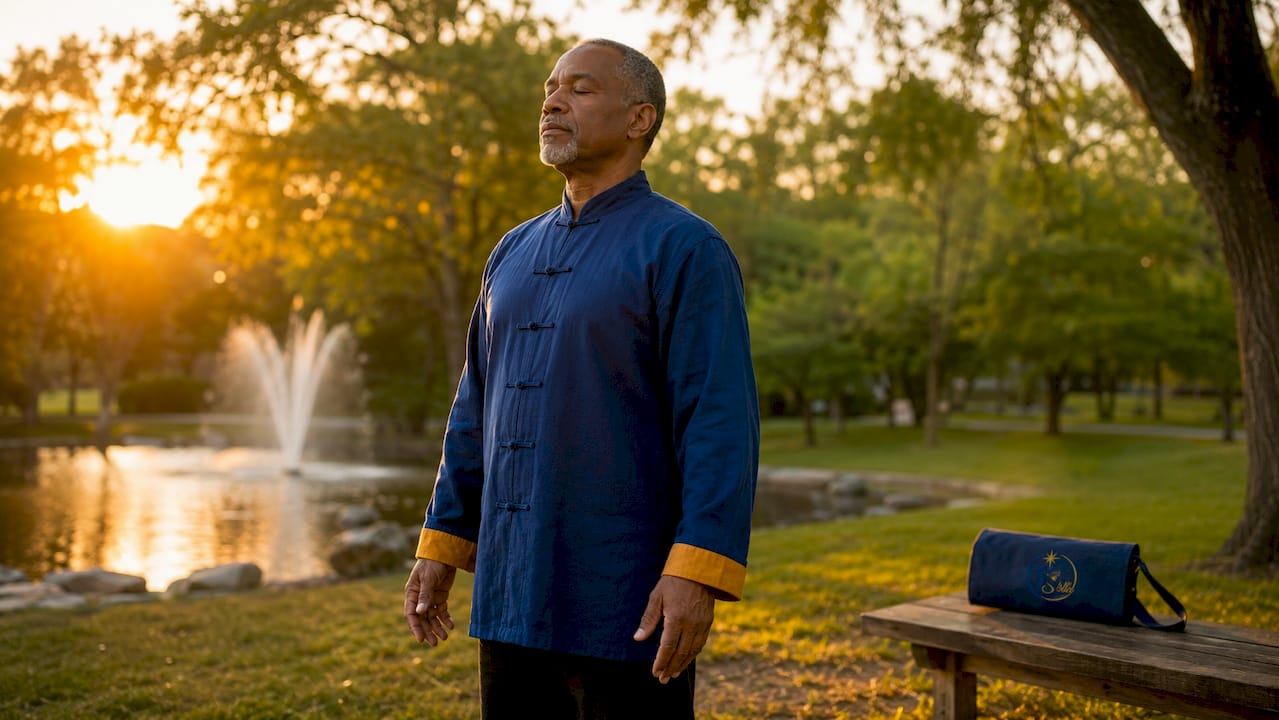
Wuji posture does something specific that most stress relief tools cannot. Daily Wuji practice trains vagal tone and increases prefrontal control over the limbic system, improving your recovery speed from stress within 1–3 months. Vagal tone is your nervous system's ability to return to calm after activation. The higher your vagal tone, the faster you bounce back from a difficult conversation, a deadline, or a sleepless night.
Abdominal resonance breathing is the third pillar. This technique involves slow, deep breaths that expand the belly on the inhale and gently contract on the exhale. It directly stimulates the vagus nerve, shifting the body from sympathetic (fight-or-flight) to parasympathetic (rest-and-digest) dominance. Think of it as a manual override for your stress response.
Qigong functions as a form of biofeedback for shen resilience, not as a tool to eliminate anxiety. Shen is the TCM term for mental and emotional spirit. Building shen resilience means cultivating the capacity to face stress without fragmenting. That distinction matters because it shifts your goal from "feeling nothing" to "feeling steady."
- Practice Shuai Shou for 5–10 minutes to open the session and release surface tension.
- Hold Wuji posture for 5–10 minutes, focusing attention on the soles of your feet.
- Close with 5 minutes of abdominal resonance breathing to anchor the parasympathetic state.
Pro Tip: During Wuji, resist the urge to listen to music or podcasts. Anchoring your attention to body sensations rather than external sound is what trains the mind to process stress rather than avoid it.
How to build a sustainable daily qigong routine
Consistency is the single most important variable in building stress resilience through qigong. Five minutes daily beats irregular 45-minute sessions because it shifts your nervous system's resting state rather than temporarily suppressing acute anxiety. That is a meaningful distinction. You are not chasing a feeling. You are changing a baseline.
Here is a practical structure to get started and stay consistent:
- Choose one form and stick with it for three weeks. Beginners who layer multiple qigong forms simultaneously risk cognitive overload and mental fragmentation. Pick the practice that matches your dominant stress pattern. If you feel scattered and wired, start with Wuji. If you feel heavy and low, start with Shuai Shou.
- Practice at the same time each day. Morning practice before screen exposure is ideal. It sets your nervous system tone before the day's demands accumulate.
- Start with 5–15 minutes. You can extend sessions to 30–60 minutes as your practice matures, but the early goal is habit formation, not duration.
- Log three simple data points each day. Note your sleep quality, mood on waking, and minutes practiced. After two weeks, patterns emerge that show you exactly how the practice is working.
- Add complementary practices only after the first three weeks. Once your primary form feels natural, you can layer in walking qigong or a second breathing technique. Explore building a lasting mind-body routine for guidance on sequencing.
Clinical data from 17 TCM clinics shows that daily qigong practice achieves 50% or greater anxiety reduction by week 8 in 68% of patients, with a 29% lower six-month relapse rate compared to non-daily practitioners. That relapse statistic is the one most people overlook. Daily practice does not just help you feel better now. It protects you from sliding back.
Pro Tip: If you miss a day, do not extend the next session to compensate. Return to your standard length. Overcompensating disrupts the rhythm that makes the practice effective.
Qigong vs. tai chi: which one targets stress and depression?
Qigong and Tai Chi are related but distinct practices, and matching the right one to your condition produces meaningfully better outcomes. A meta-analysis covering 1,351 participants across 15 randomized controlled trials found that qigong produces strong depression improvements with an effect size of approximately -1.23. That is a large effect by clinical standards.
Tai Chi, by contrast, favors anxiety reduction through its more complex, sequenced movements. The cognitive demand of learning Tai Chi forms keeps the mind engaged and interrupts anxious thought loops. Qigong's simpler, repetitive movements allow for deeper inward focus, which is why it targets depression and restorative rest more effectively.
| Feature | Qigong | Tai Chi |
|---|---|---|
| Primary mental health target | Depression, deep stress | Anxiety, cognitive engagement |
| Movement complexity | Simple, repetitive | Complex, sequenced |
| Cognitive demand | Low to moderate | Moderate to high |
| Recommended session length | 30–60 minutes, 3x weekly | 30–60 minutes, 3x weekly |
| Best for beginners with | Low energy, heaviness, burnout | Racing thoughts, restlessness |
| Nervous system mechanism | Vagal tone, shen stability | Attentional redirection |
The practice-matching principle is one of the most underused tools in stress management. Most people choose a practice based on availability or aesthetics. Choosing based on your actual stress pattern accelerates results significantly.
What lifestyle factors affect qigong's effectiveness?
Qigong practice does not exist in a vacuum. Environmental factors that disrupt Heart-Kidney communication in TCM terms, such as blue light exposure after 9 p.m. and sleeping with a phone nearby, directly diminish the gains you build through practice. Heart-Kidney communication refers to the energetic dialogue between your emotional center and your deep restorative capacity. When that channel is disrupted, shen stability erodes regardless of how diligently you practice.
These are the lifestyle factors that most directly support or undermine your qigong outcomes:
- Blue light exposure after 9 p.m. suppresses melatonin and keeps the nervous system in a low-grade alert state. Even 20 minutes of screen-free wind-down before bed amplifies the calming effects of your evening practice.
- Sleep quality is both an input and an output of qigong practice. Poor sleep raises baseline cortisol, making it harder for qigong to shift your autonomic tone. As your practice deepens, sleep quality typically improves, creating a positive cycle.
- Phone proximity during sleep generates low-level vigilance that fragments deep sleep stages. Moving your phone to another room is one of the simplest changes you can pair with qigong for faster results.
- Dietary support becomes relevant after the first three weeks of practice. Warm, cooked foods that support digestive qi, such as congee, root vegetables, and herbal teas like ginger or licorice root, complement the calming effects of qigong without requiring major lifestyle overhauls.
- Light exposure in the morning anchors your circadian rhythm and supports the cortisol awakening response. Five minutes of natural light immediately after your morning practice reinforces the nervous system signal you just created.
A wellness routine that pairs these environmental adjustments with daily qigong produces compounding benefits. The practice calms the system. The lifestyle changes stop re-activating it.
Key takeaways
Qigong builds genuine stress resilience by training the nervous system's resting state through daily, consistent practice of targeted forms like Wuji, Shuai Shou, and abdominal resonance breathing.
| Point | Details |
|---|---|
| Start with one form | Practice a single qigong form for three weeks before adding others to avoid overload. |
| Daily beats occasional | Five minutes daily shifts your nervous system baseline more effectively than sporadic long sessions. |
| Match practice to condition | Use qigong for depression and deep stress; use Tai Chi for anxiety and racing thoughts. |
| Protect your environment | Reduce blue light after 9 p.m. and move your phone out of the bedroom to support shen stability. |
| Expect results by week 8 | Clinical data shows 68% of daily practitioners achieve 50% or greater anxiety reduction within eight weeks. |
What i've learned from years of teaching qigong for stress
Most people come to qigong looking for a way to feel less. Less anxious, less overwhelmed, less reactive. What they discover, if they stay with it, is something more interesting. They start to feel more. More grounded, more present, more capable of sitting with discomfort without being swept away by it.
The biggest mistake I see in new students is using the practice as a distraction. They move through the forms while mentally rehearsing tomorrow's meeting or replaying yesterday's argument. That is not qigong. That is movement with a wandering mind. The practice only works when you anchor your attention to what is happening in your body right now. The breath. The weight in your feet. The subtle warmth building in your palms.
The second thing I have noticed is that people underestimate how small the daily investment needs to be. Five minutes of genuine Wuji, where you are actually present, does more for your nervous system than 45 minutes of distracted movement. I have watched students transform their stress response over three months with nothing more than a short morning standing practice and a few minutes of abdominal breathing before bed. The change is not dramatic. It is quiet and cumulative. One day they realize they handled a difficult situation without the usual spiral. That is the shift.
Building shen resilience is not about becoming someone who never feels stress. It is about becoming someone whose nervous system knows how to come home. Qigong gives you that map. You just have to walk it every day.
— Stella
Ready to deepen your practice with expert guidance?
If this article has given you a clear direction, the next step is practicing with structure and support. Qigongstar offers online qigong courses designed specifically for stress relief and mental resilience, including White Tiger Qigong and Five Animal Qigong. Both forms are rooted in the same clinically validated principles covered here: breath regulation, gentle movement, and nervous system regulation.
The courses are beginner-friendly, on-demand, and taught by instructors certified by the White Tiger Qigong School and Yoga Alliance. Whether you are just starting out or looking to refine an existing practice, Qigongstar's stress relief classes give you a clear, structured path from scattered and overwhelmed to calm and steady.
FAQ
How long does it take to build stress resilience with qigong?
Clinical observations show that 68% of daily practitioners achieve 50% or greater anxiety reduction by week 8. Vagal tone and nervous system recovery speed typically improve within 1–3 months of consistent daily practice.
What is the best qigong practice for stress beginners?
Shuai Shou and Wuji Standing Meditation are the most accessible starting points. A single 15-minute session of these two forms has been shown to reduce state anxiety scores significantly in people unfamiliar with qigong.
How does qigong reduce stress differently than meditation?
Qigong combines gentle physical movement with breath and focused awareness, which engages the body's proprioceptive system alongside the mind. This makes it easier for people who struggle to sit still during seated meditation to access a calm, regulated state.
Is qigong or tai chi better for anxiety?
Tai Chi's complex, sequenced movements are better matched to anxiety because they redirect cognitive attention and interrupt anxious thought loops. Qigong's simpler forms are more effective for depression and deep restorative stress recovery.
How many days a week should you practice qigong for stress relief?
Daily practice produces the strongest outcomes. Research recommends a minimum of three sessions per week at 30–60 minutes each for stress resilience, but even 5 minutes daily creates meaningful nervous system change over time.