
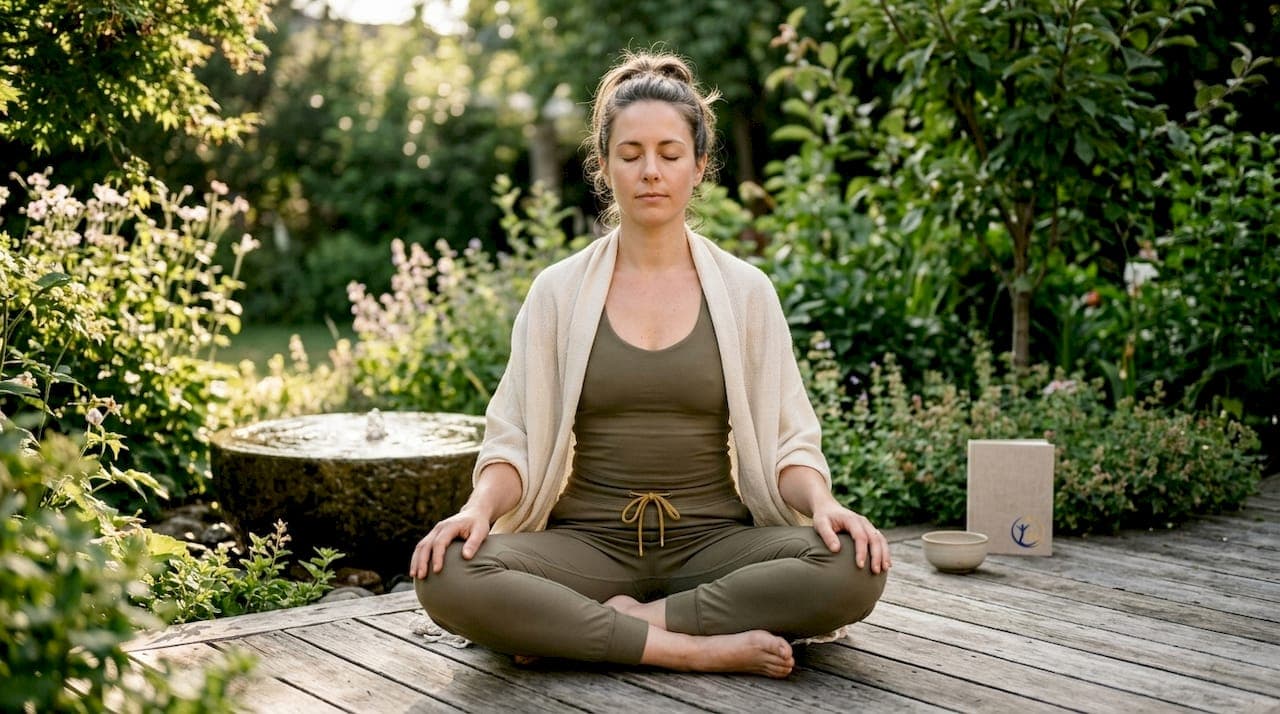
Daily stress reduction practices are specific, repeatable habits that lower cortisol, calm the nervous system, and protect your mental health when applied consistently. The CDC, NHS, and University of Utah Health all confirm that small, daily actions outperform occasional intense efforts when it comes to building real stress resilience. You do not need hours of free time or special equipment. You need the right habits, practiced regularly, starting today.
1. what are the most effective daily mindfulness exercises?
Mindfulness is not about clearing your mind. University of Utah Health defines it as noticing your thoughts and creating space between thought and reaction. That space is where stress loses its grip on you.
The most accessible daily mindfulness exercises include:
- Focused breathing: Inhale for four counts, hold for four, exhale for six. Do this for two minutes before a meeting or after waking up.
- Body scan: Sit quietly and move your attention slowly from your feet to your head, noticing tension without judgment. Five minutes is enough.
- Mindful routine tasks: Wash dishes, drink your morning coffee, or walk to your car with full attention on the sensory experience. No phone, no mental to-do list.
- Thought labeling: When a stressful thought appears, silently name it. "That's worry." "That's planning." Naming creates distance.
Research shows people spend nearly 47% of their waking hours distracted. That distraction feeds stress. Even a two-minute mindful pause interrupts that cycle and resets your focus.
Short, repeatable practices of 2–5 minutes are more effective long-term than sporadic hour-long sessions. Consistency is what builds resilience, not duration.
Pro Tip: Anchor your mindfulness practice to an existing habit. Do your breathing exercise right after you pour your morning coffee. The existing habit becomes the trigger, and the new practice sticks far more reliably.
2. how physical activity reduces stress every day
Physical movement is one of the most well-researched stress relief techniques available. The CDC recommends 2.5 hours of moderate physical activity per week to support emotional wellbeing. That breaks down to roughly 20–30 minutes per day, which is far more manageable than it sounds.
You do not need a gym membership or a structured workout plan. The most effective daily movement options for stress relief include:
- Walking: A 20-minute walk outside lowers cortisol and improves mood. Walking in nature amplifies the effect.
- Stretching: Five minutes of gentle neck rolls, shoulder stretches, and forward folds releases physical tension that accumulates from sitting.
- Non-goal-oriented movement: Dance in your kitchen, play with your dog, or do light yard work. Movement without performance pressure is deeply calming.
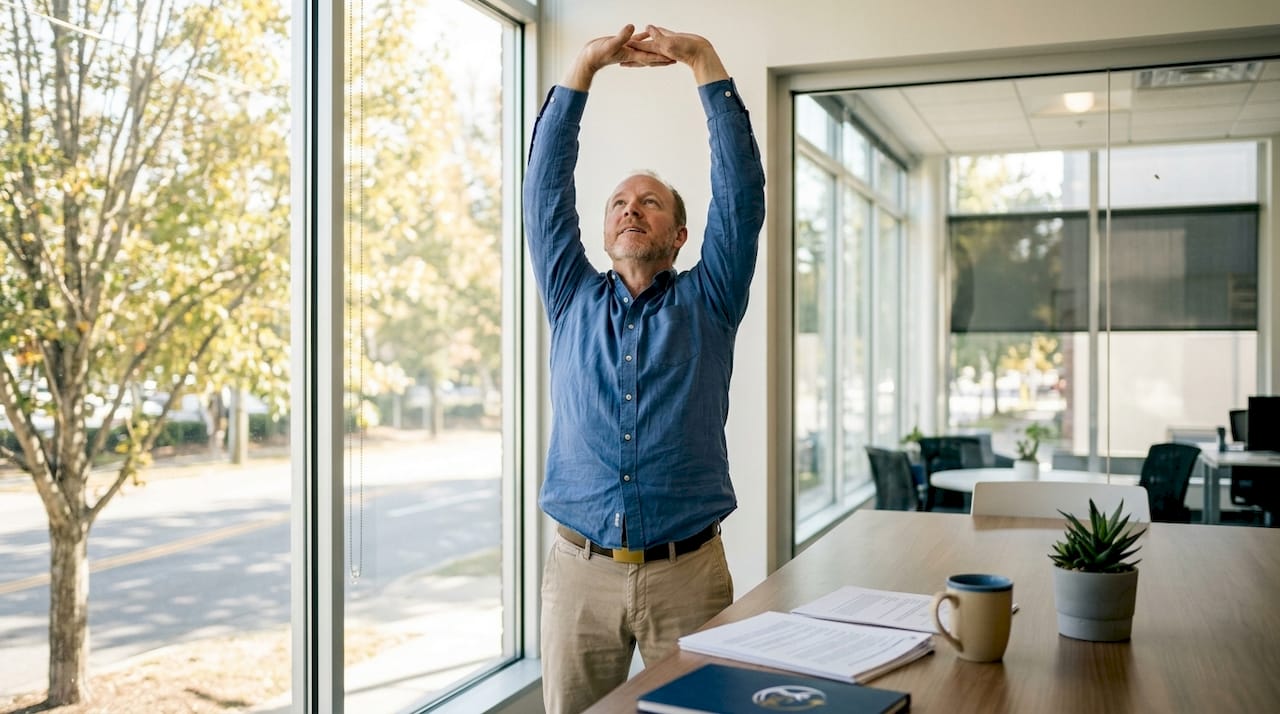
- Desk breaks: Stand up, roll your shoulders, and take three slow breaths every 60–90 minutes during your workday.
Consistency matters far more than intensity here. A 15-minute walk every day produces more lasting stress relief than a two-hour gym session once a week. Your nervous system responds to regularity, not heroics.
Pro Tip: Set a phone reminder for a two-minute movement break every 90 minutes during your workday. Stand, stretch your arms overhead, roll your ankles, and breathe. That micro-break prevents the physical tension buildup that amplifies stress by late afternoon.
3. practical lifestyle habits that calm daily stress
The most overlooked ways to manage stress are not meditation apps or supplements. They are structural changes to how you organize your day and what you say yes to.
The NHS recommends keeping a stress diary for 2–4 weeks to identify your personal stress triggers and coping patterns. Most people are surprised by what they find. A stress diary reveals patterns that feel invisible in the moment but become obvious on paper.
Planning your day using time blocks and batched tasks reduces the reactive decision-making that drains mental energy and spikes stress. Dr. Christine Carter notes that the planning process itself lowers stress, even when plans change, because it prevents you from operating in constant reaction mode.
| Lifestyle Habit | Stress Benefit |
|---|---|
| Keeping a stress diary | Identifies triggers so you can address root causes |
| Time-blocking your day | Reduces reactive decisions and mental overload |
| Setting a hard stop for work | Protects recovery time and prevents burnout |
| Saying no to non-essential tasks | Lowers overwhelm and preserves energy |
| Limiting alcohol intake | Reduces anxiety rebound and improves sleep quality |
Health authorities advise limiting alcohol to 2 drinks per day for men and 1 per day for women. Alcohol feels calming in the moment but disrupts sleep architecture and raises baseline anxiety the following day.
Pro Tip: Pick one non-essential commitment this week and decline it. Notice how much lighter your schedule feels. Saying no is a stress relief technique, not a character flaw.
4. how to build a sustainable daily stress reduction routine
The most common mistake people make with effective relaxation strategies is trying to change everything at once. That approach collapses within two weeks because it demands willpower you do not have when you are already stressed.
Small, repeatable habits that fit your real schedule, without special equipment or large time blocks, are the ones that actually last. Rachel Green, wellness writer, puts it plainly: focus on habits that fit your life, not habits that require a new life.
Start with one practice for two full weeks before adding another. This is not timidity. It is how lasting behavior change works. Your nervous system needs repetition to encode a new pattern as automatic.
Common pitfalls to avoid when building your routine:
- Aiming for perfection: Missing one day does not erase your progress. Return without judgment.
- Choosing practices you dislike: If you hate sitting still, a body scan will not stick. Choose movement instead.
- Setting unrealistic time expectations: A two-minute breathing practice done daily beats a 30-minute session done twice a month.
- Skipping adaptation during busy periods: When life gets harder, shorten the practice, do not abandon it. Two minutes still counts.
- Comparing your progress to others: Stress resilience is personal. Your baseline and your pace are your own.
Habit stacking is the most reliable method for making new practices automatic. Attach your new habit to something you already do without thinking, like brushing your teeth, making tea, or sitting down at your desk. The existing behavior carries the new one forward.
You can explore a mind-body routine that combines movement and mindfulness into a single daily practice if you want a structured starting point.
Pro Tip: Write your chosen daily practice on a sticky note and place it where you will see it at the trigger moment. If your practice is a breathing exercise after your morning coffee, put the note on the coffee maker. Visual cues reduce the mental effort required to start.
5. qigong as a daily stress reduction practice
Qigong is a traditional Chinese Medicine practice that combines gentle movement, breath regulation, and focused awareness to calm the nervous system and restore energetic balance. It is one of the most complete stress relief techniques available because it addresses the body, breath, and mind simultaneously.
White Tiger Qigong and Five Animal Qigong, both taught through Qigongstar, are specifically designed to release deep-held tension, improve mental clarity, and support digestive health. These are not high-intensity workouts. They are slow, deliberate sequences that you can practice in 10–20 minutes, making them ideal for busy schedules.
What makes qigong particularly effective as a daily practice is its low barrier to entry. You need no equipment, no gym, and no prior fitness level. The movements are gentle enough for beginners and deep enough to sustain a lifelong practice. Many practitioners report that a single morning qigong session shifts their entire emotional tone for the day.
Qigong also addresses a gap that most stress management advice misses: the body holds stress as physical tension, not just mental noise. Gentle movement sequences like those in Five Animal Qigong work through the body's meridian system to release that stored tension in a way that breathing exercises alone cannot reach.
For anyone looking to explore holistic wellness routines that combine movement, breath, and mindfulness into one practice, qigong is worth serious consideration.
Key takeaways
Consistent, small daily habits are the most effective approach to stress reduction, outperforming sporadic intense efforts every time.
| Point | Details |
|---|---|
| Mindfulness means noticing, not clearing | Create space between thought and reaction to reduce stress in real time. |
| Daily movement is non-negotiable | Even 20–30 minutes of walking or stretching lowers cortisol and lifts mood. |
| Lifestyle structure reduces stress load | Time-blocking, stress diaries, and saying no protect your mental energy daily. |
| Start with one habit for two weeks | Adding practices one at a time builds lasting routines without overwhelm. |
| Qigong addresses body and mind together | Gentle movement practices release physical tension that breathing alone cannot reach. |
What i have learned from years of daily practice
The most honest thing I can tell you is that I did not start with a perfect routine. I started with two minutes of breathing before my feet hit the floor each morning. That was it. No elaborate sequence, no special cushion, no app.
What surprised me was how quickly that two minutes changed my mornings. Not because it solved my stress, but because it gave me a moment of choice before the day took over. That is the real gift of any daily practice: not the absence of stress, but the presence of a pause.
I have seen students at Qigongstar arrive overwhelmed, convinced they need a dramatic life overhaul to feel better. What they discover is that the gentlest practices, done consistently, create the most lasting shifts. A five-minute qigong sequence practiced every morning for a month does more for your nervous system than a weekend wellness retreat done once a year.
The other thing I want you to hear is this: imperfect practice is still practice. The days when you manage only one slow breath before chaos descends are not failures. They are proof that you are building the habit even under pressure. That is exactly when it matters most.
Stress resilience is not a destination. It is something you tend to daily, the way you tend to anything you care about. Start where you are. Use what you have. Trust that small, consistent effort compounds into something real.
— Stella
Take your practice further with Qigongstar
If you are ready to move beyond individual techniques and build a daily practice that truly transforms how you feel, Qigongstar offers guided online courses designed for exactly that.
Qigongstar's online qigong courses cover White Tiger Qigong and Five Animal Qigong, both rooted in Chinese Medicine and designed to calm stress, support digestion, and restore vitality. Classes are available on demand, so you can practice at your own pace, on your own schedule, whether you have 10 minutes or an hour. Every course is beginner-friendly and led by Yoga Alliance and White Tiger Qigong School certified instructors. You can also explore live qigong classes if you prefer real-time guidance and community support.
FAQ
What are daily stress reduction practices?
Daily stress reduction practices are small, repeatable habits like mindfulness exercises, physical movement, and structured planning that lower stress hormones and improve mental wellbeing when done consistently each day.
How long does it take for stress reduction habits to work?
Most people notice a shift in mood and tension within one to two weeks of consistent daily practice. Building deeper stress resilience takes four to eight weeks of regular effort.
Can mindfulness really reduce stress in just a few minutes?
Yes. Short mindfulness practices of 2–5 minutes are proven more effective long-term than sporadic longer sessions because consistency is what trains the nervous system to respond calmly.
Is physical activity necessary for stress relief?
Physical movement is one of the most effective stress relief techniques available. The CDC recommends 2.5 hours weekly, broken into daily chunks, to support emotional wellbeing and reduce anxiety.
How do i reduce anxiety daily without medication?
Combine three approaches: a brief daily mindfulness exercise, at least 20 minutes of gentle movement, and one structural habit like time-blocking or keeping a stress diary to identify and address your personal triggers.