

You commit to your mind-body practice. You show up consistently, you breathe with intention, and you move with care. But weeks pass, and you find yourself wondering: is anything actually changing? Learning to measure wellness progress in a mind-body practice is one of the most overlooked skills in the wellness space, and it keeps many dedicated practitioners stuck in doubt. This guide gives you concrete tools, emotional and physical markers, and a clear framework to finally see the transformation that is already unfolding within you.
Table of Contents
- Key Takeaways
- How to measure wellness progress in mind-body practice
- Tracking physical wellness changes step by step
- Evaluating emotional and mental wellness progress
- Common tracking mistakes to avoid
- Interpreting your results and adjusting your practice
- My honest take on measuring wellness progress
- Continue your mind-body wellness practice with Qigongstar
- FAQ
Key Takeaways
| Point | Details |
|---|---|
| Use both subjective and objective tools | Journals and wearables together give you the clearest picture of your wellness progress. |
| Establish a baseline first | Measure your starting point in flexibility, mood, and biometrics before tracking changes. |
| Patterns matter more than daily data | Focus on trends across 2 to 4 weeks rather than reacting to daily fluctuations. |
| Emotional metrics are as valid as physical ones | Tracking mood, stress, and energy offers early insight into your mind-body health shifts. |
| Consistency outlasts intensity | Regular short check-ins reveal more meaningful progress than sporadic deep-dive assessments. |
How to measure wellness progress in mind-body practice
Before you track anything, you need the right tools and the right mindset. Rushing into data collection without a plan leads to frustration, especially when progress feels invisible in the early weeks.
Your core wellness measurement tools fall into four categories:
- Journals and reflection logs: Written notes capturing mood, energy, sleep quality, and stress levels after each practice session
- Spreadsheets: Custom wellness spreadsheets allow you to combine quantitative scores and qualitative notes, enabling pattern discovery across months in a way rigid apps often cannot
- Wearable devices: Tools that track heart rate variability (HRV), resting heart rate (RHR), and sleep stages provide objective physiological data
- Mindfulness check-ins: Brief daily body scans or emotional temperature checks that take two to five minutes
| Tool | What it measures | Best for |
|---|---|---|
| Written journal | Mood, stress, energy, tension | Emotional and subjective tracking |
| Spreadsheet | Custom metrics, patterns over time | Long-term trend analysis |
| Wearable device | HRV, RHR, sleep, recovery | Objective physical data |
| Mindfulness check-in | Body awareness, emotional state | Daily grounding and pattern recognition |
The single biggest mistake new trackers make is expecting results within days. Meaningful wellness progress assessment in mind-body practices generally emerges over weeks and months. Patience is not passivity. It is the practice itself. Setting realistic expectations from the start protects you from discouraging yourself out of a practice that is quietly working.
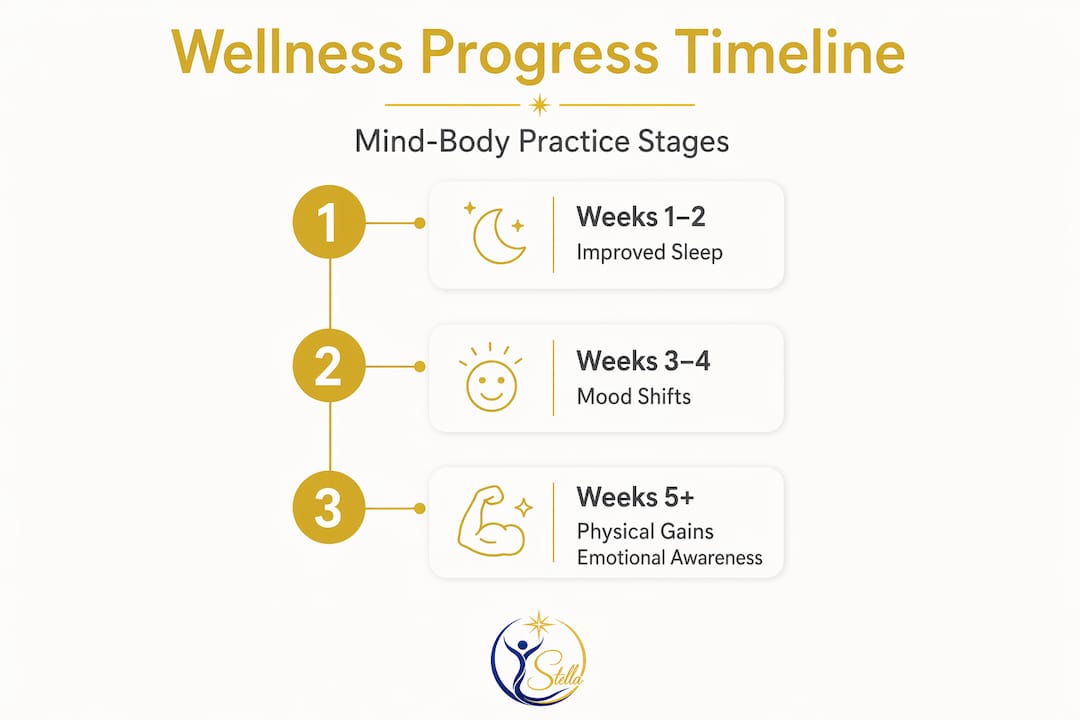
Pro Tip: Before beginning your tracking, spend one full week simply observing without judgment. Note how you feel each morning and after each session. This becomes your baseline, and it is the most important data you will ever collect.
Tracking physical wellness changes step by step
Physical progress in mind-body work is real and measurable. The key is knowing what to look for and building a reliable rhythm for checking in.
-
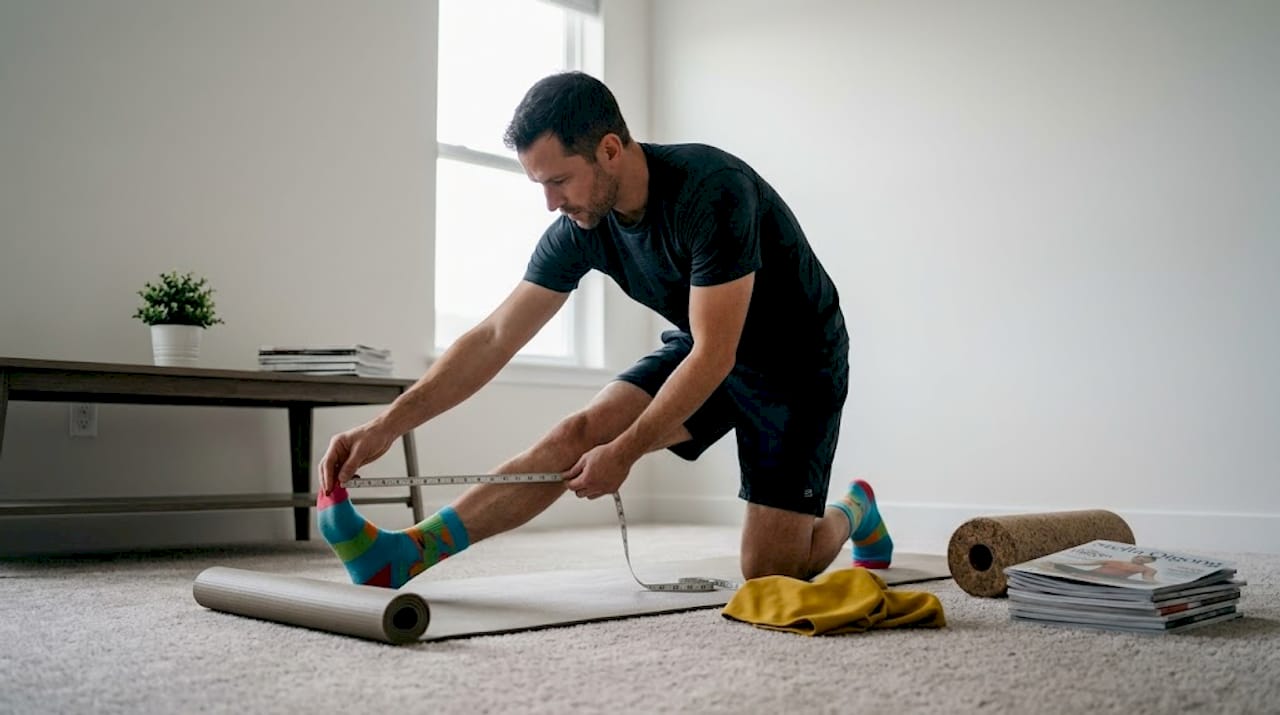
Establish your physical baseline. On week one, record your range of motion in simple movements: forward fold, shoulder rotation, and lateral side bend. Rate each on a scale of one to ten for ease and range. Take a photo if that helps you remember.
-
Monitor flexibility and mobility every two weeks. Return to the same movements under the same conditions, ideally in the morning after warming up for five minutes. Subtle gains become visible when you compare notes from week two to week six.
-
Track strength and stability markers. Note how long you can hold a standing balance pose like Tree Pose or a single-leg stance. Record the time and any wobble or compensation. A gain of ten seconds over a month is genuine physical progress.
-
Use HRV and resting heart rate as recovery indicators. HRV tracking with wearables provides valuable recovery insights, with morning baseline averages reflecting the impact of stress, sleep, training load, and even illness on your nervous system. A rising HRV trend over weeks suggests your body is becoming more resilient.
-
Check in on body composition over months, not weeks. Longitudinal tracking of skeletal muscle mass and visceral fat tells a more complete story. One detailed case study found that consistent training led to muscle mass increasing 19% across a seven-year tracking period, which shows that mind-body work and measurable physical change are not mutually exclusive.
-
Observe posture and ease of movement in daily life. This one often surprises people. Notice whether you are standing taller at your desk, carrying tension in your shoulders less often, or moving with more fluidity through ordinary tasks. These are signs your practice is working through you.
Pro Tip: When you track flexibility or balance, always use the same time of day, the same warm-up, and the same environment. Small inconsistencies in conditions are the most common reason people mistakenly believe they are not progressing.
Research on qigong specifically is encouraging for those who want evidence to anchor their practice. Qigong practiced three times per week for 31 to 60 minutes over 9 to 12 weeks significantly reduces depressive symptoms and anxiety, with measurable results across a meta-analysis of over 1,300 participants. That is not anecdote. That is a signal worth tracking.
Evaluating emotional and mental wellness progress
Emotional progress is quieter than physical change, but it is often more profound. The challenge is that feelings are slippery. Without a system, you lose track of how far you have come.
Here is a straightforward process that works:
-
Begin with a brief daily body scan. Each morning or after practice, sit quietly for three to five minutes. Scan from the crown of your head down to your feet. Notice areas of tightness, warmth, or ease without trying to change anything.
-
Rate your emotional state on simple scales. Use a one-to-ten scale for mood, energy, and stress. These three numbers take thirty seconds to record and become gold over two to four weeks of data.
-
Keep a reflective journal two to three times per week. Write three to five sentences about how you felt during practice, what arose emotionally, and how you handled it. You are looking for patterns, not perfection.
-
Identify your stress response patterns. Are you reacting less strongly to situations that used to trigger you? Do you recover from frustration more quickly? These are signs of growing emotional resilience. Note specific examples when they occur.
-
Track cortisol reactivity over time. Daily mindfulness body scan practice for about six months lowers cortisol and amygdala reactivity. You may not feel it happening day to day. Your journal will show it to you across weeks.
Simple emotional metrics worth tracking include:
- Sleep quality score (one to ten)
- Morning anxiety level before practice and after
- Number of stress episodes that felt unmanageable during the week
- Social energy: do you feel more present and connected with others?
- Moments of spontaneous calm or ease noticed during the day
"Tracking quality of life improvements over time is a better indicator of meaningful wellness progress than symptom frequency counts."
This insight points to something important. Counting how often you felt anxious matters less than noticing whether anxiety is disrupting your daily life less than it used to. Shift your lens from frequency to impact, and your emotional data becomes far more useful.
You can learn more about practicing mind-body medicine at home to complement the tracking strategies covered here.
Common tracking mistakes to avoid
Even the most dedicated practitioners fall into tracking traps. Knowing what they are means you can sidestep them before they discourage you.
- Reacting to daily noise instead of weekly trends. One tired morning does not erase three weeks of progress. Look at your weekly average, not today's number.
- Relying only on objective data. Wearables are useful, but subjective tracking journals often detect burnout or declining wellness before any objective metric reflects it. High performers especially need this layer.
- Skipping check-ins when life gets busy. This is exactly when tracking matters most. A two-minute journal entry during a stressful week is more valuable than a detailed entry during a calm one.
- Confusing effort with progress. Working harder in your practice is not the same as growing. Ease, fluidity, and recovery speed are better indicators than sweat or strain.
- Switching systems too often. Trying a new app every month destroys your ability to see long-term patterns. Pick one method and stay with it for at least three months.
Pro Tip: If your progress feels stalled, do not add more practice. Instead, audit your sleep, hydration, and stress load for the past two weeks. Plateaus in mind-body health progress tracking are almost always about recovery, not effort.
Consistency in daily check-ins yields meaningful mood and stress patterns within two to three weeks, compared to sporadic intense efforts that produce unreliable data. Showing up briefly every day beats showing up deeply once in a while.
Interpreting your results and adjusting your practice
Once you have several weeks of data, the real work begins: making sense of what you are seeing.
| Progress timeline | What to expect |
|---|---|
| Weeks 1 to 2 | Improved sleep quality and subtle mood shifts; baseline data established |
| Weeks 3 to 6 | Clearer emotional patterns; first mobility and balance gains visible |
| Weeks 7 to 12 | Measurable HRV improvement; reduced cortisol reactivity; physical flexibility gains |
| Months 4 to 6 | Consolidated emotional resilience; posture changes noticed by others; body composition shifts |
When you review your charts or journal entries, look for direction rather than perfection. A gentle upward trend in your mood score and a gradual decrease in morning anxiety, even with some dips, is progress. Expect variability. The human body is not a machine.
A weighted health metrics approach is useful here: prioritize the two or three measures with the greatest impact on how you feel and function day to day. For most mind-body practitioners, that means HRV, mood score, and sleep quality. Give those your primary attention. Let the rest inform, not overwhelm.
If your data shows three or more weeks of flat or declining trends despite consistent practice, it is a signal to adjust. Reduce session intensity. Add more restorative work. Increase sleep. This is not failure. It is your tracking system doing exactly what it was designed to do: telling you what your body needs before you burn out.
My honest take on measuring wellness progress
I have worked with mind-body practices for years, and the biggest thing I have learned is this: most people quit too early because they cannot see what is changing. They are measuring the wrong things, or they are not measuring at all.
In my experience, the practitioners who thrive are not the ones who practice longest or hardest. They are the ones who pay attention. They notice the morning they woke up without a tight jaw. They notice the moment a stressful email did not ruin their afternoon. They write it down.
What I have found is that subjective tracking is often more honest than objective data. A wearable can tell you your HRV went up. Your journal can tell you why. Both matter, but the journal builds the self-awareness that makes this practice sustainable for life.
I also think people underestimate how long real change takes. Three weeks to see patterns in mood. Three months to feel it in your body. Six months to live it differently. Give yourself that time. Measure it with compassion, not judgment. The data is not there to grade you. It is there to guide you.
— Stella
Continue your mind-body wellness practice with Qigongstar
You now have the tools to track what matters, both in your body and in your emotional world. The next step is having a practice worth tracking.
At Qigongstar, the online courses and classes are designed specifically for people who want lasting results, not quick fixes. From White Tiger Qigong to Five Animal Qigong, each program gives you the structure, movement, and breath guidance to awaken your energy and build progress you can actually feel. Classes are flexible, beginner-friendly, and accessible anywhere you are. When you combine a clear tracking system with expert-led practice, your wellness progress becomes visible, sustainable, and deeply rewarding.
FAQ
How long before I see results in a mind-body practice?
Most practitioners notice subtle mood and sleep improvements within two to three weeks of consistent practice. Physical changes like flexibility and HRV improvement typically become measurable between weeks seven and twelve.
What is the best tool to track emotional wellness progress?
A simple daily journal with mood, energy, and stress scores on a one-to-ten scale is one of the most reliable wellness measurement tools available. Consistent short entries over several weeks reveal patterns that occasional deep reflections miss.
Can I use a wearable device to evaluate mind-body health?
Yes. Wearables that track HRV and resting heart rate provide useful objective data about nervous system recovery and resilience. They work best when paired with subjective tracking like journaling to give you both the numbers and the context behind them.
How do I know if my wellness progress has stalled?
If your mood scores, flexibility, or HRV show three or more weeks of flat or declining trends despite regular practice, review your sleep, stress, and recovery habits. Plateaus are typically a recovery issue, not a practice issue.
Does qigong actually produce measurable wellness results?
Research confirms that qigong practiced three to five times per week over 9 to 12 weeks produces statistically significant reductions in both depression and anxiety. These results are trackable and give you a clear window into your mind-body health progress.