

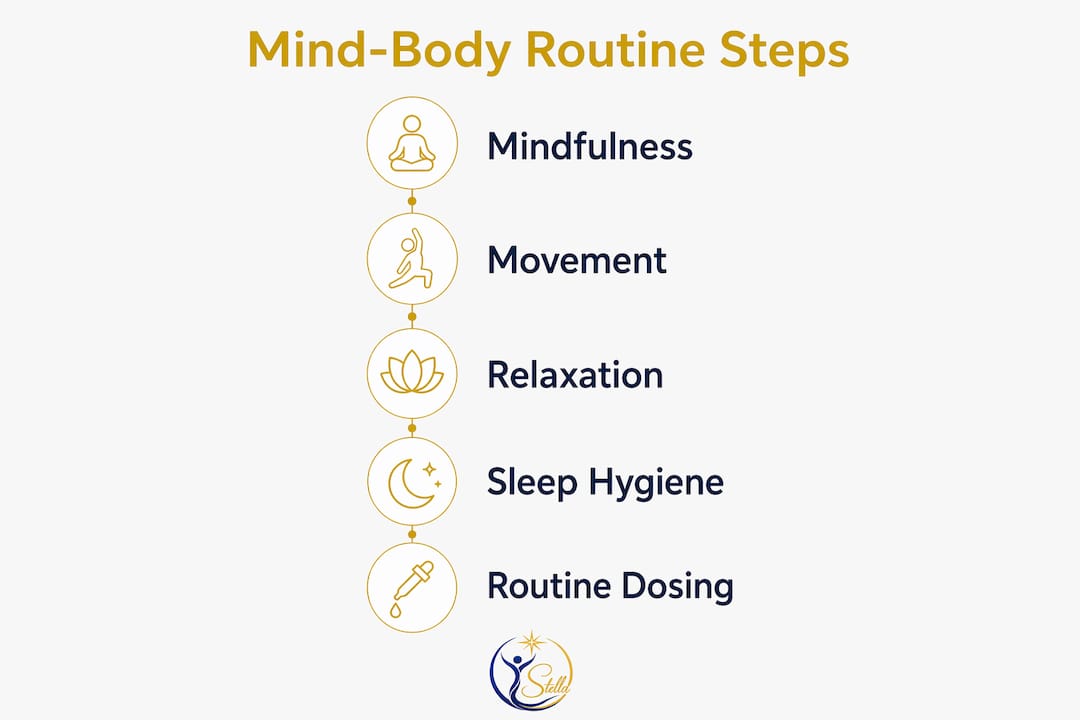
A mind-body routine is defined as a structured daily practice that integrates mindfulness, intentional movement, relaxation techniques, and sleep hygiene to restore balance across your physical and mental health. To build a comprehensive mind body routine, you need more than a single yoga class or a meditation app. Research confirms that combining focused breathwork, movement modalities like qigong and tai chi, and deliberate rest cycles produces measurable reductions in stress, anxiety, and cortisol. The good news is that you do not need hours each day. You need the right structure, the right dose, and the willingness to start small and stay consistent.
What are the core components needed to build a comprehensive mind-body routine?
A well-designed mind-body routine draws from four interconnected pillars: mindfulness practices, movement modalities, relaxation techniques, and sleep hygiene. Neglecting any one of them limits the benefits of the others. Think of these pillars as the four legs of a table. Remove one and the whole structure wobbles.
Mindfulness practices
Focused breathing and body scans regulate your nervous system even in sessions as brief as one minute. Mindful walking, where you place full attention on each step and breath, is equally effective and requires no equipment. These practices are accessible during everyday tasks, which makes them the easiest entry point for building consistency.
Mind-body movement modalities
Practices like yoga, tai chi, qigong, and Pilates combine breath regulation with physical movement to create a dual effect on body and mind. A 2026 systematic review confirms that mind-body exercises improve executive function, inhibitory control, and working memory, with greater gains tied to longer participation. These are not just fitness tools. They are cognitive and emotional training systems.

Relaxation techniques
Deep breathing and progressive muscle relaxation trigger the body's relaxation response, which directly counteracts the physiological effects of chronic stress. Progressive muscle relaxation involves tensing and releasing muscle groups in sequence, which teaches your body to recognize and release deep-held tension. These techniques function as physiologic downshifts your nervous system genuinely needs.
Sleep hygiene
Physical activity and sleep share a bidirectional relationship. A Frontiers review found that 150 minutes of moderate activity per week improves sleep quality, while disrupted sleep raises cortisol and undermines the stress relief your movement practice is building. Sleep is not a passive recovery tool. It is an active component of your wellness plan.
Pro Tip: Combine a two-minute body scan with your morning coffee ritual. Pairing a new mindfulness habit with an existing one is the fastest way to make it stick without adding time to your day.
How do you structure and dose a mind-body routine for maximum effectiveness?
Structure and dose are the most overlooked variables in routine design. Most people pick a practice they enjoy and do it whenever they feel like it. That approach rarely produces lasting change.
A 2026 meta-analysis of 23,585 participants found that mindfulness interventions lasting at least 8 weeks with a minimum of eight contact hours and regular between-session practice produced significantly stronger mental health improvements than shorter, less structured programs. Duration, frequency, and homework all matter. This means your routine needs a plan, not just good intentions.
Here is how to think about dosing your practice:
- Commit to a minimum of eight weeks. Shorter trials rarely produce the neurological and behavioral changes that make a routine feel natural. Give your practice enough time to become part of your identity.
- Aim for at least three sessions per week. Daily practice is ideal, but three structured sessions per week with brief daily micro-practices in between maintains momentum without overwhelming your schedule.
- Include between-session homework. This can be as simple as three mindful breaths before meals or a two-minute body scan before sleep. Brief daily mindfulness practice with curiosity and compassion reduces stress effectively, even without lengthy sessions.
- Schedule booster sessions. Once every two to three weeks, extend one session to 45 to 60 minutes. This deepens your practice and resets your commitment without requiring that level of effort daily.
- Balance formal and informal practice. Formal sessions anchor your routine. Micro-practices scattered through your day sustain nervous system regulation between those anchors.
Pro Tip: Set a recurring calendar reminder for your weekly booster session the same way you would a doctor's appointment. Treating it as non-negotiable removes the daily decision fatigue that kills most wellness routines.
What are practical steps to begin and maintain your routine?
Building a practice that actually lasts requires a clear starting point and a flexible structure you can adjust as you grow. Here is a step-by-step approach to develop mind body practices that fit your life.
- Assess your current habits. Spend three days noting when you feel most stressed, when you have natural pauses in your day, and how well you are sleeping. This baseline shapes every decision that follows.
- Choose one mindfulness anchor. Start with focused breathing or a simple body scan. Practice it for five minutes each morning for two weeks before adding anything else. Layering too much too soon is the most common reason people quit.
- Add a movement modality. Select a practice suited to your current fitness level and interests. Qigong and tai chi are excellent starting points because they are gentle, low-impact, and explicitly designed to integrate breath and movement. Yoga and Pilates work equally well for those who prefer a more structured physical challenge.
- Layer in relaxation techniques. Once your movement practice feels stable, add progressive muscle relaxation or extended exhale breathing in the evenings. These techniques prepare your body for quality sleep and melt away the residual tension that accumulates through the day.
- Align your exercise timing with your sleep schedule. Exercising at consistent times each day supports your circadian rhythm. The Frontiers review highlights that exercise aligned with sleep timing reduces cortisol-related sleep disruption and improves overall stress resilience.
Use the table below to track your progress across each component. Adjust the dose and mix based on how your body and mind respond.
| Component | Starting dose | Progress marker | Adjustment signal |
|---|---|---|---|
| Mindfulness practice | 5 min daily | Feeling calmer within 10 days | Extend to 10 min or add a second session |
| Mind-body movement | 2 to 3 sessions per week | Reduced muscle tension after sessions | Increase frequency or session length |
| Relaxation technique | 5 min before sleep | Falling asleep faster within 2 weeks | Add a midday session during high-stress periods |
| Sleep hygiene | Consistent bedtime | Waking refreshed within 3 weeks | Adjust exercise timing if sleep quality stalls |
You can also explore holistic wellness routines that combine stress relief and digestive health for a more targeted approach if gut issues are part of your picture.
What common mistakes should you avoid when developing a mind-body routine?
Even well-intentioned routines break down. Knowing where most people go wrong saves you weeks of frustration.
- Relying only on long sessions. Sporadic hour-long practices do less for your nervous system than brief breath-focused micro-practices woven through your day. Consistency beats intensity every time.
- Setting unrealistic goals from the start. Committing to 60 minutes of daily practice when you currently do nothing is a setup for dropout. Start with five minutes and build from there. Sustainable progress comes from small, repeatable wins.
- Treating sleep as separate from your routine. Sleep is not a reward for good behavior. It is a core component of your wellness plan. Ignoring sleep hygiene while investing in movement and mindfulness is like watering a plant but leaving it in the dark.
- Skipping flexibility in your schedule. Life changes. Your routine needs to flex with it. A rigid plan that cannot accommodate a busy week will collapse entirely. Build in permission to do a shorter version on hard days rather than nothing at all.
- Ignoring the signs your body sends. If a particular practice consistently leaves you more anxious or physically uncomfortable, adjust it. A mind-body routine should feel nurturing, not punishing.
"The goal is not perfection. The goal is a practice that you can return to, again and again, no matter what life brings."
Learning to measure your wellness progress in concrete ways helps you stay motivated and course-correct before small slips become full stops.
Key takeaways
A comprehensive mind-body routine requires mindfulness, structured movement, relaxation, and sleep hygiene working together over at least eight weeks to produce lasting stress relief and mental clarity.
| Point | Details |
|---|---|
| Four pillars are non-negotiable | Mindfulness, movement, relaxation, and sleep all contribute and none can be skipped without reducing results. |
| Dose and duration drive results | Routines lasting at least 8 weeks with regular sessions and between-session practice produce the strongest outcomes. |
| Micro-practices sustain daily balance | Brief breathwork and body scans throughout the day regulate your nervous system more reliably than occasional long sessions. |
| Sleep and movement are interdependent | Aligning exercise timing with your sleep schedule reduces cortisol and improves both stress resilience and sleep quality. |
| Start small and adjust as you grow | Beginning with five minutes daily and building gradually prevents burnout and creates habits that last. |
Why I stopped chasing the perfect routine and found something better
I spent years designing what I thought was the ideal mind-body schedule. Two hours of qigong in the morning, a meditation sit at noon, and a wind-down practice before bed. It looked beautiful on paper. In practice, one busy week would unravel the whole thing, and I would spend days feeling like I had failed.
What actually changed my practice was letting go of the idea that more structure meant more benefit. The research backs this up. Combining breath focus with body awareness during ordinary moments, a few conscious breaths while waiting for tea to brew, a gentle body scan during a work break, produced more consistent nervous system calm than my elaborate formal sessions ever did.
The shift I noticed was not dramatic. It was quiet. My stress response softened. My sleep deepened. My mind felt less cluttered, not because I was meditating more, but because I was practicing more often in smaller, gentler ways. That is the insight most wellness guides miss. Frequency matters more than duration, and presence matters more than perfection.
If you are just starting out, I would encourage you to read about sustainable wellness practice before you build your first schedule. Understanding what makes a practice last changes how you design it from the beginning.
— Stella
Awaken your practice with Qigongstar's guided qigong courses
If you are ready to build your mind-body routine with expert guidance, Qigongstar offers structured online courses designed specifically for stress relief, digestive wellness, and energetic balance.

The Five Animal Qigong course and the online qigong classes at Qigongstar give you a complete, beginner-friendly framework rooted in Chinese Medicine and certified by the White Tiger Qigong School and Yoga Alliance. Each course combines gentle movement, breath regulation, and mindfulness into a practice you can follow at your own pace, from anywhere. Whether you are managing chronic stress, gut issues, or simply want to awaken your energy and feel more alive in your body, these courses offer a clear, nurturing path forward.
FAQ
What is a mind-body routine?
A mind-body routine is a structured practice combining mindfulness, intentional movement, relaxation techniques, and sleep hygiene to improve both mental and physical health. It is designed to reduce stress, regulate the nervous system, and support long-term wellbeing.
How long does it take to see results from a mind-body routine?
Research shows that mindfulness-based programs lasting 8 weeks with regular sessions produce measurable improvements in anxiety and mental health. Most people notice calmer stress responses and better sleep within two to three weeks of consistent daily practice.
What are the best mind-body exercises for beginners?
Qigong, tai chi, and gentle yoga are the most accessible starting points because they combine breath and movement without requiring high fitness levels. A 2026 systematic review confirms these modalities improve cognitive function and emotional regulation with consistent practice.
How do I integrate mindfulness into my fitness routine?
Start by adding three conscious breaths before and after each workout, then layer in a short body scan at the end of your session. Mindfulness during everyday tasks is equally valid and builds the habit of presence without adding extra time to your day.
Can a mind-body routine help with sleep?
Yes. The bidirectional relationship between physical activity and sleep means that consistent movement improves sleep quality, while better sleep deepens the benefits of your mindfulness practice. Aligning your exercise schedule with your natural sleep-wake cycle further reduces cortisol and supports restorative rest.