
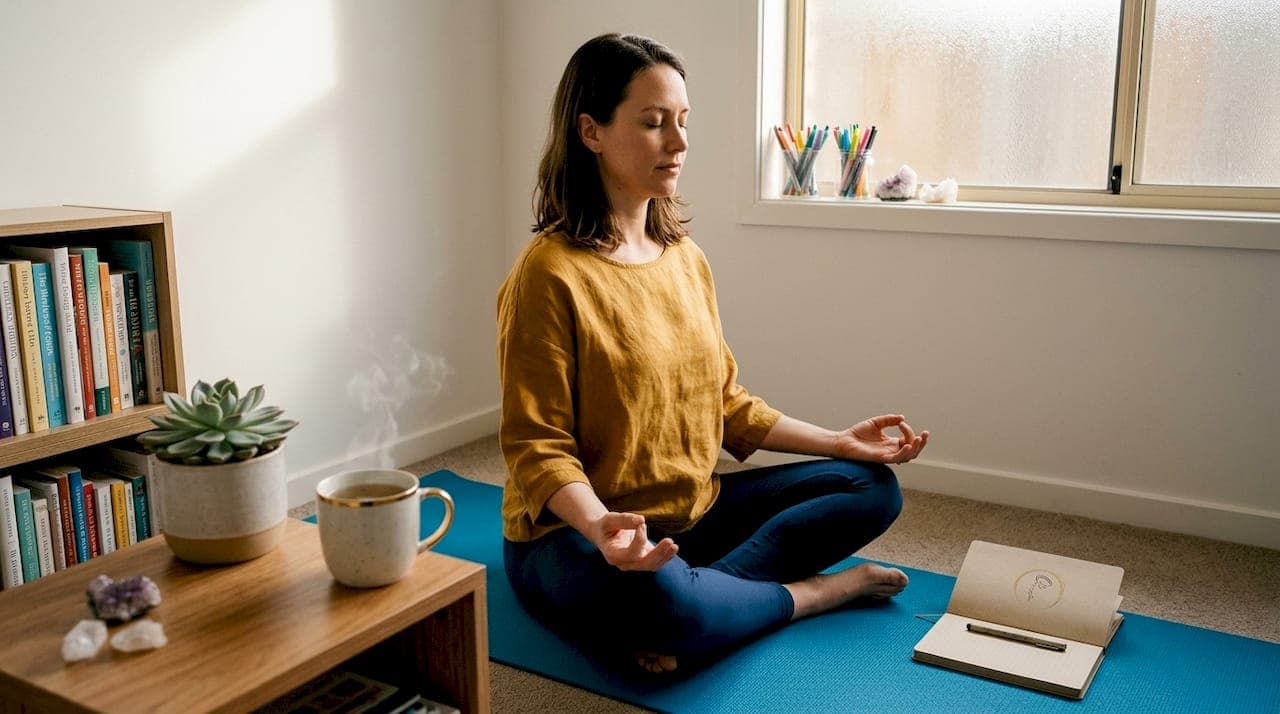
Stress piles up, digestion falters, and sleep becomes elusive. Many health-conscious adults sense that the body and mind are deeply connected, yet the guidance available on mind-body medicine often feels scattered, overly clinical, or just too complicated to apply at home. This step-by-step guide cuts through the confusion. You’ll find clear definitions, evidence-backed techniques, practical setup advice, and gentle movement practices that can soothe stress, support digestion, and nurture your overall vitality starting today.
Table of Contents
-
Practice steps: Stress relief with breathing, meditation, and movement
-
Mindful eating for digestion: How to activate rest-and-digest at home
-
Troubleshooting and safety: Common mistakes, limitations, and adaptation
-
A practitioner’s perspective: Making mind-body medicine practical at home
Key Takeaways
| Point | Details |
|---|---|
| Essential practices overview | Breathing exercises, meditative movement, and mindful eating are foundational mind-body techniques you can use at home. |
| Evidence for stress relief | Research supports short-term benefits for stress and blood pressure from these practices, especially when practiced daily. |
| Adaptation and safety | Individualize your practice and supplement, not replace, conventional care especially for chronic conditions. |
| Mindful eating for digestion | Activating the rest-and-digest state with mindful breathing and slow eating improves digestive wellness. |
| Consistency over complexity | Regular practice of simple mind-body techniques yields greater benefits than complicated routines. |
What is mind-body medicine? Key practices and benefits
Mind-body medicine is the practice of using the relationship between your thoughts, emotions, and physical body to promote healing and wellbeing. The NCCIH defines mind-and-body practices as a broad set of techniques that target brain-body interactions, often delivered or taught by trained practitioners or teachers, including meditation, mindfulness, yoga, tai chi, qigong, acupuncture, and massage.
What makes these practices so appealing is their accessibility. Most require no equipment, no prescription, and no gym membership. You can read more about meditative movement and how it fits into a holistic wellness lifestyle to get a clearer sense of where to begin.
Here is a quick overview of the most common practices and what they offer:
| Practice | Primary focus | Main benefit | Evidence rating |
|---|---|---|---|
| Mindfulness meditation | Attention and awareness | Stress reduction | Strong |
| Slow-paced breathing | Breath regulation | Anxiety and blood pressure | Strong |
| Yoga | Movement and breath | Flexibility, stress relief | Moderate to strong |
| Tai chi | Gentle movement and flow | Balance, cardiovascular health | Moderate |
| Qigong | Energy cultivation and breath | Digestion, stress, vitality | Moderate |
| Massage therapy | Soft tissue manipulation | Pain, relaxation | Moderate |
| Guided imagery | Visualization | Anxiety, chronic pain | Moderate |
Key benefits you can expect with consistent practice include:
-
Stress relief: Calming the nervous system and lowering cortisol levels
-
Digestive support: Activating the parasympathetic (rest-and-digest) state
-
Reduced chronic pain: Shifting your relationship with discomfort
-
Better sleep: Quieting mental chatter before bed
-
Emotional balance: Building resilience against daily pressures
You can also explore resources on emotional wellness therapy to see how these practices pair with broader psychological support.
“Mind-body practices work best when adapted to the individual. For those managing chronic conditions, combining these approaches with conventional care often yields the most meaningful results.”
The Qi Blog offers ongoing insights into how these practices evolve and how practitioners at every level find their rhythm.
Preparing your space and mindset for at-home practice
Once you’ve picked your preferred practice, setting up your environment and mindset makes all the difference. A cluttered, noisy room signals your nervous system to stay alert. A calm, intentional space does the opposite. It tells your body it is safe to soften.
Here is a simple checklist to create your home practice space:
-
Choose a quiet corner away from high-traffic areas of your home
-
Clear the floor of obstacles so movement feels free and safe
-
Dim the lights or use natural light to reduce visual stimulation
-
Add a yoga mat or soft rug for comfort during floor-based practices
-
Keep a blanket nearby for relaxation poses or seated meditation
-
Use a diffuser or open window to introduce calming scents or fresh air
-
Silence your phone or use airplane mode for the duration of your session
Beyond the physical setup, your mindset matters just as much. Approach each session with intention rather than expectation. You are not trying to achieve a perfect state. You are simply creating the conditions for your body to settle and your energy to flow.
Mind-and-body approaches for chronic pain are generally nonpharmacologic, and NCCIH highlights that research quality and strength vary. Individualized adaptation, especially for those managing chronic pain, is a recurring theme among experts who recommend combining these practices with conventional care.
If you are new to practicing at-home qigong, start with sessions as short as five to ten minutes. Consistency builds the neural pathways that make these practices feel natural over time.
Pro Tip: Keep a simple journal next to your practice space. After each session, write one word that describes how you feel. Over weeks, these notes become a gentle record of your progress and a motivating reminder of why you started.
You might also find sound therapy for balance a useful complement, especially if silence feels uncomfortable at first.
Practice steps: Stress relief with breathing, meditation, and movement
With your space ready, here is exactly how to practice these techniques for stress relief and wellness. These three approaches work beautifully together, and each one reinforces the other.
Step 1: Slow-paced breathing (5 to 10 minutes)
-
Sit comfortably with your spine gently upright
-
Inhale slowly through your nose for a count of four
-
Pause briefly at the top of the breath
-
Exhale through your nose or mouth for a count of six to eight
-
Repeat for five to ten cycles, letting each breath deepen naturally
Breath-focused practices such as slow-paced and controlled breathing have experimental evidence for reducing anxiety and shifting autonomic measures associated with parasympathetic activity. In plain terms, your body shifts from fight-or-flight into a calmer, more restorative state.
Step 2: Mindfulness meditation (10 to 15 minutes)
-
After your breathing practice, remain seated
-
Close your eyes and bring attention to the natural rhythm of your breath
-
When a thought arises, notice it without judgment and gently return your focus
-
Expand your awareness to include body sensations, sounds, and the feeling of stillness
-
End by taking three slow, deep breaths and opening your eyes softly
Step 3: Meditative movement (10 to 20 minutes)
-
Stand with feet shoulder-width apart, knees soft
-
Begin gentle arm swings, letting the motion originate from your center
-
Move into slow, flowing sequences inspired by meditative movement techniques like qigong or tai chi
-
Coordinate each movement with your breath, inhaling as you expand and exhaling as you gather
-
Close with a standing stillness pose, hands over your lower belly, breathing deeply
Short-term reductions in blood pressure have been observed with multiple relaxation approaches including breathing control, meditation, meditative movement such as tai chi and yoga, mindfulness, and progressive muscle relaxation in studies lasting up to three months.
| Practice step | Target effect | Main tips |
|---|---|---|
| Slow-paced breathing | Parasympathetic activation | Extend the exhale longer than the inhale |
| Mindfulness meditation | Mental clarity, stress reduction | Non-judgment is the key skill |
| Meditative movement | Energy flow, blood pressure | Keep movements slow and breath-connected |
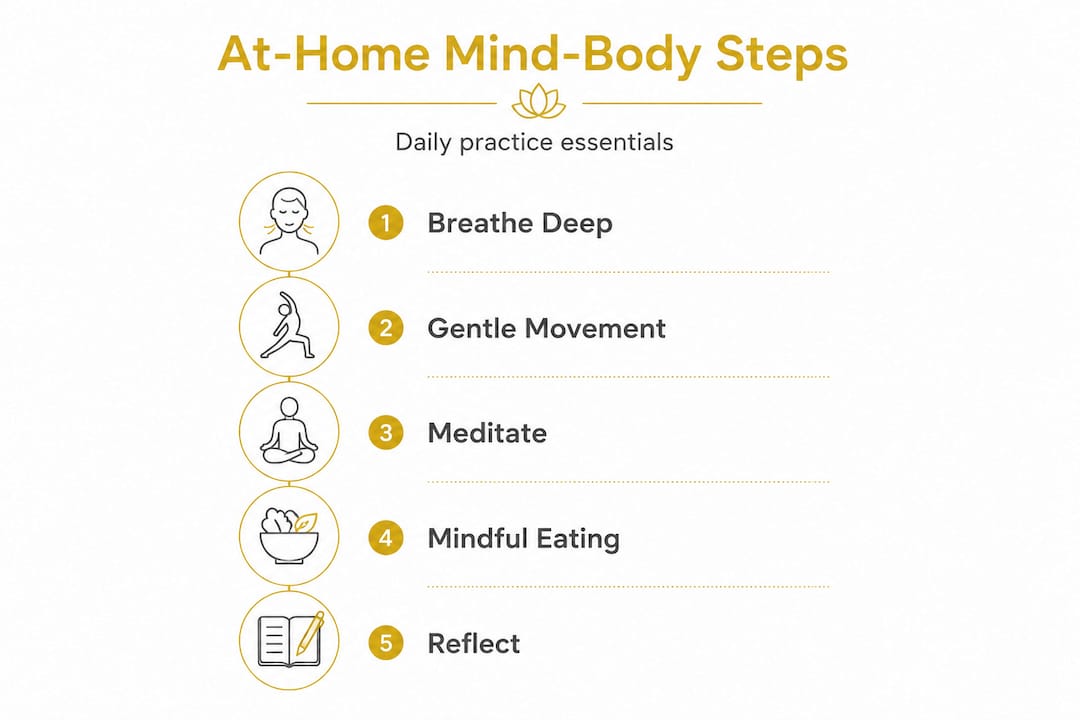
Practices like White Tiger Qigong and Five Animal Qigong offer structured sequences that guide you through these principles with depth and tradition behind every movement.
Pro Tip: Combining a breathing exercise with meditative movement in the same session amplifies the benefits of each. The breath primes your nervous system, and the movement carries that calm energy through your whole body.
Mindful eating for digestion: How to activate rest-and-digest at home
Stress relief is not only about meditative movement. Mindful eating turns every meal into a wellness opportunity. When you eat in a stressed state, your digestive system works against you. Blood is diverted away from your gut, enzyme production slows, and discomfort follows.

Mindful eating activates the parasympathetic nervous system, the rest-and-digest state, by slowing the pace of your meal and bringing full attention to the experience of eating. Mindful eating practices are commonly framed as a home technique to reduce stress during meals and support digestion via activating this parasympathetic response.
Here is how to practice mindful eating step by step:
-
Pause before eating: Take three to five slow belly breaths before your first bite to shift your nervous system into a receptive state
-
Remove distractions: Put away your phone, turn off the television, and sit at a table rather than eating on the go
-
Engage your senses: Notice the color, aroma, and texture of your food before you begin
-
Chew slowly and thoroughly: Aim for twenty to thirty chews per bite, which supports mechanical digestion and signals fullness more accurately
-
Put down your utensils between bites: This simple act naturally slows your pace and keeps you present
Benefits of mindful eating for your body and mind include:
-
Improved nutrient absorption through better mechanical digestion
-
Reduced bloating and discomfort, especially for those managing IBS
-
Greater awareness of hunger and fullness cues
-
Lower cortisol levels during and after meals
-
A calmer, more nourishing relationship with food
You can explore gut health tips and learn how qigong for digestion pairs beautifully with mindful eating to create a full-body approach to gut wellness. For a more structured path, digestive wellness courses offer guided programs designed around these principles.
Pro Tip: Try deep belly breathing, also called diaphragmatic breathing, for two minutes before every meal this week. Notice whether your digestion feels smoother and your meals feel more satisfying.
Troubleshooting and safety: Common mistakes, limitations, and adaptation
Even with a solid start, some pitfalls and limitations can influence mind-body medicine success at home. Knowing what to watch for helps you stay on track and practice safely.
Common mistakes to avoid:
-
Over-ambition at the start: Trying to practice for an hour daily from day one often leads to burnout within a week. Start with ten minutes and build gradually.
-
Expecting immediate results: Mind-body practices work through accumulated effect. Give yourself at least four to six weeks of consistent practice before evaluating outcomes.
-
Treating it as all-or-nothing: Missing a day does not erase your progress. Flexibility is part of the practice.
-
Ignoring physical signals: If a movement causes pain or a breathing exercise triggers dizziness, stop and adapt. Gentle does not mean pushing through discomfort.
-
Misreading the evidence: Not every practice works equally well for every condition. Research is still evolving, and results vary by person.
NCCIH reports that mind-and-body approaches can have modest benefits for chronic pain self-management, but effect sizes and evidence strength vary by approach and condition. Treatment is often individualized and may supplement, not replace, conventional care.
It is also worth noting that for some conditions such as insomnia, evidence for specific approaches used alone may be insufficient for firm recommendations, while other approaches like cognitive behavioral therapy for insomnia carry stronger support.
You can find helpful adaptation tips for modifying practices to suit your body and health history. If you are managing a chronic condition, always work alongside your healthcare provider.
“Adaptation is not a compromise. It is wisdom in action. The most effective mind-body practice is the one you can sustain, not the one that looks most impressive.”
For those who find movement-based stress relief challenging, sound-based stress relief offers a gentle, accessible alternative worth exploring.
A practitioner’s perspective: Making mind-body medicine practical at home
Having covered troubleshooting, let’s step back for a candid practitioner perspective. What works, what does not, and what most guides miss.
Most at-home mind-body medicine guidance falls into one of two traps. It is either so vague that you finish reading and still have no idea what to actually do, or it is so rigidly prescriptive that it feels impossible to fit into a real life. Neither approach serves you well.
Here is what experience and evidence suggest: pair one psychological practice with one physiological practice. That means combining something that works through the mind, like mindfulness meditation, with something that works through the body, like slow breathing or gentle qigong movement. This pairing is not arbitrary. It mirrors how the nervous system actually functions, engaging both top-down (mind to body) and bottom-up (body to mind) pathways simultaneously.
The second thing most guides miss is the power of short, consistent sessions over long, occasional ones. Ten minutes every morning for thirty days creates far more lasting change than a two-hour session once a week. Your nervous system learns through repetition, not intensity.
You will find real-life experiences from practitioners who have navigated exactly this kind of journey, which can be deeply reassuring when you are finding your footing.
The third overlooked truth is that the goal is not relaxation for its own sake. It is building a body that responds to stress differently over time. That is a longer arc, and it requires patience. But it is also genuinely transformative for natural healing.
Start simple. Stay consistent. Adapt freely. That is the practitioner’s honest advice.
Explore guided mind-body practices and courses online
If you are ready to move beyond solo exploration and want structured, expert-led guidance, there are wonderful resources waiting for you.
At QigongStar.com, you can access online mind-body courses designed specifically for stress relief, digestive wellness, and energetic balance. Whether you are drawn to the flowing sequences of Five Animal Qigong or want to explore the full White Tiger system, the courses are beginner-friendly, on-demand, and taught by certified instructors. Each program is built around the same gentle, evidence-informed principles covered in this guide, giving you a clear and nurturing path forward from wherever you are starting.
Frequently asked questions
What mind-body medicine practice is easiest to start at home?
Slow-paced breathing and mindfulness meditation require no special equipment and have strong evidence for stress relief, making them ideal for beginners. Breath-focused practices specifically show measurable shifts in parasympathetic activity even in short sessions.
How long should I spend on mind-body practices daily to notice benefits?
Most studies examine short-term practice, and 10 to 30 minutes daily for several weeks can yield meaningful stress and blood pressure improvements. Consistency over time matters far more than session length.
Can mind-body medicine replace conventional care for chronic conditions?
Mind-and-body practices are designed to supplement, not replace, conventional treatments. Always consult your healthcare provider when managing chronic or serious health conditions.
Is yoga safe for everyone to practice at home?
Yoga is generally safe, but adaptations may be needed for those with specific health conditions or physical limitations. NCCIH includes yoga among practices with evidence for stress and general wellness, while noting that evidence is not uniformly consistent across all outcomes.
What is the rest-and-digest state, and how can I activate it during meals?
The rest-and-digest state is the parasympathetic nervous system response that supports healthy digestion. You can activate it by practicing mindful breathing before meals and eating slowly without distractions, which signals safety to your body and allows digestion to flow freely.