
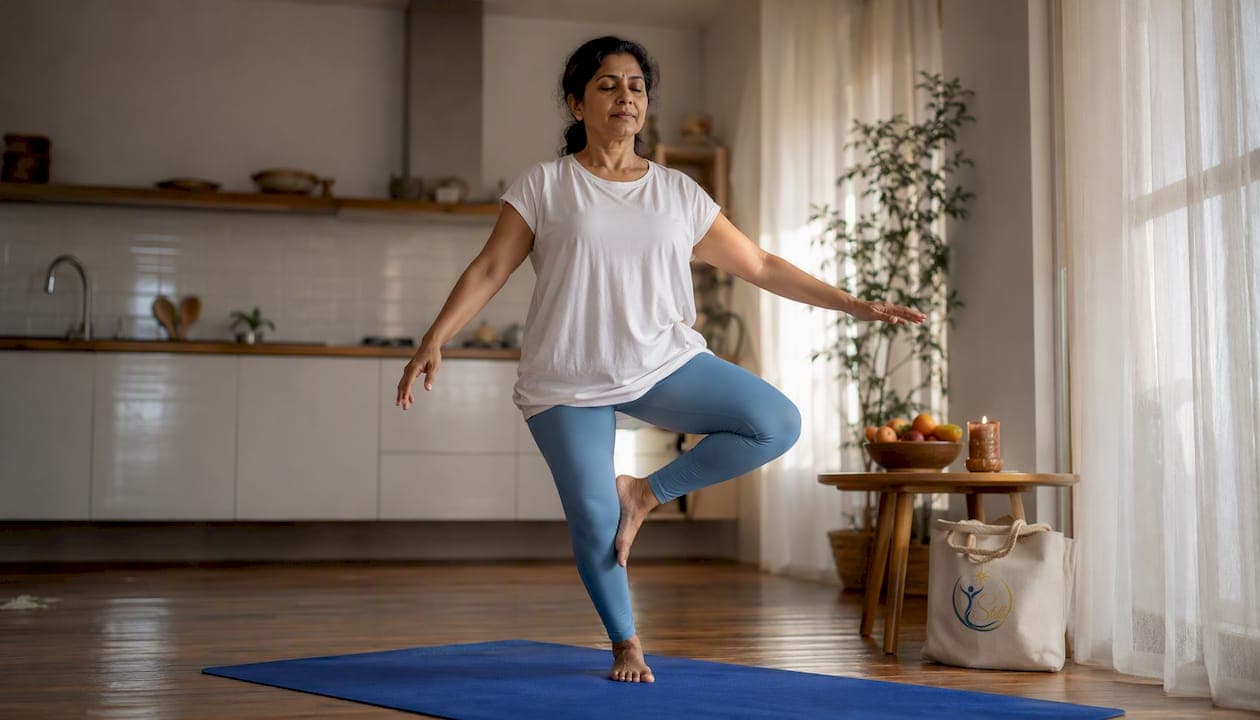
Yes, simple body awareness exercises can genuinely improve your coordination, balance, and physical mindfulness — even in your first week. You don't need a gym, special equipment, or prior experience. A chair, a wall, and five minutes a day are enough to begin.
Your 5-move starter routine (5–10 minutes, daily):
- Mindful breathing + micro body scan (60 seconds): Sit or stand, close your eyes, take three slow breaths, and notice where your body feels tight or at ease. No fixing, just noticing.
- Slow heel-to-toe walk: Walk in a straight line, placing each heel directly in front of the opposite toe. Move slowly enough to feel every shift of weight.
- Single-leg balance, eyes open: Stand near a wall, lift one foot slightly off the floor, and hold. Use the wall if needed.
- Slow squat with attention: Lower yourself into a squat at half your normal speed, noticing where your weight shifts and where tension builds.
- Mindful standing: Stand still, feet hip-width apart, and simply feel the ground beneath you. Notice your breath, your posture, any subtle sway.
After one week of daily practice, many beginners notice some improvement: a bit more steadiness on one leg, better awareness of where tension is in the body, and increased confidence in everyday movements like climbing stairs or reaching overhead.
Table of Contents
- What is body awareness and why does it matter for beginners?
- Beginner body awareness exercises, step by step
- Two ready-made beginner routines and a weekly plan
- Safety guidance and common beginner mistakes
- Why guided sessions help beginners more than solo practice
- How to measure your progress with simple at-home tests
- Key Takeaways
- The thing most beginners get wrong about body awareness
- Gentle Qigong courses built for beginners, from Qigongstar
- Useful sources and further reading
What is body awareness and why does it matter for beginners?
Body awareness is your ability to sense, interpret, and respond to signals from your own body. It sounds simple, but it draws on two distinct systems. Proprioception is your sense of where your limbs are in space and how they're moving — the reason you can touch your nose with your eyes closed. Interoception is your awareness of internal sensations: heartbeat, breath, gut feelings, muscle tension. Together, they form the foundation of how you move, balance, and regulate stress.
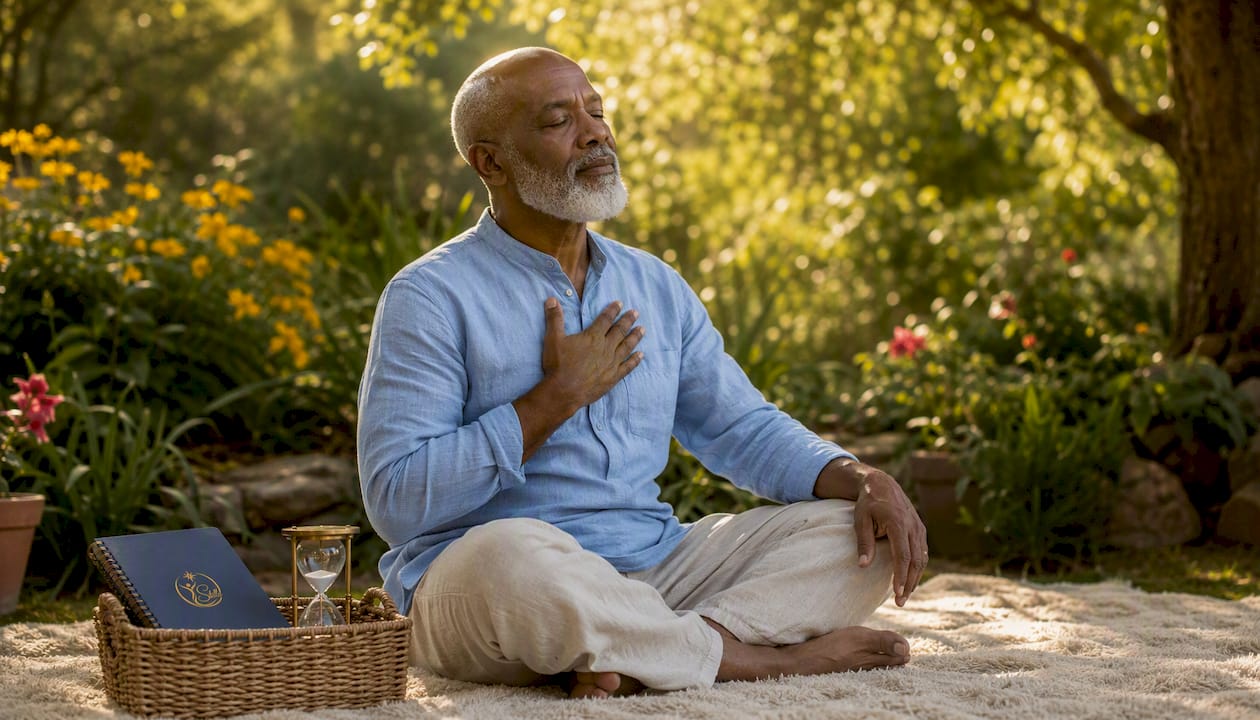
For beginners, developing these senses is less about athletic performance and more about reconnecting with a body you may have been ignoring. Poor body awareness often shows up as chronic tension you didn't notice until it became pain, stumbles on uneven ground, or a vague sense of being "in your head" all day.
The benefits of building this awareness are practical and wide-ranging:
- Better balance and coordination: When your nervous system gets clearer signals from your joints and muscles, movement becomes smoother and falls become less likely.
- Injury resilience: You catch a misstep before it becomes a sprain because your body responds faster to instability.
- Earlier stress detection: Body scans help you notice tension and bodily signals — a tight chest, a clenched jaw, a knotted stomach — before they escalate into full stress responses.
- Improved posture: Awareness of how you're holding yourself is the first step to changing it.
- Emotional regulation: Interoceptive awareness lets you catch the early physical signatures of anxiety or overwhelm and respond with a calming breath before the feeling takes over.
Body scan meditation is one of the most accessible ways to build interoceptive awareness. It's a core practice in Mindfulness-Based Stress Reduction (MBSR) and trains you to notice sensations from head to toe without judgment. Several movement traditions build on this same principle: yoga, tai chi, Pilates, Feldenkrais, and Qigong (including Five Animal Qigong and White Tiger Qigong) all use slow, intentional movement paired with breath to sharpen proprioception and interoception simultaneously.
"The goal of body awareness practice isn't relaxation — it's developing the capacity to notice your inner landscape without judgment. Relaxation may follow, but presence is the real aim." — Jon Kabat-Zinn, founder of MBSR, as described in Simply Psychology
Body scan meditation can also engage the parasympathetic nervous system and help reduce the perception of chronic pain when practiced regularly — a meaningful benefit for anyone carrying long-held physical tension.
Beginner body awareness exercises, step by step
These exercises are grouped by goal. Work through them in order, or pick the category that fits your current need. Each one includes a clear purpose, step-by-step instructions, an easier regression, and a way to progress when you're ready.
Grounding and interoception
1. Mindful breathing with micro body scan
Purpose: Anchor attention in the body and build interoceptive sensitivity.
- Sit comfortably in a chair with your feet flat on the floor.
- Close your eyes and take three slow breaths, inhaling through the nose and exhaling through the mouth.
- Starting at the top of your head, slowly move your attention downward: scalp, forehead, jaw, neck, shoulders, chest, belly, hips, legs, feet.
- At each area, pause for one breath and simply notice — warmth, tightness, tingling, or nothing at all.
- Don't try to change what you find. Neutral observation often allows natural release — attempting to "fix" a sensation usually increases tension.
Regression: Scan only from shoulders to feet if a full scan feels overwhelming. Progression: Extend to a 5-minute scan, pausing three breaths at each area. Time: 1–3 minutes. Daily.
2. Progressive body scan (1–5 minutes)
Full body scans traditionally take 20–40 minutes, but shorter versions build the same skill. A 1-minute version works perfectly for busy mornings.
- Lie on your back or sit upright.
- Set a timer for 1–5 minutes.
- Breathe naturally and move your attention slowly from feet to head, spending a few seconds at each body part.
- When your mind wanders, gently return it. Each notice-and-return is a genuine training rep — not a failure.
Regression: Focus only on your hands and feet. Progression: Add a verbal or written note after each scan: "Where did I notice the most tension today?"
Balance and proprioception
3. Slow heel-to-toe walk
Purpose: Train balance, weight-shifting awareness, and foot-ground contact.
- Find a clear line on the floor (a tile edge or a piece of tape works well).
- Place your right heel directly in front of your left toe, touching or nearly touching.
- Shift your weight forward slowly, feeling each phase of the step.
- Continue for 10–15 steps, then turn and return.
Regression: Walk with arms out to the sides for balance, or use a wall alongside you. Progression: Try it with eyes closed for 3–5 steps (near a wall for safety). Time: 2–3 minutes.
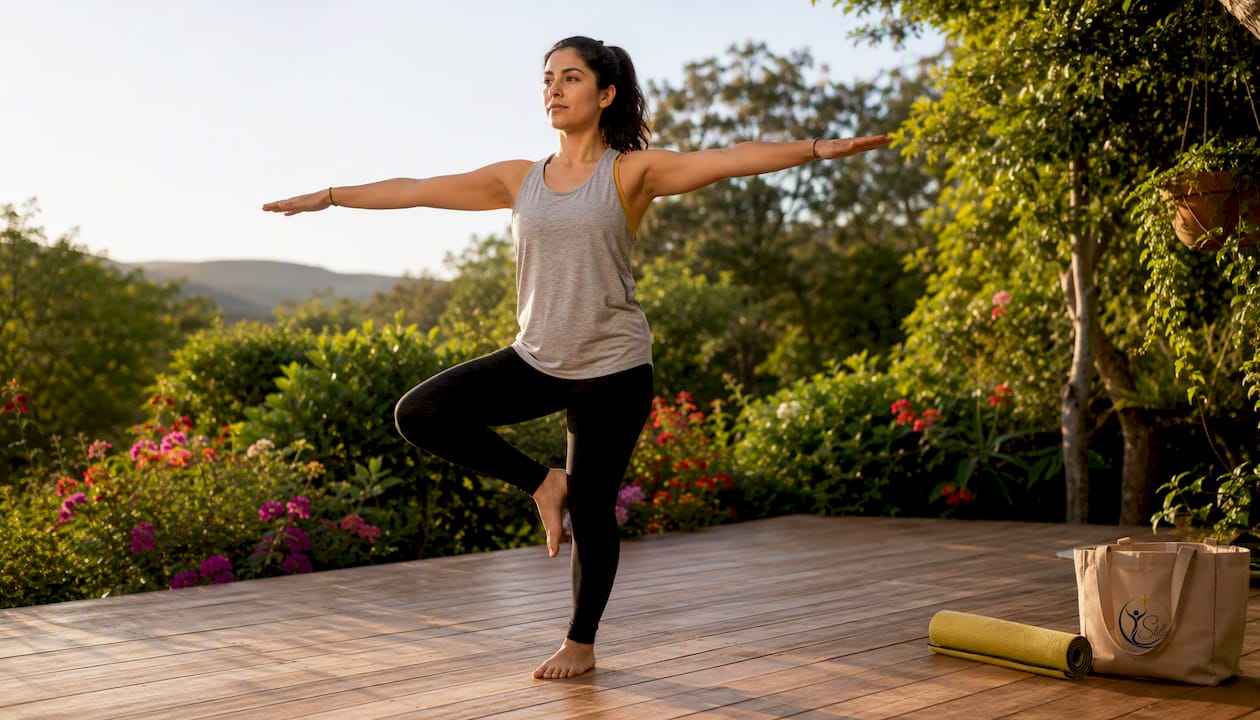
4. Single-leg balance with soft knee
Purpose: Build ankle stability and proprioceptive feedback from the standing leg.
- Stand near a wall or chair back.
- Soften your standing knee slightly — never lock it straight.
- Lift one foot just an inch off the floor.
- Hold for 20–30 seconds, then switch sides.
- Focus on the subtle adjustments your ankle and foot make to keep you steady.
Regression: Keep the lifted toe touching the floor lightly. Progression: Close your eyes for 5–10 seconds, or stand on a folded towel for an unstable surface. Time: 2–3 minutes total.
5. Three-way ankle taps
Purpose: Challenge balance in multiple directions and strengthen the stabilizing muscles around the ankle.
- Stand on your left foot, soft knee.
- Reach your right foot forward and tap the floor lightly, then return.
- Tap to the side, then return. Tap diagonally behind, then return.
- Complete 5 taps in each direction, then switch legs.
Regression: Hold a wall with one hand throughout. Progression: Slow each tap to a 3-second reach, pausing at the farthest point.
Mindful mobility and movement
6. Slow sit-to-stand
Purpose: Build awareness of weight distribution and leg engagement during a movement you do dozens of times daily.
- Sit at the edge of a chair, feet hip-width apart.
- Lean slightly forward from the hips (not the waist).
- Rise to standing over 4–5 seconds, noticing which leg takes more weight.
- Lower back down at the same slow pace.
- Repeat 5–8 times.
Regression: Use armrests to assist. Progression: Pause halfway up for 2 seconds before completing the movement.
7. Mindful squat with attention
Purpose: Develop awareness of hip, knee, and ankle alignment during a fundamental movement pattern.
- Stand with feet shoulder-width apart, toes turned out slightly.
- Lower into a squat over 4 seconds, tracking your knees over your toes.
- Pause at the bottom for one breath.
- Rise slowly, squeezing your glutes at the top.
Regression: Squat to a chair seat and stand back up. Progression: Add a slow overhead reach at the top of each rep.
8. Slow mindful walking
Purpose: Bring full attention to the mechanics of walking — heel strike, weight transfer, toe-off.
- Walk at half your normal pace.
- Notice the heel making contact first, then the arch, then the ball of the foot, then the toes pushing off.
- Feel how your hips shift side to side with each step.
- Walk for 2–3 minutes without looking at your phone.
Qigong-style breath-linked movement
9. Simple Qigong flow (Five Animal / White Tiger style, beginner version)
Purpose: Integrate breath, slow movement, and body awareness in a flowing sequence rooted in Chinese medicine traditions.
- Stand with feet shoulder-width apart, knees soft, arms relaxed at your sides.
- Inhale slowly as you raise both arms out to the sides and up overhead, palms facing up.
- Pause at the top for one breath, feeling length through your spine.
- Exhale slowly as you lower your arms back down, palms facing down, as if pressing gently through water.
- Repeat 5–8 times, letting the breath lead the movement rather than the other way around.
- On the final repetition, pause with hands at heart height and take three quiet breaths, noticing the warmth or tingling in your palms.
Regression: Perform seated, raising arms only to shoulder height. Progression: Add a gentle side-bend at the top of each inhale, alternating left and right.
This style of movement, drawn from energetic body awareness through Qigong, teaches you to let breath organize movement — a skill that carries directly into better posture and calmer nervous system responses throughout the day.
Pro Tip: Short guided audio or video cues make a real difference in the early weeks. When a calm voice tells you where to place your attention next, you spend less mental energy managing the practice and more time actually feeling. Even a 5-minute guided track helps beginners sustain focus and reduces the frustration of a wandering mind.
Two ready-made beginner routines and a weekly plan
10-minute routine
- Mindful breathing + micro body scan — (2 minutes): Sit, close your eyes, three slow breaths, then scan from head to feet.
20-minute routine
- Progressive body scan — (5 minutes): Lying down or seated, head to toe, 3 breaths per area.
- Mindful breathing close — (4 minutes): Seated, eyes closed, natural breath, noticing how the body feels different from when you started.
Weekly practice schedule
Starting with 5 minutes daily builds habit faster than sporadic longer sessions. Here's a gentle progression:
- Week 1: 5–10 minutes daily, using the 5-move starter routine or the 10-minute routine.
- Week 2: Introduce the 20-minute routine on 3 days; keep the 10-minute version on the other days.
- Weeks 3–4: Aim for 5–7 days per week, alternating routines based on time and energy.
What to expect:
- Week 1: Small balance improvements, greater awareness of where you hold tension.
- Week 2: Movements feel slightly smoother; the body scan becomes easier to sustain.
- Week 4: Noticeably steadier on one leg, calmer nervous system response to daily stress, more natural posture corrections throughout the day.
Scheduling tip: Pair your practice with an existing habit — right after brushing your teeth in the morning, or just before your first cup of coffee. Micro-routines that attach to existing habits are significantly easier to maintain long-term. For a fuller daily structure, the daily Qigong routine for stress reduction on the Qigongstar blog offers a natural next step when you're ready to extend your practice.
Safety guidance and common beginner mistakes
Common mistakes to avoid
- Rushing through exercises: Speed defeats the purpose. If you're moving fast enough to feel "efficient," slow down by half.
- Trying to fix every sensation immediately: Noticing discomfort and immediately tensing around it makes it worse. Observe first, respond second.
- Skipping regressions: If the full version of an exercise feels unstable, the regression isn't "easier" — it's the correct starting point for your body right now.
- Holding your breath: Many beginners unconsciously hold their breath during balance challenges. Keep breathing, even if it's shallow at first.
- Expecting a quiet mind: A wandering mind during body-scan practice is normal. Each time you notice your attention has drifted and gently return it, that noticing is the actual practice — treat it as a rep, not a mistake.
Safety red flags — stop and rest or seek help
- Sharp joint pain during any exercise: stop immediately. Dull muscle fatigue is normal; sharp or stabbing pain is not.
- Dizziness or lightheadedness: Sit or lie down, breathe slowly, and wait for it to pass before continuing.
- Chest pain or shortness of breath: Stop all activity and seek medical attention.
- Persistent numbness or tingling in hands or feet: note when it occurs and mention it to your doctor.
Modifications for common limitations
- Balance impairment or vertigo: Perform all standing exercises with one hand on a wall or the back of a sturdy chair. Never practice single-leg balance without support until your provider clears you.
- Knee or hip pain: Use the chair regression for squats and sit-to-stands, and reduce the range of motion to a pain-free zone.
- Chronic pain conditions: Body scan practice can support nervous system regulation and reduce perceived pain when practiced gently and consistently, but always work within your comfort range.
When to see a professional: If you experience recurring dizziness, significant joint pain, or notice that your balance is worsening rather than improving after two to three weeks of gentle practice, consult a physical therapist or your primary care physician. A physical therapist can assess your baseline and tailor exercises specifically to your needs.
This article provides general wellness information, not medical advice. Confirm any exercise program with a qualified healthcare professional if you have existing health conditions.
Why guided sessions help beginners more than solo practice
The single most common reason beginners quit body awareness practice in the first two weeks isn't lack of motivation. It's not knowing where to put their attention. A guided session solves this directly.
Guided sessions give beginners a clearer place for attention and reduce frustration during early practice. When a calm voice tells you to "soften your jaw" or "notice the weight of your feet on the floor," you don't have to generate that instruction yourself. That frees your nervous system to actually feel, rather than manage.
Practical formats for beginners:
- Short guided audio tracks (5–10 minutes): The most accessible starting point. Play one before your morning routine or during a lunch break.
- On-demand video with voice cues: Lets you follow movement and breath cues simultaneously — especially useful for Qigong-style flows where timing matters.
- Live virtual classes: Provide real-time feedback and the motivating presence of a teacher and group.
- Scripted self-guided sessions: Once you've internalized a few cues, you can guide yourself through a familiar sequence — but this works best after two to four weeks of guided practice.
The research is consistent: a brief, progressive plan starting with 5 minutes daily builds habit faster than sporadic long sessions. Guided formats make those 5 minutes more effective because they reduce the cognitive load of self-directing attention. Qigongstar's live and on-demand course formats are built around exactly this principle — short, structured, breath-led sessions with clear verbal cues that give your attention a home from the very first minute.
How to measure your progress with simple at-home tests
Tracking doesn't need to be complicated. These four tests take less than five minutes combined and give you a clear, repeatable picture of how your balance and awareness are developing.
| Test | How to do it | Baseline target | 4-week goal |
|---|---|---|---|
| Single-leg balance | Stand on one foot, soft knee, eyes open. Time how long before you wobble or touch down. | 10–20 seconds | Add 5–10 seconds per side |
| Heel-to-toe walk | Walk heel-to-toe along a line. Count steps before losing the line. | 5–8 steps | 10–15 steps without wobble |
| Timed sit-to-stand | From a chair, stand and sit as many times as possible in 30 seconds. | 5–8 reps | 5–8 reps |
| Mindful breathing check-in | After a 2-minute body scan, rate your sense of body awareness on a scale of 1–5 (1 = very disconnected, 5 = very present). | 1–2 | 3–4 |
What to record each session:
- Date and which routine you completed
- Time spent
- Single-leg balance time (both sides)
- Perceived stability and awareness score (1–5)
- Any notes on pain, dizziness, or areas of tension
Keep it simple. A notes app or a small notebook works fine. The goal isn't precision — it's noticing a direction of change over two to four weeks.
Realistic expectations: Balance improvements tend to be modest but meaningful in the first month. A gain of 5–10 seconds on the single-leg balance test over four weeks is a genuine sign that your proprioceptive system is adapting. The mindful breathing score often improves faster — many beginners move from a 1 or 2 to a 3 within the first week simply because they've started paying attention.
Key Takeaways
Consistent daily practice of even 5 minutes builds body awareness faster than occasional long sessions, and guided formats make those minutes more effective for beginners.
| Point | Details |
|---|---|
| Start small and daily | Five minutes of body-awareness practice every day outperforms a 30-minute session once a week for building habit and noticing change. |
| Track one simple test | Use the single-leg balance test as your baseline; aim to add 5–10 seconds per side over four weeks. |
| Use guided formats first | Audio or video guidance reduces beginner frustration by giving attention a clear place to land for the first two weeks. |
| Neutral observation works | Noticing a sensation without trying to fix it often allows natural release — forcing correction usually increases tension. |
| Qigongstar for structured practice | Qigongstar's Five Animal Qigong and White Tiger Qigong courses offer short, breath-led guided sessions designed specifically for beginners. |
The thing most beginners get wrong about body awareness
Most people approach body awareness practice the way they approach a to-do list: get in, check the boxes, get out. They rush the body scan, muscle through the balance drills, and then wonder why nothing feels different after two weeks.
The shift that actually changes things is slower than most people expect and quieter than they imagine. It's not about achieving a perfectly still mind or holding a single-leg balance for a minute. It's about noticing — really noticing — the small signals your body sends constantly and has been sending for years. The tight spot under your left shoulder blade. The way your weight drifts to your right foot when you're stressed. The breath that shortens before you even realize you're anxious.
What I find most meaningful in teaching beginners is the moment they stop trying to perform the exercise and start actually feeling it. That shift usually happens somewhere in the second week, often during something as unglamorous as a slow sit-to-stand. Suddenly the movement isn't a drill — it's information. And once you start receiving that information, you can't un-receive it. Your body becomes a resource rather than a background hum.
Simple body awareness exercises aren't a stepping stone to something more advanced. For many people, they are the practice. The coordination, the balance, the calmer nervous system — those are the natural results of showing up, slowing down, and listening.
Gentle Qigong courses built for beginners, from Qigongstar
If the routines in this article resonate with you, Qigongstar's beginner-friendly Qigong courses take that foundation and give it a clear, progressive structure. The 5 Animal Qigong course and White Tiger Qigong program are both designed around the same principles covered here: short, breath-led sessions, gentle movement rooted in Chinese medicine, and a calm guided voice that tells you exactly where to place your attention.
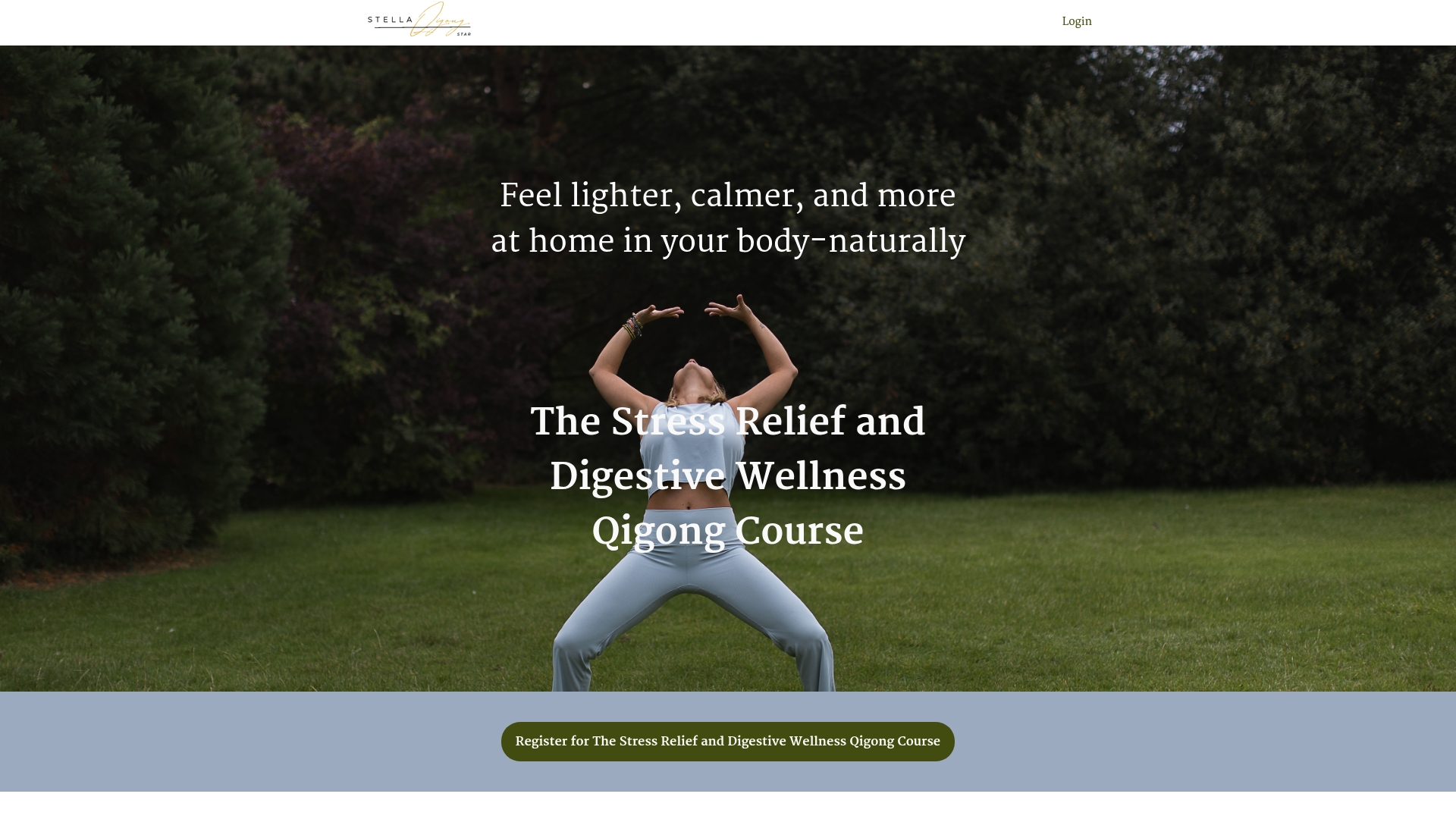
Both courses are available on-demand, so you practice at your own pace, on your own schedule. Live virtual classes are also available for those who want real-time guidance and the warmth of a group. Whether you have 10 minutes in the morning or 20 minutes before bed, there's a format that fits. Browse the full range of online Qigong classes and courses and find the session that feels right for where you are today.
Useful sources and further reading
The claims in this article draw on peer-reviewed research and practitioner resources. Here are the key sources, with a brief note on what each one offers:
-
Penn Psychiatry — Progressive Body Awareness: A clinical guide to somatic and body-scan practices, including the principle of neutral observation over forced correction. Useful for understanding why "noticing without fixing" is the core skill.
-
Mindful — Beginner's Body Scan Meditation: A practitioner-friendly, step-by-step guide to body scan meditation as an MBSR tool. Clear instructions for beginners starting interoceptive practice.
-
ACE Fitness — Body Awareness for Beginners: Covers the connection between body awareness, emotional regulation, and physical performance. Particularly useful for understanding how early tension detection supports stress management.
-
Cleveland Clinic — Body Scan Meditation: A clinical perspective on how body scan practice engages the parasympathetic nervous system and supports chronic pain management.
-
Simply Psychology — Mindfulness for Absolute Beginners: Covers habit formation, the "notice-and-return" rep model, and the case for starting with 5 minutes daily. Includes Jon Kabat-Zinn's framing of body awareness as developing interoception.
-
Simply Psychology — Body Scan Meditation Guide: Explains how full body scans can be adapted into shorter micro-routines for daily practice and habit pairing.
-
Mayo Clinic — Mindfulness Exercises: A trusted clinical overview of mindfulness as a practical, accessible tool for stress reduction and overall health.
"You don't need special equipment or training to begin. Start with simple mindfulness exercises and find out what works for your body." — Mayo Clinic
Further reading on the Qigongstar blog:
- How to start a mind-body practice: beginner's guide
- Daily stress reduction practices that actually work
- Breathwork styles for health: a Qigong guide
- 8 examples of somatic stress release that actually work