
A home wellness practice starter guide is the structured foundation that turns scattered good intentions into daily habits that actually stick. Healthy aging ranks as a top priority for 60% of individuals, and a consistent home routine reduces anxiety by 40% while helping people fall asleep 30 minutes faster. Those numbers matter because they prove that small, repeatable actions at home produce real, measurable change. You do not need a gym membership, expensive equipment, or hours of free time. You need a clear starting point and a plan that grows with you. This guide gives you both.
1. What is a home wellness practice starter guide?
A home wellness practice, known in integrative health circles as a self-care protocol, is a personal system of daily habits designed to support your physical, mental, and energetic health. The term "starter guide" signals that the goal is entry, not perfection. You are building a foundation, not completing a marathon. A sustainable wellness practice is one you can maintain on your worst days, not just your best ones.
The core of any beginner protocol rests on three pillars: movement, breath, and rest. Each pillar reinforces the others. When you sleep well, you move more willingly. When you breathe with intention, stress softens and sleep deepens. Starting with this triangle gives you the most return for the least effort.
2. What are the essential practices to start a home wellness routine?
Beginner routines work best at 5–15 minutes daily, adding one small new habit every 1–2 weeks. That pace feels slow, but it is the pace that lasts. Rushing the process is the single most common reason beginners quit within the first month.
Start with these foundational wellness activities at home:
- Morning breath work: Three to five minutes of slow, diaphragmatic breathing upon waking calms your nervous system before the day's demands arrive.
- Gentle movement: Basic stretching, beginner yoga, or a short qigong sequence wakes up your joints and circulates energy without straining your body.
- Mindful journaling: Five minutes of free writing clears mental clutter and helps you track mood patterns over time.
- Screen-free mornings: The average person spends one full day per week online, and 62% feel dissatisfied with that amount. Protecting the first 30 minutes of your morning from screens protects your mental clarity.
- Consistent sleep schedule: Going to bed and waking at the same time each day is the single highest-leverage habit for mood, immunity, and cognitive function.
- Hydration anchor: Drinking a full glass of water before coffee or food is a zero-cost habit that supports digestion and energy from the first minute of your day.
Pro Tip: Stack your breath work directly onto an existing habit, like making coffee. The moment the kettle goes on, sit down and breathe. You borrow the existing cue and skip the willpower requirement entirely.
3. How can you create a supportive home environment for your wellness routine?
Staging your home environment through decluttering and tech-free zones significantly lowers stress and supports routine adherence. Your environment is not a passive backdrop. It is an active participant in your wellness. A cluttered, screen-saturated space works against every habit you are trying to build.
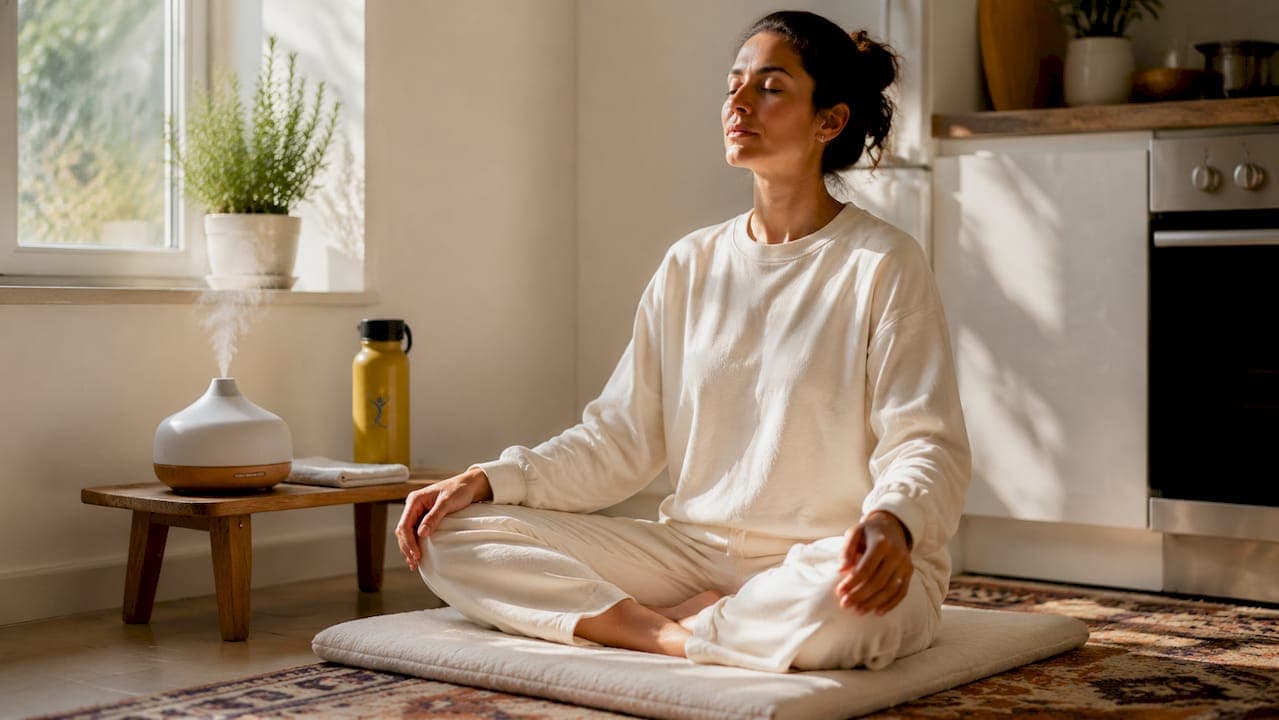
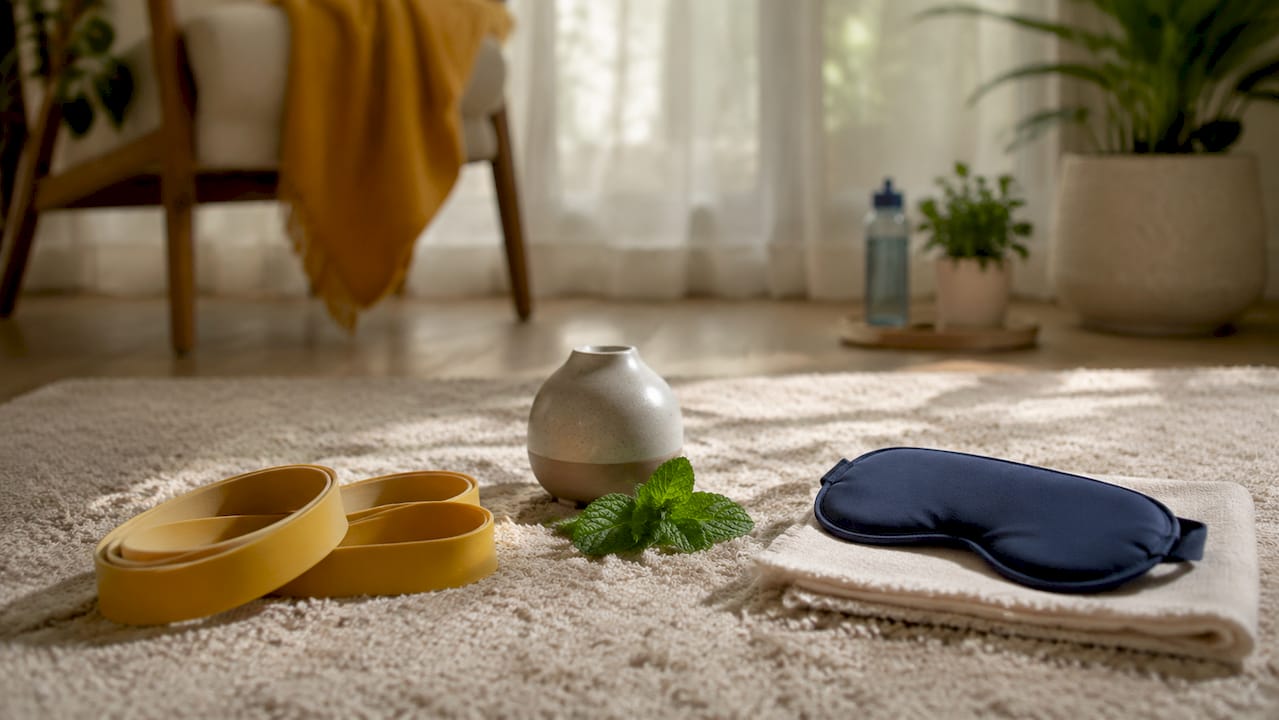
Start by choosing one corner of a room as your dedicated wellness space. It does not need to be large. A yoga mat, a cushion, and a small plant are enough to signal to your brain that this space means calm. That signal becomes a powerful cue over time. Natural light matters here too. Morning sunlight exposure helps regulate your circadian rhythm, which in turn supports both sleep quality and mood.
Introduce calming scents through a diffuser with lavender or eucalyptus oil. These are not luxuries. They are sensory anchors that help your nervous system shift gears. Pair them with a consistent time of day and your body begins to associate the scent with relaxation before you even sit down. For daily stress reduction practices that go deeper, small environmental changes like these are often the most underrated starting point.
Pro Tip: Designate one room or corner as a tech-free zone. Remove chargers, silence notifications, and let that space exist purely for rest or practice. The boundary itself reduces cognitive load.
4. How to build and expand your routine over time without burnout
Wellness routines fail when treated as rigid makeovers. They succeed when treated as living systems that flex with your energy, hormones, and life circumstances. The goal is not to build a perfect schedule. The goal is to build a practice that survives imperfect weeks.
The concept of a minimum viable practice (MVP) is your most important tool here. Your MVP is the smallest version of your habit that still maintains the neural pathway. On a hard day, five minutes of breathing or one gentle stretch counts. It keeps the habit alive without demanding more than you have. This prevents the all-or-nothing thinking that derails most beginners.
Habit stacking anchors new wellness habits onto existing daily actions, reducing the willpower needed to start. Link your new habit to something you already do without thinking, like brushing your teeth, making breakfast, or sitting down at your desk. The existing action becomes the trigger. The new habit rides in behind it.
Here is a simple framework for building your routine over eight weeks:
| Week | Practice added | Duration | Intensity |
|---|---|---|---|
| 1–2 | Morning breath work | 5 minutes | Very gentle |
| 3–4 | Gentle stretching or qigong | 10 minutes | Low |
| 5–6 | Journaling or meditation | 5–10 minutes | Reflective |
| 7–8 | Screen-free morning block | 30 minutes | Behavioral |
Starting with one anchor habit and gradually adding others avoids burnout and increases your long-term success. Treat each new addition as an experiment, not a commitment carved in stone. If something does not fit your life, swap it. A mind-body routine that lasts is one you designed around your actual life, not someone else's ideal schedule.
5. What are common beginner misconceptions and how to avoid them?
Beginners consistently overestimate what they need and underestimate what they already have. The wellness industry profits from the idea that you need more gear, more apps, and more time. The evidence points in the opposite direction.
Common myths and the reality behind them:
- Myth: You need expensive equipment. Reality: Effective stress regulation comes from environmental adjustments, not purchased gear. Decluttering and tech-free rules cost nothing and deliver real results.
- Myth: You need at least an hour a day. Reality: The most effective beginner practices are simple and short, built around 7–8 hours of sleep, short walks, and brief daily habits.
- Myth: Missing a day means starting over. Reality: Your MVP keeps the habit alive. One missed day does not erase your progress.
- Myth: Wellness requires a complete lifestyle overhaul. Reality: One anchor habit, practiced consistently, creates more lasting change than a total reset that collapses under pressure.
- Myth: You will feel motivated every day. Reality: Motivation is unreliable. Environment and routine structure carry you when motivation disappears.
Pro Tip: Before buying anything, audit your space. Remove three items that create visual noise in your wellness corner. That single act of subtraction often does more for your calm than any purchase.
Key takeaways
A home wellness practice built on small, consistent habits outperforms any intensive routine that ignores your real daily capacity.
| Point | Details |
|---|---|
| Start with 5–15 minutes daily | Short daily sessions build the habit foundation without overwhelming beginners. |
| Use your MVP on hard days | Five minutes of breathing or one stretch keeps your habit alive when life gets difficult. |
| Design your environment first | Decluttering and tech-free zones reduce stress before any habit begins. |
| Stack new habits onto existing ones | Linking new practices to daily anchors removes the need for extra willpower. |
| Treat your routine as flexible | Adjusting your practice for stress and life changes prevents burnout and quitting. |
What I have learned from building a home practice from scratch
The most honest thing I can tell you is this: the version of a wellness routine that actually changed my life looked nothing like the one I planned. I started with grand intentions, a full schedule, and a list of practices I had read about. Within two weeks, I had abandoned most of it.
What stayed was the smallest stuff. Five minutes of breathing before I got out of bed. A glass of water before anything else. One stretch that felt good on my lower back. Those three things, done consistently, shifted my energy more than any ambitious plan I had tried before.
The obstacle I see most often in people starting out is the belief that if they cannot do it perfectly, they should not do it at all. That belief is the real enemy of progress. A two-minute qigong sequence on a chaotic morning is not a failure. It is a victory. It tells your nervous system that you still showed up, even when life pushed back.
I also learned that your environment does the heavy lifting when your willpower runs low. The days I struggled most were the days my space was cluttered, my phone was nearby, and there was no clear signal that this time was for me. Once I created a small, consistent space for practice, the habit followed almost automatically. Your surroundings shape your behavior more than your intentions do.
Treat your routine as something alive. Let it shift with your seasons, your stress, and your energy. The practice that serves you in january may need to soften in a difficult month and strengthen again when you have more capacity. That flexibility is not weakness. It is wisdom.
— Stella
Deepen your practice with guided qigong classes
Building a home wellness routine is a powerful first step. Guided instruction takes it further by giving you structure, feedback, and a practice rooted in centuries of Chinese Medicine wisdom.

Qigongstar offers online qigong courses and classes designed specifically for beginners seeking gentle, effective movement for stress relief and digestive wellness. Whether you are drawn to the flowing sequences of Five Animal Qigong or want to explore breath-centered movement for calming your nervous system, there is a course built for where you are right now. All classes are available on demand, so you practice on your schedule, in your space, at your pace.
FAQ
How long should a beginner wellness routine be?
Beginner routines work best at 5–15 minutes daily, with one new habit added every 1–2 weeks. Short sessions build consistency faster than long ones that are hard to sustain.
Do I need equipment to start a home wellness practice?
No equipment is required. Simple environmental adjustments like decluttering and tech-free zones reduce stress effectively and cost nothing.
What is a minimum viable practice?
A minimum viable practice is the smallest version of your habit that keeps the neural pathway active. Five minutes of breathing or one stretch on a difficult day counts as a full win.
How do I stay consistent when motivation drops?
Habit stacking links new wellness habits to existing daily actions, removing the need for motivation to trigger the behavior. Your existing routine becomes the cue.
What wellness activities work best at home for beginners?
The most effective home wellness activities for beginners are breath work, gentle movement like stretching or qigong, journaling, and a consistent sleep schedule. These practices require no equipment and deliver measurable benefits quickly.