
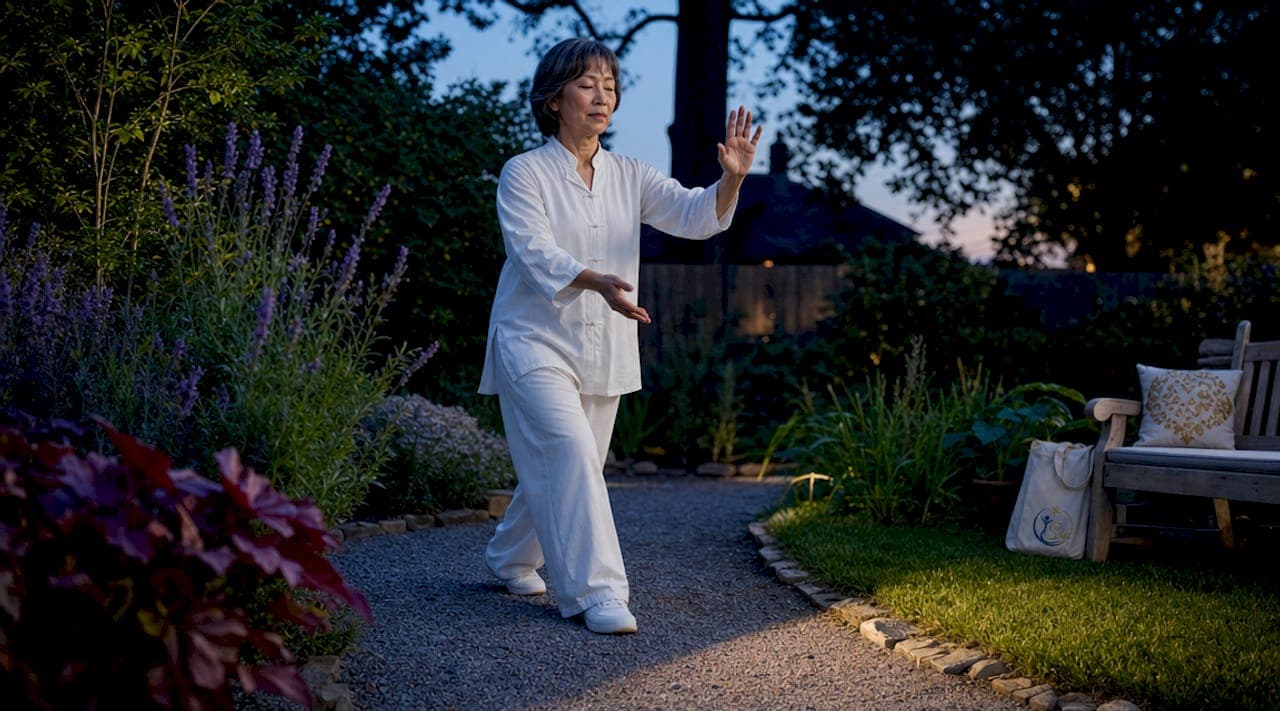
Walking qigong is a mindful movement practice rooted in Traditional Chinese Medicine that combines deliberate weight transfer, coordinated breathing, and focused awareness to calm the nervous system, improve balance, and release deep-held tension. Unlike regular walking, which relies on momentum and habit, walking qigong asks you to slow down completely and feel every shift of weight through your body. The result is a moving meditation that soothes stress as effectively as seated practice. Research on related forms like Tai Chi confirms that slow, mindful movement activates the parasympathetic nervous system, interrupting the cycle of rumination that keeps stress alive. For anyone seeking a gentle, accessible way to reconnect with their body, this practice is a powerful place to start.
What is walking qigong and why does it work?
Walking qigong is the practice of walking with complete mindful control, coordinating each step with breath and body awareness rather than moving on autopilot. The formal term used in Chinese Medicine traditions is xing gong, meaning "walking cultivation," though the phrase walking qigong has become the widely recognized description in Western wellness communities. The distinction from ordinary walking matters because the therapeutic benefits come specifically from the controlled, intentional quality of movement, not from the act of walking itself.
The calming effect depends on the interplay of three elements working together: slow movement, breath control, and mindful focus. Slow deliberate movement paired with coordinated breathing shifts the nervous system toward "rest and digest," reducing cortisol and quieting mental noise. This is why walking qigong routines feel so different from a brisk walk in the park, even when covering the same distance.
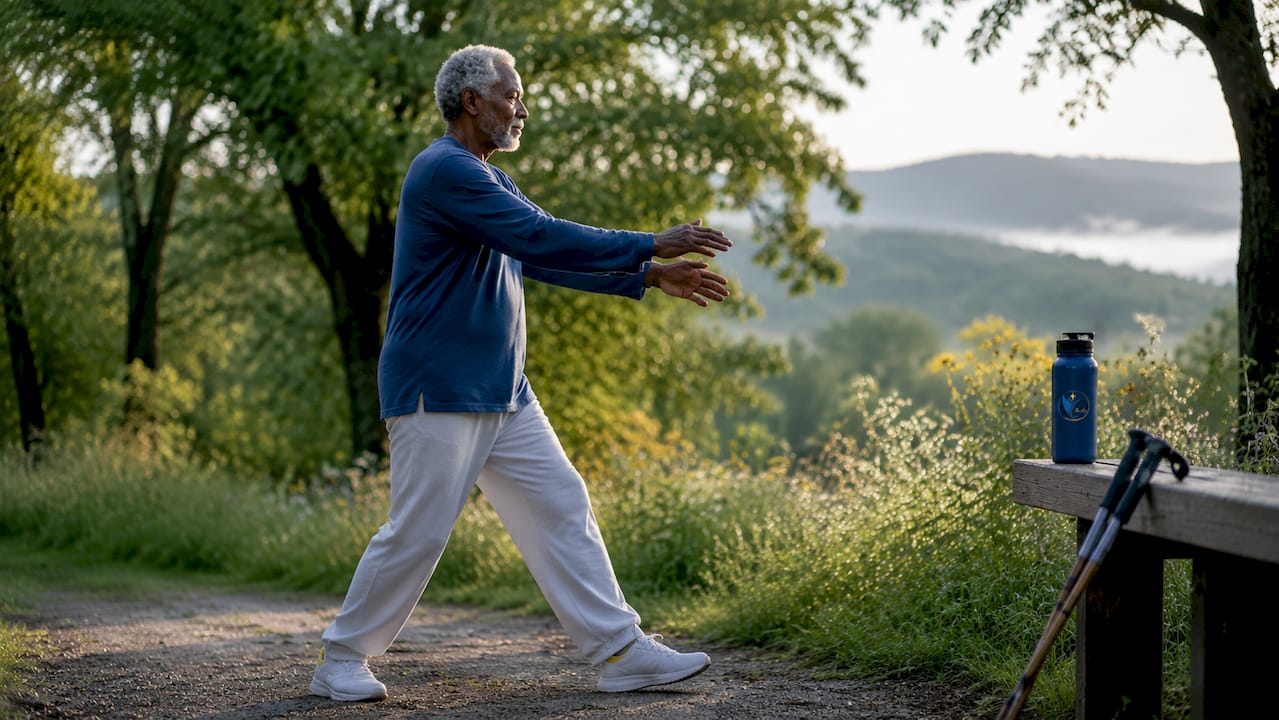
Balance improvement is another well-documented benefit. A 2026 biomechanical study found that long-term Tai Chi practitioners show 32.1% smaller center-of-pressure excursion and 36.2% faster time-to-stabilization compared to non-practitioners. This means your body learns to self-correct more quickly and with less effort, which translates directly into fall prevention and everyday steadiness.
What you need to get started
Preparing well removes the friction that stops most beginners from building a consistent practice. You do not need equipment, a gym, or prior experience. What you do need is the right environment and a clear intention before your first step.
Environment and setup:
- Choose a flat, quiet surface. A garden path, a calm park trail, or even a long hallway indoors all work well.
- Wear comfortable, flat-soled shoes that allow you to feel the ground beneath your feet. Thick-soled running shoes reduce the sensory feedback that makes mindful weight transfer possible.
- Wear loose, non-restrictive clothing. Anything that lets your hips and knees move freely without pulling or binding is ideal.
- Remove distractions. Leave headphones out for your first few sessions so you can direct full attention inward.
- Practice in natural light when possible. Outdoor settings with gentle visual stimuli support the calming effect of qigong for relaxation.
Setting your intention:
Before you begin, take thirty seconds to stand still and decide what you are practicing for. Stress relief, better balance, and mindful body awareness are all valid intentions, and naming one helps your nervous system orient toward the practice rather than your to-do list.
Safety basics for beginners:
- Start with sessions of five to ten minutes. Controlled single-leg balance is more tiring than it looks.
- Practice near a wall or fence for the first week so you have something to steady yourself if needed.
- Stop and rest if you feel dizziness, sharp joint discomfort, or significant fatigue.
Pro Tip: Set a gentle timer rather than watching a clock. Checking the time pulls your attention out of the body and back into the mind, which is exactly what this practice is designed to undo.
How to practice walking qigong step by step
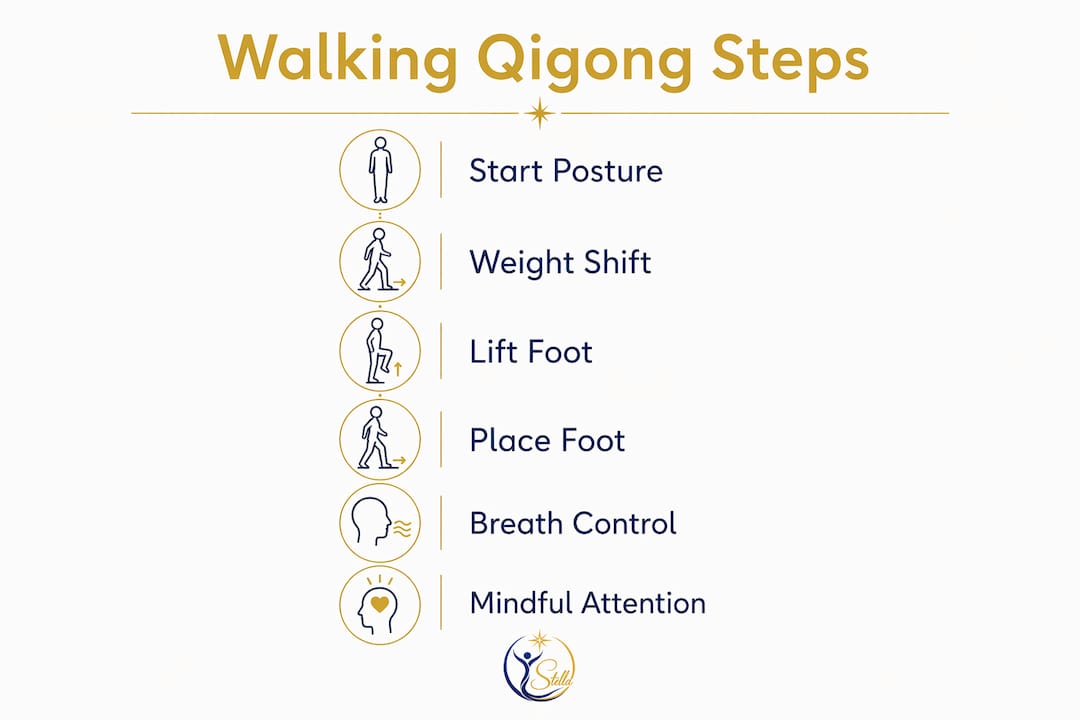
The core sequence in walking qigong follows a simple cycle: full weight shift, single-leg stability, then the next step. Beginners should prioritize this cycle above all else, because rushing through it is the single most common reason people miss the benefits entirely.
Step 1: Establish your starting posture
Stand with your feet shoulder-width apart, knees softly bent, and spine gently lengthened upward as if a thread were lifting the crown of your head. Relax your shoulders away from your ears. Let your arms hang loosely at your sides. Take three slow, deep abdominal breaths here before moving.
Step 2: Shift your full weight onto one leg
Begin by transferring your entire body weight onto your right leg. Move slowly and deliberately. Feel the sole of your right foot press into the ground. Your left foot should become completely "empty," meaning it carries no weight at all. This single-leg stability phase is where neuromuscular adaptations that improve balance actually occur, specifically through ankle proprioception and dynamic joint stiffness regulation.
Step 3: Lift and place the empty foot
Only once your right leg is fully stable, lift your left foot and place it forward with a heel-first landing. Keep the movement slow and controlled. Avoid letting the foot drop or slap the ground. The placement should feel like you are setting something fragile down gently.
Step 4: Transfer weight forward with breath
As you shift your weight forward onto the left foot, exhale slowly and completely. The exhale should last the full duration of the weight transfer. This breath coordination is what separates walking qigong from Tai Chi walking as a purely physical exercise. Inhale as you stabilize on the left leg and prepare for the next step.
Step 5: Maintain mindful attention throughout
Keep your gaze soft, directed about ten feet ahead and slightly downward. Notice the sensations in your feet, ankles, and hips without judging them. If your mind wanders, gently return attention to the physical sensation of weight shifting. This mindful attention is not a bonus feature. It is the mechanism through which the practice reduces stress.
| Phase | Action | Breath |
|---|---|---|
| Weight shift | Transfer fully onto standing leg | Begin exhale |
| Single-leg stability | Hold until fully balanced | Complete exhale |
| Foot lift | Raise empty foot slowly | Natural pause |
| Step forward | Place heel gently on ground | Begin inhale |
| Weight transfer | Shift weight to new front foot | Complete inhale |
Pro Tip: Count to three silently during each weight shift. This simple count prevents rushing and keeps your nervous system in the slow, calm rhythm that makes the practice work.
Common mistakes and how to avoid them
Most beginners encounter the same handful of challenges. Recognizing them early saves weeks of frustration and keeps your practice safe.
- Rushing the weight shift. The most common error is moving the foot before the standing leg is fully stable. This recreates normal walking momentum and removes the balance training entirely. Pause on one leg until you feel genuinely settled before stepping.
- Leaning forward from the waist. Leaning compresses the lower back and shifts your center of gravity forward, making balance harder. Keep your torso upright and let the weight shift happen through the hips and legs, not the spine.
- Forgetting the breath. Breath coordination is not optional. Without it, the practice becomes slow walking rather than qigong. If you notice you have been holding your breath or breathing shallowly, stop, reset your posture, and restart the breath cycle.
- Ignoring discomfort signals. Mild muscle fatigue is normal. Sharp knee pain, dizziness, or a sudden sense of imbalance are signals to stop. If these persist across multiple sessions, consult a healthcare provider before continuing.
- Expecting immediate results. The cumulative benefits of structured qigong programs build over multiple weeks of consistent practice. A single session will leave you calmer. Sixteen sessions will change your balance and stress baseline.
"The practice does not ask you to be perfect. It asks you to be present. Every mindful step, however wobbly, is a step in the right direction."
Variations and complementary exercises to deepen your practice
Once the basic sequence feels natural, several variations and related qigong walking exercises can enrich your routine and address specific wellness goals.
| Practice | Focus | Best for |
|---|---|---|
| Tai Chi walking | Single-leg stability and posture alignment | Balance and fall prevention |
| Eight Energy Circle walking | Circular pathways with arm movements | Energy circulation and coordination |
| Breathwalk | Rhythmic breath patterns synchronized to steps | Stress relief and mental clarity |
| Transition training | Starting, stopping, and turning mindfully | Neuromuscular fall prevention |
Tai Chi walking, as taught by the Tai Chi for Health Institute, is the closest relative to walking qigong and shares the same foundational weight shift technique. Practicing both in the same session deepens the neuromuscular learning because each form reinforces the same balance principles from slightly different angles.
Transition training deserves special attention. Focused practice on starting, stopping, and turning improves the neuromuscular responses that matter most in daily life, because falls most often happen during direction changes, not during steady walking. The Tai Chi for Arthritis and Fall Prevention program, which uses a 16-session structured format, incorporates transition training specifically for this reason.
Sleep quality is another benefit worth noting. A 2025 systematic review of 15 randomized controlled trials found that qigong improves sleep quality significantly in older adults, particularly with consistent practice of styles like Baduanjin. The effect is modest but reliable, and it builds over time rather than appearing after a single session. A 2026 feasibility study also highlighted the promising role of walking qigong for fatigue and sleep disturbance, suggesting that combining walking with qigong principles amplifies the benefits of either practice alone.
Key takeaways
Walking qigong works because it combines full weight transfer, coordinated breathing, and mindful attention into a single practice that trains balance, calms the nervous system, and builds wellness over time.
| Point | Details |
|---|---|
| Core mechanism | Slow movement, breath control, and mindful focus together activate parasympathetic regulation. |
| Balance training | Full weight transfer onto one leg before stepping is where neuromuscular adaptation occurs. |
| Common mistake | Rushing the weight shift removes the balance benefit and recreates ordinary walking. |
| Sleep and fatigue | Consistent qigong practice improves sleep quality and reduces fatigue over multiple weeks. |
| Progression | Structured multi-week programs build cumulative strength, flexibility, and balance improvements. |
Why patience is the most underrated part of this practice
I have been teaching and practicing qigong for years, and the pattern I see most often is this: people try walking qigong once, feel a little calmer, and then abandon it because they expected something more dramatic. What they miss is that this practice is cumulative. The first session opens a door. The tenth session changes how you carry yourself. The thirtieth session changes how you respond to stress.
What surprises most of my students is how much mental work is involved. The physical steps are simple. Staying genuinely present for each one is the real practice. I have worked with people managing chronic stress, digestive issues, and anxiety, and the ones who progress fastest are not the most physically coordinated. They are the ones who stop trying to do it perfectly and simply pay attention.
Walking qigong also complements other wellness routines beautifully. If you already practice seated meditation, yoga, or breathwork, you will find that this form of mindful walking carries those same qualities into movement. It closes the gap between stillness and daily life, which is where most of us actually need the calm.
My honest encouragement: give it four weeks before you judge it. Practice five minutes a day. Be gentle with your wobbles. The steadiness you build on the outside reflects something real happening on the inside.
— Stella
Explore guided qigong classes with Qigongstar
If you are ready to go deeper, Qigongstar offers structured online qigong classes designed specifically for stress relief, digestive wellness, and mindful movement. Stella's courses are beginner-friendly, on-demand, and rooted in the same Chinese Medicine principles that make walking qigong so effective. For those who want a full movement system to complement their walking practice, the Five Animal Qigong course brings dynamic, flowing forms that awaken your energy and build on the balance and breath awareness you develop through walking. Every course is accessible online, so you can practice at your own pace, in your own space, and on your own schedule.
FAQ
What is walking qigong?
Walking qigong is a mindful movement practice that combines slow, deliberate weight transfer with coordinated breathing and focused awareness. It is rooted in Traditional Chinese Medicine and is used to reduce stress, improve balance, and cultivate body awareness.
How is walking qigong different from regular walking?
Regular walking relies on momentum and habit. Walking qigong requires full, conscious weight transfer onto one leg before the next step, paired with breath coordination and mindful attention, which activates the parasympathetic nervous system and trains neuromuscular balance.
How long does it take to see benefits?
Calming effects are noticeable after a single session. Balance and sleep improvements build over multiple weeks. Structured programs of 16 or more sessions produce the most reliable gains in strength, flexibility, and fall prevention.
Is walking qigong safe for older adults or beginners?
Yes. Walking qigong is one of the most accessible movement practices available. Beginners should start with short sessions near a wall for support, wear flat-soled shoes, and stop if they experience dizziness or sharp joint pain.
Can walking qigong help with sleep?
A 2025 meta-analysis of 15 randomized controlled trials found that qigong practice significantly improves sleep quality in older adults. The effect is modest and builds with consistent practice over several weeks.