

Starting an online wellness journey sounds simple until you're staring at dozens of course options, each promising transformation. The sheer volume of choices can feel paralyzing, especially when you're new to wellness and unsure what your body actually needs. These online wellness course beginner tips cut through that noise. You'll find clear criteria for evaluating courses, profiles of beginner-friendly course types, a side-by-side comparison, and practical strategies for building a gentle, sustainable practice that you can genuinely stick with.
Table of Contents
- Key takeaways
- 1. Online wellness course beginner tips: how to evaluate your options
- 2. Mindfulness courses for beginners
- 3. Gentle yoga courses for beginners
- 4. Tai chi and qigong for gentle movement
- 5. Hybrid wellness programs for whole-person care
- 6. Comparing beginner online wellness course types
- 7. Practical tips for starting and sustaining your practice
- What I've learned from watching beginners start their wellness path
- Start your gentle wellness practice with Qigongstar
- FAQ
Key takeaways
| Point | Details |
|---|---|
| Match structure to your schedule | Look for courses running 6–8 weeks with 1–3 hours per week so the commitment feels gentle, not overwhelming. |
| Prioritize instructor clarity | Clear verbal cues and modification options matter more than any credential when you're just starting out. |
| Start short and repeat often | Consistent short sessions build body awareness faster and more safely than occasional long workouts. |
| Use a habit-building framework | Pair your course with SMART goals and a simple daily tracker to stay consistent beyond motivation alone. |
| Choose the right movement style | Match your wellness goal, whether stress relief, joint care, or digestive health, to the right course type from the start. |
1. Online wellness course beginner tips: how to evaluate your options
Before you enroll in anything, you need a clear framework for what makes a course genuinely beginner-friendly. Not all wellness courses labeled "beginner" are created equal.
Start with course structure and time commitment. Beginner mindfulness courses typically run 6–8 weeks with around 3 hours per week, self-paced and accessible from home. That's a realistic commitment. Anything requiring more than 5 hours weekly from the start is likely to cause burnout before you build real momentum.
Consider these essential criteria before choosing:
- Self-paced vs. live sessions. Self-paced gives you flexibility; live sessions offer real-time feedback. If accountability is your challenge, look for a course with optional live components.
- Gentle movement and mindfulness focus. The course should spend time on breath awareness, not just physical technique.
- Equipment and space requirements. Minimal equipment needed is a hallmark of beginner-friendly design. A yoga mat and a quiet corner of your home should be enough.
- Modification cues. Every session should offer alternatives for different fitness levels or physical limitations.
- Habit-building support. Look for goal-setting prompts, progress tracking, or short check-ins built into the course experience.
- Community access. Optional peer forums or group chats help you stay motivated without pressure.
Pro Tip: Watch the first free lesson before you commit. If the instructor doesn't mention modifications in the first ten minutes, that's a signal the course may not be designed with your safety in mind.
2. Mindfulness courses for beginners
Mindfulness courses focus on meditation, breathwork, and stress reduction through awareness practices. They require almost no physical movement, which makes them ideal if joint sensitivity or fatigue is a concern.
A typical 6-week mindfulness course runs about 1–2 hours per week with no equipment beyond a quiet space and an optional yoga mat. The best ones mirror structured in-person programs, giving you predictable progression without needing to attend live classes. Think of these as training your attention the way you'd train a muscle. Slowly. With repetition. With patience.
Mindfulness is genuinely a skill built through repeated practice, not a one-time relaxation session. The format suits people dealing with anxiety, sleep issues, or chronic stress. It also pairs beautifully with any movement-based course you add later.
3. Gentle yoga courses for beginners
Beginner yoga courses focus on foundational poses, breath coordination, and body awareness. The key word in any good beginner yoga course is modification. Online beginner yoga works best when teachers emphasize alignment cues, offer pose alternatives, and regularly remind you that resting is allowed.
Consistent short sessions matter more than marathon practice. Three sessions per week of 20–30 minutes each builds habit and body awareness far more effectively than one long session on a Saturday. Learner profiles who benefit most include adults with mild stiffness, those recovering from sedentary lifestyles, and anyone who wants a structured way to feel more at home in their body.
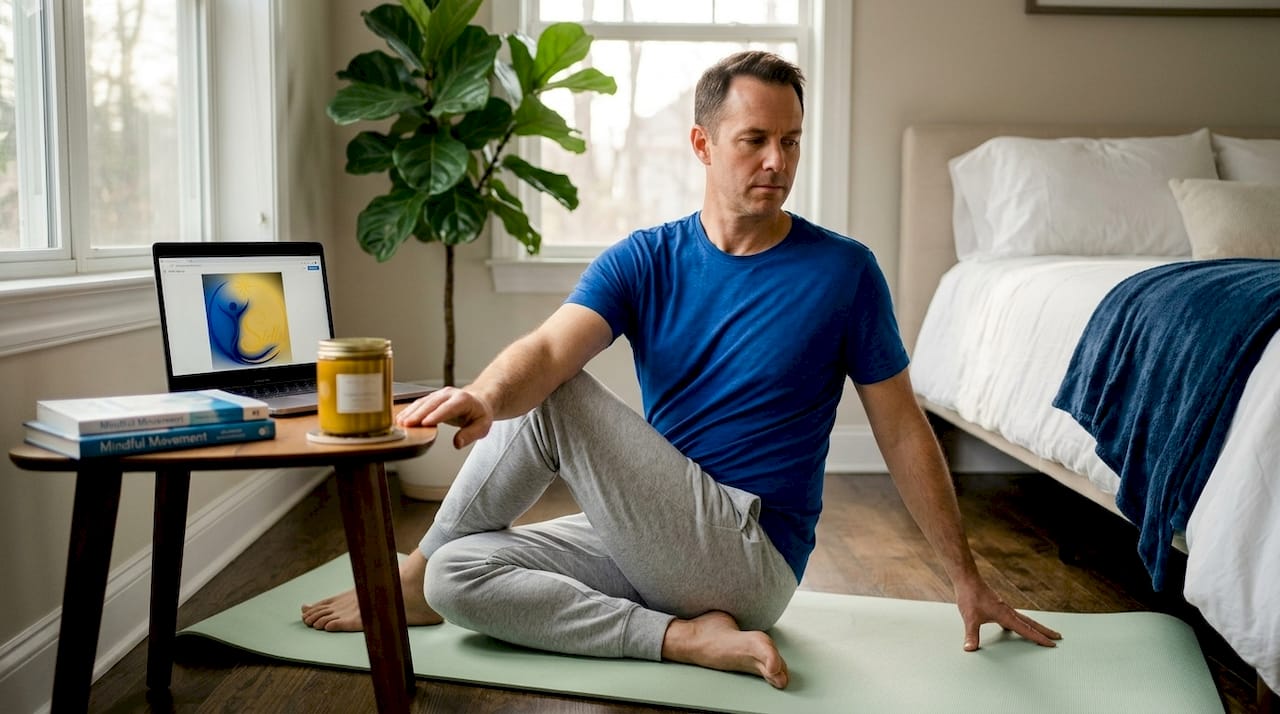
Look for a yoga course with at least 10–15 lessons, clear verbal guidance, and a calm, unhurried pace.
4. Tai chi and qigong for gentle movement
Tai chi and qigong represent some of the most accessible online movement practices for true beginners. A beginner tai chi routine runs about 15 minutes, requires no equipment, and can be done with a chair nearby for support. Every movement is coordinated with breathing, which makes it naturally calming for the nervous system.
What sets these practices apart is their emphasis on internal awareness. You're not just moving your arms and legs. You're learning to feel energy flow through the body and release areas where tension tends to gather. This is why tai chi and qigong are particularly effective for stress and gut health. The gentle, rhythmic movements stimulate the parasympathetic nervous system, which governs digestion and calm.
These practices suit adults with joint concerns, those new to any exercise, and people who want a movement practice with a spiritual or energetic dimension.
5. Hybrid wellness programs for whole-person care
Hybrid wellness programs combine movement, mindfulness, and lifestyle guidance into a single course experience. A 14-day wellness program with daily check-ins and 17 lessons, for example, gives beginners a taste of multiple pillars without demanding expertise in any one area.
The advantage here is integration. You learn how sleep, movement, breath, and nutrition interact rather than treating them as separate categories. These courses often include reflection prompts and daily habit check-ins, which research supports as some of the most effective tools for long-term behavior change.
Hybrid courses work especially well for adults who feel a vague sense of imbalance but haven't yet identified which aspect of wellness needs the most attention.
6. Comparing beginner online wellness course types
Use this table to quickly match your needs with the right course type before you enroll.
| Course type | Duration | Weekly time | Equipment needed | Best for | Modification support |
|---|---|---|---|---|---|
| Mindfulness | 6–8 weeks | 1–3 hrs | None or a mat | Stress, anxiety, sleep | Not applicable |
| Gentle yoga | 8–12 weeks | 2–3 hrs | Mat, optional blocks | Flexibility, body awareness | High |
| Tai chi / Qigong | Ongoing or 6–8 weeks | 1–2 hrs | None (chair optional) | Joint health, energy, stress | High |
| Hybrid wellness | 2–6 weeks | 1–3 hrs | Minimal | Overall well-being, habit-building | Moderate |
No single course type is superior. The best one is the one you'll actually complete.
7. Practical tips for starting and sustaining your practice
Choosing the right course is only half the work. Building a practice that actually sticks requires a few simple strategies.
1. Set realistic goals using the SMART framework. Structured tracking with realistic goals outperforms motivation every time. Write down what you want to feel, not just what you want to achieve. "I want to feel calmer after work" is more motivating than "I want to complete 30 sessions."
2. Anchor your practice to an existing habit. Pair your session with something you already do daily, like your morning coffee or the moment after brushing your teeth at night. This removes the decision-making that derains consistency.
3. Predetermine your safety thresholds. Know when to modify or stop. Stop or modify movement for sharp pain, numbness, or dizziness. Mild discomfort from unfamiliar movement is normal. Pain that feels sharp or radiating is not.
4. Start with shorter sessions and repeat them. Starting slowly with a small foundation and practicing regularly prevents injury and frustration better than accelerating too quickly. Repeat lessons you find challenging instead of pushing forward.
5. Create a calming practice space. Dim the lights slightly, set your mat in the same spot each time, and clear the area of clutter. Your environment signals to your nervous system that something restorative is about to happen.
6. Use community features selectively. Online course forums can inspire you during low-motivation weeks. Dip in when you need a lift, but don't let comparison derail your pace.
7. Practice self-compassion as a daily discipline. Missing a session is not failure. It's data. Notice what got in the way and gently adjust. Consistency over months matters far more than perfection over a week.
Pro Tip: Build your own micro-practice loop: a short calendar block, a basic habit tracker, and one SMART goal per week. This three-part system dramatically improves how well you absorb and apply course content over time.
What I've learned from watching beginners start their wellness path
I've guided many adults through their first steps in mind-body wellness, and the pattern I see most often is this: beginners abandon courses not because the content is bad, but because the expectations were wrong from the start.
People expect to feel transformed after a week. When they don't, they conclude the practice isn't working. What I've found is that the instructors who communicate the timeline honestly, who say "this may take three to four weeks before you notice a shift," are the ones whose students actually stay.
Clear verbal alignment cues and regular encouragement to rest matter more than any certification a teacher holds. I've seen beautifully credentialed instructors create anxious, confused students because they never paused to say, "If that doesn't feel right in your body today, do this instead." That phrase alone changes everything for a beginner.
The other thing I want you to hear is that habit-building requires structure, not willpower. A daily micro-practice loop with a simple tracker and one clear weekly intention will serve you better than any amount of inspiration. Inspiration fades. Systems hold.
Start with gentleness. Stay with consistency. Trust the process even when it feels slow. That patience is the practice.
— Stella
Start your gentle wellness practice with Qigongstar
If you're ready to move from reading to practicing, Qigongstar offers beginner-friendly online courses built specifically around gentle movement, breath awareness, and whole-body wellness. Stella's teaching is rooted in Traditional Chinese Medicine and designed for adults who want real results without intensity or overwhelm.
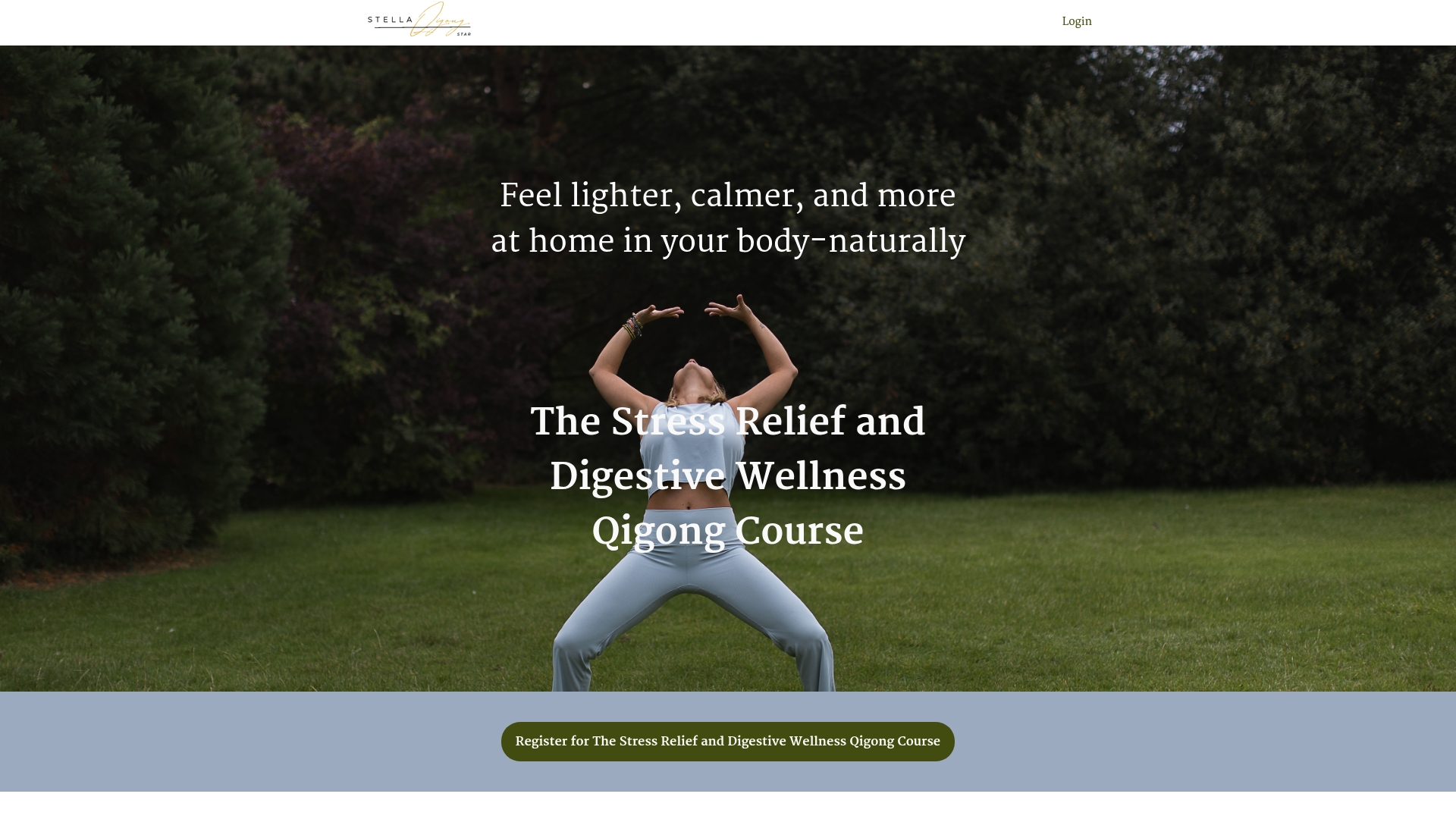
The Five Animal Qigong course and the White Tiger Qigong program both offer on-demand access, clear modification guidance, and a pace that honors your body exactly where it is today. Whether stress relief, digestive wellness, or simply more calm in your daily life is your goal, you'll find a path that fits. Explore all beginner Qigong classes and take the first gentle step toward feeling more alive in your own body.
FAQ
How long should a beginner online wellness course be?
Most beginner online wellness courses run 6–8 weeks with 1–3 hours per week. This length gives you enough time to build genuine skill without overwhelming your schedule.
What should I look for in a beginner wellness course instructor?
Look for instructors who offer clear verbal cues, regular modification options, and encouragement to rest. These qualities predict a safer, more supportive beginner experience than credentials alone.
Do I need special equipment to start an online wellness course?
Most beginner-friendly courses require little to no equipment. A yoga mat and a quiet space are typically enough, and some practices like tai chi and qigong need nothing at all.
How often should beginners practice to see results?
Three sessions per week of 20–30 minutes each is more effective than one long weekly session. Short, consistent practice builds body awareness and lasting habits more reliably.
What type of online wellness course is best for stress relief?
Mindfulness, qigong, and tai chi courses are particularly effective for stress relief because they combine gentle movement with breath regulation, directly calming the nervous system.