
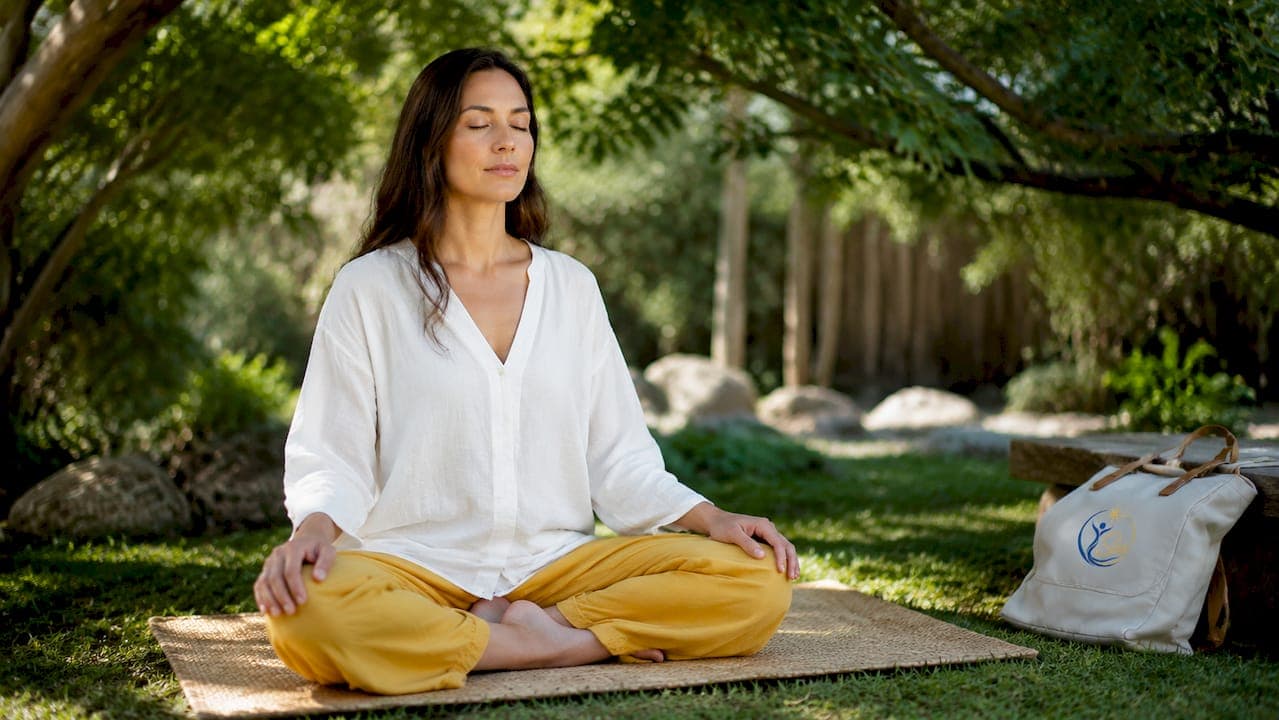
Somatic stress release is defined as a set of body-centered practices that regulate the nervous system by discharging stored tension and shifting the body from fight-or-flight into rest-and-digest mode. Unlike talk therapy, these techniques work directly through physical sensation, movement, and breath. Harvard Health confirms that somatic practice focuses on internal sensory awareness rather than physical output, making it accessible to almost anyone. If you carry stress in your shoulders, jaw, or gut, these examples of somatic stress release give your body a direct path to relief.
1. Examples of somatic stress release: body scan and grounding
Body scanning is a foundational somatic exercise that trains your attention to move slowly through each region of the body, noticing sensation without judgment. You start at the top of your head and move downward, pausing wherever you feel tightness, heat, or numbness. The goal is not to fix anything. The goal is to notice, which signals safety to your nervous system.
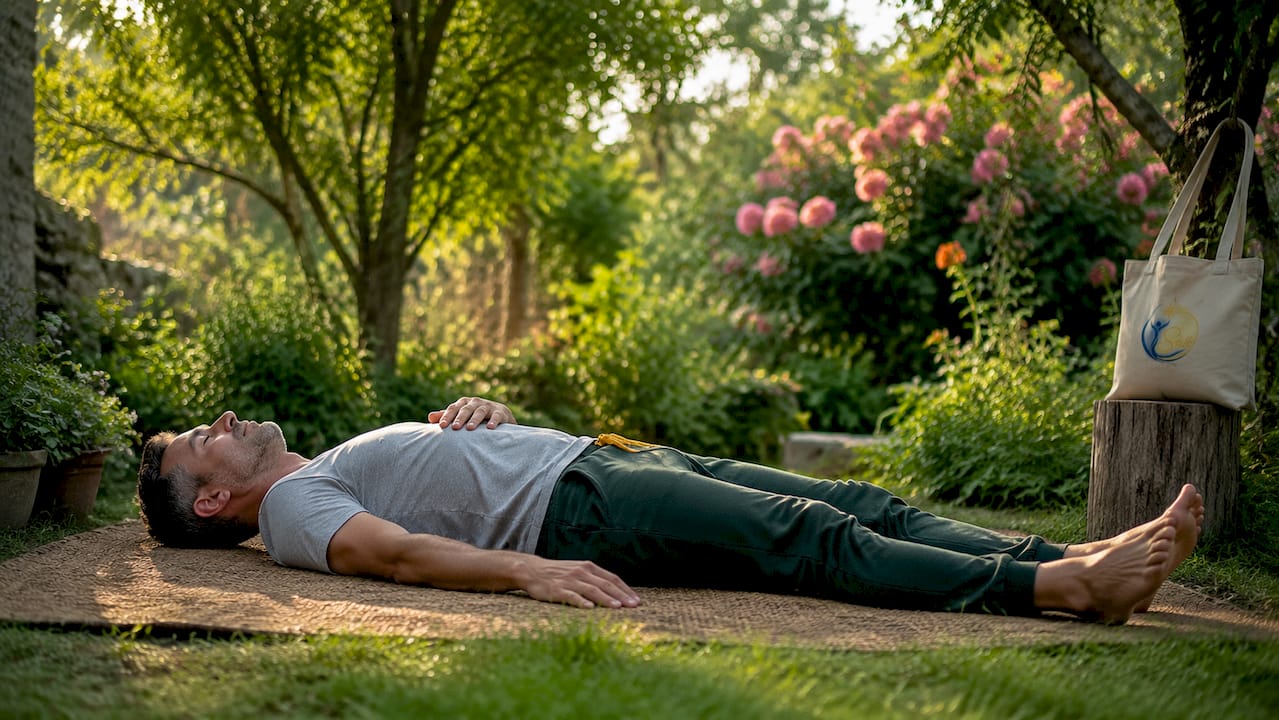
Somatic body scans and grounding pull the mind out of anxious future or past focus, anchoring presence and a felt sense of safety. That shift alone interrupts the stress loop your nervous system runs on repeat.
The 5-4-3-2-1 grounding technique pairs well with body scanning:
- 5 things you can see around you right now
- 4 things you can physically touch and feel their texture
- 3 things you can hear in your immediate environment
- 2 things you can smell or recall a comforting scent
- 1 thing you can taste or notice in your mouth
Both practices take under 10 minutes and require no equipment. They work because sensory engagement activates the parasympathetic nervous system, the branch responsible for calm and recovery.
Pro Tip: Try a two-minute body scan at the top of every hour during your workday. This micro-practice builds nervous system resilience faster than one long weekly session.
2. Breathwork techniques for somatic stress release
Breathwork is one of the most direct somatic therapy methods available because breath is the only autonomic function you can consciously control. Slowing and deepening the breath directly stimulates the vagus nerve, which carries the signal of safety from body to brain.
The most effective breath patterns for stress include:
- 4-2-6 breathing: Inhale for 4 counts, hold for 2, exhale for 6. The extended exhale activates the parasympathetic response.
- Physiological sigh: Take a double inhale through the nose, then a long, slow exhale through the mouth. This deflates collapsed air sacs in the lungs and rapidly lowers heart rate.
- Voo vocal toning: Inhale deeply, then exhale while humming a low "Voo" sound from your belly. The vibration stimulates the vagus nerve through sound resonance.
- Diaphragmatic breathing: Place one hand on your chest and one on your belly. Breathe so only the belly hand rises. This engages the diaphragm fully and avoids shallow chest breathing that keeps the stress response active.
Diaphragmatic breathing and grounding techniques regulate the nervous system efficiently in under 10 minutes, making them practical for daily use.
Start with just three to five breath cycles. Breathing too fast or too deeply can cause lightheadedness, so pace yourself and stop if you feel dizzy.
Pro Tip: Pair the physiological sigh with any moment of acute stress, such as before a difficult conversation or after reading upsetting news. Two breaths are enough to shift your state.
3. Somatic shaking to discharge fight-or-flight energy
Somatic shaking is one of the most underused yet powerful body-based stress relief methods. Animals in the wild shake vigorously after a threatening encounter to discharge adrenaline and cortisol. Humans have largely lost this instinct, and the stored energy stays locked in muscle tissue.
Somatic shaking involves controlled rhythmic bouncing with knees slightly bent and feet hip-width apart for 1–3 minutes. The movement is gentle, not vigorous. You let the body vibrate naturally rather than forcing a dramatic shake.
The benefits are real. Physical shaking mirrors natural animal responses to threat and can trigger parasympathetic responses like deep yawning, sighing, and improved digestion. These are signs your nervous system is resetting.
Follow these steps to practice safely:
- Stand with feet hip-width apart and knees soft.
- Begin bouncing gently through your knees, letting the vibration travel up your legs.
- Allow your arms to hang loose and shake naturally.
- Continue for 1–3 minutes, then stand still and notice the sensations.
- Pause immediately if you feel dizzy, nauseous, or emotionally overwhelmed.
Pro Tip: End every shaking session with 60 seconds of stillness. This integration pause lets your nervous system register the shift from activation to calm.
4. Progressive muscle relaxation for deep tension release
Progressive muscle relaxation (PMR) teaches your body the contrast between tension and ease. Most people living with chronic stress have forgotten what relaxed muscles actually feel like. PMR makes that contrast unmistakable.
PMR involves maximum tension followed by slow, mindful release in each muscle group, working from feet to face or face to feet. The technique is particularly effective for chronic neck and shoulder tension, which stress tends to concentrate.
A basic PMR sequence works like this. Squeeze your right fist as tightly as you can for five seconds. Then release completely and notice the warmth and tingling that follows. Move to your forearm, upper arm, shoulder, and so on up through your face. Spend a full breath in the release phase before moving to the next group.
The key is the release, not the tension. Tensing is just a tool to make the letting-go more felt and more complete.
5. Pandiculation and gentle stretching
Pandiculation is the technical term for the stretch-and-contract movement you see in a cat waking from sleep, or in yourself when you yawn and stretch first thing in the morning. It is one of the most natural somatic release techniques the body knows.
The Arch and Flatten exercise is a simple pandiculation practice. Lie on your back with knees bent. Slowly arch your lower back away from the floor, hold for a breath, then gently flatten it back down. Move slowly enough that you can feel every millimeter of the movement. This resets the resting length of the muscles along your spine and lower back, where stress commonly pools.
Slow stretching combined with conscious breath amplifies the effect. Hold each stretch for 60–90 seconds while breathing into the area of tension. Rushing through stretches bypasses the nervous system reset that makes somatic work effective.
6. Cold water exposure as a grounding reset
Brief cold water exposure is a body-based stress relief method that works through the mammalian dive reflex. Splashing cold water on your face or running cold water over your wrists activates the vagus nerve and slows heart rate within seconds. This is not about ice baths or extreme cold. Even 30 seconds of cool water on the face produces a measurable calming effect.
This technique works well as a rapid interrupt when anxiety spikes suddenly. It is concrete, fast, and requires nothing more than a sink. Pair it with three slow breaths afterward to anchor the calming response.
7. How nervous system regulation makes somatic release work
The reason these techniques work is not mystery. Somatic practice shifts nervous system activity from sympathetic (fight-or-flight) to parasympathetic (rest-and-digest), breaking chronic muscle tension loops that stress creates and maintains.
Peter Levine's concept of pendulation describes this process well. Pendulation is the deliberate oscillation between noticing a stress sensation and returning to a sensation of safety or comfort. This oscillation prevents overwhelm and keeps the nervous system from getting stuck in either extreme. You feel the tension, then you feel your feet on the floor. You notice the tightness in your chest, then you feel the warmth of your hands. That rhythm is the practice.
"The goal of somatic work is not to perform relaxation but to feel it. When you stop trying to relax and start noticing what is actually present in your body, the nervous system begins to regulate on its own."
Consistent somatic practice integrated into daily routines supports nervous system regulation far more effectively than occasional long sessions. Short, frequent contact with your body builds the resilience that stress erodes.
For people managing significant trauma or PTSD, self-directed somatic work has limits. Professional guidance and co-regulation with a trained somatic therapist provide a safer container for deeper work. The techniques in this article are appropriate for everyday stress and mild anxiety.
8. Integrating somatic exercises into your daily routine
The most effective approach to somatic stress release is not a single long session but micro-practices woven into daily life. A two-minute body scan before lunch, three cycles of 4-2-6 breathing before a meeting, and a brief shaking session after work add up to consistent nervous system care.
For those who want to build a structured practice, Qigongstar's daily stress reduction practices offer a clear framework for combining breathwork, movement, and mindful awareness into a sustainable routine. The key is regularity, not duration.
A small study published in june 2025 found that twice-weekly somatic movement programs significantly improved spinal mobility after 10 weeks. Consistency, not intensity, produced the results.
Key takeaways
Somatic stress release works because it directly addresses the nervous system through body sensation, breath, and movement, rather than relying on thought or willpower alone.
| Point | Details |
|---|---|
| Body scan and grounding | Anchor awareness to the present moment and interrupt anxious thought loops in under 10 minutes. |
| Breathwork activates the vagus nerve | Extended exhale breathing and vocal toning shift the nervous system from stress to calm quickly. |
| Shaking discharges stored energy | Gentle rhythmic bouncing for 1–3 minutes releases fight-or-flight tension locked in muscle tissue. |
| Consistency beats intensity | Daily micro-practices build more nervous system resilience than infrequent long sessions. |
| Trauma requires professional support | Self-directed somatic work suits mild stress; significant trauma warrants a trained somatic therapist. |
What I've learned from years of somatic and Qigong practice
Most people approach somatic work the same way they approach exercise: more is better, push through discomfort, and results come from effort. That mindset works against you here.
The most important shift I made was learning to treat discomfort as information rather than an obstacle. When a body scan surfaces tightness in my chest, that tightness is not a problem to solve. It is a signal to stay with, breathe into, and gently acknowledge. The moment I stopped trying to fix the sensation and started simply noticing it, the release came naturally.
Consistency matters far more than duration. Five minutes of genuine body awareness every morning outperforms a 45-minute somatic session once a week. Your nervous system learns through repetition, not through occasional intensity.
One caution I share with everyone: do not push through emotional flooding. If a practice brings up intense emotion or physical overwhelm, stop. Rest. Ground yourself with your feet on the floor and your eyes open. Somatic work is not about forcing release. It is about creating the conditions where release happens on its own. Gentle attention, practiced often, is the method.
Combining somatic practices with supportive relationships also accelerates the process. Co-regulation, the calming effect of being in the presence of a regulated, caring person, is itself a somatic experience. You do not have to do this work alone.
— Stella
Qigongstar courses for somatic stress relief
Qigong is a natural companion to somatic stress release. Both practices center on breath, gentle movement, and internal awareness to calm the nervous system and restore vitality.
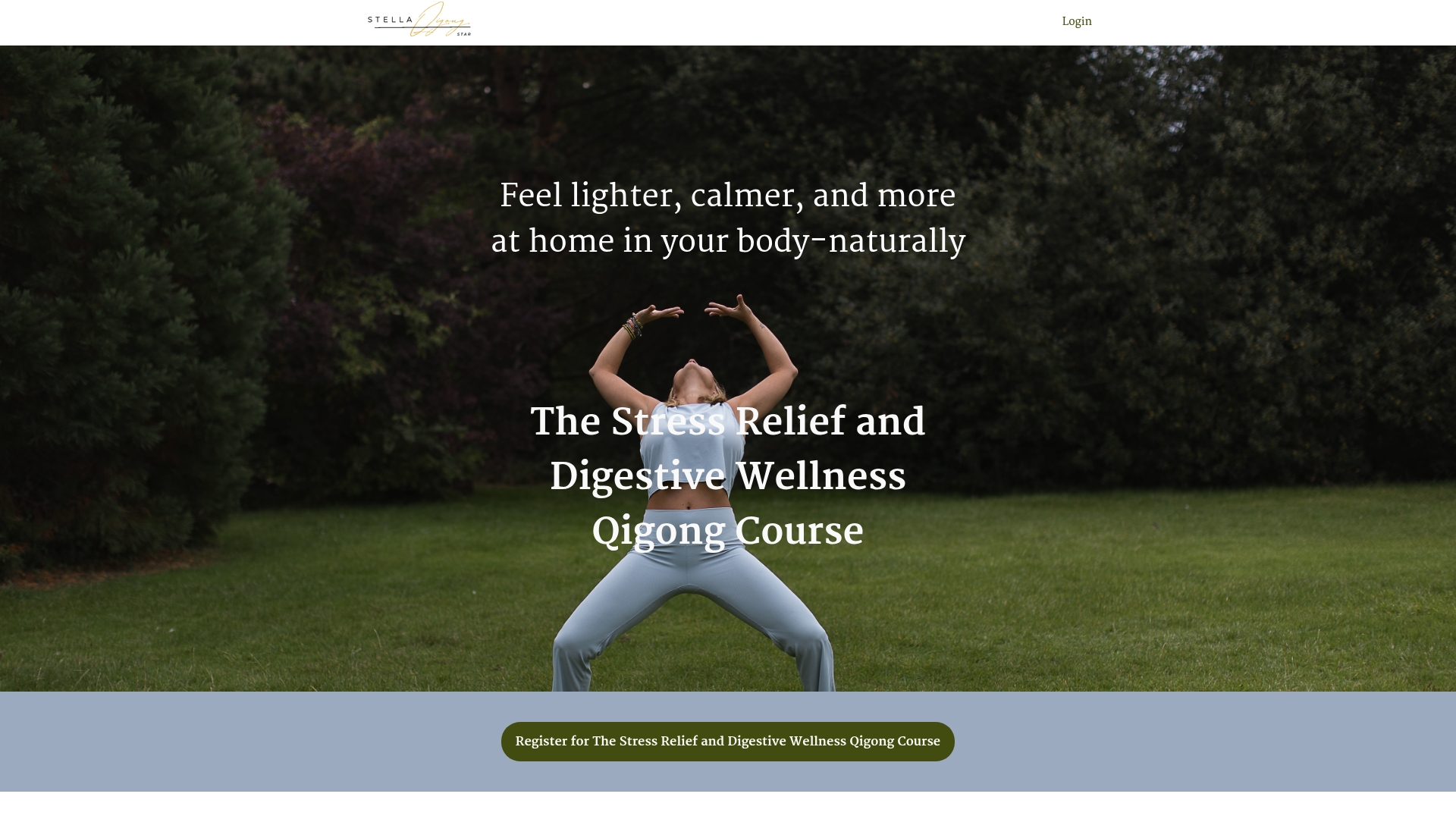
Qigongstar's 5 Animal Qigong course brings together flowing movement sequences rooted in Chinese Medicine that mirror many of the principles behind somatic release: slow, mindful motion, breath coordination, and a focus on feeling rather than performing. The course is beginner-friendly and available on demand, so you can practice at your own pace. For those ready to build a complete mind-body practice, Qigongstar also offers online Qigong classes designed to support nervous system balance and long-term stress resilience. Explore what fits your life and start gently.
FAQ
What are the most common examples of somatic stress release?
The most common examples include body scans, 5-4-3-2-1 grounding, diaphragmatic breathing, somatic shaking, and progressive muscle relaxation. Each targets nervous system regulation through direct physical sensation rather than thought.
How long does somatic stress release take to work?
Many techniques produce a noticeable calming effect within a single session of 5–10 minutes. Consistent practice over several weeks builds lasting nervous system resilience and reduces baseline stress levels.
Is somatic stress release safe for people with trauma or PTSD?
Gentle self-directed somatic exercises suit mild stress and anxiety well. For significant trauma or PTSD, a trained somatic therapist provides safer guidance, using techniques like pendulation to prevent re-traumatization.
What is the difference between somatic exercises and regular exercise?
Somatic exercises prioritize internal sensory awareness over physical output. The goal is to feel and regulate, not to build strength or burn calories. Harvard Health describes this as "feeling, not performing."
Can I combine somatic practices with Qigong?
Yes. Qigong and somatic release share core principles: breath regulation, gentle movement, and mindful body awareness. Combining both creates a fuller practice that addresses nervous system regulation, energy flow, and physical tension together.