
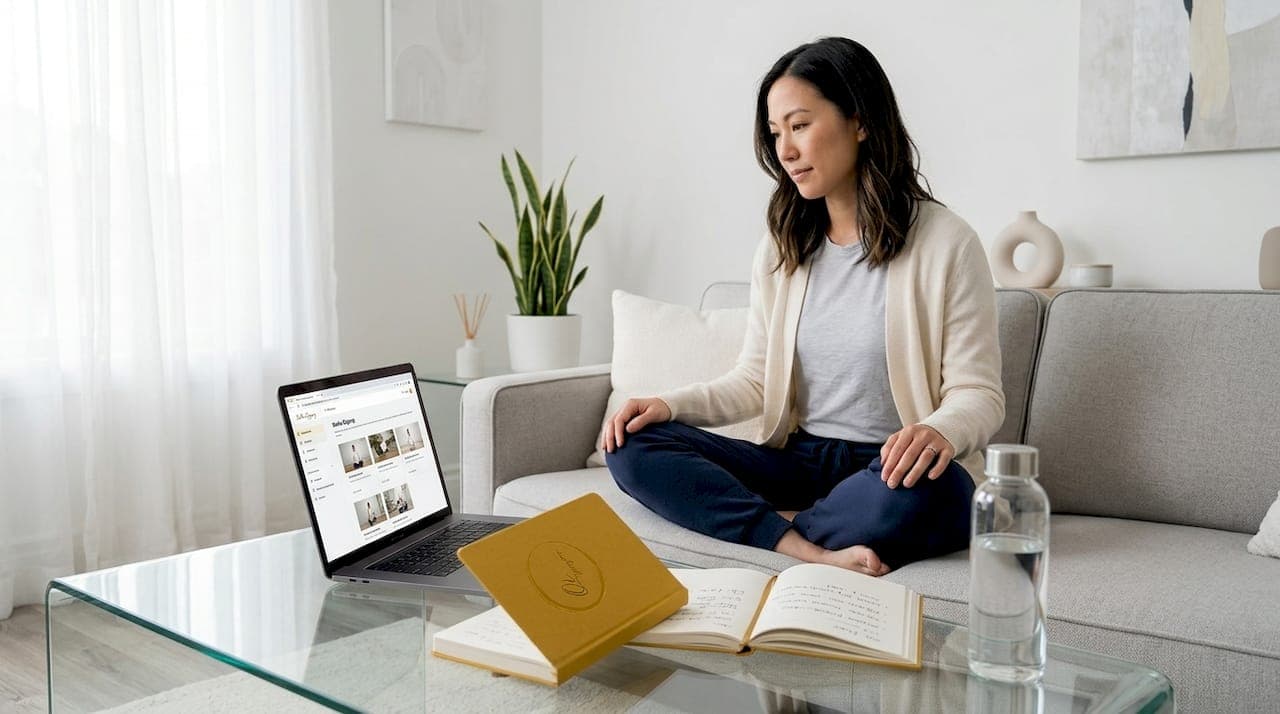
You signed up for an online wellness course, felt a flicker of hope, and then stared at a screen wondering where to even begin. You're not alone. Thousands of people enroll in digital health programs each year, only to quietly drop out within the first two weeks because the structure felt unclear, the results felt invisible, or the practice felt disconnected from real life. This guide is here to change that. We'll walk you through exactly how online wellness courses work, what to expect from qigong and similar gentle movement practices, and how these programs can genuinely support your stress levels, anxious mind, and digestive health.
Table of Contents
- What are online wellness courses and who are they for?
- How course structure supports learning and results
- Comparing core practices: Qigong, yoga, and beyond
- Safety first: How trauma-informed and somatic approaches set courses apart
- Why the 'gentle movement' approach works better for real life than most expect
- Ready to try an online wellness course? Next steps
- Frequently asked questions
Key Takeaways
| Point | Details |
|---|---|
| Designed for real needs | Online wellness courses are built for stress, anxiety, and digestive issues using gentle movement and nervous-system support. |
| Structure supports results | Modules, routines, and supportive materials keep beginners engaged and reduce confusion. |
| Gentle methods work best | Practices like qigong and yoga offer gradual improvements and suit all fitness levels, especially if you go at your own pace. |
| Safety is prioritized | Trauma-informed and somatic approaches offer safety, permission, and adaptability for every learner. |
What are online wellness courses and who are they for?
Online wellness courses are structured educational programs you access through a website, app, or dedicated platform. They typically combine video lessons, guided movement sequences, breathing exercises, and reflective materials, all designed to support your physical and mental health from the comfort of your own home. You can usually access them on your phone, tablet, or laptop, and many are available on demand, meaning you practice when it suits your schedule rather than a fixed class time.
These courses address a wide range of concerns, but the most common themes center on stress, anxiety, and gut health. This is not a coincidence. Stress and digestive discomfort are deeply connected through the gut-brain axis, a communication network linking your nervous system to your digestive tract. When your nervous system is overwhelmed, your gut often feels it first. Courses addressing stress and gut concerns commonly frame their practices as nervous-system regulation, using techniques such as breathwork and gentle movement to calm the body from the inside out.
Practices like qigong, yoga, and breathwork sit at the heart of many of these programs. Qigong, rooted in Chinese Medicine, uses slow, intentional movement combined with breath and awareness to move energy (called qi) through the body. Yoga blends posture, breath, and mindfulness. Breathwork focuses specifically on conscious breathing patterns to shift your physiological state. All three are accessible through online wellness classes and require no prior experience.
Who benefits most? Beginners, particularly those who want a gentle entry point into mind-body practice. If you've been curious about movement-based wellness but felt intimidated by intense fitness classes or confused by complex spiritual systems, these courses meet you exactly where you are. Here are the most common reasons people join:
- To manage daily stress and feel calmer in their bodies
- To reduce anxiety without relying solely on medication
- To soothe digestive issues like bloating, IBS, or gut tension
- To find a gentle movement practice that doesn't strain the body
- To build a self-care routine with flexible scheduling
- To explore stress management strategies that feel natural and sustainable
If any of these resonate with you, an online wellness course may be exactly the kind of nurturing support you've been looking for.
How course structure supports learning and results
Now that you know who these courses are for, let's look at how their design makes learning and change easier. The biggest reason people abandon online courses is not lack of motivation. It's lack of clarity. A well-designed wellness program anticipates this and builds a clear path forward from the very first lesson.
Most courses organize content into modules. Each module contains a handful of video lessons, guided audio practices, and sometimes short readings or reflection prompts. You move through them in sequence, which creates a natural sense of progression. You're not dropped into a library of content and left to figure it out. You're guided, step by step, from orientation to practice to integration.

Many established platforms include assignments, assessments, and interaction elements such as discussion prompts, quizzes, and even final reflections, even when the primary format is instructional video. These elements matter because they shift passive watching into active learning. When you write a reflection or respond to a prompt, you're processing the material in a way that supports real change.
Here is what a typical course journey looks like for a beginner:
- Enroll and set up your account so you can access all materials in one place
- Complete an orientation module that explains the practice, its benefits, and how to use the course
- Begin with short, accessible sessions often just 10 to 15 minutes to build comfort and consistency
- Progress through weekly modules that gradually introduce new movements or techniques
- Complete reflection assignments to notice how your body and mood are shifting
- Join community discussions or live sessions if the course includes interactive elements
- Revisit earlier practices as you deepen your understanding and refine your form
Explore the variety of course formats available to find one that matches your learning style and wellness goals.
Pro Tip: Start with the shortest practice available, even if it feels almost too easy. Consistency over five minutes a day will produce more lasting change than an occasional hour-long session. Your nervous system responds to regularity, not intensity.
Comparing core practices: Qigong, yoga, and beyond
After understanding course formats, it helps to know how specific practices compare and what results you can realistically expect. Three practices dominate the online wellness space for stress, anxiety, and gut health: qigong, yoga, and tai chi. Each has a distinct flavor, and knowing the difference helps you choose what fits your body and your goals.
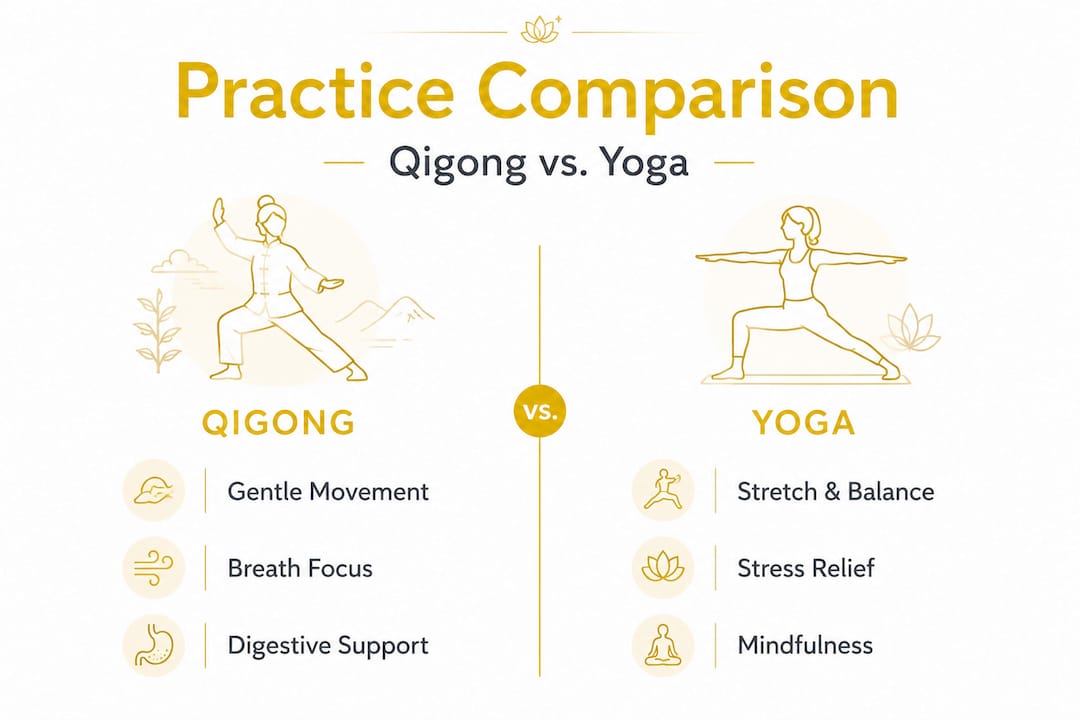
| Practice | Main focus | Typical format | Evidence for stress and anxiety | Best for |
|---|---|---|---|---|
| Qigong | Energy flow, breath, gentle movement | Video sequences, guided audio | Growing body of research; supports nervous-system regulation | Beginners, those with digestive issues, low-impact needs |
| Yoga | Posture, flexibility, breath, mindfulness | Video classes, live sessions | Small to moderate effect sizes across studies | Wide range of learners; many styles available |
| Tai chi | Slow, flowing martial movement, balance | Video sequences, in-person or online | Moderate evidence for stress and balance | Older adults, those recovering from injury |
A 2026 meta-analysis found that evidence on anxiety and stress reduction from yoga shows effect sizes of approximately 0.54 for stress and 0.52 for anxiety, which are considered small to moderate, with low-level evidence overall. This is important context. It means these practices genuinely help, but they work gradually, not dramatically. Real-life improvement builds over weeks and months of consistent practice, not after a single session.
For digestive concerns specifically, qigong has a particularly strong case. The slow, rhythmic movements and deep breathing directly stimulate the vagus nerve, which plays a central role in gut function. You can read more about how qigong supports gut health and why it's especially relevant for IBS and related conditions. If you want to explore the broader research and practitioner insights, the qigong blog is a rich resource.
When choosing a practice, consider your physical comfort level, your relationship with stillness versus movement, and whether you prefer a more spiritual or purely physical approach. There is no wrong answer. What matters most is that the practice feels welcoming enough that you return to it. For those exploring different therapy types for anxiety, gentle movement can complement other therapeutic approaches beautifully.
Safety first: How trauma-informed and somatic approaches set courses apart
Once you know what kinds of practices are offered, it's important to understand how thoughtful courses keep safety and comfort as genuine priorities, not just marketing language.
"Trauma-informed" is a term you'll see used across many wellness programs. In this context, it means the course is designed with an awareness that some students carry past experiences of stress, trauma, or chronic illness that affect how they relate to their bodies. A trauma-informed approach does not push you to override discomfort. It invites you to listen to your body and move at your own pace.
"Somatic" refers to body-centered awareness. Somatic practices encourage you to notice physical sensations, breath patterns, and subtle shifts in energy rather than focusing only on achieving a particular pose or technique. This is especially valuable if anxiety lives in your body as tension, shallow breathing, or gut tightness.
Some programs explicitly use trauma-informed and somatic approaches that emphasize nervous-system safety, consent and choice, and working at the student's pace rather than pushing through discomfort. This design philosophy makes a meaningful difference for people with sensitive mental health histories or chronic health conditions.
Key elements to look for in a trauma-informed wellness course include:
- Clear permission to pause or skip any movement that doesn't feel right
- Self-pacing with no pressure to keep up with a group or timeline
- Body awareness cues that invite sensation rather than demand performance
- Transparent communication about what each session involves before you begin
- Supportive language that emphasizes choice rather than correction
"The goal is not to push through discomfort, but to gently expand your window of tolerance, allowing your nervous system to settle and your body to feel safe in movement."
If you're exploring flexible online therapy alongside a wellness course, a trauma-informed program can complement that work by giving you a daily somatic practice that reinforces the safety and regulation you're building in therapy.
Why the 'gentle movement' approach works better for real life than most expect
Having covered safety and program features, let's explore why this gentle, flexible approach works so well for most newcomers, and why we believe it's actually more powerful than it first appears.
Here's what most wellness guides won't tell you: the modest effect sizes in the research are not a limitation. They're a reflection of how real, sustainable change actually works. Your nervous system does not transform overnight. It recalibrates slowly, through repeated gentle signals that say "you are safe, you can rest, you can digest." Each short qigong session is one of those signals. Over weeks, those signals accumulate into something genuinely meaningful.
The biggest mistake beginners make is measuring success by dramatic outcomes: sleeping perfectly, digesting without discomfort, feeling zero anxiety. Those outcomes can come, but they arrive quietly, over time. The more honest measure of progress is noticing that you paused before reacting to stress, that your shoulders felt slightly less tense after your morning practice, or that your gut felt calmer after a gentle breathing sequence.
We've seen this pattern consistently. People who stick with gentle, self-paced courses are not the ones who felt immediately transformed. They're the ones who stopped expecting transformation and started noticing small, real shifts. That's where the genuine empowerment lives.
Gentle movement also fits into real life in a way that intense programs simply don't. You can practice in your living room in ten minutes before work. You can return after a week off without guilt or injury. You don't need equipment, a gym membership, or a particular level of fitness. The practice meets you where you are, every single time.
Explore our qigong perspective for deeper insights into how consistent, mindful practice creates lasting change in the body and mind.
Pro Tip: Keep a simple mood and energy journal alongside your practice. Note one or two words about how you feel before and after each session. Over a month, patterns will emerge that show you real, concrete progress you might otherwise overlook.
Ready to try an online wellness course? Next steps
If you're ready to put these concepts into practice, here are some resources for getting started.
At QigongStar.com, we've designed our courses specifically for people who are new to qigong and looking for gentle, effective support for stress, anxiety, and digestive health. You don't need any prior experience. You don't need to be flexible, fit, or familiar with Chinese Medicine. You just need a quiet space and a willingness to begin.
Our online qigong courses are self-paced and beginner-friendly, with clear video guidance and structured modules that take you from your very first movement to a confident, empowering daily routine. If you're drawn to the richness of traditional animal-inspired forms, the 5 Animal Qigong program is a beautiful place to start, weaving together five distinct movement energies to nurture your whole body. For those seeking a deeply therapeutic and energetically grounded practice, White Tiger Qigong offers a powerful path rooted in authentic lineage and modern wellness understanding. Your journey toward calm, vitality, and ease begins with a single gentle step.
Frequently asked questions
Are online wellness courses effective for managing anxiety and stress?
Research shows yoga, qigong, and similar practices can genuinely help reduce stress and anxiety, though effect sizes are small to moderate and benefits build gradually with consistent practice over time.
Can I join a course with no experience in yoga or qigong?
Absolutely. Beginner-focused courses use self-paced lessons, gentle movements, and clear step-by-step guidance so that no prior knowledge or physical fitness level is required.
Do I need special equipment for online gentle movement classes?
Most courses only require a device with internet access and a comfortable, open space to move. No special equipment, props, or workout gear is needed to get started.
What makes trauma-informed courses different from regular online wellness programs?
Trauma-informed courses prioritize safety, self-pacing, and personal choice throughout, explicitly avoiding any pressure to push through discomfort or keep pace with others.