

Integrative medicine is defined as a coordinated care model that combines evidence-based conventional treatments with complementary therapies to treat the whole person, not just the diagnosis. The Mayo Clinic draws a clear line: integrative medicine works alongside conventional care, while alternative medicine replaces it. This distinction matters enormously if you are managing chronic stress, anxiety, or digestive issues and want a plan that is both safe and effective. The integrative medicine approach addresses physical, emotional, and lifestyle factors together, making it one of the most complete frameworks available for long-term wellness.
What is the integrative medicine approach, and how does it differ from alternative care?
Integrative medicine is not a rejection of conventional healthcare. It is a deliberate coordination of both worlds. The National Centre for Integrative Medicine describes it as moving beyond "what is the diagnosis" to "why is this person ill," targeting root causes rather than surface symptoms. That shift in framing changes everything about how care is planned and delivered.
Three terms often get confused:
- Conventional medicine treats disease using pharmaceuticals, surgery, and clinically validated protocols. It focuses on the absence of disease as the definition of health.
- Complementary medicine uses therapies like acupuncture, massage, or meditation alongside conventional treatment. These practices support, not replace, standard care.
- Alternative medicine substitutes conventional treatment entirely. This is where safety risks rise sharply.
- Integrative medicine coordinates all evidence-based options, conventional and complementary, into one personalized plan. It is collaborative and supervised.
The Merck Manuals frame it this way: conventional medicine defines health as the absence of disease, while integrative medicine defines health as a balanced system that actively supports natural defenses and resilience. That is a fundamentally different goal.
Pro Tip: Always tell your primary care provider about every therapy you are using, including supplements and movement practices. Failure to disclose can cause harmful interactions with medications, according to Mayo Clinic guidance.

What therapies are commonly used in an integrative health approach?
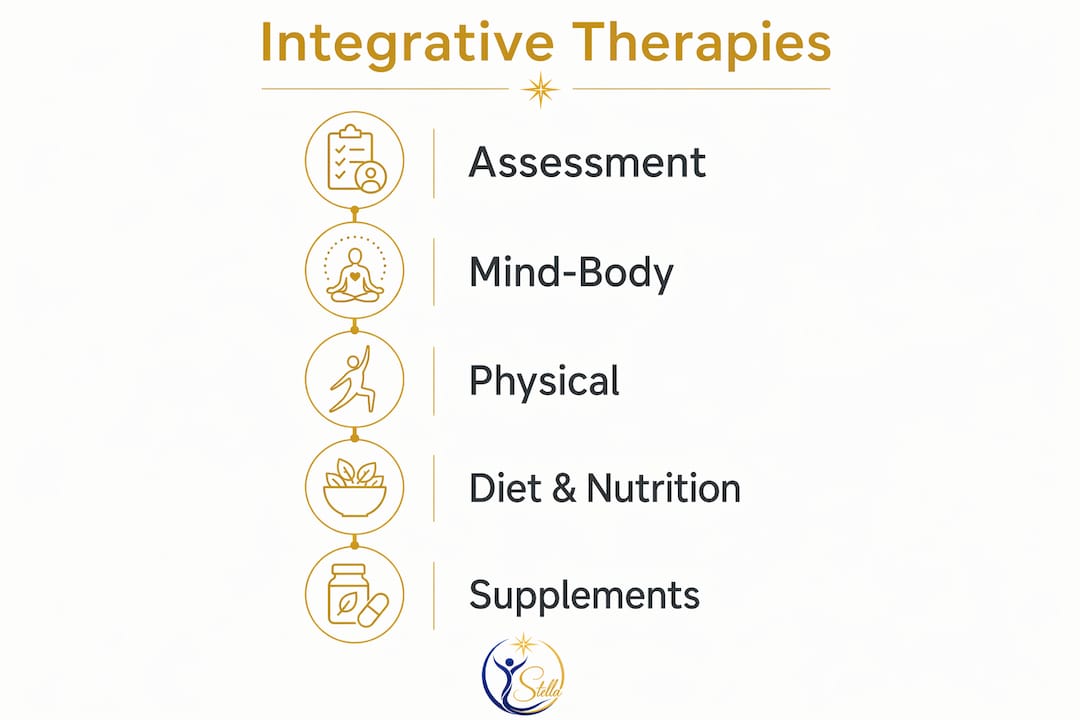
Integrative health practices span a wide range of modalities, all chosen based on evidence and individual need. The most commonly used therapies include:
- Meditation and mindfulness: Calms the nervous system, reduces cortisol, and supports emotional regulation. Patients learn self-regulation techniques over multiple sessions, not in a single appointment.
- Yoga and tai chi: Gentle movement practices that combine breath, posture, and mental focus. Both are well-studied for reducing anxiety and improving gut motility.
- Qigong: A Chinese Medicine practice using slow, intentional movement and breath regulation to restore energetic balance. Qigongstar's White Tiger Qigong and Five Animal Qigong courses are built directly on these principles.
- Acupuncture: Stimulates specific points to regulate the nervous system and reduce pain signals. Widely used for stress, IBS, and chronic pain.
- Massage therapy: Reduces muscle tension, lowers stress hormones, and supports lymphatic circulation.
- Dietary changes: Food choices directly affect gut health, inflammation, and mood. Integrative practitioners often work with nutrition as a core therapeutic tool.
The Mayo Clinic confirms that integrative consultations require patients to actively learn self-regulation techniques across multiple sessions. This is not passive treatment. You are expected to practice between appointments, build new habits, and engage with your own healing process. That active role is what makes the results last.
For a practical breakdown of therapies matched to stress and digestive concerns, the integrative health practices list on the Qigongstar blog is a useful starting point.
Pro Tip: Give any mind-body practice at least eight weeks of consistent effort before evaluating results. Techniques like qigong and meditation require repeated practice to rewire stress responses at a neurological level.
How does integrative medicine work: the assessment and treatment framework?
Integrative medicine uses a layered assessment process that most conventional appointments simply do not have time for. The National Centre for Integrative Medicine describes evaluations that span cellular, nervous system, emotional, and spiritual dimensions. Each level informs the treatment plan.
A typical integrative assessment follows this sequence:
- Comprehensive health history: Practitioners gather information about sleep, stress, diet, relationships, and past trauma, not just current symptoms.
- Root cause analysis: Rather than labeling a diagnosis and prescribing a protocol, the practitioner identifies predisposing, precipitating, and perpetuating factors behind the illness.
- Personalized care planning: Treatment combines conventional medical management with targeted complementary therapies chosen for that specific person.
- Collaborative goal setting: You and your practitioner set measurable wellness goals together. The plan evolves as your health changes.
- Habit formation and follow-up: Integrative care is built on sustainable lifestyle changes. Progress is tracked over months, not days.
This framework reflects what the Merck Manuals describe as restoring systemic balance rather than suppressing individual symptoms. For conditions like IBS, chronic anxiety, or burnout, that distinction is clinically significant. Understanding the whole person health model gives you a clearer picture of how this layered evaluation works in practice.
Pro Tip: Bring a written list of all medications, supplements, and practices to your first integrative consultation. The more complete your picture, the more precise your care plan will be.
What are the benefits and limitations of integrative medicine for chronic conditions?
The benefits of integrative medicine are real, but so are the demands it places on you. Understanding both sides helps you make an informed decision.
| Factor | Integrative medicine | Conventional medicine only |
|---|---|---|
| Symptom focus | Root causes and systemic balance | Diagnosis and symptom suppression |
| Patient role | Active participant in healing | Primarily passive recipient of treatment |
| Time to results | Months of consistent practice | Often faster for acute conditions |
| Scope of care | Physical, emotional, lifestyle, spiritual | Primarily physical and biochemical |
| Cost and access | Higher initial investment, longer visits | Typically covered by insurance |
| Chronic condition management | Strong evidence for stress, anxiety, IBS | Effective for acute and emergency care |
The American Public Health Association reported in january 2025 that 60% of U.S. adults live with at least one chronic condition. That scale signals a genuine gap in conventional care alone. Integrative approaches fill that gap by addressing the lifestyle and emotional factors that drive chronic illness.
The limitations are worth naming clearly. Integrative care requires a substantial initial time and financial investment. Patients may need months before seeing meaningful symptom improvement. This is not a quick fix. If you are expecting results in two weeks, integrative medicine will disappoint you. If you are willing to commit to a sustained process, the outcomes for conditions like stress and digestive dysfunction are well-supported by evidence.
MedlinePlus is direct on safety: not all complementary therapies are scientifically validated. Vetting your chosen therapies and discussing them with your primary care provider is non-negotiable.
How can you safely incorporate integrative practices into your health routine?
Starting integrative medicine safely requires a methodical approach. Enthusiasm is good. Skipping steps is not.
- Research before you commit. Look for therapies with published clinical evidence. Meditation, yoga, qigong, and acupuncture all have peer-reviewed research supporting their use for stress and digestive health.
- Talk to your primary care provider first. Share every therapy you are considering, including herbal supplements. Drug-herb interactions are real and can be serious.
- Choose qualified practitioners. For acupuncture, look for licensed acupuncturists. For qigong, seek instructors certified by recognized schools. Qigongstar's instructors hold certifications from the White Tiger Qigong School and Yoga Alliance.
- Start with one or two practices. Adding too many therapies at once makes it impossible to know what is working. Begin with a single mind-body practice and build from there.
- Track your symptoms. Keep a simple log of sleep quality, stress levels, and digestive comfort. Patterns become visible over weeks and give you data to share with your provider.
- Use credible resources. The Qigongstar blog's evidence-based wellness routines offer structured starting points for stress and digestion-focused practice.
The goal is a sustainable routine, not a dramatic overhaul. Small, consistent practices compound into meaningful change over months.
Key takeaways
Integrative medicine combines conventional and complementary care into one personalized, root-cause-focused plan that requires active patient participation and sustained commitment to produce lasting results.
| Point | Details |
|---|---|
| Clear definition matters | Integrative medicine coordinates conventional and complementary care; it does not replace standard treatment. |
| Root cause focus | Assessment spans cellular, emotional, and lifestyle factors, not just current symptoms. |
| Active patient role | Mind-body practices like qigong and meditation require repeated practice to produce lasting neurological change. |
| Realistic time frame | Meaningful improvement in chronic conditions typically emerges over months, not weeks. |
| Safety requires disclosure | Always tell your primary care provider about every therapy and supplement you use to avoid harmful interactions. |
What I have learned from watching integrative medicine work in practice
The most common mistake I see is treating integrative medicine as a menu. People pick acupuncture for one month, try meditation for two weeks, and then declare it does not work. That is not how this model functions. Integrative care is a system, and systems need time to recalibrate.
What genuinely surprises people is how much the emotional layer matters. Stress and digestive issues are rarely just physical. The gut-brain connection is well-documented, and practices like qigong and tai chi work precisely because they address both simultaneously. When you calm the nervous system through breath and gentle movement, the digestive system responds. That is not metaphor. That is physiology.
I also caution against the assumption that "natural" means safe without scrutiny. Some herbal supplements interact with common medications in ways that are clinically significant. The rigor you apply to evaluating a pharmaceutical should apply equally to any complementary therapy. Evidence-based choices protect you.
The shift I find most meaningful in integrative medicine is the move from patient as passive recipient to patient as active participant. You are not waiting to be fixed. You are learning to work with your own body. That shift in identity, from someone things happen to, to someone who actively shapes their health, is where the real long-term benefit lives. Practices like qigong make that shift tangible. You feel it in your body within the first session.
— Stella
Qigongstar's online classes for stress relief and digestive wellness
If the integrative medicine approach resonates with you, qigong is one of the most accessible and evidence-supported practices you can add to your care plan.
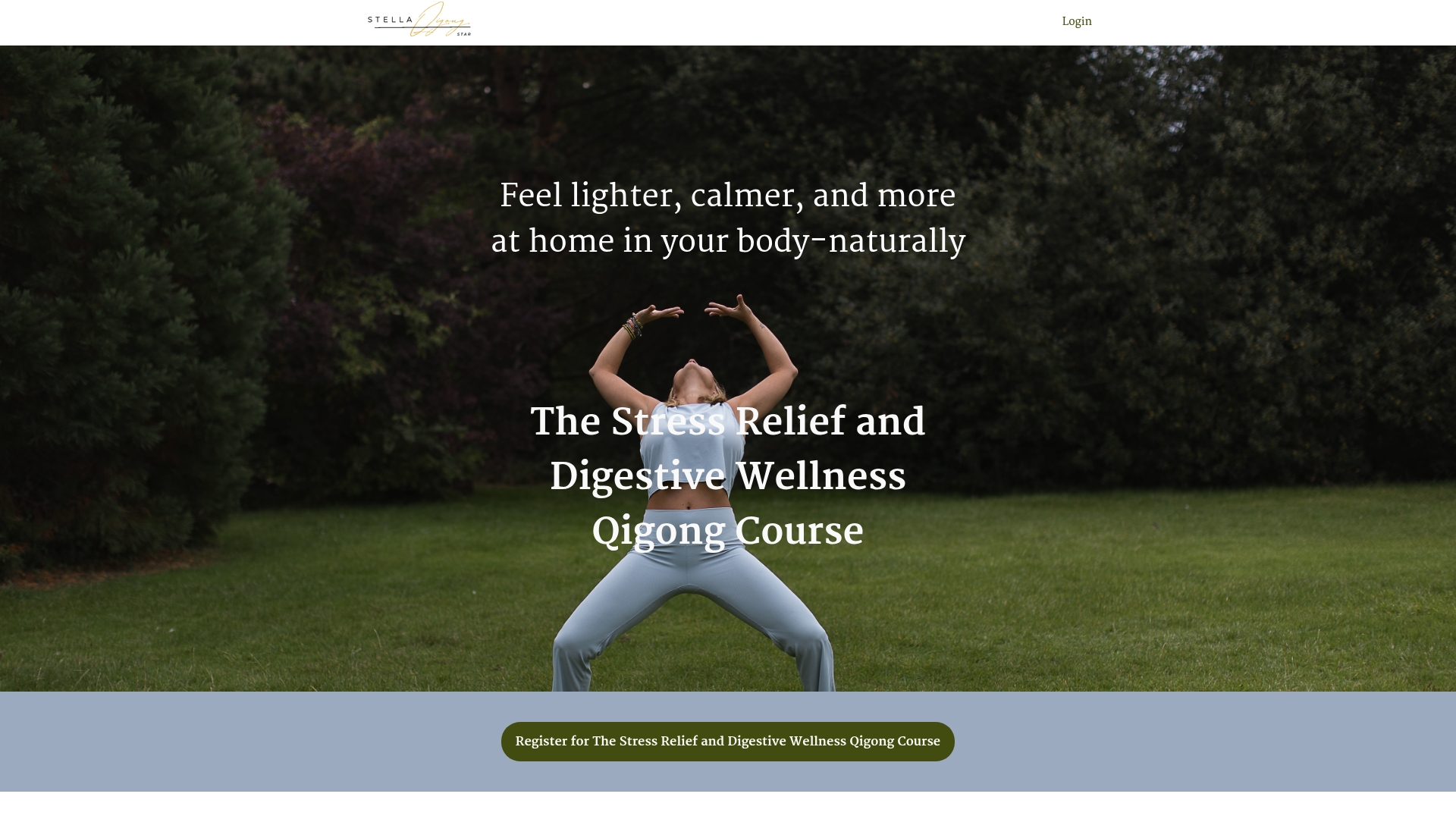
Qigongstar offers online qigong classes focused specifically on stress relief and digestive wellness, taught by Stella, a certified White Tiger Qigong instructor. The Five Animal Qigong course uses gentle, flowing movements rooted in Chinese Medicine to soothe the nervous system, support gut health, and restore energetic balance. Classes are available on demand, beginner-friendly, and designed to fit into a real daily routine. Whether you are new to mind-body practice or deepening an existing wellness plan, Qigongstar gives you a structured, qualified path forward.
FAQ
What is the integrative medicine definition in simple terms?
Integrative medicine is a care model that combines conventional medical treatment with evidence-based complementary therapies to address the whole person, including physical, emotional, and lifestyle factors.
How does integrative medicine differ from alternative medicine?
Integrative medicine works alongside conventional care, while alternative medicine replaces it. The Mayo Clinic makes this distinction clear: integrative medicine never abandons evidence-based conventional treatment.
What are the main benefits of integrative medicine for stress and digestion?
Integrative medicine targets root causes of stress and digestive dysfunction rather than suppressing symptoms alone. Therapies like qigong, meditation, and dietary changes work together to calm the nervous system and support gut health over time.
How long does it take to see results with integrative medicine?
Meaningful improvement in chronic conditions typically takes months of consistent practice and engagement. Integrative care is designed for long-term wellness, not rapid symptom relief.
Is integrative medicine safe to use alongside my current medications?
Integrative medicine is generally safe when practiced transparently with your primary care provider. Always disclose every supplement and complementary therapy you use, since some can interact with prescription medications in clinically significant ways.