

Living with irritable bowel syndrome (IBS) means navigating unpredictable flares, relentless bloating, and the kind of gut discomfort that quietly reshapes your daily life. Pharmaceuticals can offer relief, but many people find them incomplete or hard to tolerate long-term. That's exactly why holistic approaches to irritable bowel syndrome have gained serious traction, not as fringe alternatives, but as evidence-backed strategies that address the whole picture: your diet, your stress levels, your nervous system, and your gut. This article walks you through the most effective natural and integrative methods available, with the research to back them up.
Table of Contents
- Key Takeaways
- 1. Understand what makes holistic IBS approaches work
- 2. Prioritize dietary changes as your first line of support
- 3. Use targeted supplements with real clinical backing
- 4. Harness the gut-brain axis through mind-body therapies
- 5. Move your body to calm your gut
- 6. Compare your options: a practical guide to choosing what fits
- 7. Build sustainable daily routines that support your gut
- My honest perspective on what actually moves the needle
- Discover Qigong as your daily IBS support practice
- FAQ
Key Takeaways
| Point | Details |
|---|---|
| Stress reduction matters most | Reducing perceived stress can improve IBS symptoms by 36.7% and more than double remission odds. |
| Fiber type makes a real difference | Soluble fiber like psyllium soothes IBS, while insoluble fiber like wheat bran often worsens it. |
| Mind-body therapies are highly effective | Gut-directed hypnotherapy and CBT can reduce IBS symptom severity by 50 to 70 percent. |
| Lifestyle changes drive lasting relief | Sleep quality, meal timing, and alcohol reduction work together to stabilize gut function sustainably. |
| Personalization is non-negotiable | No single approach works for everyone; combining and tailoring methods produces the best outcomes. |
1. Understand what makes holistic IBS approaches work
The most useful framework you can start with is this: IBS is not a one-size-fits-all condition. Medically, it falls under the umbrella of disorders of gut-brain interaction, a term that captures why emotional stress, sleep quality, and gut chemistry are all part of the same problem.
Because your symptoms may look very different from someone else's, any approach you choose needs to match your specific IBS subtype, whether that's IBS-C (constipation-predominant), IBS-D (diarrhea-predominant), or IBS-M (mixed). Research confirms that personalized multi-pronged approaches work far better than generic diet or supplement advice for managing this condition.
When evaluating any natural remedy or lifestyle strategy, look for three things:
- Evidence of efficacy: Has this been tested in clinical trials, or is it purely anecdotal?
- Safety and tolerability: Natural does not always mean harmless, especially with herbal treatments or high-dose supplements.
- Practical fit: Can you realistically maintain this change for months, not just days?
Pro Tip: Keep a simple symptom journal for at least two weeks before changing anything. Knowing your personal triggers puts you in control and makes every other strategy more effective.
2. Prioritize dietary changes as your first line of support
Diet is often the most immediate lever you can pull. The challenge is that not all dietary advice applies equally to every IBS subtype.
The low-FODMAP diet is the most researched IBS dietary intervention in the world. It works by temporarily removing fermentable carbohydrates that trigger gas and water shifts in the colon, then systematically reintroducing them to identify your specific triggers. The reintroduction phase is just as important as the elimination phase. Skipping it leaves you with an unnecessarily restrictive diet and no clear answers about what you actually need to avoid.
Fiber is another area where nuance matters enormously. Soluble fiber regulates stool consistency and tends to benefit IBS symptoms, while insoluble fiber, like wheat bran, can increase gut irritation. Psyllium husk is the most well-supported soluble fiber supplement for IBS and is gentle enough for most people to introduce gradually.

Beyond fiber, alcohol reduction deserves more attention than it typically gets. Data shows that reduced alcohol intake is associated with a 50% lower likelihood of developing or worsening IBS symptoms. Even moderate reductions can calm gut hypersensitivity noticeably.
3. Use targeted supplements with real clinical backing
Not every supplement on the shelf belongs in your IBS coping strategy. These four have the strongest evidence:
| Supplement | Best for | Key evidence |
|---|---|---|
| Enteric-coated peppermint oil | Bloating and abdominal pain | NNT of 3 to 4 for significant pain relief |
| Psyllium husk | Stool consistency (both types) | Regulates both constipation and loose stools |
| Ginger (1,500 mg daily) | Nausea, bloating, overall symptoms | 28-day trial showed significant improvement |
| Probiotics | Gut microbiome balance | Reduces bloating and urgency; strain-specific results vary |
Peppermint oil stands out because of how specifically it works. The enteric coating allows it to bypass the stomach and release directly in the small intestine, where it relaxes smooth muscle and reduces spasms. Generic peppermint tea does not deliver the same effect.
Ginger deserves more recognition in the IBS world. A randomized controlled trial found that ginger at 1,500 mg daily significantly reduced nausea and bloating over 28 days, which makes it one of the more accessible and affordable herbal treatments for IBS available.
4. Harness the gut-brain axis through mind-body therapies
Your gut and brain communicate constantly through a vast bidirectional network. When stress activates your nervous system, your gut responds. When your gut is inflamed or irritated, your mood and cognition suffer. Managing this connection is central to any genuine IBS lifestyle change.
Gut-directed hypnotherapy and cognitive behavioral therapy (CBT) are the most clinically supported mind-body therapies available. They don't just reduce anxiety. They actually reduce IBS symptom severity by 50 to 70 percent, which rivals the results of pharmaceutical interventions. Gut-directed hypnotherapy works by recalibrating the way the brain interprets gut signals, essentially turning down the volume on pain sensitivity.
The access barrier to these therapies is lower than most people realize. Phone-delivered CBT produced adequate relief in 61% of participants versus 43% with education alone, meaning you don't need to commute to a specialist clinic to benefit.
Here are additional mind-body strategies worth incorporating:
- Mindfulness meditation: Even 10 minutes daily can interrupt the stress-symptom cycle by calming the vagal nerve and lowering cortisol.
- Diaphragmatic breathing: Slow, belly-focused breathing activates the parasympathetic nervous system and reduces gut hypersensitivity in minutes.
- Yoga for digestive health: Some trials show yoga reduces IBS severity comparably to the low-FODMAP diet, though results vary by individual.
- Acupuncture: Emerging evidence supports its role in reducing gut motility issues and pain perception, particularly in IBS-D.
- Biofeedback: Teaches you to consciously regulate physiological responses like muscle tension, a useful tool for stress management in IBS.
Pro Tip: If traditional meditation feels too passive, try Qigong for IBS relief. The combination of slow movement, breath regulation, and focused awareness makes it far more accessible than sitting still, especially when gut symptoms make it hard to relax.
5. Move your body to calm your gut
Regular movement is one of the most underused natural remedies for IBS. Exercise does not just help your mood. It physically changes gut motility, reduces visceral hypersensitivity, and lowers the stress hormones that trigger flares.
The CDC recommends 150 minutes of moderate exercise per week, and research supports this as a meaningful threshold for IBS symptom improvement. Walking, swimming, cycling, and gentle yoga all count. The key is consistency, not intensity.
For people with IBS, high-intensity workouts can sometimes worsen symptoms by redirecting blood flow away from the digestive tract. Gentle, rhythmic movement practices like Qigong are particularly well-suited because they engage the nervous system without creating the physiological stress that comes with vigorous training.
6. Compare your options: a practical guide to choosing what fits
Choosing between approaches can feel overwhelming. This table simplifies the decision:
| Approach | Best suited for | Main consideration |
|---|---|---|
| Low-FODMAP diet | IBS-D and IBS-M | Requires dietitian guidance; not a permanent diet |
| Soluble fiber (psyllium) | IBS-C and IBS-D | Introduce slowly to avoid initial gas |
| Peppermint oil (enteric-coated) | Bloating and cramping | Avoid with acid reflux; always use enteric-coated form |
| CBT or hypnotherapy | Anxiety-driven IBS | Access via phone or app; equally effective as in-person |
| Yoga or Qigong | Stress-related flares | Gentle enough for sensitive days |
| Probiotics | General gut support | Strain-specific; results take 4 to 8 weeks |
| Acupuncture | Pain and urgency | Best combined with dietary work |
A few things worth knowing before you combine therapies:
- Starting multiple interventions at once makes it impossible to know what's working.
- Some herbal treatments for IBS interact with medications. Always check with your doctor if you take antidepressants or anti-spasmodics.
- The lifestyle changes driving remission in research include stress reduction, sleep improvement, fiber intake, and alcohol reduction working together, not in isolation.
7. Build sustainable daily routines that support your gut
Knowing what helps is one thing. Doing it consistently is another. Here's how to make these changes last:
- Start with one change at a time. Introduce a new strategy every two weeks so you can actually measure its effect. Your gut adapts slowly, and your journal will tell you what's working.
- Eat at regular times. Your gut has its own circadian rhythm. Consistent meal timing trains digestive motility and reduces the unpredictability that makes IBS exhausting.
- Protect your sleep. Poor sleep directly worsens gut sensitivity. Prioritizing seven to nine hours is genuinely therapeutic, not just supportive.
- Use breath as a daily reset. Three to five slow, deep breaths before meals activates the parasympathetic system and primes your gut for calmer digestion.
- Revisit your journal monthly. Tracking symptoms and lifestyle factors over time reveals patterns that no single appointment with a doctor can capture.
- Give yourself grace during setbacks. Flares will happen. They do not erase your progress. Adjusting without self-judgment is itself a key IBS coping strategy.
Explore integrative health practices that combine stress reduction and digestive support for a structured starting point when building your routine.
My honest perspective on what actually moves the needle
I've worked with enough people struggling with IBS to say this plainly: the ones who experience lasting relief are rarely the ones who found the perfect diet. They are the ones who addressed the stress piece.
It's tempting to stay in the dietary optimization loop because food feels controllable. But lifestyle changes including stress reduction are what the research consistently points to as the deepest drivers of remission. Treating stress management as optional self-care rather than core treatment is one of the most common and costly mistakes I see.
What I've found is that the gut-brain axis doesn't respond to logic. It responds to safety. Your nervous system needs to feel calm before your gut can follow. That's why practices like mindfulness for IBS, breath work, and gentle movement aren't just feel-good additions. They are mechanistically targeting the exact pathway that's driving your symptoms.
Be patient with yourself. This is not a two-week fix. Real, sustained improvement typically takes three to six months of consistent effort. But when it comes, it's not fragile. And you'll have built a relationship with your own body that no prescription can replicate.
— Stella
Discover Qigong as your daily IBS support practice
If you're ready to bring the mind-body connection to life in a gentle, structured way, Qigongstar's online classes offer exactly that. Rooted in Chinese Medicine, these practices weave breath regulation, intentional movement, and focused awareness into routines specifically designed to soothe stress and support digestive health.
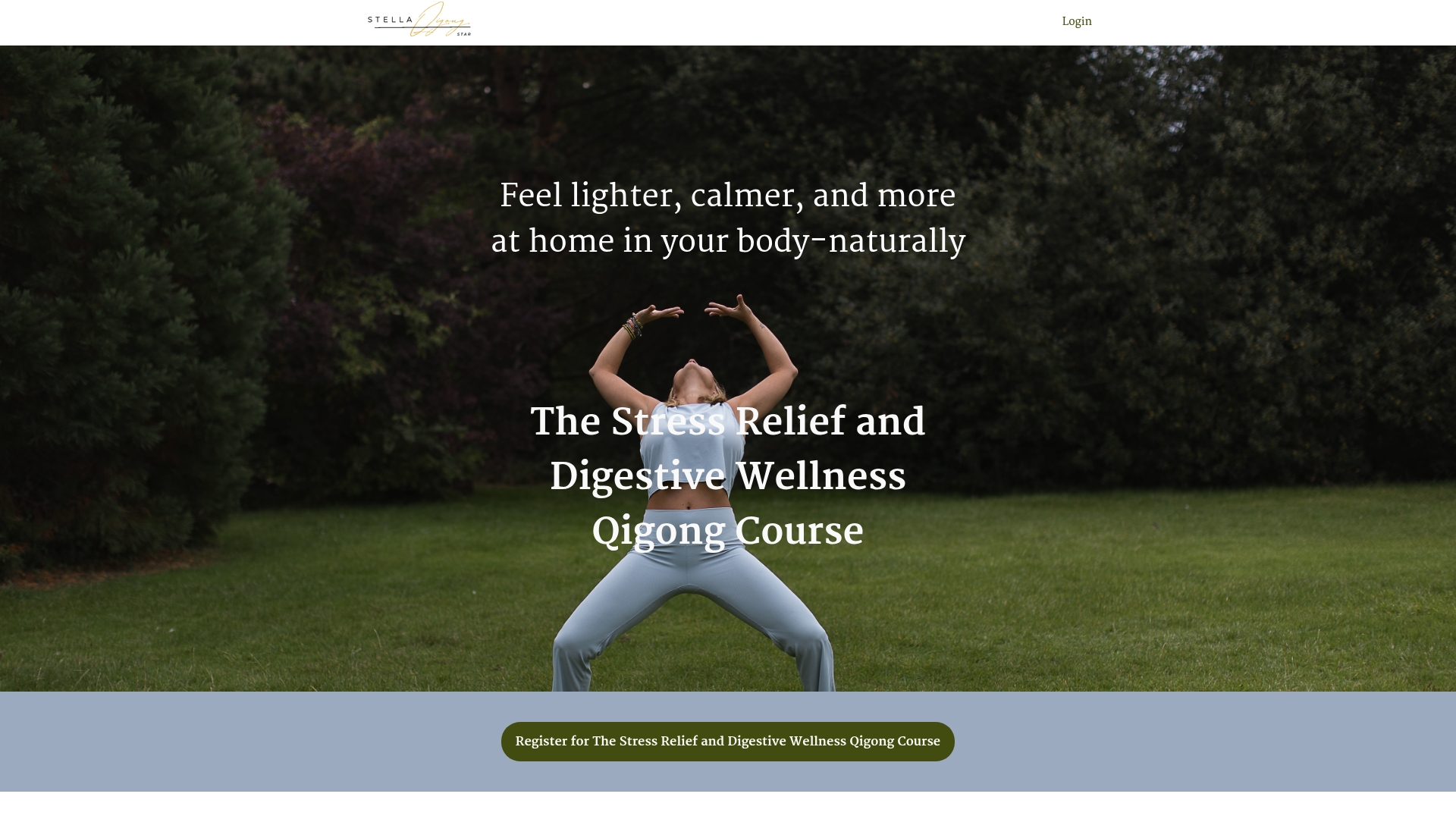
Unlike static meditation, Qigong gives your body something to do while your nervous system unwinds. Stella's online Qigong classes include targeted sessions for stress relief and gut wellness, accessible on-demand so you can practice on your schedule, even on difficult symptom days. Courses range from White Tiger Qigong to Five Animal Qigong, both beginner-friendly and deeply grounded in the same principles that Chinese Medicine uses to treat the gut. If your gut is asking for calm, this is a beautiful place to start.
FAQ
What are the most effective holistic approaches for IBS?
Gut-directed hypnotherapy, CBT, soluble fiber supplementation, and the low-FODMAP diet have the strongest clinical evidence. Combining stress management with dietary support tends to produce the most lasting results.
Can stress really cause IBS flares?
Yes. Reducing perceived stress produced a 36.7% symptom improvement and more than doubled remission odds in clinical data, confirming that stress is a direct physiological driver of IBS symptoms, not just a side effect.
Is yoga good for IBS symptom relief?
Some trials show yoga reduces IBS severity comparably to dietary interventions, though individual results vary. It works primarily through stress reduction and gentle stimulation of digestive motility.
How long does it take for natural IBS remedies to work?
Dietary changes like low-FODMAP typically show results within two to four weeks. Mind-body therapies and probiotic supplementation generally require four to eight weeks of consistent practice before meaningful improvement appears.
Should I try multiple holistic strategies at once?
Starting one approach at a time is more practical. Introducing changes gradually lets you identify what's actually helping, and your symptom journal becomes your most reliable guide to building a plan that fits your body.