
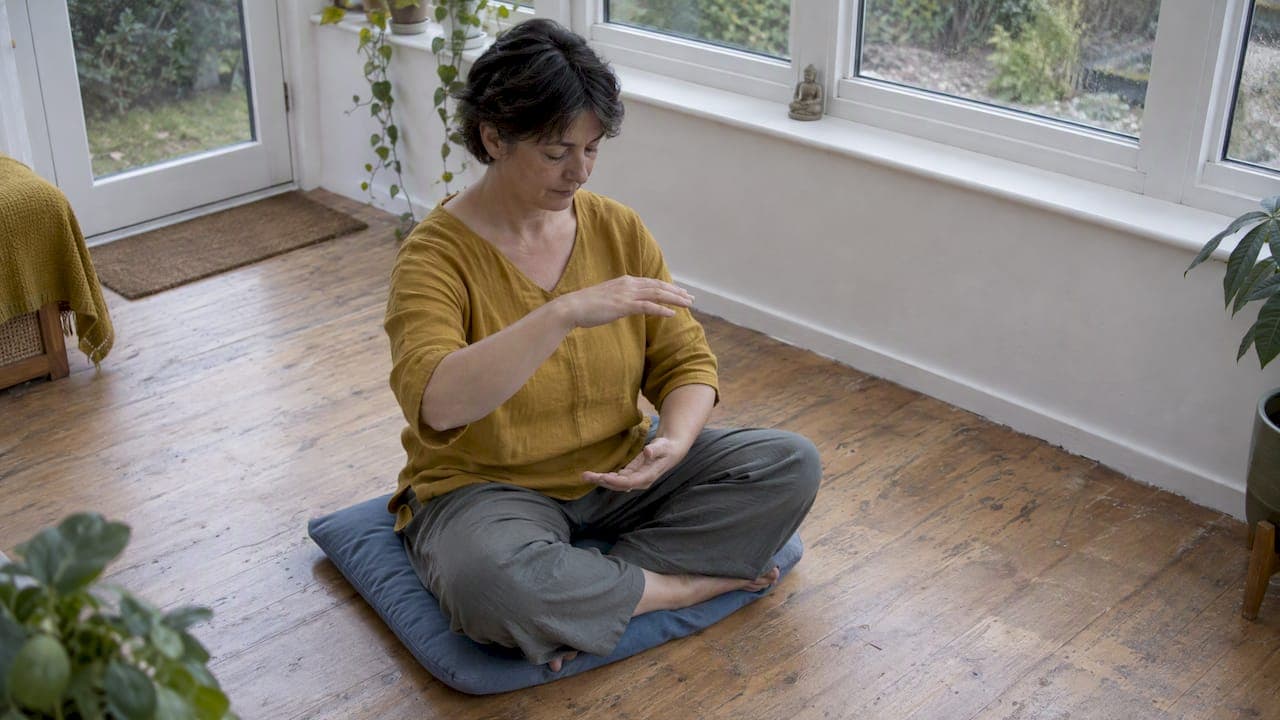
Spiritual Qigong practice blends gentle movement, mindful breath, and intentional awareness into a daily path toward inner calm and physical vitality. When you practice with sincerity, even for a few minutes, you build presence, ease stress, and restore a felt sense of energetic balance. The sections ahead walk through the principles, techniques, evidence, and a simple plan to help you begin.
TL;DR:
- Consistent practice begins to show mental and physical benefits within two weeks, with deeper improvements in stress and well-being developing after four weeks.
- Short sessions of five to ten minutes effectively cultivate calmness and body awareness, especially when combined with deliberate attention to breath and sensation.
- Beginners should focus on slow, mindful movement and breathing, avoiding vigorous or strenuous exercises, especially if they have health conditions or are pregnant.
- Guided instruction with verified certification can improve safety and deepen meditative focus, while also ensuring proper technique and modifications.
- Regularity and starting with small, manageable routines are more effective than attempting intense or lengthy sessions that may lead to burnout or injury.
Table of Contents
- What Spiritual Qigong Means and How It Differs From General Qigong
- Core Spiritual Principles That Guide Practice
- Key Practices and Meditative Techniques in Spiritual Qigong
- What Research Says About Spiritual Qigong's Benefits
- Safety, Contraindications, and When to Modify Your Practice
- How to Start a Spiritual Qigong Practice: A Four-Week Plan
- Why Verified Instruction and the Right Teacher Matter
- A Reflection on Presence and Small Daily Practice
- Learning Spiritual Qigong Safely With Guided Support
- FAQ
- Sources
What Spiritual Qigong Means and How It Differs From General Qigong
General Qigong often focuses on physical conditioning: loosening joints, improving circulation, and building stamina through repeated movement sequences. Spiritual Qigong carries those same movements but asks something more of you. It invites a quality of attention that turns each gesture into a meditation, so the body becomes a vehicle for inner cultivation rather than just a target for fitness.
The distinction lives mostly in intent. A spiritual session slows down, leaves space between movements, and keeps your awareness anchored inside the body rather than on the shape of the form. You are not performing the movement so much as feeling your way through it, noticing where tension lives, where breath catches, and where awareness drifts.
This emphasis traces back to Daoist and Chan Buddhist roots, where movement, breath, and stillness were treated as tools for self-cultivation long before Qigong became known in the West as an exercise system. These lineages framed practice as a way of harmonizing with natural rhythms rather than mastering the body through effort. We share this context as background, not as a doctrine you need to adopt. You can practice spiritual Qigong as a purely secular mindfulness tool or layer in whatever spiritual meaning feels authentic to you.
The spiritual emphasis reshapes how a session unfolds:
- Sessions open with a few minutes of stillness to settle the mind before any movement begins.
- Transitions between postures are slower, with attention placed on sensation rather than precision.
- Breath leads the movement instead of the other way around.
- Closing moments include quiet standing or sitting to let the practice settle into the body.
The outcome of this structure tends to differ from a purely physical workout. Instead of simply feeling loosened up, practitioners often describe a quieter mind, a steadier mood, and a clearer sense of their own internal state. That shift in outcome is the real marker of spiritual Qigong: it changes not just how your body feels but how present you are within it.
Core Spiritual Principles That Guide Practice
Spiritual Qigong rests on a small set of principles that show up in nearly every tradition, from White Tiger forms to Five Animal sequences. These ideas are not abstract philosophy. Each one translates into a concrete cue you can apply the next time you practice.
- Intention (Yi): Where your mind goes, energy tends to follow, so directing attention deliberately shapes the quality of a session.
- Presence and awareness: Noticing sensation without judgment keeps practice meditative rather than mechanical.
- Breath (Qi flow): Slow, even breathing regulates the nervous system and gives movement its rhythm.
- Energy circulation: Visualizing energy moving smoothly through the body supports a felt sense of openness and ease.
- Preservation of essence (Jing): Avoiding strain or overexertion protects the vitality the practice aims to cultivate.
- Natural ease (Wu Wei): Movements stay soft and unforced, reflecting effort without tension.
Each principle pairs with a simple micro-cue you can use mid-practice:
- For intention, silently name what you want the session to cultivate, calm, clarity, or release, before you begin moving.
- For presence, pause every few minutes and ask what you notice in your hands, feet, or breath right now.
- For breath, lengthen your exhale slightly longer than your inhale to settle the nervous system.
- For energy circulation, imagine warmth spreading from your center outward as you move.
- For preservation of essence, stop a movement the moment it feels forced rather than pushing through it.
- For natural ease, soften your shoulders and jaw every time you notice them tightening.
These principles are intentionally neutral. You can hold them as physiological cues about breath and nervous system regulation, or as part of a broader spiritual framework. Either reading is compatible with the practice, and most practitioners move between the two depending on the day.
Pro Tip: Pick one principle to focus on per week rather than trying to hold all six at once; depth comes from repetition, not from juggling every cue simultaneously.
Key Practices and Meditative Techniques in Spiritual Qigong
Spiritual Qigong offers a range of formats, so you can match a practice to the time and energy you actually have rather than forcing a rigid routine.
- Five to ten minutes: grounding practice. A short standing or seated meditation with slow breathing is often enough to settle a racing mind before work or sleep.
- Fifteen to twenty minutes: flowing movement. A short sequence of gentle, repeated movements paired with breath builds warmth and circulation without demanding much time, and our 15-minute spiritual growth practice offers one example of this format led by a certified teacher.
- Thirty minutes or more: deep session. Longer sessions combine movement, stillness, and breathwork, giving space for the nervous system to fully downshift and for subtler sensations of energy to surface.
Several techniques recur across spiritual Qigong styles:
- Standing meditation (Zhan Zhuang): Holding a relaxed, upright stance while breathing slowly builds both physical stability and mental focus.
- Seated meditation: Useful when mobility is limited or when a session calls for deeper internal stillness.
- Diaphragmatic breathing: Slow belly breathing anchors the nervous system and supports the sense of energy moving smoothly; our guide to breathwork styles explains several approaches compatible with Qigong.
- Microcirculation movements: Small, repeated motions in the wrists, ankles, or spine are used to draw attention inward and encourage a felt sense of energy flow.
Two well-known approaches illustrate how these techniques come together in a complete system. White Tiger Qigong draws on the qualities often associated with the tiger: groundedness, strength, and alert calm, cultivated through postures that build core stability and steady breath control. Five Animal Qigong structures practice around the movement qualities of five animals, typically the tiger, deer, bear, monkey, and crane, each contributing a different quality such as strength, flexibility, grounded power, agility, or lightness. Rather than memorizing symbolism, most practitioners experience these forms simply as varied movement patterns that keep practice engaging while working different aspects of the body and breath.
What Research Says About Spiritual Qigong's Benefits
Evidence for Qigong's physical and psychological benefits has grown substantially over the past decade, and the findings line up well with what spiritual practitioners report anecdotally. A systematic review of Qigong as an integrative practice found consistent improvements in perceived stress, quality of life, respiratory function, and pain measures across adult and elderly populations, with larger effects linked to longer or more frequent practice.
One key finding worth noting: the same review recommended at least four weeks of consistent practice before benefits become measurable, which matches the timeline generally recommended for beginning a spiritual Qigong routine. Shorter, more frequent sessions tend to outperform occasional long ones, a dose-response pattern the review also highlighted.
Other clinical trial data indexed on PubMed report reduced perceived stress and anxiety scores, along with improved quality-of-life measures, after programs lasting roughly four to twelve weeks. More recent clinical findings continue to corroborate benefits for mood, fatigue, and physical function, reinforcing Qigong's standing as a low-risk option for adults seeking a mind-body practice.
For someone approaching Qigong with a spiritual focus, these findings translate into realistic expectations. A felt sense of calm and clearer breathing often shows up within the first couple of weeks, while deeper shifts in stress reactivity and overall well-being tend to build over a month or more of steady practice. It is worth remembering that study populations vary widely, from COPD patients to healthy adults, so individual results will differ, and consistency matters more than intensity.
Safety, Contraindications, and When to Modify Your Practice
Spiritual Qigong is gentle by design, but it is not risk-free for everyone; older adults might also benefit from balance training exercises designed to prevent falls that complement their Qigong practice. Most people experience only mild, short-term effects such as light-headedness during standing meditation or temporary fatigue as the body adjusts to slower breathing patterns.
A smaller group should approach certain movements with more caution:
- Pregnant practitioners should avoid deep twists or abdominal compression and favor seated or standing forms with gentle breath work.
- Anyone with an unstable cardiac condition should check with a physician before starting vigorous flowing sequences.
- Those prone to severe vertigo may need to skip movements involving head turns or eye closure while standing.
- Recent surgical patients should wait for medical clearance before resuming full-range movement.
Our detailed guide to Qigong contraindications covers condition-specific modifications in more depth. When in doubt, a quick conversation with a qualified teacher or your physician before beginning is the safest route, particularly if you are managing a chronic condition or recovering from illness.
How to Start a Spiritual Qigong Practice: A Four-Week Plan
Starting small and staying consistent beats an ambitious routine that fizzles out after a week. This plan builds gradually, giving your body and awareness time to adjust.
- Week one: grounding. Practice five to ten minutes daily, focusing only on standing meditation and slow breathing. The goal is simply to notice how your body feels at rest.
- Week two: gentle movement. Add ten minutes of flowing movement to your grounding practice, keeping attention on breath rather than form.
- Week three: extend and refine. Increase to twenty minutes total, incorporating one of the micro-cues from the principles above each session.
- Week four: deepen. Add a longer weekend session of thirty minutes or more, combining movement, stillness, and breathwork to consolidate what you have built.
Three markers are worth tracking as you go: sleep quality, how quickly your stress response settles after a tense moment, and how steady your breath feels during the day. Small, early shifts in these areas often predict longer-term gains better than how flexible or coordinated you feel during the form itself. Our relaxation techniques guide offers short routines that fit naturally into this kind of starter schedule, and our beginner's guide to Qigong is a useful companion for the early weeks.
On format: live instruction, even once a week, tends to catch small errors that recorded video cannot, things like breath-holding, neck tension, or overextending a stance. A blend of recorded sessions for daily repetition and occasional live or one-on-one feedback gives you both convenience and the correction that keeps a spiritual practice safe and effective over time.
Pro Tip: Keep a one-line journal after each session, noting one sensation or shift you noticed; patterns become visible after a few weeks that are easy to miss day to day.

Why Verified Instruction and the Right Teacher Matter
Learning spiritual Qigong from an unqualified source risks more than wasted time. Misaligned postures, rushed breathing cues, and misunderstood intent can blunt the benefits or, in rarer cases, cause strain. We teach as a White Tiger Qigong Level 3 certified instructor, also accredited by Yoga Alliance, and our course offerings at Qigongstar include both White Tiger and Five Animal Qigong pathways.
When choosing a teacher, look for verifiable certification, documented teaching hours, clear safety guidance, and the ability to modify movements for different bodies and conditions. Live feedback, even briefly, reduces the risk of practicing a form incorrectly and helps deepen the meditative intent that separates spiritual Qigong from simple exercise.

A Reflection on Presence and Small Daily Practice
What changed my own relationship with stress was not a dramatic breakthrough but a quiet, repeated choice: standing still for five minutes before the day pulled me into motion. That small habit built a kind of internal steadiness I did not expect from something so simple. If you take nothing else from this guide, let it be this: start smaller than feels meaningful, and let the four-week plan above show you what consistency actually does.
— Stella
Learning Spiritual Qigong Safely With Guided Support
Reading about spiritual Qigong gets you only partway there. The real shift happens through guided, consistent practice, and we built our course and session formats around exactly that gap.
- New to Qigong: Our Qigong for Stress Relief and Digestive Wellness course (£116, one-off) gives you a structured, self-paced entry point into the practice.
- Want quick clarity: A 30-Minute Clarity Session (£85, one-off) suits anyone who wants focused, personal guidance without a longer commitment.
- Ready to go deeper: The 60-Minute Deep Dive Online Session (£145, one-off) or the 60-Minute Face-to-Face Qigong session (£165, one-off) offer extended, one-on-one time to refine your form and breath.
- Prefer group energy: Our Group Qigong Classes bring the same White Tiger and Five Animal foundations into a shared setting, with pricing available on request.
Each format carries the same certified instruction behind it, so whichever pace fits your life, you get correction and feedback that keep your practice safe as it deepens. Explore the full lineup on our online courses and classes page and find the starting point that matches where you are right now.
FAQ
What is spiritual Qigong?
Spiritual Qigong is a form of Qigong practice that combines gentle movement, breath regulation, and focused intention to cultivate inner awareness alongside physical benefits. It treats the body as a vehicle for meditation rather than purely a tool for fitness, often drawing on Daoist and Chan Buddhist roots for its emphasis on presence and natural ease.
What are the core principles of spiritual Qigong?
Most traditions center on intention, presence, breath, energy circulation, preservation of essence, and natural ease. These principles guide how a practitioner moves and breathes during a session, shaping it into a meditative experience rather than a simple exercise routine.
What are the negative side effects of Qigong?
Most people experience only mild, short-term effects such as light-headedness during standing postures or temporary fatigue while adjusting to slower breathing. A systematic review of Qigong practice found it generally low-risk, though certain conditions, including pregnancy, unstable heart conditions, or recent surgery, call for modified movements.
Is it okay for Christians to do Qigong?
There is no single consensus on this question. Many practitioners treat Qigong as a secular practice focused on breath and movement, while some Christian perspectives raise caution about its spiritual or energetic language, so clarifying your own intent before starting can help you decide how comfortable the practice feels for you.
Sources
- Benefits of Qigong as an integrative and complementary practice for health: a systematic review
- PubMed entry related to qigong trial evidence
- PubMed entry on qigong-related clinical findings