

Authentic teaching is defined as the practice of engaging learners through genuine presence, sincere vulnerability, and real human connection, and research confirms it directly shapes wellness for both educators and students. Understanding why authentic teaching matters for wellness means recognizing that how you show up in a learning space is as powerful as what you teach. When educators bring their true selves into the room, they activate something that no curriculum alone can produce: psychological safety, trust, and the kind of connection that sustains mental health over time. Frameworks like PERMA, Social-Emotional Learning (SEL), and mindfulness-based practices all point to the same conclusion. Genuine teaching presence is a wellness strategy, not just a pedagogical preference.
Why authentic teaching matters for wellness in practice
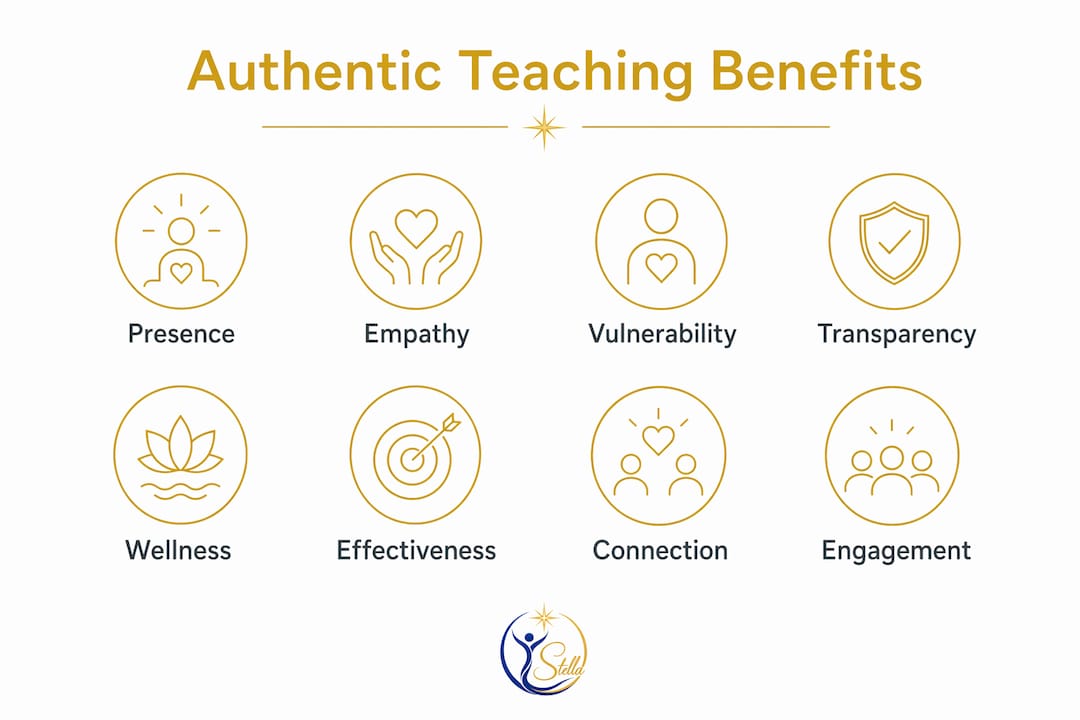
Authentic teaching rests on four core elements: vulnerability, empathy, transparency, and presence. These are not soft skills. They are the structural conditions that make learning feel safe and meaningful. When you model honest engagement, you signal to every person in the room that imperfection is acceptable and growth is the goal.
Positive teacher-student relationships rooted in authentic teaching improve all five PERMA dimensions of well-being for teachers, including positive emotion, engagement, relationships, meaning, and accomplishment. That finding matters because it reframes authenticity from a personality trait into a measurable wellness mechanism. You are not just being "nice." You are actively protecting your own mental health.

Mindfulness is one of the most well-researched tools for cultivating this kind of presence. Mindfulness-Based Interventions promote authentic teaching presence and improve teacher self-efficacy with medium-to-large effects, with 19% of studies showing lasting improvements after the intervention period ends. That persistence matters because burnout often stems from the exhaustion of performing a role rather than inhabiting one.
Here are the core characteristics that define authentic teaching in practice:
- Genuine presence: You are fully attentive, not distracted or going through the motions.
- Relevant vulnerability: You share personal experiences that illuminate the lesson, not overshare for emotional relief.
- Transparent reasoning: You explain why you teach the way you do, building student trust in the process.
- Empathetic responsiveness: You adjust your approach based on what students actually need, not just what the syllabus requires.
- Consistent alignment: Your values, words, and actions match, so students experience you as coherent and trustworthy.
Pro Tip: Start each class or session with one brief, honest observation about your own learning process. Something as simple as "I've been rethinking how I explain this concept" signals genuine engagement and models intellectual humility.
How does authentic teaching impact teacher wellness and effectiveness?
The connection between teacher well-being and professional performance is not incidental. 2026 systematic reviews confirm that psychological well-being is a core mechanism for educational success, not merely a pleasant side effect. Teachers who feel psychologically grounded bring more energy, creativity, and patience to their work. Those who do not eventually deplete.
Teacher autonomy is the critical variable here. Perceived autonomy strongly correlates with lower emotional exhaustion and improved professional fulfillment. When you have the freedom to teach in a way that reflects your genuine values and style, you stop spending energy managing the gap between who you are and who you feel you are supposed to be. That gap is where burnout lives.
The PEACE framework, which stands for Preparation, Expertise, Authenticity, Caring, and Engagement, places authenticity as the integrative element that holds all other teaching foundations together. Without it, even excellent preparation and deep expertise feel hollow to students. With it, every other element of your teaching gains coherence and warmth.
"Authenticity is the essential glue in teaching that transforms expertise and preparation into meaningful student relationships and lasting learning impact." — Faculty Focus, PEACE Framework Research
| Authentic teaching factor | Wellness outcome |
|---|---|
| Genuine presence and empathy | Reduced classroom conflict and sustained teacher mental health |
| Teacher autonomy and agency | Lower emotional exhaustion and higher job satisfaction |
| Mindfulness-based practice | Lasting improvements in self-efficacy and teaching presence |
| PEACE framework integration | Deeper trust, coherence, and connected learning environments |
Teachers who adopt authentic teaching with autonomy also experience greater eudaimonic well-being, the kind rooted in purpose and meaning rather than just pleasure. This serves as a resilience buffer against stress, meaning you recover faster from difficult days rather than accumulating damage over time.
What separates authentic teaching from performance?
Students detect inauthenticity immediately, and when they do, trust collapses. This is the performance trap: the belief that projecting confidence, enthusiasm, or authority is the same as embodying it. It is not. Performed teaching is exhausting for the teacher and unconvincing to the learner.
Authentic teaching is not the same as radical transparency or emotional oversharing. The distinction matters enormously for educator wellness. Sharing every frustration, personal struggle, or moment of doubt does not build connection. It creates confusion and places an unfair emotional burden on students. Boundary mismanagement leads to emotional exhaustion and student discomfort, two outcomes that directly undermine the wellness goals authentic teaching is meant to support.
Healthy authenticity is intentional. It asks: "Is sharing this relevant to the learning? Does it serve the student, or does it serve my need to be seen?" That filter protects both you and the people you teach.
Common pitfalls to avoid:
- Oversharing personal struggles that are unrelated to the lesson or the learner's growth
- Performing enthusiasm you do not feel, which students read as condescension or dishonesty
- Abandoning structure in the name of "being real," when structure is itself a form of care
- Conflating likability with authenticity, since genuine teaching sometimes means delivering uncomfortable truths with compassion
Pro Tip: Before sharing a personal story or experience in a teaching context, ask yourself: "Does this help the learner understand something they could not understand without it?" If the answer is no, hold it back.
Practical strategies to cultivate genuine teaching for holistic wellness
Building authentic teaching into your practice does not require a complete overhaul. Small, consistent shifts create the conditions for genuine connection to grow. The Vulnerability Loop is one practical model: when educators share relevant personal stories, students feel permission to engage honestly, which deepens trust and dismantles the perfectionism that silences learning.
Here is a sequence of practices you can begin this week:
- Open with a real moment. Share one genuine observation, question, or reflection at the start of each session. This sets the tone without requiring vulnerability that feels unsafe.
- Name your reasoning. When you make a pedagogical choice, say why. "I'm structuring this as a discussion rather than a lecture because I want to hear your thinking" builds transparency and models metacognition.
- Create space for student voice. Authentic teaching fosters student autonomy, improving engagement, motivation, and social-emotional health. Ask open questions and resist filling every silence.
- Practice mindfulness before teaching. Even five minutes of breath-focused awareness before a session helps you arrive present rather than distracted. This is not a luxury. It is preparation.
- Reflect after each session. Note one moment where you felt genuinely connected and one where you felt yourself performing. That reflection builds self-awareness over time.
You can also look at the qualities of effective mind-body instructors to understand how presence and authenticity translate across wellness teaching contexts. The principles are consistent whether you teach in a classroom, a studio, or online.
| Approach | Authentic teaching | Performative teaching |
|---|---|---|
| Emotional tone | Grounded, responsive, and present | Projected, rehearsed, and managed |
| Student relationship | Built on trust and genuine care | Built on authority and impression |
| Wellness impact | Sustains educator energy and student engagement | Depletes educator energy over time |
| Error response | Models learning from mistakes openly | Conceals or minimizes mistakes |
Integrating SEL principles into your practice means teaching the whole person, not just the content. When you acknowledge emotional states, normalize struggle, and respond with empathy, you create a holistic wellness framework that benefits everyone in the room, including you.
Key takeaways
Authentic teaching is the single most effective way educators can protect their own wellness while deepening student engagement and trust.
| Point | Details |
|---|---|
| Authenticity protects teacher wellness | Genuine presence reduces burnout by eliminating the energy cost of performing a role. |
| PERMA dimensions improve with authentic relationships | All five well-being dimensions strengthen when teacher-student relationships are rooted in real connection. |
| Mindfulness builds authentic presence | Mindfulness-Based Interventions show medium-to-large effects on teacher self-efficacy and lasting teaching presence. |
| Boundary setting is non-negotiable | Relevant, intentional vulnerability protects both educator wellness and student trust. |
| Small practices create lasting change | Daily reflection, open reasoning, and student autonomy build authentic teaching habits over time. |
What I've learned about authenticity as a wellness practice
I used to think that showing up fully meant having everything together. The polished sequence, the confident delivery, the sense that I had already solved what I was teaching. What I discovered, after years of teaching qigong and movement practices, is that the moments of genuine connection almost never happened in those polished stretches. They happened when I said something honest: "I struggled with this too" or "I'm still learning how to hold this in my own body."
That shift changed everything. Not just for the students, but for me. Teaching from a place of real presence stopped feeling like a performance I had to sustain and started feeling like something that actually restored my energy. The research now confirms what I felt intuitively. Eudaimonic well-being grows when teaching aligns with your genuine values and lived experience.
The uncomfortable truth is that most educator burnout is not caused by overwork alone. It is caused by the chronic exhaustion of being someone slightly different from who you actually are. Authenticity is not a risk. It is the most sustainable path forward. Embrace imperfection. Let your genuine care show. Your wellness and your students' wellness are not separate concerns. They are the same conversation.
— Stella
Deepen your practice with Qigongstar
If this resonates with you, Qigongstar offers a range of online wellness courses designed to help educators and wellness practitioners cultivate genuine presence, release stress, and build the kind of inner calm that authentic teaching requires. From White Tiger Qigong to Five Animal Qigong, each program is rooted in Chinese Medicine principles and taught with the same authentic, mindful approach this article describes. You can also explore qigong for stress relief as a direct practice for building the grounded presence that makes genuine teaching possible. All courses are beginner-friendly, on-demand, and certified through the White Tiger Qigong School and Yoga Alliance.
FAQ
What is authentic teaching?
Authentic teaching is the practice of engaging learners through genuine presence, relevant vulnerability, and sincere care rather than performance or role-playing. It aligns a teacher's values, expertise, and personal style into a coherent, trustworthy experience for students.
How does authentic teaching affect teacher mental health?
Authentic teacher-student relationships improve all PERMA well-being dimensions and reduce classroom conflict, directly sustaining teacher mental health. Teachers who teach authentically also report lower emotional exhaustion and higher job satisfaction.
Is vulnerability in teaching always healthy?
Vulnerability is healthy when it is relevant to the learning and intentionally bounded. Boundary mismanagement leads to emotional exhaustion for educators and discomfort for students, so the key is sharing what serves the learner, not what relieves the teacher.
Can mindfulness help me teach more authentically?
Mindfulness-Based Interventions show medium-to-large effects on teacher self-efficacy and authentic presence, with improvements that persist after the intervention ends. Even brief daily mindfulness practice before teaching can meaningfully shift how present and grounded you feel.
Does authentic teaching benefit students as well as teachers?
Authentic teaching fosters student autonomy and engagement, improving motivation and social-emotional health alongside academic outcomes. The wellness benefits of genuine teaching flow in both directions, making it one of the few practices that simultaneously serves the educator and the learner.