
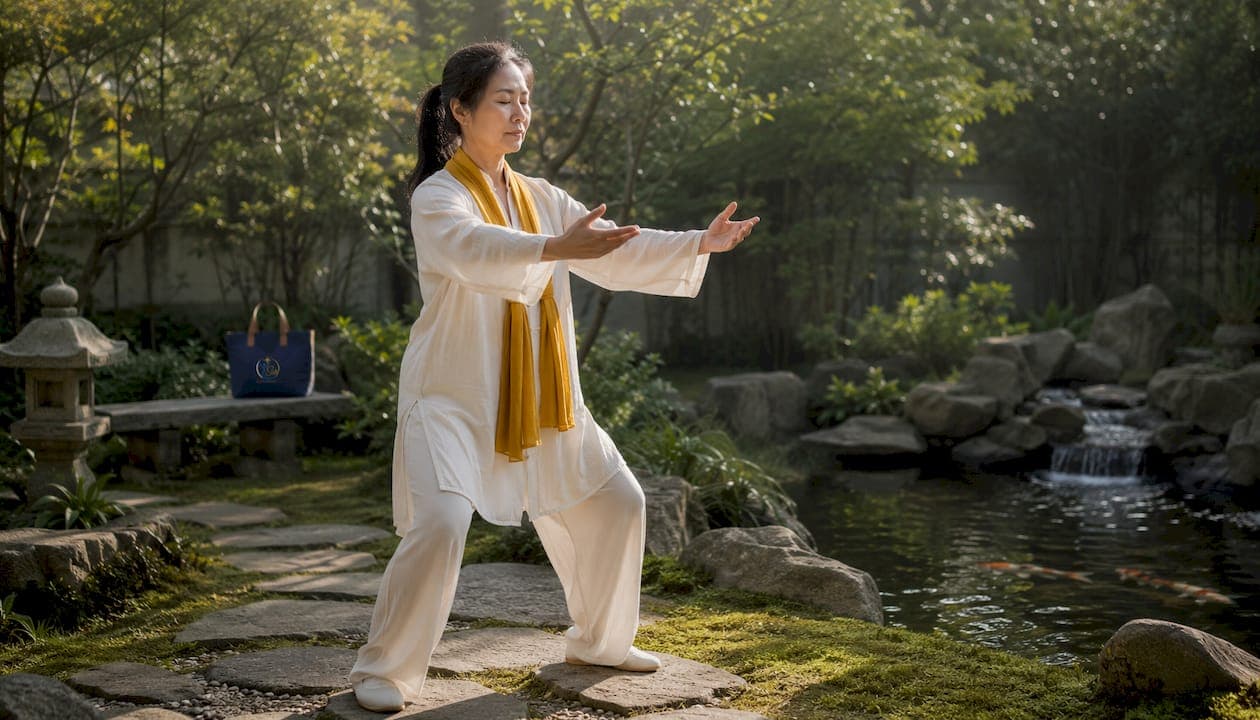
You can reliably cultivate energetic body awareness through short, daily Qigong sessions that combine slowed movement, breath focus, and receptive internal listening. The NIH/PMC review on Qigong frames this practice as bio-energy medicine built on internal energy activation, breathing, meditation, and gentle movement. You do not need hours on a mat or years of training. You need consistency, curiosity, and a willingness to listen inward.
Start here, right now:
- 1-minute micro-practice: Stand or sit comfortably. Feel your feet on the floor. Take three slow, full breaths and notice the rise and fall of your chest. That contact and that breath are your first qi cues.
- 5-minute movement set: Slow arm circles, gentle weight shifts from foot to foot, and soft pelvic tilts. With each movement, pause and notice where you feel heaviness, warmth, or subtle tingling.
- 10-minute internal listening practice: Stand in a relaxed posture, knees soft, arms at your sides. Breathe at a 4-count inhale, 6-count exhale ratio. Let your attention rest inside your body without forcing it anywhere. This receptive state is called tingjin, or internal listening.
A 12-week structured Qigong program enrolling 332 participants produced measurable improvements in body listening, self-regulation, and emotional well-being. Most people notice their first subtle sensations, a warmth in the palms or a gentle heaviness in the legs, within days of starting. Consistent, usable interoceptive shifts in daily life typically take 8–12 weeks of regular practice.
Table of Contents
- What do practitioners actually mean by qi and energetic body awareness?
- How Qigong builds your capacity to feel inner energy
- Beginner Qigong practices you can do today to feel qi
- What sensations are normal, and when should you stop?
- How long until you feel results, and how often should you practice?
- What to do when you feel energetically blocked
- How to choose a Qigong teacher or online course
- What does the research actually say about Qigong and body awareness?
- Key Takeaways
- What energetic awareness actually taught me about teaching
- Qigongstar's online courses can help you go deeper
- Useful sources and suggested next steps
What do practitioners actually mean by qi and energetic body awareness?
Qi, translated from Chinese as "vital energy," is best understood as the felt sense of your integrated internal body processes: circulation, breath, warmth, subtle pressure, and the micro-shifts in balance that happen with every movement. Energetic body awareness is simply a refined version of what scientists call interoception, your nervous system's ability to sense and interpret signals from inside the body.
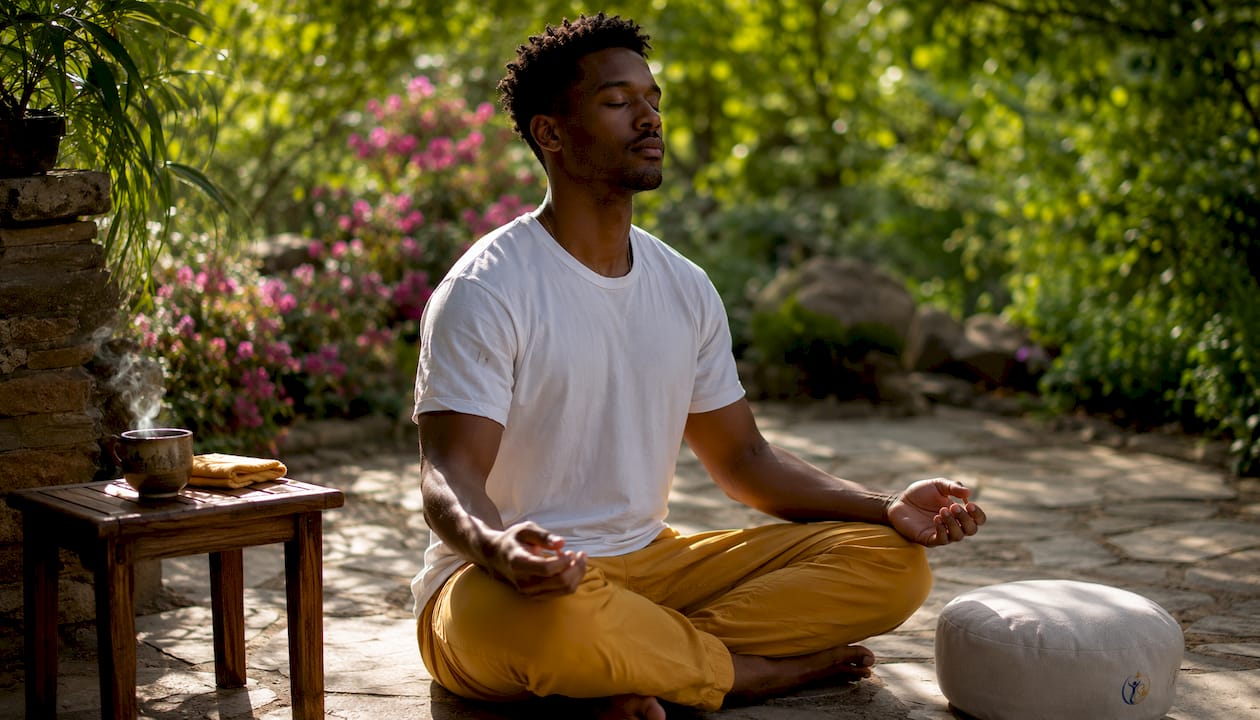
Modern psychophysiology does not dismiss these sensations. Interoceptive awareness and autonomic regulation are well-studied mechanisms, and Qigong trains both. When you slow your movement and soften your attention, you give your nervous system space to register signals it normally filters out.
The practical framing matters. Sensations you notice during practice, warmth, coolness, tingling, a sense of fullness, are cues to adapt your posture, breath, and attention. They are not proof of special powers. They are your body's feedback system coming online, and Qigong gives you a reliable method to tune in.
How Qigong builds your capacity to feel inner energy
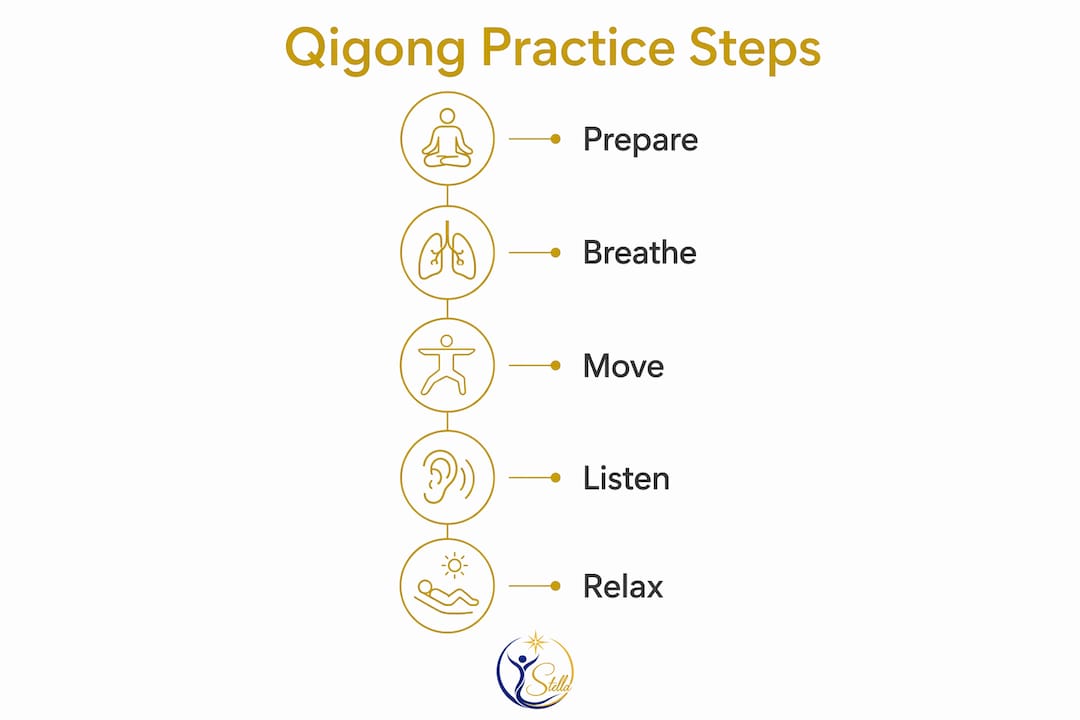
Qigong layers top-down attention with bottom-up bodily signals to improve interoception and shift your nervous system toward a calmer, more receptive state. The MDPI Mind the Motion study describes this as the interaction between attention-driven processes and spontaneous physiological responses, a loop that gradually trains you to notice subtler and subtler internal cues.
Here is how each mechanism works in practice:
- Breath anchoring: Slowing the breath activates the parasympathetic nervous system, quieting background noise so subtler sensations surface.
- Slow amplitude movement: Moving slowly amplifies proprioceptive feedback. You feel weight shifts, joint angles, and muscular effort that fast movement masks.
- Posture and alignment: Holding a relaxed, upright posture without rigidity creates a stable reference point, making deviations, tension, and release easier to notice.
- Micro-adjustment feedback loops: Each small correction in stance or breath teaches your nervous system to register finer signals over time.
- Standing meditation (nei gong): Stillness with soft attention is one of the most direct ways to feel internal circulation and subtle movement.
- Sound and vocalization: Certain Qigong sounds resonate in specific body cavities, making internal vibration tangible and easier to locate.
"Qigong is best understood as a moving meditation whose primary aim is restoring the dialogue between conscious intention and deeper physiological layers, not achieving conventional fitness goals." — Healthful Qigong
The NIH/PMC review confirms that Qigong's core components, internal energy activation, breathing, and mindful movement, work together as an integrated system rather than isolated techniques. That integration is what makes the practice so effective for building body energy awareness over time.

Beginner Qigong practices you can do today to feel qi
A repeatable 1/5/10-minute set is all you need to begin training breath, grounding, and internal listening. Start with whichever time block fits your morning or lunch break, and build from there.
The 1-minute grounding practice
- Stand with feet hip-width apart, or sit with both feet flat on the floor.
- Close your eyes or soften your gaze downward.
- Take one slow breath in through the nose for a count of four, then exhale through the mouth for a count of six.
- Notice the weight of your body pressing into the floor. Feel the temperature of the air as it enters your nostrils.
- Repeat three times. That is your complete micro-practice.
The 5-minute movement set
Begin with slow arm circles, letting your arms float up on the inhale and drift down on the exhale. After eight circles, shift your weight gently from your left foot to your right, pausing at each side to feel the difference in pressure underfoot. Add soft pelvic tilts, forward and back, noticing where your lower back releases. Throughout, keep your attention on sensation, not performance. What do you feel in your palms? Where does warmth gather?
The 10-minute internal listening practice
Stand in a relaxed posture with knees slightly soft and arms resting at your sides. Breathe at a 4-count inhale, 6-count exhale ratio. Let your attention settle inside your body the way you might listen for a sound in a quiet room: receptive, patient, unhurried. Notice any warmth, tingling, or subtle pulsing without trying to intensify it. This is tingjin, and it is the heart of energetic body awareness through Qigong.
Pro Tip: Soft attention is the skill. If you notice yourself straining to feel something, you have already over-focused. Relax your eyes, soften your jaw, and let sensations come to you rather than chasing them. Beginners most commonly make three mistakes: forcing concentration, over-breathing (hyperventilating with deep breaths), and holding subtle tension in the shoulders and hands. Check for all three every few minutes.
For a model daily Qigong routine that maps these time blocks into a full week, Qigongstar's blog offers a practical template you can follow alongside this guide.
What sensations are normal, and when should you stop?
Many subtle sensations during practice are normal and reflect your interoception waking up. Others are safety signals worth respecting immediately.
Common sensations and what they typically mean:
- Yawning: A sign your nervous system is shifting toward parasympathetic rest. Welcome it.
- Tingling or paresthesia in the hands and feet: Increased circulation and heightened sensory attention. Usually harmless; soften your grip and relax your shoulders if it intensifies.
- Warmth in the palms or lower abdomen: Often described as the first clear qi sensation. It reflects vasodilation and increased blood flow.
- Coolness or a gentle breeze sensation: Common in more advanced practice; indicates heightened skin sensitivity and interoceptive refinement.
- Heaviness in the legs: A sign of deep relaxation and grounding. Let it be.
- Spontaneous micro-movements: Subtle swaying or trembling in standing practice is normal and reflects the body's postural micro-adjustments.
"Grounding practices, including sensory awareness and presence, form the practical foundation of energy work, not spiritual claims." — Holistic Energy Healing Techniques
Stop practice immediately if you experience:
- Sharp or shooting pain anywhere in the body
- Dizziness or faintness
- Prolonged involuntary breath-holding
- Emotional flooding that feels unmanageable
- Numbness that does not resolve within a minute of rest
If any of these arise, sit or lie down, breathe naturally, and consult a qualified Qigong instructor or your healthcare provider before resuming. The escalation path is simple: modify the practice first, rest if that does not help, then seek instructor or medical guidance.
How long until you feel results, and how often should you practice?
Initial sensations, warmth, tingling, a gentle heaviness, often appear within the first few days of consistent practice. Measurable, reliable changes in how you use interoceptive signals in daily life typically take several weeks of consistent practice. The 12-week Mind the Motion program showed consistent improvements across body listening, trusting, and self-regulation subscales, with the strongest gains in participants who had lower baseline interoception at the start.
| Schedule | Time per day | Weekly frequency | 4-week outcome | 8-week outcome | 12-week outcome |
|---|---|---|---|---|---|
| Short | 5–10 min | Daily | First micro-sensations; calmer breath | More consistent breath awareness | Improved posture and grounding in daily life |
| Medium | 15 min | 3–5x per week | Clearer sensation during practice | Improved emotion regulation | Stable interoceptive use across situations |
| Long | 30 min | Daily + one longer session | Deepening tingjin skill | Noticeable autonomic shifts | Integrated body-energy awareness in movement and rest |
The short schedule is the right starting point for most adults. Five to ten minutes each morning, done consistently, builds the neural pathways that make longer sessions more productive later. Pairing Qigong with stress resilience strategies accelerates the shift from sympathetic reactivity to parasympathetic calm, which is the physiological ground where qi sensations become most accessible.
What to do when you feel energetically blocked
Simple movement, breath, and attention shifts commonly relieve the sense of stagnation. Persistent blockage, especially when accompanied by pain or emotional distress, may call for an experienced instructor or clinician.
- Slow, bounding breath with gentle pumping movement. Inhale slowly and let your arms float up; exhale and let them drift down with a soft bounce in the knees. Repeat 8–10 times. This combination encourages circulation without force.
- Walk or shake out your limbs. A two-minute gentle walk or a full-body shake, starting from the feet and working upward, moves stagnant energy more efficiently than any static technique.
- Body scan with micro-adjustments. Sit or stand quietly and move your attention slowly from your feet to your crown. Wherever you notice tension or numbness, make one small adjustment: soften the joint, release the breath, or shift your weight slightly.
- Gentle acupressure. Pressing lightly on the center of each palm (Pericardium 8, or Laogong point) for 30 seconds while breathing slowly can encourage a sense of warmth and circulation. Press only to the point of mild sensation, never pain, and skip this step if you have any hand injury or circulatory condition.
Seek instructor guidance, rather than continuing self-work, if you experience persistent pain, emotional flooding, or any neurological symptoms such as numbness that spreads or does not resolve. A medical professional should be your first call if symptoms feel physical rather than practice-related.
Pro Tip: Pair grounding with slow exhalation to encourage downward circulation and prevent the "floating" or lightheaded sensation some beginners notice. Feel your feet on the floor, exhale for a count of six, and imagine warmth settling into your lower body. This simple pairing is one of the most reliable resets in the practice.
For readers interested in how whole-body awareness connects to broader wellbeing, holistic somatic practices that cultivate bodily presence share a similar foundation of receptive, grounded attention.
How to choose a Qigong teacher or online course
Choose teachers with clear lineage or certification, explicit safety guidance, and a curriculum that emphasizes internal listening and progressive skill-building. A credential alone is not enough; the teaching approach matters just as much.
What to prioritize:
- Certification from a recognized school such as the White Tiger Qigong School, which provides structured lineage and teaching standards
- Yoga Alliance registration as an additional marker of professional accountability
- Demonstrable teaching experience with beginners, not just advanced practitioners
- A curriculum that explicitly addresses tingjin, breath regulation, and safe progression
- Clear contraindication guidance for common conditions (joint issues, high blood pressure, pregnancy)
Questions worth asking any instructor:
- How do you teach internal listening to someone who has never felt qi before?
- How do you adapt practice for someone with an injury or chronic condition?
- What is your approach to pacing a beginner through the first 8–12 weeks?
Red flags to watch for:
- Grandiose claims about healing specific diseases or "curing" conditions through qi alone
- Pressure to purchase expensive private sessions before you have tried a group class
- No mention of safety, contraindications, or when to stop practice
- Vague or evasive answers about their training background or lineage
What does the research actually say about Qigong and body awareness?
Peer-reviewed and clinical studies consistently link Qigong practice to improved interoceptive awareness, emotion regulation, and parasympathetic activation. The evidence is not yet at the scale of large randomized controlled trials, but the pattern across studies is clear and growing.
The NIH/PMC review on Qigong as bio-energy medicine identifies internal energy activation, breathing, meditation, and physical movement as the core components, and frames their combined effect as a clinically relevant system for improving physiological and psychological health. The review supports Qigong's use as a complementary practice rather than a replacement for medical care.
The MDPI Mind the Motion 12-week intervention is one of the most detailed recent studies on Qigong and interoception. With 332 enrolled participants and 114 completers, it reported consistent improvements across multiple Multidimensional Assessment of Interoceptive Awareness (MAIA) subscales, including body listening, trusting, and self-regulation, alongside gains in emotion regulation and general well-being. The study's authors note methodological limits, including self-selection and attrition, so the findings should be read as promising rather than definitive.
"Structured group Qigong programs are feasible and can measurably improve self-reported interoceptive awareness and emotion regulation, especially in participants with lower baseline interoception." — Mind the Motion, MDPI
Practical implications from the data:
- Short, regular sessions (even 10–15 minutes) produce interoceptive gains when practiced consistently
- Combining static (standing/sitting) and dynamic (slow movement) exercises trains both interoceptive awareness and proprioception
- Participants with lower baseline body awareness tend to show the largest gains, making Qigong especially well-suited for beginners
- Subjective self-report measures (journaling, body-scan notes) are a valid and useful way to track your own progress
For a broader look at how Qigong compares with other mind-body healing approaches, Qigongstar's comparison guide offers useful context alongside the clinical evidence.
Key Takeaways
Energetic body awareness through Qigong develops reliably with short daily practice combining slow movement, breath focus, and receptive internal listening, with first sensations often appearing within days and stable interoceptive gains emerging across 8–12 weeks.
| Point | Details |
|---|---|
| Start with micro-practice | A 1-minute grounding breath and foot-contact check is enough to begin sensing qi today. |
| Soft attention is the skill | Forcing concentration creates tension; let sensations come to you with a relaxed, receptive gaze. |
| Expect a 8–12 week arc | First sensations arrive within days; consistent, usable interoceptive shifts typically take 8–12 weeks of regular practice. |
| Know your stop signals | Sharp pain, dizziness, or emotional flooding mean stop, rest, and consult an instructor or clinician before continuing. |
| Qigongstar offers a structured path | Qigongstar's online courses in Five Animal Qigong and White Tiger Qigong map directly to the 1/5/10-minute progression in this guide. |
What energetic awareness actually taught me about teaching
Most students arrive expecting to feel something dramatic. They imagine a surge of electricity or a sudden rush of heat. What actually happens is quieter and, in many ways, more profound. A student who had spent years disconnected from her digestive signals began noticing, after a few weeks of morning practice, that she could feel the difference between hunger and anxiety in her body for the first time. That distinction changed how she ate, how she rested, and how she responded to stress.
The teacher tip I return to most often is this: take three slow breaths before any transition in your day, before a meal, before a meeting, before you open your phone. That small pause is not a spiritual ritual. It is a moment of interoceptive check-in that keeps the channel open between your conscious attention and your body's quieter signals.
Stella's teaching is grounded in White Tiger Qigong School certification and Yoga Alliance registration, which means the practices in this guide follow a structured, safety-conscious lineage rather than improvised wellness advice.
Qigongstar's online courses can help you go deeper
If the practices in this guide have sparked something in you, Qigongstar offers a clear, structured next step. The Five Animal Qigong course and White Tiger Qigong program are built around exactly the progression described here: breath regulation, slow movement, internal listening, and progressive skill-building across weeks and months.
Both courses are available live and on-demand, so you can practice at your own pace or join a live session for real-time guidance. The curriculum is designed for beginners and intermediate practitioners alike, with safety guidance and contraindication awareness built into every module. Certification through the White Tiger Qigong School and Yoga Alliance registration mean you are learning from a lineage with professional standards, not a generic wellness program. Browse the online classes and courses and choose the format that fits your schedule.
Useful sources and suggested next steps
Key research:
- Qigong: Bio-Energy Medicine, NIH/PMC — The foundational review framing Qigong's components and clinical relevance as an integrated bio-energy system.
- Mind the Motion: MDPI 12-week Qigong intervention — The most detailed recent study on Qigong and interoceptive awareness, with MAIA subscale data and psychological outcomes.
- How Internal Listening Builds Sensory Awareness, Healthful Qigong — Practitioner-level guidance on tingjin and the attentional style that makes energetic awareness accessible.
Practitioner resources:
- 8 Qigong Techniques for Increasing Body Awareness, Reality Pathing — A practical list of accessible entry-point techniques for beginners.
- How Qigong heals the body, Qigongstar blog — Evidence-linked discussion of Qigong's physiological effects, useful for readers who want the science alongside the practice.
- Nourished hormone-healthy nutrition — For readers connecting energetic body awareness with digestion and daily nourishment, this resource explores the embodied dimension of eating and hormonal health.
Your suggested next steps:
- Try the 1-minute micro-practice each morning for one week. Keep a simple log: date, what you noticed, how long you practiced.
- If you want structured progression with instructor support, explore Qigongstar's online courses and classes for live and on-demand options built around the practices in this guide.
This article is general educational information, not medical or clinical advice. Consult a qualified healthcare provider or certified Qigong instructor for guidance specific to your health situation.