

Choosing the right holistic health program online should feel empowering, not exhausting. Yet with hundreds of holistic health online classes flooding the market, from mindfulness courses online to nutrition courses checklist programs and alternative medicine training, it is easy to feel lost before you even begin. This online holistic health courses checklist gives you a clear, calm framework for evaluating what actually matters: instructor credentials, curriculum depth, accreditation, and real-world applicability. Whether you want to deepen your personal wellness practice or move toward professional certification, this guide helps you cut through the noise and choose with confidence.
Table of Contents
- Key takeaways
- 1. Your online holistic health courses checklist: the core criteria
- 2. Popular course types and what each delivers
- 3. Side-by-side comparison of course categories
- 4. How to choose the right course for your goals
- My honest take on what actually matters here
- Deepen your practice with Qigongstar's online courses
- FAQ
Key takeaways
| Point | Details |
|---|---|
| Accreditation versus certification | A certificate of completion is not the same as industry-recognized accreditation. Seek NBHWC-approved programs when pursuing professional credentials. |
| Curriculum depth matters | Quality courses cover nutrition, mind-body practices, energy work, and lifestyle change, not just one isolated topic. |
| Instructor experience counts | Expert instructors with hands-on practice bring real-world context that online theory alone cannot replicate. |
| Scope of practice clarity | Trustworthy programs teach you exactly what you can and cannot advise on, protecting you and the people you serve. |
| Match the course to your goal | Personal enrichment, professional certification, and budget all require different course types. Use situational criteria before enrolling. |
1. Your online holistic health courses checklist: the core criteria
Before you spend a single dollar or bookmark a single program, build your personal evaluation filter. Think of this checklist as a gentle but firm gate that only lets the right programs through.
The first thing to assess is accreditation and recognized certification. Certification differs from accreditation; many programs hand out certificates of completion without any industry-recognized standing. If professional practice is your goal, look for programs approved by the National Board for Health and Wellness Coaching (NBHWC) or clinically supervised equivalents. For nursing-adjacent holistic work, credentials like the Holistic Nursing Certification can demand 229 continuing education hours and 500 supervised practice hours just for recertification. That level of rigor signals genuine quality.
Next, look at curriculum breadth. A trustworthy program covers more than one modality. The best holistic health online classes weave together nutrition, mind-body practices, energy work, herbal medicine, and lifestyle coaching. When a course only covers one narrow topic without connecting it to the whole person, you are likely looking at marketing, not education.
Here is a quick checklist of what a quality curriculum should include:
- Foundational nutrition science and practical dietary guidance
- Mind-body modalities such as breathwork, meditation, or movement
- Energy-based practices including qigong, reiki, or acupressure principles
- Lifestyle coaching frameworks grounded in behavior change science
- Scope of practice boundaries and ethical guidelines
- Referral protocols and client safety education
Instructor qualifications carry more weight than most people realize. Expert instructors with hands-on experience add real-world texture that pure theory cannot offer. Look for bios that list clinical hours, teaching lineage, certifications, and active practice. A wellness blogger with a large following is not the same as a certified practitioner with years of client work.
Pro Tip: Before enrolling, search the instructor's name alongside their certifying body. If you cannot independently verify their credentials through a third-party registry or school website, treat that as a yellow flag.
Learning format is also worth checking carefully. Self-paced video modules suit busy adults who need flexibility. Live cohort programs add accountability and real-time feedback. The strongest programs often blend both. Also confirm whether community access, mentorship, or peer groups are included, since community support and mentorship are among the strongest predictors of long-term learner success.

Finally, assess pricing and time commitment honestly. Online holistic courses range from free introductory options to multi-hundred-dollar professional certifications. Course lengths vary too, from short 30-minute weekly modules to eight-week structured programs. Know your budget and your schedule before you fall in love with a program you cannot realistically complete.
2. Popular course types and what each delivers
Understanding what are online holistic courses means knowing that they are not all built the same. Each category has a different purpose, depth, and outcome.
Nutrition courses tend to be the most structured, often drawing from functional nutrition, Ayurvedic principles, or integrative dietetics. The best ones go beyond food lists and teach you how the gut communicates with the brain, how inflammation cycles work, and how to build sustainable eating habits. Look for a nutrition courses checklist that includes macronutrient education, gut health modules, and behavioral coaching tools.
Mindfulness and meditation courses online vary wildly in quality. Some are genuinely grounded in neuroscience and somatic awareness. Others are lightly produced content with no depth. A solid mindfulness courses online program will reference evidence-based modalities like Mindfulness-Based Stress Reduction (MBSR), include guided practices, and teach you how to build a daily habit rather than just explain its benefits.
Herbal and essential oils programs deserve special scrutiny. The most meaningful courses teach you about plant safety and practical knowledge rather than simply cataloging hundreds of herbs or oils without context. An essential oils certification checklist should confirm that safety protocols, contraindications, and appropriate use are all clearly taught. If a course only covers benefits without risks, skip it.
Energy healing and movement-based programs such as qigong, tai chi, and reiki training bring a different kind of depth. These practices are rooted in centuries-old systems and, at their best, connect breath, movement, and intention in ways that create genuine physiological shifts. For anyone curious about learning more about holistic wellness frameworks, these body-based modalities are often the missing piece that nutrition and mindfulness courses alone do not address.
Alternative medicine training and coaching programs such as integrative health coaching or functional medicine coaching tend to be the most rigorous and expensive. The most effective programs emphasize behavior change science with peer-reviewed coaching models, not just information delivery. These are best suited to people who want to work professionally with clients.
3. Side-by-side comparison of course categories
Use this table as a starting-point map when building your personal checklist. Actual programs vary, but these benchmarks give you a realistic frame of reference.
| Course type | Typical duration | Cost range | Accreditation available | Best for |
|---|---|---|---|---|
| Nutrition certification | 3 to 12 months | $200 to $1,500+ | Yes, select programs | Personal and professional use |
| Mindfulness and meditation | 4 to 8 weeks | Free to $300 | Rarely | Personal wellness |
| Herbal / essential oils | 6 weeks to 6 months | $50 to $500 | Limited | Personal enrichment, wellness coaching |
| Energy healing and qigong | 4 weeks to ongoing | $30 to $400+ | Select schools | Personal practice and instructor paths |
| Integrative health coaching | 6 to 18 months | $1,000 to $7,000+ | Yes, NBHWC-approved | Professional client practice |
| Bundled holistic platforms | Self-paced, ongoing | $100 to $600 | Internationally varied | Broad skill-building |
Some platforms bundle multiple certifications such as naturopathy, nutrition, and energy healing into a single flexible pathway, which works well for learners who want breadth without committing to one specialty.
Pro Tip: If you are unsure whether personal enrichment or professional credentialing is your goal, start with a mid-tier course in your area of greatest curiosity. You will quickly discover whether you want to go deeper or pivot to a different modality.
4. How to choose the right course for your goals
This is where the checklist becomes personal. The right course for someone building a professional practice looks very different from the right course for someone who wants to soothe daily stress and feel more at home in their body.
Here is a situational framework to guide your decision:
-
If your goal is professional certification, prioritize programs with NBHWC approval or documented clinical supervision. Verify that the program teaches clear scope of practice boundaries and legal guidelines. Budget for a higher investment and longer commitment.
-
If your goal is personal wellness enrichment, you have far more freedom. Focus on curriculum resonance over credentials. A beautifully designed eight-week mind-body program with live sessions and a supportive community can genuinely shift your daily life, even without formal accreditation.
-
If you have a tight schedule, look for programs with short weekly sessions. Many structured programs offer modules as brief as 30 minutes per week. Flexibility in pacing matters more than course prestige when life is full.
-
If you are working with a specific health concern such as chronic stress, digestive issues, or anxiety, look for programs that address that condition directly. Mind-body movement courses and targeted nutrition programs tend to outperform general wellness surveys when you have a specific need. Exploring how movement supports stress and gut health can help you find the right modality before committing to a course.
-
If budget is your primary constraint, start with free or low-cost introductory courses from reputable schools. Use that experience to clarify what you actually want before investing in a premium program. Many excellent platforms offer trial access or free sample modules.
-
If ongoing support matters to you, make community and mentorship a non-negotiable on your checklist. The difference between completing a course and actually integrating its lessons into daily life often comes down to whether you had a peer group holding you accountable.
-
If you want a broad skillset, consider platforms that offer bundled pathways across nutrition, herbal medicine, and energy work. This approach supports evidence-based holistic wellness routines by giving you multiple tools to draw from across different areas of wellbeing.
My honest take on what actually matters here
I have watched many people pour real money and genuine hope into online holistic courses, only to walk away feeling informed but not transformed. That gap is not random. It almost always traces back to one of three problems.
The first is accreditation confusion. Students assume a beautifully designed course with a glossy certificate carries professional weight. Often it does not. Reputable certification requires documented hours, ongoing education, and adherence to professional standards. A PDF certificate without those foundations is a starting point, not a credential.
The second problem is courses that dump information without teaching behavior change. The research is clear: programs grounded in behavior change science consistently outperform information-heavy courses when it comes to real-world outcomes. If a course never asks you to practice, reflect, or apply what you are learning, its value stops the moment the final video ends.
The third issue is a lack of scope of practice training. I feel strongly that any course touching on health guidance must teach students exactly what they are and are not qualified to do. Clear scope of practice education protects both the student and the people they eventually support. Without it, well-meaning graduates can inadvertently cause harm, however unintentionally.
My honest recommendation: treat your course search the way you would treat finding a trusted practitioner. Look for transparency, lived experience in the instructor, and a curriculum that nurtures your ability to apply knowledge, not just absorb it.
— Stella
Deepen your practice with Qigongstar's online courses
If your checklist has led you toward mind-body movement as a core part of your holistic wellness path, Qigongstar offers something genuinely different. Rather than broad overviews, the courses at Qigongstar focus on the deep, practical work of White Tiger Qigong and Five Animal Qigong, both of which are rooted in Chinese Medicine and designed specifically for stress relief and digestive wellness.
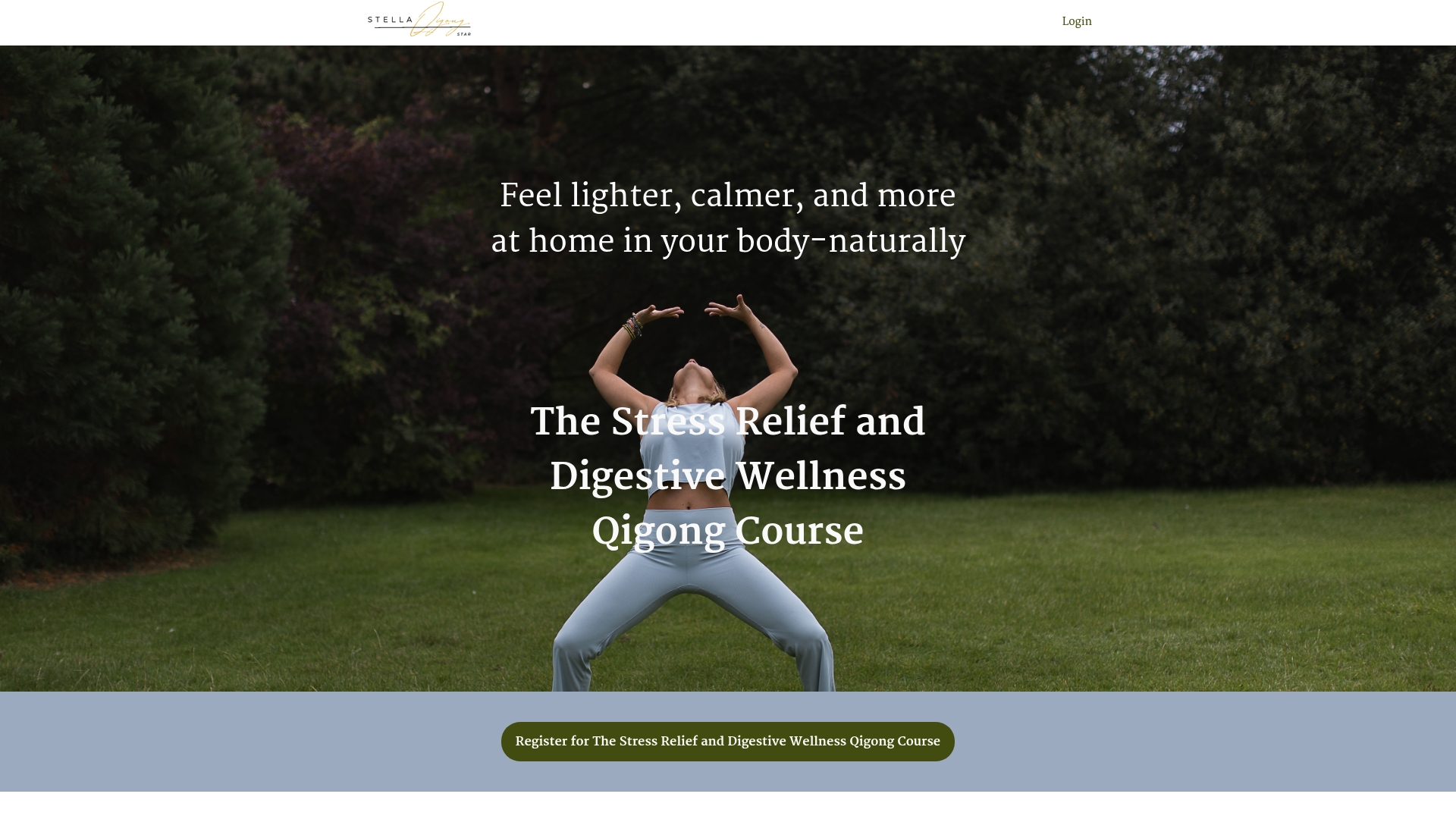
These courses are beginner-friendly, self-paced, and taught by a certified White Tiger Qigong and Yoga Alliance instructor. The gentle, mindful movements help release deep-held tension, awaken your energy, and support your gut from the inside out. Whether you are brand new to qigong or want to expand an existing practice, Qigongstar's online Qigong classes offer a calm, structured path forward. Explore the full range of available programs and take the next step toward a wellness practice that truly nourishes your whole self.
FAQ
What are online holistic courses?
Online holistic courses are structured learning programs that teach natural health practices such as nutrition, energy work, herbal medicine, mindfulness, and movement, delivered digitally for flexible, self-paced learning.
How do I know if a holistic health course is accredited?
Check whether the program is approved by a recognized body such as the NBHWC or a governing board in your specialty. A certificate of completion alone does not indicate professional accreditation.
What should be on my essential oils certification checklist?
Your checklist should confirm that the course covers plant safety, contraindications, appropriate use protocols, and practical application, not just the benefits of individual oils.
How long do online holistic health courses take?
Course lengths vary widely. Short modules can run 30 minutes per session, while eight-week structured programs or professional certifications can span months of weekly commitment.
Are free holistic health online classes worth it?
Free introductory courses are a great way to explore a modality before investing. They rarely offer professional credentials but can help you clarify your interests and find the right paid program to commit to next.