
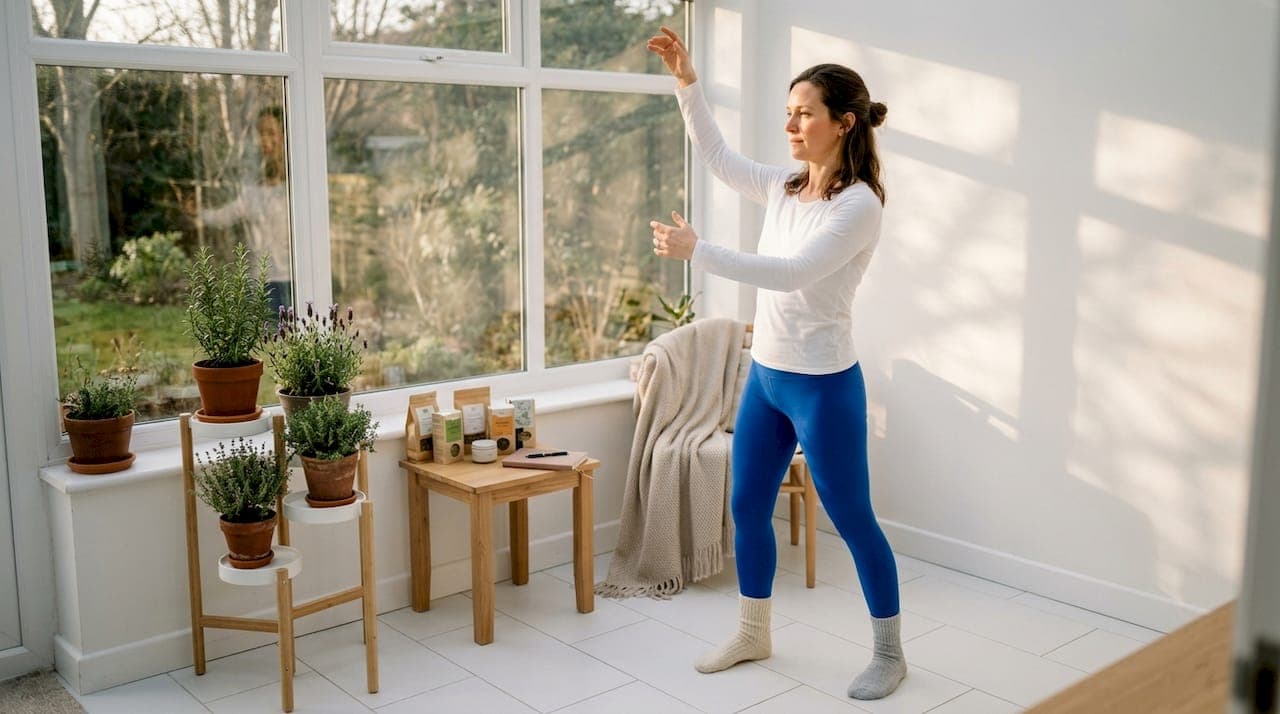
Most people assume that learning a mindful movement practice like Qigong requires showing up to a studio at a fixed time, following a teacher’s cues in real time, and keeping pace with a group. That assumption is costing people their wellbeing. On-demand fitness courses have quietly transformed how individuals access practices like Qigong, making it possible to build a consistent, deeply personal routine without ever leaving home. Whether you’re managing chronic stress, struggling with digestive issues like IBS, or simply searching for a sustainable path to better health, on-demand Qigong offers a flexible, research-backed alternative that fits into your actual life.
Table of Contents
Key Takeaways
| Point | Details |
|---|---|
| On-demand is flexible | You can start, pause, and repeat courses any time without waiting for a live class. |
| Qigong offers holistic benefits | Research supports Qigong’s positive impact on stress, digestion, and quality of life. |
| Choose your course wisely | Select on-demand Qigong programs that match your wellness needs and provide evidence-based guidance. |
| Regular practice matters | Consistent, mindful Qigong practice delivers greater results, especially when you set your own pace. |
What is an on-demand fitness course?
The wellness world has borrowed a model from the entertainment industry, and it works remarkably well. Think of on-demand fitness courses the way you think of streaming a show. You choose what to watch, when to watch it, and how many times you want to revisit it. There are no schedules to juggle, no late penalties, and no pressure to keep up with someone else’s pace.
On-demand fitness courses are “typically pre-created video content that learners can access and repeat asynchronously,” meaning you engage with the material entirely on your own timeline. For a practice like Qigong, which relies on breath awareness, slow intentional movement, and internal energy cultivation, this format is genuinely ideal. You can pause mid-flow to feel a sensation in your body. You can rewatch a movement sequence until it feels natural. You can practice at 6 a.m. before the house wakes up or at 10 p.m. when the day finally quiets down.
On-demand fitness courses are asynchronous, self-paced programs that give learners 24/7 access to pre-recorded instruction, allowing them to learn, repeat, and progress without being tied to a fixed schedule.
Here’s how on-demand Qigong courses differ from traditional live classes at a glance:
| Feature | On-demand courses | Live classes |
|---|---|---|
| Schedule | Fully flexible, 24/7 access | Fixed time slots |
| Repeatability | Unlimited replays | One-time unless recorded |
| Pace control | Learner sets the pace | Instructor sets the pace |
| Cost | Often lower, one-time fee | Recurring fees per session |
| Feedback | Built-in cues, no live Q&A | Real-time instructor feedback |
| Accessibility | Any device, any location | Location or platform dependent |
The core benefits of on-demand Qigong courses for holistic wellness include:
-
Stress reduction on your schedule: Practice when your nervous system needs it most, not when a class happens to be available.
-
Digestive support through consistency: Regular gentle movement supports gut motility and calms the enteric nervous system.
-
Energy flow without disruption: You can build a daily practice without rearranging your life.
-
Beginner-friendly pacing: No one is watching you struggle with a new movement. You can take your time.
-
Deeper integration: Returning to the same lesson multiple times builds muscle memory and body awareness far more effectively than a single live session.
On-demand courses vs. live classes: Which is right for you?
Now that you know what on-demand learning is, let’s compare it to traditional live instruction so you can decide the best fit for your wellness journey.
Both formats have genuine strengths. Live classes offer real-time correction, community energy, and accountability that some people genuinely need to stay motivated. On-demand courses offer freedom, repeatability, and the ability to truly personalize your practice. The good news is that you don’t have to pick just one.
On-demand fitness is “often discussed as complementing, not replacing, live coaching: it provides 24/7 access to curated guidance while live sessions can be reserved for tailoring, feedback, and accountability.” This is exactly how many practitioners at QigongStar approach their wellness journey. They use on-demand courses to build their foundational practice and supplement with live sessions when they want specific guidance.
| Factor | On-demand | Live |
|---|---|---|
| Flexibility | High | Low to moderate |
| Real-time feedback | No | Yes |
| Community interaction | Limited | Strong |
| Accountability | Self-driven | Instructor and peer driven |
| Cost per session | Lower | Higher |
| Best for | Consistent daily practice | Technique refinement |
Ask yourself these key questions before choosing your format:
-
Do you need schedule flexibility? If your work hours, family commitments, or energy levels vary day to day, on-demand is likely the better primary format.
-
Are you a complete beginner? On-demand courses designed for beginners walk you through each movement step by step, often more clearly than a live class where the instructor divides attention among many students.
-
Do you thrive on community motivation? If you find it hard to practice without external accountability, consider starting with live sessions and using on-demand content to supplement.
-
Is cost a barrier? On-demand courses typically involve a one-time investment rather than recurring session fees, making them more sustainable long-term.
-
Do you want to deepen a specific area? If you’re focusing on digestive health or stress relief, a structured on-demand course targeting those outcomes gives you focused, repeatable content.
Pro Tip: Try a blended approach for your first three months. Use on-demand online Qigong classes as your daily foundation and book a live session once a month to check your form and ask questions. This combination accelerates progress without sacrificing flexibility.
How on-demand Qigong courses support holistic wellbeing
With both formats in mind, let’s explore why Qigong stands out for those seeking holistic wellbeing through accessible, evidence-backed methods.
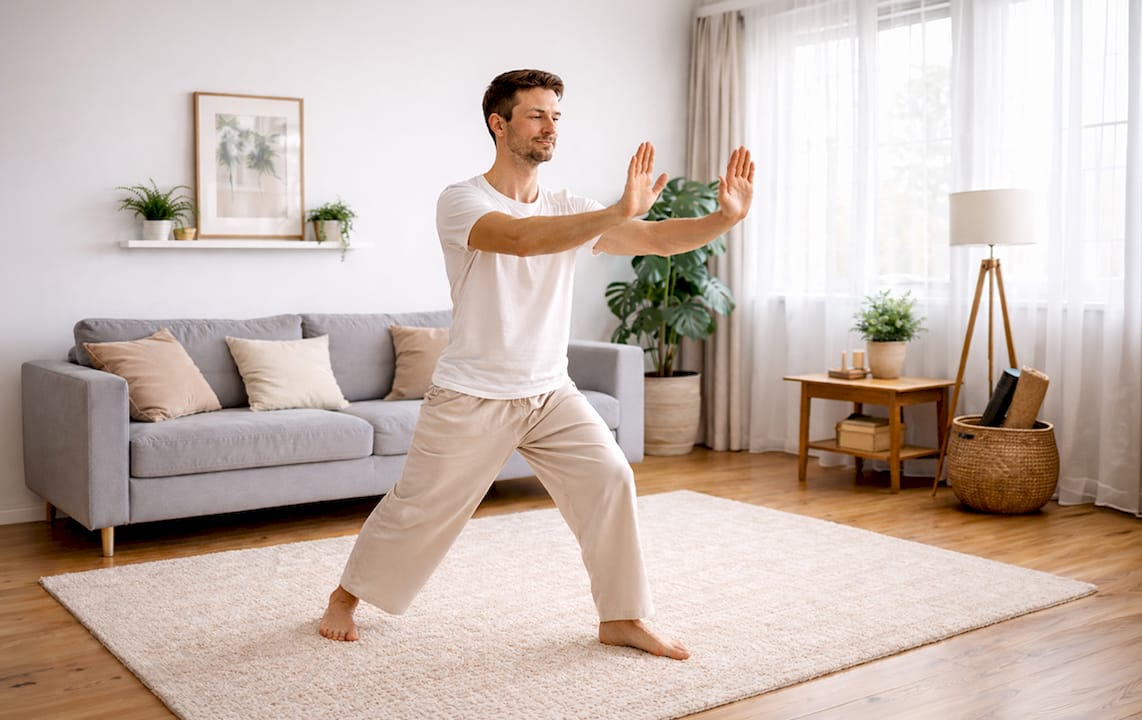
Qigong is not just exercise. It is a practice rooted in Traditional Chinese Medicine that integrates breath regulation, gentle movement, and mental focus to cultivate what practitioners call “Qi,” or life energy. The effects of consistent practice ripple across multiple dimensions of health, and the research supports this.
Studies show that “qigong and taichi-qigong can improve some psychological outcomes including quality of life, anxiety measures, and sleep quality in certain groups.” These are not trivial benefits. For someone managing chronic stress or gut-related conditions like IBS, improvements in anxiety and sleep quality can create meaningful shifts in daily functioning.
Here’s a summary of what the research indicates across key health outcomes:
| Health outcome | Evidence of improvement | Notes |
|---|---|---|
| Quality of life | Moderate to strong | Consistent across multiple study groups |
| Anxiety reduction | Moderate | Particularly in chronic stress populations |
| Sleep quality | Moderate | Especially in older adults and those with anxiety |
| Digestive health | Emerging | Linked to nervous system calming and gut-brain axis |
| Physical function | Moderate | Balance, flexibility, and coordination |
| Depression symptoms | Mixed | Some studies show benefit, others inconclusive |
It’s worth noting that not all studies show benefits for every outcome. Results vary depending on the program structure, the individual’s starting point, and consistency of practice. This is exactly why choosing a credible, well-structured course matters.
The holistic benefits of a consistent on-demand Qigong practice include:
-
Body: Improved flexibility, balance, and physical coordination through gentle, low-impact movement sequences.
-
Mind: Reduced anxiety and mental chatter through breath-focused awareness and moving meditation.
-
Energy: Enhanced sense of vitality and reduced fatigue as Qi circulation improves over weeks of practice.
-
Stress management: Activation of the parasympathetic nervous system, the body’s natural “rest and digest” mode.
-
Digestive health: Gentle abdominal movements and breath work support gut motility and reduce tension in the digestive tract. Learn more about Qigong for gut health and how specific practices target IBS symptoms.
-
Sleep support: Calming evening routines help regulate the nervous system before bed, improving sleep onset and quality.
For a broader look at how these practices integrate into a complete wellness lifestyle, the blog on holistic wellness covers topics ranging from energy cultivation to seasonal health practices rooted in Traditional Chinese Medicine.
Getting started with on-demand Qigong: What to expect
Understanding the evidence is helpful, but what happens once you sign up? Here’s how to turn knowledge into daily practice.
Enrolling in an on-demand Qigong course is straightforward. You create an account, gain immediate access to the course library, and begin working through video lessons at whatever pace suits you. Most well-designed courses organize content progressively, starting with foundational breathing and standing postures before moving into flowing movement sequences. You don’t need any prior experience, special equipment, or a large space. A clear area roughly the size of a yoga mat is enough.
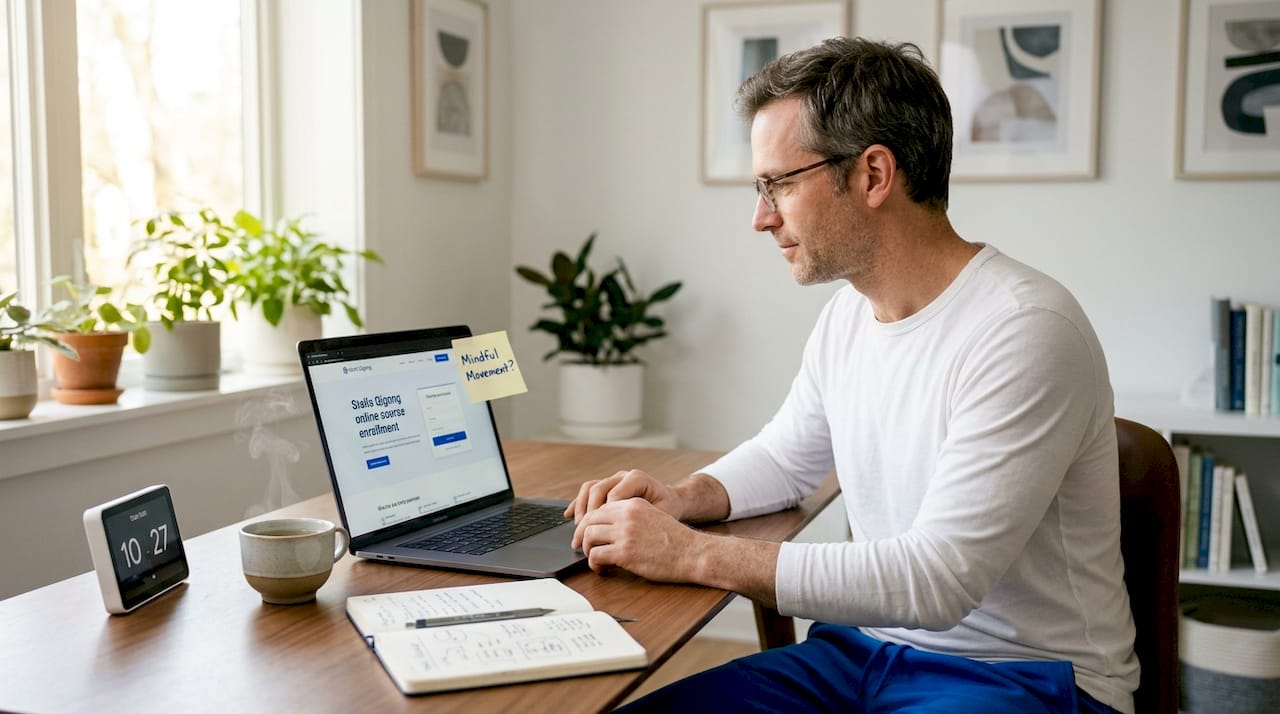
Research supports taking a gradual, exploratory approach. A 3-month online Qigong course study found meaningful shifts in participant wellbeing over time, though it also noted the importance of structured, consistent engagement rather than sporadic participation. Three months of regular practice, even 15 to 20 minutes a day, is enough time to begin noticing genuine changes in how you feel.
Here’s a practical step-by-step approach to building your on-demand Qigong practice:
-
Set your space: Choose a quiet, clutter-free area where you won’t be interrupted. Natural light and a comfortable temperature help signal to your body that this time is intentional.
-
Pick a consistent time: Morning practice builds energy and mental clarity for the day. Evening practice calms the nervous system and supports better sleep. Choose what fits your rhythm and stick with it.
-
Start with the foundational lessons: Resist the urge to skip ahead. Foundational posture, breath work, and body awareness are the pillars that make everything else more effective.
-
Follow lessons at your own pace: If a movement doesn’t feel right, rewatch it. If a session feels too short, do it twice. The course is yours to use as you need.
-
Reflect on your progress weekly: Notice shifts in your energy, mood, digestion, and sleep. Small improvements compound significantly over time.
-
Explore different styles: Once you’ve built a foundation, consider branching into specialized practices like 5 Animal Qigong, which draws on the movements and energetics of five animals to address different organ systems and emotional states.
Pro Tip: Keep a simple wellness journal alongside your practice. Each day, write down your energy level, stress level, and one physical sensation you noticed during the session. After 30 days, reading back through your entries often reveals improvements you hadn’t consciously registered.
A mindful approach: Why on-demand Qigong truly matters
Here’s something the mainstream wellness industry rarely says out loud: the obsession with live, instructor-led, group-based fitness has more to do with business models than with what actually helps people heal.
Most wellness programs are designed around a schedule that serves the provider, not the student. You show up when the class is offered. You keep pace with the group. You measure your progress against others in the room. And when life gets complicated, as it always does, you miss a session, then two, then the habit dissolves entirely. This is not a personal failure. It is a structural problem with the format itself.
On-demand Qigong flips this dynamic entirely. When you practice on your own timeline, you develop something far more valuable than technique: you develop relationship with your own body. You start to notice how your breath changes when you’re anxious. You feel where tension lives in your shoulders after a hard week. You recognize when your digestion feels sluggish and know which movements help. This is the body-mind awareness that Traditional Chinese Medicine has always pointed toward, and it cannot be rushed or scheduled.
Think of it like learning an instrument. A student who practices piano for 20 minutes every day for six months will always outperform a student who attends weekly lessons but never practices between them. The repetition, the quiet attention, the willingness to sit with difficulty and return again the next day: that is where transformation happens. Qigong is exactly the same.
The practitioners who experience the deepest shifts are rarely the ones who attend the most live sessions. They’re the ones who show up consistently, on their own terms, and let the practice teach them. Our approach at QigongStar.com is built around this philosophy: genuine wellness is self-led, sustainable, and rooted in listening rather than performing.
Explore Qigong courses tailored for your wellness
If this article has sparked something in you, the natural next step is to explore what a structured, on-demand Qigong practice actually looks like in practice.

QigongStar.com offers a range of thoughtfully designed courses for every level, from complete beginners to those ready to deepen an existing practice. Whether your focus is stress relief, digestive health, sleep support, or energetic balance, there’s a course built for your specific goals. You can see Qigong course offerings and find the right starting point for your journey. For those drawn to animal-inspired movement and organ system health, 5 Animal Qigong is a powerful place to begin. If you’re interested in a more dynamic, flowing practice rooted in classical lineage, explore White Tiger Qigong and discover how it supports both physical vitality and energetic clarity.
Frequently asked questions
Can I learn Qigong effectively through on-demand courses without live coaching?
Yes, on-demand Qigong programs provide structured, repeatable guidance that builds skill progressively, and they work especially well when supplemented with occasional live feedback for technique refinement.
What results can I expect from practicing Qigong online?
Research shows possible improvements in quality of life, anxiety, sleep, and digestive health, though individual results depend on consistency, program quality, and your specific health starting point.
How do I choose the right Qigong course for my needs?
Look for courses that clearly state their health focus, list instructor credentials, offer progressive lesson structures, and provide evidence-backed outcomes aligned with your specific wellness goals.
Is on-demand Qigong suitable for beginners with no prior experience?
Absolutely. Most on-demand Qigong courses are specifically designed to start from zero, guiding you through foundational breath work and basic movements before progressing into more complex sequences at a pace you control entirely.