
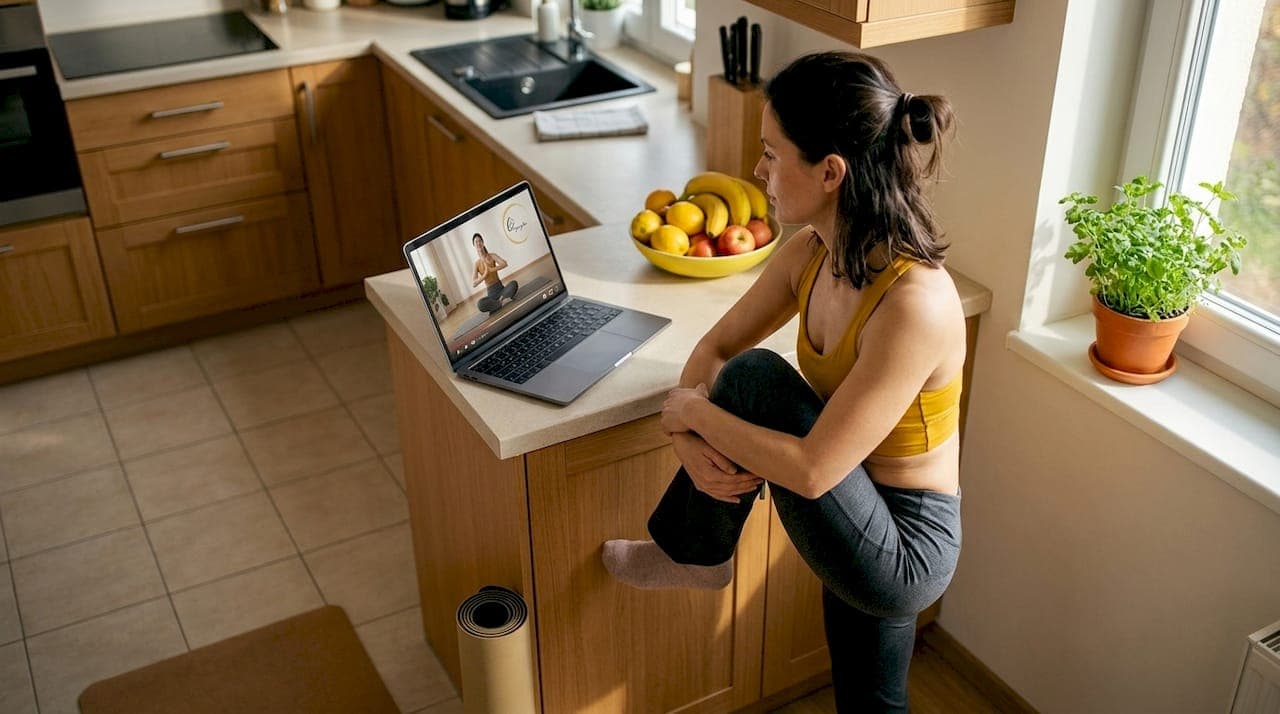
Skeptics often assume that mind-body practices like Qigong simply cannot translate to a screen. Yet thousands of adults are quietly soothing their stress and nurturing their digestive health from the comfort of their own living rooms, guided by certified instructors through a laptop or tablet. The evidence is catching up with the experience: virtual holistic movement classes are not a compromise. When designed thoughtfully, they deliver genuine, measurable wellness benefits. This guide walks you through exactly how online movement classes work, what the research shows, and how to choose the right class so you can begin your own calming, empowering journey toward better health.
Table of Contents
- Understanding online movement classes: What makes them unique?
- What to expect: Common structures and adaptations in virtual classes
- Evidence of benefits: Stress, digestion, and quality of life improvements
- Choosing and thriving in your first online movement class
- The overlooked truths about online movement and what really works
- Ready to start your journey? Find a class for stress and digestive wellness
- Frequently asked questions
Key Takeaways
| Point | Details |
|---|---|
| Accessible wellness at home | Online movement classes make mind-body health practices like Qigong possible for everyone, regardless of location or experience. |
| Safety through visibility | Effective online programs emphasize clear communication, visibility, and instructor support so you can practice safely. |
| Evidence-backed benefits | Research shows that online Qigong classes can improve stress, digestion, and overall quality of life. |
| Easy start for beginners | With the right preparation and mindset, you can thrive and progress even if you’re new to holistic movement. |
Understanding online movement classes: What makes them unique?
Now that we've challenged the common doubt that virtual movement is "second best," let's clarify exactly what makes online movement classes distinct and often surprisingly accessible.
Online movement classes fall into three main formats. Live-stream classes happen in real time with an instructor who can see you and respond to your questions. On-demand recordings let you practice on your own schedule, replaying sequences as often as you need. Interactive hybrid classes blend both, often pairing pre-recorded content with occasional live check-ins for feedback and community.
Practices like Qigong, yoga, and tai chi each have their own flavor online. Qigong, rooted in Traditional Chinese Medicine, uses slow, flowing movements paired with breath and intention to move vital energy (called "qi") through the body. Yoga weaves posture, breath, and mindfulness. Tai chi emphasizes balance and martial-rooted movement sequences. Online, all three translate well because they are low-impact, gentle, and do not require a spotter or physical corrections the way weightlifting might.
For stress and digestive health specifically, these practices shine online because you practice in your own calm environment, free from the social pressure of a studio. Research confirms that mind-body programs delivered virtually can be feasible and generally safe in adult populations when programs include participant visibility, communication adaptations, and safety reminders. In other words, safety does not disappear when you move the class online. It just requires intentional design.
Key features that make online holistic classes effective:
- Participant visibility: Instructors can see your movements via webcam and offer real-time corrections.
- Clear audio cues: Detailed verbal guidance replaces hands-on adjustments, keeping the experience safe.
- Safety reminders: Good instructors build in regular prompts about posture, breath, and pacing.
- Accessibility: You can join from anywhere, reducing barriers like travel, cost, and social anxiety.
- Beginner-friendly pacing: On-demand formats let you pause, rewind, and re-practice at your own rhythm.
Practices like 5 Animal Qigong are especially well-suited to beginners because each animal movement targets a specific organ system and emotional state, giving you a clear, purposeful structure from your very first session. You are not just moving. You are nurturing a specific part of yourself.
Pro Tip: Before your first class, test your camera angle so your full body is visible from head to toe. Place your device at chest height on a stable surface. This one small step ensures your instructor can give you accurate, personalized guidance and keeps your practice safe.
What to expect: Common structures and adaptations in virtual classes
With a clear definition in mind, it's helpful to discover how virtual movement classes are typically structured, and what makes them work for a range of needs.
Most online movement sessions follow a predictable, nurturing flow:
- Check-in: The instructor greets participants, asks about energy levels or any physical concerns, and sets an intention for the session. This is your moment to mention any injuries, tension areas, or goals.
- Warm-up: Gentle breath-led movements ease your body awake, releasing surface tension before deeper practice begins.
- Instruction and demonstration: The instructor demonstrates each movement clearly, often from multiple camera angles, and narrates exactly what you should feel in your body.
- Guided practice: You follow along in real time, with the instructor offering verbal cues, modifications, and encouragement throughout.
- Integration and cool-down: The session closes with stillness, breath awareness, or meditation to allow your nervous system to absorb the work.
- Feedback: In live classes, instructors often open a brief window for questions or reflections before closing.
For those with mobility or sensory needs, a thoughtful approach is key. Evidence suggests that choosing platforms and classes that explicitly support visibility and communication, including large screens, trained audiovisual setup, and safety reminders, and opting for seated or modified practices where appropriate, is the most practical way to manage edge cases like limited mobility or difficulty seeing the instructor.
Here is a quick look at how online and in-person class delivery compares across key factors:
| Feature | In-person class | Online class |
|---|---|---|
| Real-time feedback | Hands-on and verbal | Verbal and visual via camera |
| Scheduling flexibility | Fixed location and time | Live or on-demand options |
| Modification support | Direct physical assist | Cued modifications and seated options |
| Accessibility | Requires travel | Available from any quiet space |
| Community connection | In-room presence | Chat, breakout rooms, and group energy |
| Cost | Studio fees, travel | Often more affordable, no commute |
You can also explore specialized health programs that combine movement with other integrative wellness strategies if you want to build a broader support system alongside your Qigong practice.
Pro Tip: If you have a specific health concern like IBS or chronic lower back pain, message your instructor before the first class. A good teacher will prepare modifications or seated alternatives in advance. You deserve a class that meets you where you are, not one that asks you to keep up.
Evidence of benefits: Stress, digestion, and quality of life improvements
Armed with an understanding of the format, let's turn to what the research actually says about online movement classes and your health.
The evidence is encouraging, and it is growing. One of the most directly relevant findings comes from a prospective study of a 3-month online Qigong course that showed measurable improvements in participants' quality-of-life domains, including physical function, emotional wellbeing, and vitality, with high adherence rates throughout. Participants kept showing up and kept improving. That matters.
"There is direct evidence that a specifically online Qigong course can improve participants' quality-of-life domains over a 3-month period, with high adherence, but the evidence base cited includes limitations such as lack of a control group in that study."
For digestion specifically, the picture is nuanced. Gastroenterology literature now discusses meditative movement as potentially beneficial for certain gut-brain interaction disorders, like irritable bowel syndrome (IBS), while also noting that the evidence for tai chi compared with yoga remains limited and still developing. This is honest science. It means Qigong and similar practices show real promise, but they work best as part of a broader, mindful wellness approach rather than as a standalone cure.
Here is how Qigong, yoga, and tai chi compare based on current evidence for stress and digestive wellness:
| Practice | Stress relief evidence | Digestive health evidence | Online accessibility |
|---|---|---|---|
| Qigong | Strong, especially online courses | Emerging, gut-brain connection | Excellent |
| Yoga | Extensive, well-researched | Moderate, supported for IBS | Very good |
| Tai chi | Good for balance and calm | Limited compared to yoga | Good |
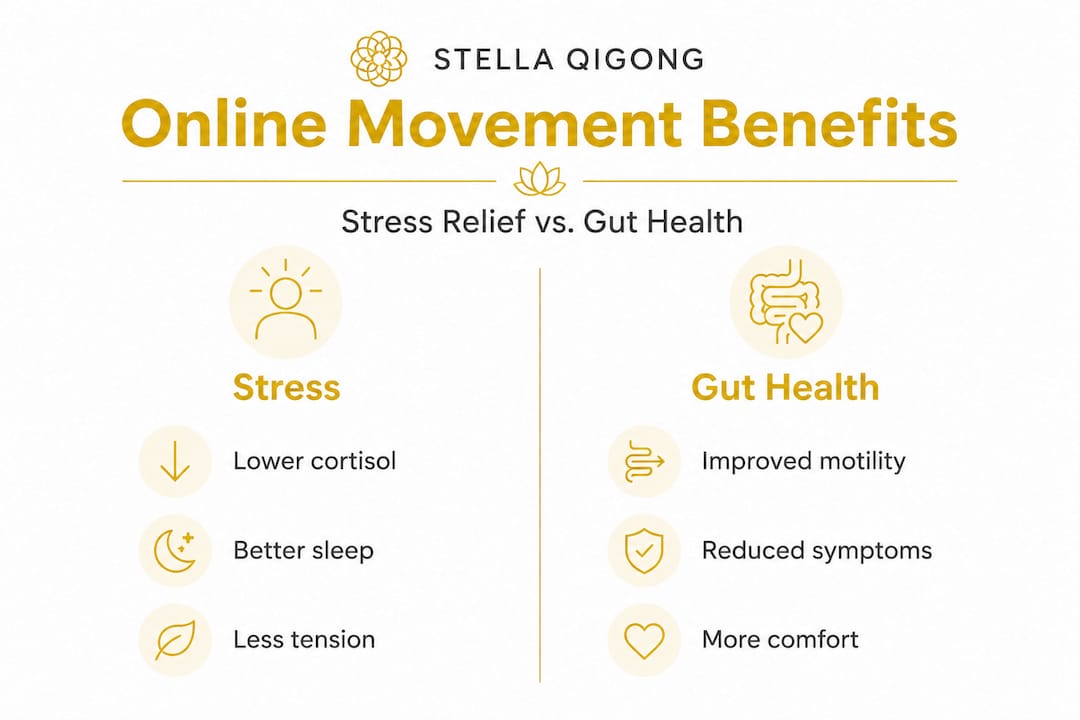
For those navigating Qigong for gut health, the gut-brain axis is the bridge you want to understand. Your gut and brain communicate constantly through the vagus nerve. Gentle movement, slow breathing, and mindful awareness all calm that nervous system pathway, which can reduce gut cramping, bloating, and the anxiety that often travels alongside digestive discomfort.
Key benefits supported by current research:
- Reduced anxiety and perceived stress through breath-regulated movement
- Improved sleep quality, which in turn supports gut repair and immune function
- Enhanced emotional regulation by activating the parasympathetic nervous system
- Better physical function and mobility over consistent practice periods
- Reported improvements in digestive comfort in those with gut-brain interaction disorders
It is worth being realistic. No single study wraps everything up neatly. Researchers call for larger controlled trials. But you do not need to wait for a perfect study to start a gentle practice that already has a compelling track record across thousands of years of Traditional Chinese Medicine and a growing body of modern clinical evidence.
Pro Tip: Watch for red flags in any online wellness program. Promises of overnight transformation, no instructor credentials listed, no safety modifications offered, and pressure to purchase expensive supplements alongside a class are all signs to step back. A trustworthy program is honest about what practice can do and what it cannot.
Choosing and thriving in your first online movement class
With a better sense of the benefits and limitations, the next step is to set yourself up for an empowering and safe virtual movement experience.
Finding the right class does not have to feel overwhelming. Use this checklist to guide your search:
- Check instructor credentials. Look for certification from a recognized school like White Tiger Qigong or accreditation through Yoga Alliance. Credentials matter for your safety and your results.
- Identify your primary goal. Is it stress relief, digestive support, better sleep, or general vitality? Choose a class with a stated focus that matches your needs.
- Consider the format. Live classes offer real-time feedback. On-demand classes offer flexibility. Many beginners benefit from starting with on-demand content and joining a live class once they feel confident.
- Review the platform. Ensure the technology supports clear video, two-way communication, and the ability to see modifications if you need them.
- Start with a beginner-level program. Avoid the temptation to jump into an advanced class. A well-designed beginner program builds the foundation that makes everything else feel natural.
- Communicate your needs. Before your first session, tell your instructor about any injuries, health conditions, or areas of concern. This is not weakness. It is wisdom.
Preparing your physical space matters just as much as finding the right class. Clear a quiet area where you can move freely without furniture in your way. Dim overhead lighting if it feels harsh. Keep a glass of water nearby. These small acts of preparation signal to your nervous system that this time is sacred, set apart for your healing and growth.
Setting small milestones keeps motivation alive. Rather than committing to "practice every day forever," aim for two sessions per week for the first month. Notice how you feel after each session. Track one thing, whether that is your mood, your sleep, or your gut comfort. Seeing even one small improvement makes the practice feel worthwhile and real.
You can explore the full range of online classes overview to find the format and focus that resonates, and learning more about your instructor helps you trust the guidance you are receiving from day one.
The virtual delivery of mind-body programs is most effective when both student and teacher are intentional about visibility, safety, and communication. You are not a passive participant. You are an active partner in your own wellness.
Pro Tip: Set a recurring calendar reminder for your practice sessions just as you would for a doctor's appointment. Treat it with the same respect. Consistency, even imperfect consistency, creates transformation over time far more reliably than occasional intense effort.
The overlooked truths about online movement and what really works
Having laid out the mechanics and evidence, let's look honestly at what actually helps people transform through online movement.
The myth that you cannot genuinely learn a mind-body practice like Qigong through a screen has quietly collapsed. What people discover when they try it honestly is that the screen is almost irrelevant. The real barrier was never the technology. It was the belief that healing required a specific room, a specific teacher standing next to them, or a perfect body capable of perfect postures.
The most overlooked success factor in online movement is not your Wi-Fi connection or your yoga mat. It is self-honesty. Beginners who communicate openly with their instructors about what hurts, what confuses them, or what intimidates them get dramatically better results than those who quietly struggle through sessions trying to look capable. Your instructor cannot feel your body from across a screen, which means your words become your most important tool.
The unglamorous basics matter more than any premium feature. Clear lighting so your instructor can see your form. A space where you will not trip. A consistent time each week that you actually protect. These boring practicalities, done well, create the container for real, lasting change. Many people spend weeks researching the perfect program and never start. The truth is that a good-enough class practiced regularly will always outperform the perfect class practiced occasionally.
5 Animal Qigong offers something particularly valuable for online learners: each animal archetype gives you a clear, memorable anchor for your practice. You are not just following abstract instructions. You are embodying the crane's grace or the bear's grounded strength. That imagery makes the practice stick, which is exactly what beginners need to build a sustainable habit.
Progress over perfection is not a motivational slogan. It is a description of how the body and nervous system actually heal. Small, consistent movements practiced with mindful attention compound quietly into genuine transformation.
Ready to start your journey? Find a class for stress and digestive wellness
If you are inspired to explore further, here is how you can take practical action on your wellness goals today.
You now understand how online movement classes work, what to look for, and what the research supports. The next step is simply to begin. At QigongStar.com, we offer beginner-friendly programs designed specifically for adults seeking to soothe stress and nurture their digestive health through gentle, evidence-informed Qigong practice.
Our 5 Animal Qigong program is a beautiful starting point, guiding you through five animal archetypes that awaken energy in specific organ systems and emotional states. It is accessible, structured, and deeply rooted in Traditional Chinese Medicine. You can also browse our full online course list to find live sessions, on-demand courses, and programs tailored to your pace and goals. Every class is led by instructors certified by the White Tiger Qigong School and Yoga Alliance, so you move with confidence knowing you are in qualified, caring hands. Your calmer, more balanced self is one gentle step away.
Frequently asked questions
Are online movement classes safe for beginners?
Yes, online movement classes are generally safe for beginners when instructors use visibility and safety reminders and students clearly communicate any physical limitations before and during class.
Can online Qigong classes improve digestion?
Online Qigong classes have been associated with improved quality of life over a 3-month period and may benefit digestion by calming the gut-brain axis, particularly for those with gut-brain interaction disorders.
How do online instructors handle safety during movement classes?
Instructors use communication adaptations and safety reminders throughout sessions, encourage participants to stay visible on camera, and offer seated or modified movements for those with physical limitations.
Are there specific advantages of online classes over in-person sessions?
Online classes offer scheduling flexibility, no travel requirements, lower cost, and the ability to practice in a personally comforting environment, all of which can reduce pre-class anxiety and encourage more consistent attendance.
What should I look for in my first online movement class?
Choose classes that support visibility and communication, offer seated or modified options, list clear instructor credentials, and focus on your specific wellness goals rather than promising overly broad results.