
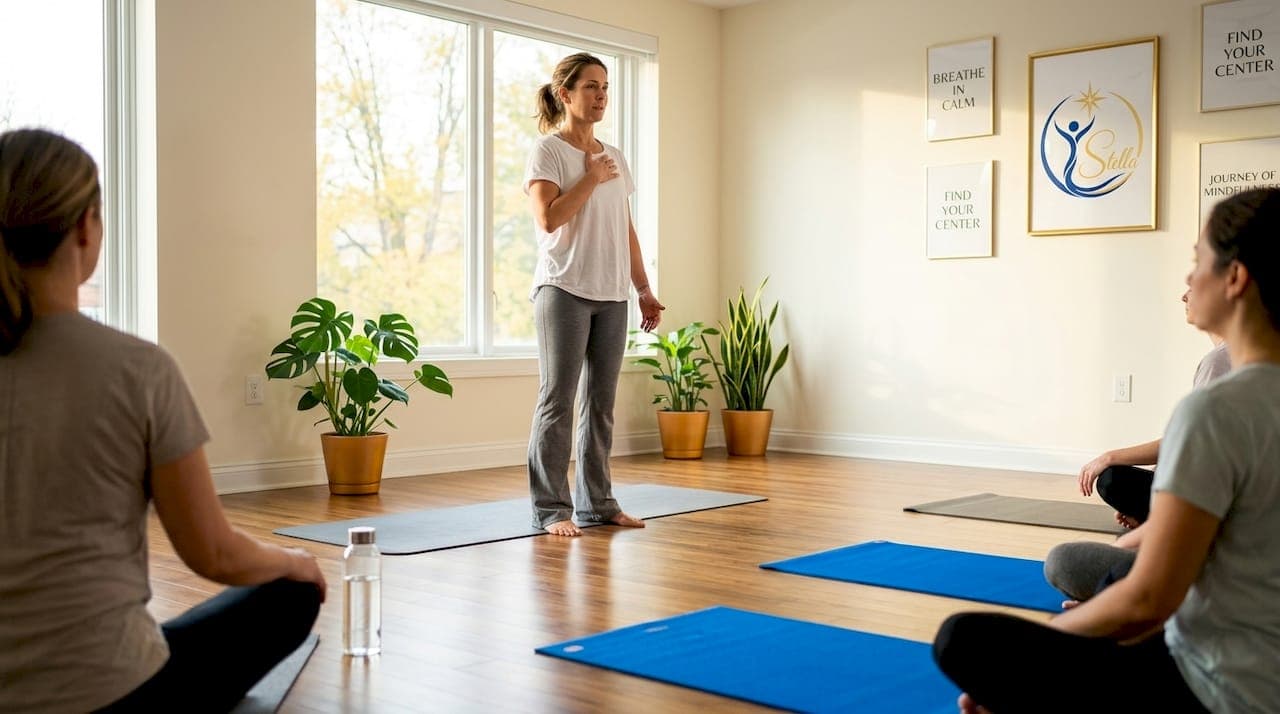
Finding the right mind-body wellness instructor can feel genuinely confusing. Titles like "wellness coach," "mindfulness teacher," and "holistic health instructor" carry no universal standard, and credentials range from weekend workshops to rigorous board certifications. What the industry calls a "wellness facilitator" or "mind-body coach" covers an enormous range of training backgrounds. Knowing the specific mind-body wellness instructor qualities to look for cuts through the noise and helps you make a confident, informed choice, whether you are selecting a teacher for your personal practice or building your own skills as an aspiring instructor.
Table of Contents
- Key takeaways
- 1. Genuine empathy and active listening
- 2. Emotional intelligence and self-awareness
- 3. Patience and adaptability
- 4. Authenticity and lived practice
- 5. A strong foundation in holistic health modalities
- 6. Client-centered coaching competencies
- 7. Clear and adaptive communication skills
- 8. Evidence-based certification and continuing education
- 9. Real-time practice and feedback-driven training
- 10. The ability to create safe, inclusive environments
- 11. Cultivating client self-responsibility and confidence
- 12. Motivation without pressure
- 13. Practical evaluation checklist
- My honest take on what really separates great instructors
- Experience these qualities firsthand with Qigongstar
- FAQ
Key takeaways
| Point | Details |
|---|---|
| Personal qualities come first | Empathy, emotional intelligence, and authenticity shape every student's experience more than credentials alone. |
| Evidence-based certification matters | Board-certified coaches meet rigorous, verifiable standards that generic wellness titles do not require. |
| Real-time practice builds readiness | Instructors who trained with supervised coaching sessions and peer feedback are more effective than those trained on theory only. |
| Safe environments require skill | Adapting cues to diverse abilities without singling anyone out is a core professional responsibility. |
| Evaluate before committing | Watch a sample class, ask about continuing education, and notice how the instructor responds to questions. |
1. Genuine empathy and active listening
These are the foundational mind-body wellness instructor qualities, and no amount of technical knowledge replaces them. Empathy means the instructor actually perceives where you are, not where they assume you should be. Active listening goes further. It means they pause, reflect, and respond to what you share rather than following a script.
You feel this immediately in a good class. The instructor notices when the group's energy is flat and adjusts. They remember that one participant mentioned lower back discomfort and quietly offer a gentler variation. This level of attunement is what separates a good teacher from a technically correct one.
- Read body language, not just words
- Create space for questions without judgment
- Acknowledge discomfort without dismissing it
Pro Tip: When evaluating a potential instructor, notice whether they make eye contact with the whole room or mostly face the front wall. Instructors who scan the group are actively listening, even without words.
2. Emotional intelligence and self-awareness
A mind-body instructor spends a lot of time in emotionally charged spaces. Students arrive stressed, grieving, anxious, or simply disconnected from their bodies. An instructor with strong emotional intelligence recognizes these states and responds with steady warmth rather than reactive energy.
Self-awareness matters just as much. An instructor who has done their own inner work does not project their struggles onto students. They know when to hold space and when to redirect. This quality is difficult to assess from a website bio, but it becomes clear within a few sessions.
3. Patience and adaptability
No two students are alike. A Tuesday evening qigong class might include a retired athlete, someone recovering from surgery, a first-timer with chronic anxiety, and a teenager dragged in by a parent. Effective wellness facilitator attributes include the ability to hold space for all of them simultaneously.
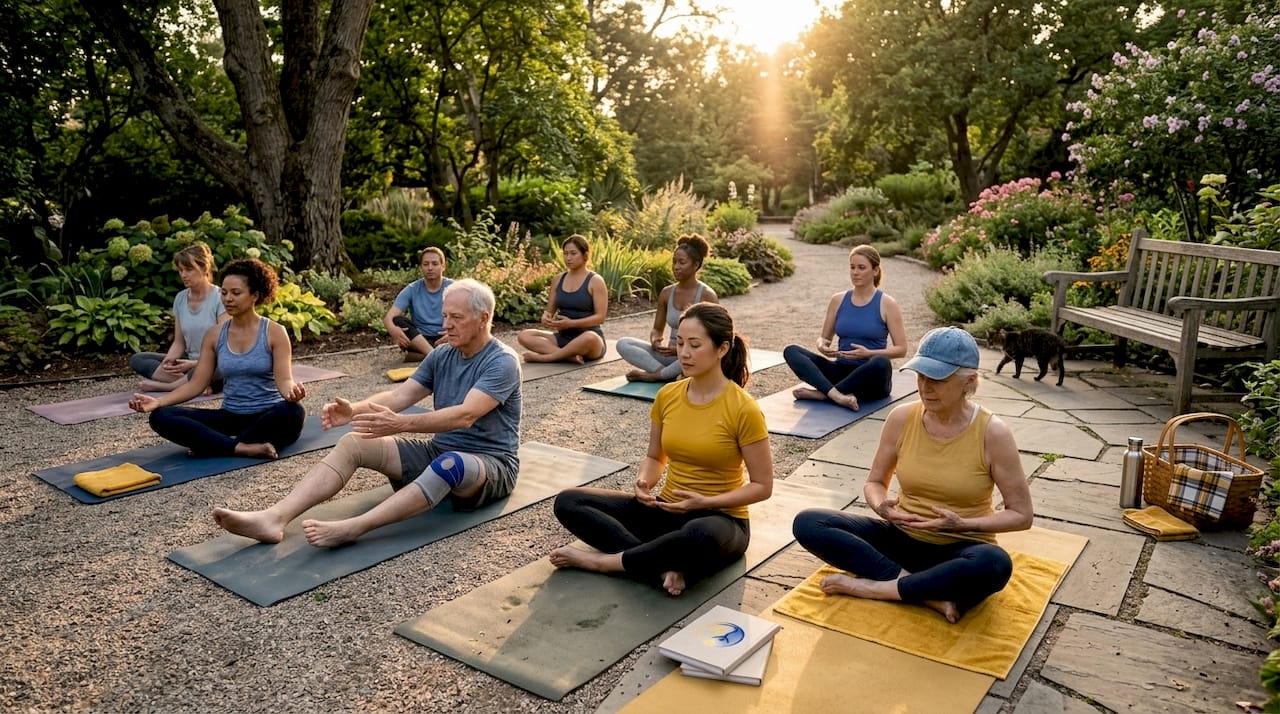
Patience shows up in how an instructor responds to a student who keeps struggling with a movement or asks the same question repeatedly. Adaptability shows up in safe, adaptable sessions that meet participants where they are, not where the instructor wishes they were.
4. Authenticity and lived practice
Students sense inauthenticity fast. An instructor who teaches breathwork but is visibly tense, or who promotes stillness while radiating impatience, creates a subtle dissonance that erodes trust. The most effective mindfulness teacher characteristics include a genuine personal practice that the instructor continues to deepen.
This does not mean the instructor must be perfect. It means they are honest about their own process. An instructor who says "I still find this pose challenging" often builds more connection than one who makes everything look effortless. Authenticity is magnetic and calming at the same time.
5. A strong foundation in holistic health modalities
Technical knowledge underpins everything else. Quality wellness instructors bring a working understanding of mind-body modalities such as qigong, yoga, meditation, and breath regulation. They understand how these practices connect to physical systems, including stress response, digestive function, and nervous system regulation.
For instructors rooted in traditional systems like Chinese Medicine, this means understanding concepts like Qi, the Five Elements, and meridian pathways, not as abstract philosophy but as practical frameworks that inform how they design each session. The depth of this foundational knowledge directly affects the quality of guidance students receive.
6. Client-centered coaching competencies
This is where the professional wellness world draws a meaningful line. National Board Certified Health & Wellness Coaches use evidence-based, client-centered approaches that focus on the student's own goals rather than the instructor's agenda. These coaches complete at least 50 supervised coaching sessions before sitting a national exam.
The specific skills this certification requires include:
- Powerful questioning that prompts self-reflection rather than directs behavior
- Goal clarification through dialogue rather than prescription
- Accountability structures the client designs themselves
- Recognizing and honoring ambivalence about change
This client-centered approach creates lasting transformation because students feel ownership over their progress. The instructor's role shifts from authority figure to empowering guide.
Pro Tip: Ask a prospective instructor how they handle a student who is not meeting their goals. A client-centered instructor will describe asking questions and exploring obstacles. An instructor who talks about correcting or pushing harder may not be using evidence-based coaching methods.
7. Clear and adaptive communication skills
Effective cueing is a craft. The way an instructor describes a movement, breath pattern, or visualization shapes whether students can access it safely and meaningfully. Adaptive cueing practices adjust intensity, language, and pacing to meet varied participant needs without singling anyone out.
In mind-body practices specifically, language carries energetic weight. The difference between "try to relax" and "allow your breath to soften" is subtle but real. Instructors who choose their words with care create an atmosphere where students feel invited rather than instructed.
8. Evidence-based certification and continuing education
Certification is not just a credential on a wall. It represents a commitment to standards. Board-certified coaches meet rigorous, verifiable competence benchmarks that distinguish them from instructors with only a weekend certificate.
When evaluating an instructor's credentials, look for:
- Nationally recognized certifications with clear prerequisites
- Evidence-based training that includes behavior change theory
- Supervised practice hours before certification is granted
- Commitment to continuing education after certification
- Alignment with professional ethical codes
The White Tiger Qigong School certification and Yoga Alliance registration are examples of recognized standards in the qigong and movement world. They signal that an instructor has met structured training requirements and is accountable to a professional body.
"The difference between a certified coach and a self-declared wellness expert is not just knowledge. It is the accountability structure that comes with verified training, supervised practice, and ethical standards."
9. Real-time practice and feedback-driven training
Knowledge alone does not create an effective instructor. Real-time practice with feedback creates confident coaching skills far more reliably than lecture-only training formats. This distinction matters enormously when you are selecting someone to guide your practice.
The best training programs build instructor readiness through repeated supervised coaching cycles. Peer feedback, faculty observation, and mock sessions reveal gaps that reading cannot. An instructor who has been through this kind of formation has genuinely practiced responding to diverse student needs under real conditions.
When you ask an instructor about their training, listen for whether they mention supervised practice, not just coursework completed. That detail tells you a lot.
10. The ability to create safe, inclusive environments
A well-designed session considers the full range of people who might show up. This includes those with physical limitations, emotional sensitivity, cultural differences, and varying levels of body awareness. Holistic health instructor qualities in this area include session design that builds variation in without making anyone feel singled out.
Mind-body wellness success depends on building an inclusive community that promotes sustainable change across physical, emotional, and mental dimensions. Instructors who achieve this do not just teach movements. They cultivate a sense of belonging that keeps students coming back.
The comparison below shows what inclusive versus less inclusive instructors tend to do in practice:
| Behavior | Inclusive instructor | Less inclusive instructor |
|---|---|---|
| Offering modifications | Weaves options in naturally for everyone | Calls out individuals who need adjustments |
| Language choices | Uses inviting, option-based language | Uses directive or performance-focused language |
| Responding to struggle | Normalizes difficulty with warmth | Moves on without acknowledging it |
| Pacing decisions | Scans the room and adjusts in real time | Follows a fixed plan regardless of the group |
11. Cultivating client self-responsibility and confidence
The goal of excellent instruction is not dependency. It is the gradual transfer of ownership to the student. Top instructors create an atmosphere that encourages self-evaluation and builds confidence in the student's own capacity to maintain their wellness practice.
This quality shows up in how instructors frame progress. Rather than "you did well today," a skilled instructor might ask "what did you notice in your body during that sequence?" This small shift moves the student from passive recipient to active participant in their own transformation.
12. Motivation without pressure
Sustainable change does not come from guilt or performance anxiety. The most effective wellness instructors motivate through inspiration and curiosity rather than comparison or urgency. They create conditions where students want to return to their practice because it feels good, not because they feel bad about not doing it.
This trait is especially relevant in mind-body disciplines where the relationship with the body is already tender for many students. An instructor who understands this sustainable wellness approach creates a space where healing feels possible, not pressured.
Pro Tip: Notice how you feel after a trial class. Motivated and calm usually means the instructor is skilled. Guilty or inadequate usually means something else is at play, regardless of how good the content was.
13. Practical evaluation checklist
Whether you are choosing an instructor or developing your own practice as a wellness coach, these qualities form a clear framework:
| Quality area | What to look for in an instructor | What to develop in yourself |
|---|---|---|
| Personal qualities | Warmth, patience, genuine practice | Deepen your own mindfulness and self-awareness |
| Professional skills | Holistic knowledge, clear communication | Pursue structured training with supervised hours |
| Certification | Board-recognized credentials, ethics alignment | Target NBC-HWC or equivalent rigorous programs |
| Environment skills | Inclusive design, adaptive cueing | Practice modifying for diverse participants |
Avoid common pitfalls: do not confuse social media presence for expertise, or assume a high follower count means strong interpersonal skills. Ask directly about supervised training hours and continuing education. These questions quickly reveal the depth behind a title.
My honest take on what really separates great instructors
I have seen a lot of certified instructors who teach technically sound classes but leave students feeling somehow disconnected. The credentials are there. The sequence is correct. And yet something is missing.
What I have come to believe is that the real differentiator is what the IDEA Health & Fitness Association describes as engineering a learning environment. It is not about performing wellness. It is about designing conditions where students can genuinely access their own inner calm and vitality.
The other gap I notice often: mindfulness training tends to build intrapersonal awareness well, but relational attunement, the ability to be truly present with another person's experience, often goes undeveloped. The best instructors I know have deliberately sought out relational training, supervision, and feedback beyond their initial certification.
Certification matters. Knowledge matters. But what I have found to be the most reliably transformative quality in an instructor is the genuine desire to empower the student to own their practice, not to need the instructor forever.
— Stella
Experience these qualities firsthand with Qigongstar
Qigongstar's courses are built on exactly the instructor qualities explored in this article. Stella brings certified White Tiger Qigong and Five Animal Qigong training together with a genuine personal practice to create sessions that are safe, inclusive, and deeply calming.
Every course is designed around your pace and your body, with clear cueing, gentle progressions, and real attention to diverse needs. Whether you are drawn to the Five Animal Qigong for its dynamic energy work or looking to explore the full range of offerings, you will find a warm, structured space to awaken vitality and release tension naturally. Browse all online courses and classes and take the first step toward a practice you can carry with you for life.
FAQ
What are the most important mind-body wellness instructor qualities?
Empathy, emotional intelligence, authentic personal practice, and client-centered coaching skills are the qualities that consistently create the most positive and lasting outcomes for students.
Does certification matter when choosing a wellness instructor?
Yes. Board-certified coaches meet standardized, verifiable competence requirements including supervised practice hours and a national exam, which generic wellness titles do not require.
How can I tell if an instructor is truly client-centered?
Listen for whether they ask questions and invite your self-reflection, or whether they direct and prescribe. A client-centered instructor prioritizes your goals and builds accountability around your own design.
What role does continuing education play in instructor quality?
Continuing education signals that an instructor is committed to growing their skills beyond initial certification, which directly benefits the quality and safety of every session they teach.
Why is inclusive session design a key wellness facilitator attribute?
Inclusive design means every participant, regardless of ability or background, feels genuinely welcome. Effective adaptive cueing keeps the whole group engaged and reduces the risk of students feeling singled out or inadequate.