

Integrated health philosophy is defined as a whole-person approach to well-being that combines conventional medicine with evidence-informed complementary practices to address physical, mental, emotional, social, and spiritual health together. Known formally as integrative medicine or integrative health care, this philosophy treats the body as an interconnected system rather than a collection of separate symptoms. You are not a passive recipient of care here. You are an active participant in your own healing. Understanding this shift is the first step toward a genuinely different relationship with your health.
What is integrated health philosophy and its core principles?
Integrated health philosophy rests on one foundational claim: health is not simply the absence of disease. Holistic health views optimal balance across five interconnected dimensions as the true measure of well-being. Each dimension shapes the others, and neglecting one creates ripple effects throughout the whole system.
The five dimensions are:
- Physical health: Your body's structural and functional state, including movement, nutrition, sleep, and breath regulation. Chronic back pain, for example, often traces back to emotional tension or social isolation, not just a mechanical problem.
- Mental and emotional health: Your thought patterns, stress responses, and emotional resilience. Unresolved anxiety can manifest as digestive issues, skin flares, or fatigue.
- Social health: The quality of your relationships and community connections. Research consistently links social isolation to faster physical decline.
- Environmental health: Your exposure to toxins, nature, and the spaces where you live and work. A cluttered, noisy environment raises cortisol levels and disrupts sleep.
- Spiritual health: Your sense of meaning, purpose, and connection to something larger than yourself. This does not require religious belief. It simply means living with intention.
The philosophy also prioritizes root causes over symptom management. Rather than prescribing a medication to suppress a headache, an integrated approach asks why the headache keeps returning. Is it dehydration, chronic stress, poor posture, or a disrupted sleep cycle? The goal is resilience, not just relief.
Pro Tip: When you first explore integrated health, map your own five dimensions honestly. Rate each one from 1 to 10. The lowest score almost always points to the root cause of your most persistent health complaint.
How does integrated health differ from conventional Western medicine?
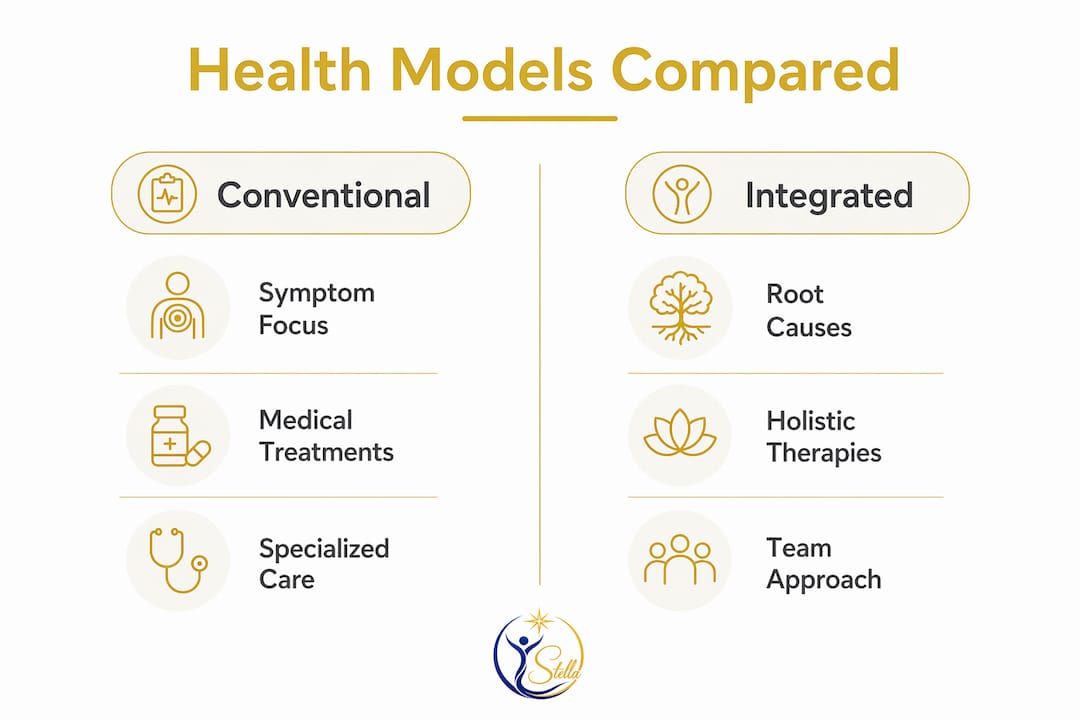
The philosophical gap between these two models is significant. Conventional medicine defines health as the absence of diagnosable disease. Integrated health defines it as a dynamic, ongoing balance of interconnected systems. That difference changes everything about how care is delivered.
| Feature | Conventional Western Medicine | Integrated Health Philosophy |
|---|---|---|
| Definition of health | Absence of disease or dysfunction | Dynamic balance across all life dimensions |
| Patient role | Passive recipient of treatment | Active co-creator of healing |
| Focus | Diagnosing and treating specific conditions | Identifying and addressing root causes |
| Therapies used | Pharmaceutical and surgical interventions | Conventional plus evidence-informed complementary practices |
| Care relationship | Brief, condition-focused consultations | Longer, relationship-based, whole-person assessments |
| Systemic view | Individual organ or system | Mind, body, community, and environment together |
Integrated care transitions from siloed medical models to team-based care that links behavioral, primary, and social health services. This shift has shown measurable results, including improved outcomes for conditions like perinatal depression where emotional and physical care are delivered together.
The patient role shift is perhaps the most transformative element. When you understand health as a dynamic balance you help maintain, you stop waiting for symptoms to become crises. You start making daily choices that support your whole system. That is a fundamentally different way to live.
What are common misconceptions about integrated health?
The biggest misconception is that integrated health means rejecting science. Holistic health philosophy uses all appropriate therapies based on the best available evidence. It does not dismiss conventional medicine. It adds to it thoughtfully.
A second misconception is that "natural" automatically means safe or effective. Herbal supplements can interact with prescription medications. Breathwork practiced incorrectly can cause dizziness or anxiety. The word "natural" carries no guarantee of benefit.
A third misunderstanding involves the idea that more modalities equal better care. Success in integrated health depends on the individual acting as a thoughtful curator of their care, not an uncritical collector of treatments. Stacking acupuncture, homeopathy, nutritional therapy, and energy healing simultaneously without a coherent plan often produces confusion rather than healing.
Common myths worth releasing:
- Myth: Integrated health is only for people who distrust doctors. Reality: Many integrative practitioners are licensed physicians and nurses who use conventional tools alongside complementary ones.
- Myth: It is expensive and inaccessible. Reality: Practices like qigong, mindfulness, and dietary shifts cost little to nothing and deliver measurable benefits.
- Myth: Spiritual health means religion. Reality: In this context, spiritual health means purpose, meaning, and connection, which are universal human needs.
Pro Tip: Before adding any new modality to your health routine, ask one question: "What root cause am I addressing with this?" If you cannot answer clearly, pause and consult a qualified practitioner first.
How to apply integrated health philosophy in daily life
Applying this philosophy does not require a complete life overhaul. It starts with honest self-assessment and small, consistent shifts. Initial integrated health consultations typically run 60–90 minutes, exploring root causes across lifestyle, emotional patterns, social support, and physical symptoms. You can replicate that depth of inquiry on your own.
Here is a practical starting framework:
-
Assess your baseline. Spend 20 minutes journaling across the five dimensions. Where do you feel drained? Where do you feel alive? Patterns will emerge quickly.
-
Choose one anchor practice. Practices like qigong, mindfulness meditation, or breathwork address multiple dimensions at once. Qigong, for example, regulates the nervous system, improves digestion, and cultivates a sense of calm presence. You can explore a range of integrative modalities specifically suited to stress and digestive health.
-
Audit your nutrition. You do not need a strict diet. You need to notice how food affects your energy, mood, and gut. Whole foods, regular meal timing, and mindful eating are the foundations.
-
Build your social environment intentionally. Identify one relationship that drains you and one that restores you. Invest more in the restorative one.
-
Seek a qualified integrative practitioner. Look for someone trained in both conventional and complementary approaches. The whole-person health model explains how these dimensions interact and why a skilled guide makes the process more effective.
-
Review and adjust regularly. Integrated health is not a fixed protocol. It is a living practice. Reassess your five dimensions every 90 days and adjust your approach based on what has shifted.
Integrative medicine combines the best of conventional and complementary treatments chosen according to individual needs, with a focus on activating the body's own healing response. That activation happens through consistent daily practice, not occasional treatments.
Key takeaways
Integrated health philosophy is the most complete framework for well-being because it addresses root causes across all five dimensions of health, not just the symptoms that show up last.
| Point | Details |
|---|---|
| Whole-person definition | Integrated health addresses physical, mental, emotional, social, and spiritual dimensions together. |
| Root cause focus | The philosophy targets why symptoms arise, not just how to suppress them. |
| Active patient role | You become a co-creator of your health, not a passive recipient of treatment. |
| Evidence-informed practice | Integrated health uses science-backed therapies from both conventional and complementary traditions. |
| Thoughtful curation | Combining modalities without a clear purpose weakens results; intentional selection drives lasting healing. |
Why I think most people misunderstand what integrated health actually asks of you
Most people come to integrated health looking for a better treatment. They want a gentler version of the same transaction: hand over the problem, receive the solution. What integrated health actually asks is something harder. It asks you to become curious about your own patterns.
I have seen this play out repeatedly. Someone discovers qigong or mindfulness and feels genuinely better for a few weeks. Then life gets busy, the practice slips, and the old symptoms return. They conclude the approach "didn't work." What actually happened is that they treated a philosophy like a prescription. You take it until you feel better, then stop.
The integrative health movement also carries a dimension most wellness content ignores: it is partly a cultural reclamation. Healing traditions from Chinese Medicine, Ayurveda, and Indigenous practices were marginalized by Western biomedicine for centuries. Choosing to integrate them is not just a personal health decision. It is a quiet acknowledgment that wisdom exists in many forms.
The challenge I see most often in new adopters is impatience. The body did not arrive at imbalance overnight. It will not return to balance overnight either. The people who get the most from this philosophy are the ones who commit to the long, gentle work of knowing themselves better. That is where the real transformation lives.
— Stella
Start your integrated health practice with Qigongstar
If you are ready to move from understanding integrated health philosophy to actually living it, Qigongstar offers a gentle, structured entry point.
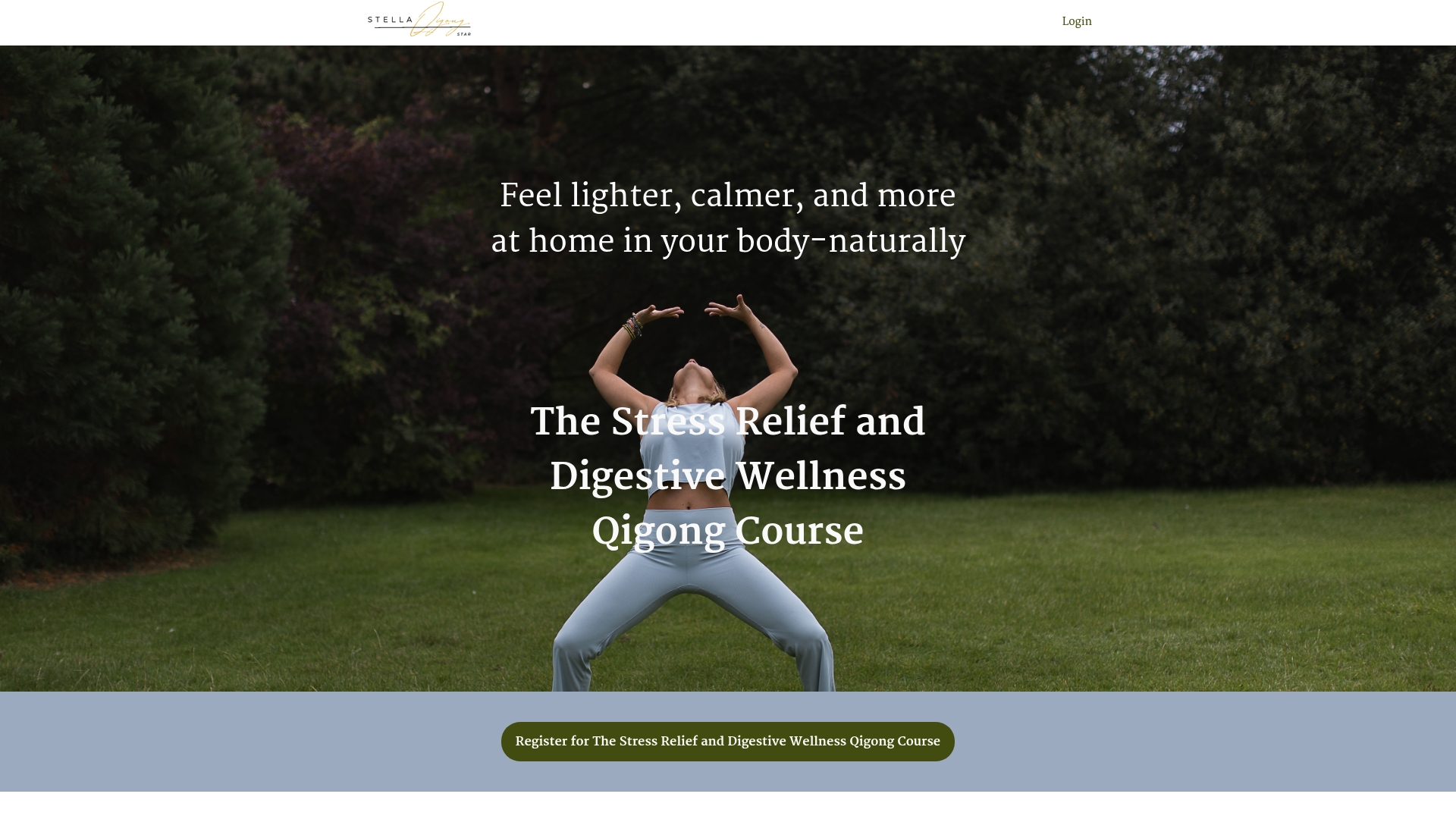
Qigongstar's online courses in Five Animal Qigong and White Tiger Qigong are rooted in Chinese Medicine and designed specifically for stress relief and digestive wellness. Each practice works across multiple health dimensions at once, calming the nervous system, awakening energy flow, and nurturing the mind-body connection that integrated health philosophy describes. The courses are beginner-friendly, accessible on demand, and taught by a certified instructor. You can explore the full range of online qigong classes and find the practice that fits where you are right now.
FAQ
What is the integrated health philosophy definition?
Integrated health philosophy is a whole-person approach to well-being that combines conventional and complementary therapies to address physical, mental, emotional, social, and spiritual health together. It focuses on root causes rather than isolated symptoms.
How does holistic health differ from integrative medicine?
Holistic health is the broader philosophy emphasizing balance across all life dimensions, while integrative medicine is its clinical application, combining evidence-based conventional treatments with complementary practices in a coordinated care plan.
Is integrated health philosophy scientifically valid?
Yes. Holistic health philosophy applies evidence-informed therapies from both conventional and complementary traditions. It does not reject scientific rigor. It expands the scope of what science is applied to.
What practices are common in an integrated health approach?
Common modalities include nutrition therapy, mindfulness meditation, qigong, acupuncture, breathwork, and cognitive behavioral therapy. The key is selecting practices that address your specific root causes, not combining everything at once.
How do I start applying integrated health principles?
Begin with a self-assessment across the five health dimensions, choose one anchor practice like qigong or mindfulness, and consult a qualified integrative practitioner for a personalized whole-person assessment that explores your lifestyle, emotional patterns, and physical symptoms together.