
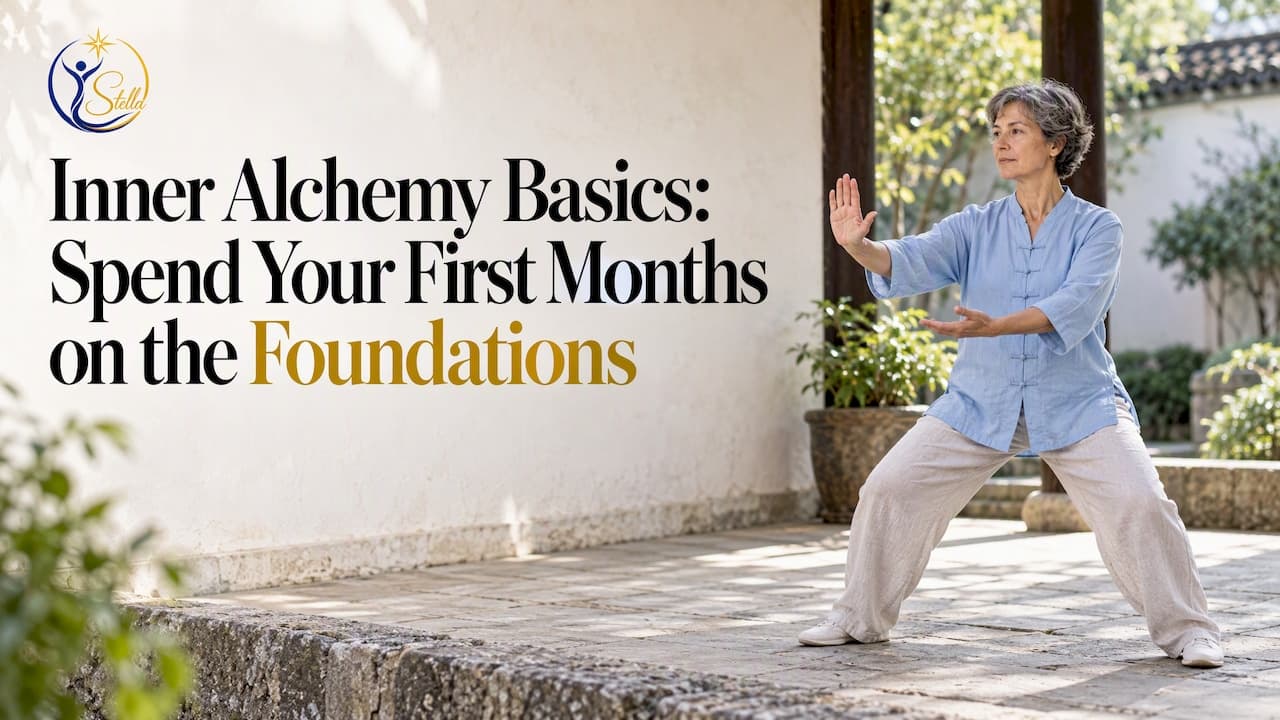
Inner alchemy, known in Chinese as Neidan, is a Taoist system for refining the body's vital energies toward balance, calm, and longevity. This guide walks you through the foundational concepts and a few safe, approachable practices you can start today, along with a short routine and the evidence behind it. No prior experience is needed, just a quiet corner and a willingness to breathe with intention.
TL;DR:
- Spend your first few months building steady breathing, calm attention, and restorative habits; classical teaching treats this foundation as necessary before deeper practice.
- Practice three to five times weekly for 15 to 25 minutes, with a brief warmup, 10 to 15 minutes of meditation, and gentle movement afterward.
- A 2022 UK pilot found 84% of participants reported better stress, sleep, and energy, but its small scale limits confidence and calls for objective measures.
- Anchor practice to a daily habit, such as waking or bedtime, and keep a shorter version lasting two minutes for busy days to maintain consistency.
- Because Neidan methods vary by lineage, work with a qualified instructor before advancing beyond basic breathing, stillness, posture, and gentle movement.
Table of Contents
- What Is Inner Alchemy? Core Concepts and a Short History
- The Beginner Stage: What 'Laying the Foundations' Really Means
- Core Beginner Practices: Breath, Stillness, Posture, and Movement
- A Simple Starter Routine: 15 to 25 Minutes a Day
- What to Expect: Early Benefits and the Evidence Behind Them
- How Stella and QigongStar Guide Beginners Through These Foundations
- A Practitioner's Perspective on Staying Consistent
- Learning These Foundations With Stella QigongStar
- FAQ
- Sources
What Is Inner Alchemy? Core Concepts and a Short History
Neidan means "internal alchemy," and it differs from its older cousin, Waidan or external alchemy, which once relied on minerals and compounds in a search for physical immortality. Neidan turned that search inward, treating the body itself as the furnace and the breath and mind as the ingredients. According to DaoInfo's overview, the practice centers on refining three energies known as the Three Treasures:
- Jing (Essence): your body's foundational vitality, often linked to physical reserves and reproductive energy.
- Qi (Breath or Vital Energy): the animating force that moves through the body and connects breath to vitality.
- Shen (Spirit): the subtlest treasure, associated with awareness, clarity, and presence.
Classical texts describe these treasures as mutually transforming rather than separate goals: essence is refined into breath, and breath into spirit, in sequence. It helps to remember that inner alchemy is not one fixed method. Different lineages shaped their own approaches over centuries, so what you encounter in one teacher's lessons may look different from another's, even while sharing the same roots.
The Beginner Stage: What 'Laying the Foundations' Really Means
Before any advanced alchemical work, classical teachings insist on a preparatory stage called Zhuji, often translated as "basic cultivation" or "laying the foundations." DaoInfo describes this stage as having two simple but essential tasks:
- Preserve what Essence and Breath you already have, avoiding habits that drain them.
- Replenish whatever has been depleted, through rest, stillness, and steady breath practice.
Wang Mu's classical exposition frames this stage plainly: foundations must be solid, meaning essence full, breath steady, and spirit calm, before deeper practice can safely proceed.
For beginners, this translates into practical goals: steadying your breath, quieting a busy mind, and gently restoring energy you may have lost to stress or poor sleep. This is where Neigong, a form of body and nervous-system conditioning, plays its part. It prepares your posture, tissue, and breath patterns so later practice unfolds without strain.
Pro Tip: Treat the foundation stage as the whole practice for your first few months, not a step to rush past.
Core Beginner Practices: Breath, Stillness, Posture, and Movement
These four elements form the practical heart of inner alchemy for anyone starting out. Each one is simple on its own, and together they support the nervous system changes that foundational cultivation relies on.
- Regulate your breath. Sit comfortably, place a hand on your belly, and breathe so the belly rises on the inhale and falls on the exhale. Aim for slow, even breaths, working toward a relaxed, circular rhythm with no pause or strain between inhale and exhale.
- Practice short stillness. Close your eyes, rest attention lightly on the breath, and when your mind wanders, simply return to it without judgment. NHS meditation guidance suggests around 20 minutes as a useful guideline for many beginners, though even five minutes builds the habit.
- Add gentle movement. A slow, mindful walking qigong practice or simple five-animal style movements act as Neigong for the body, loosening joints and settling the breath before stillness practice.
- Mind your posture. Keep your spine upright but relaxed, shoulders soft, and chin slightly tucked, whether seated or standing.
Pro Tip: Combine breath, stillness, and movement in one sitting rather than treating them as separate workouts, and practice daily or at least three to five times a week for steady progress.
A Simple Starter Routine: 15 to 25 Minutes a Day
You do not need special equipment, only a quiet space and a few unhurried minutes.
- Warm up (3 to 5 minutes): gentle walking qigong or slow abdominal breathing to settle the body.
- Main practice (10 to 15 minutes): seated breath-focused meditation, returning attention to the breath whenever it drifts.
- Closing (2 to 5 minutes): a few slow stretches or gentle movement to ground your energy before returning to your day.
Before you begin, run through a short checklist: a chair or cushion that supports an upright spine, loose clothing, and a space free from interruptions for the length of your session. As your comfort grows, lengthen the main practice by a few minutes every week or two rather than jumping straight to longer sessions. Our daily qigong routine guide offers a fuller version of this structure if you want to build toward a longer practice.
What to Expect: Early Benefits and the Evidence Behind Them
Most beginners notice changes gradually rather than overnight, and much of the wellbeing evidence comes from practitioner self-reports rather than large clinical trials.
84% of participants in a 2022 UK pilot study on Lung-Strengthening Qigong reported improvements in stress, sleep quality, and energy, though the study itself notes its small scale and recommends future trials include objective biomarkers.
Early, commonly reported benefits among beginners include:
- Reduced day-to-day stress and tension
- Better, more settled sleep
- A calmer, steadier focus during the day
- A gentle lift in overall energy
Our guide to natural stress relief without medication looks more closely at how these non-pharmacological approaches fit into daily life.
How Stella and QigongStar Guide Beginners Through These Foundations
We built QigongStar around the idea that inner transformation starts with gentle, well-sequenced movement and breath work, not complicated theory. Our courses include specialized training in qigong styles rooted in Chinese medicine principles, with instruction certified through recognized qigong and wellness organizations. We offer a mix of on-demand courses and live virtual classes, so you can learn at your own pace or alongside others.
Beginner courses progress deliberately: foundational movement and posture first, then breath regulation, then short meditative practices layered in as your comfort grows. Each stage builds on the one before it, mirroring the classical emphasis on laying solid foundations before anything more advanced.

A Practitioner's Perspective on Staying Consistent

Most beginners expect calm from the first sitting and instead find a wandering mind and uneven progress. That is normal, and it is not a sign you are doing it wrong. Consistency matters more than intensity.
Anchor your practice to something you already do daily, like right after waking or before bed, and keep a two-minute version ready for busy days. As your foundation steadies, working with a qualified instructor helps you move into deeper practice safely rather than guessing at the next step.
— Stella
Learning These Foundations With Stella QigongStar
If you would rather be guided than figure this out alone, our online classes build these same foundations step by step. We offer a 30-Min Clarity Session for a focused introduction, a 60-Min Deep Dive Online Session for a fuller practice, and our Qigong for Stress Relief and Digestive Wellness course for ongoing, self-paced learning.
These formats suit beginners who want structure without pressure, whether you are easing stress, settling your digestion, or simply curious about where this practice leads. For grounding and nervous-system support between sessions, this resource on nervous system regulation pairs well with early practice. When you are ready to begin, visit our online classes page to find the session that fits where you are starting from.
FAQ
What is the meaning of inner alchemy?
Inner alchemy, or Neidan, refers to Taoist practices aimed at refining the body's Essence, Breath, and Spirit toward balance and longevity, using meditation, breathwork, and gentle movement rather than external substances. It treats the body as the vessel for transformation, according to DaoInfo.
What are the basic elements of alchemy?
In Taoist inner alchemy, the core elements are the Three Treasures: Jing (Essence), Qi (Breath or vital energy), and Shen (Spirit). Classical teaching holds that essence refines into breath, and breath refines into spirit, in a sequential process rather than three isolated goals.
What is Daoist inner alchemy?
Daoist inner alchemy is a family of internal practices, varying by lineage, that uses breath regulation, stillness, and gentle movement to cultivate and refine the body's vital energies rather than relying on external compounds. It is better understood as a tradition with many approaches than a single fixed method.
What is alchemy in spirituality?
In a spiritual context, alchemy often describes an inner process of transformation rather than a literal chemical one, turning raw vitality into calm clarity and steadiness. In Taoist practice, this transformation unfolds gradually through consistent breath work, meditation, and movement.
How long does it take to see results from inner alchemy practice?
Many beginners report early shifts in stress and sleep within weeks of steady practice, though individual timelines vary. A 2022 UK pilot study found that 84% of participants noticed wellbeing improvements, though the research itself notes it was small in scale.
Sources
- A pilot study on the impacts of lung-strengthening qigong on wellbeing - Northumbria University Research Portal
- Inner Alchemy - DaoInfo
- Laying the Foundations (Wang Mu) - GoldenElixir
- How to meditate for beginners - NHS