
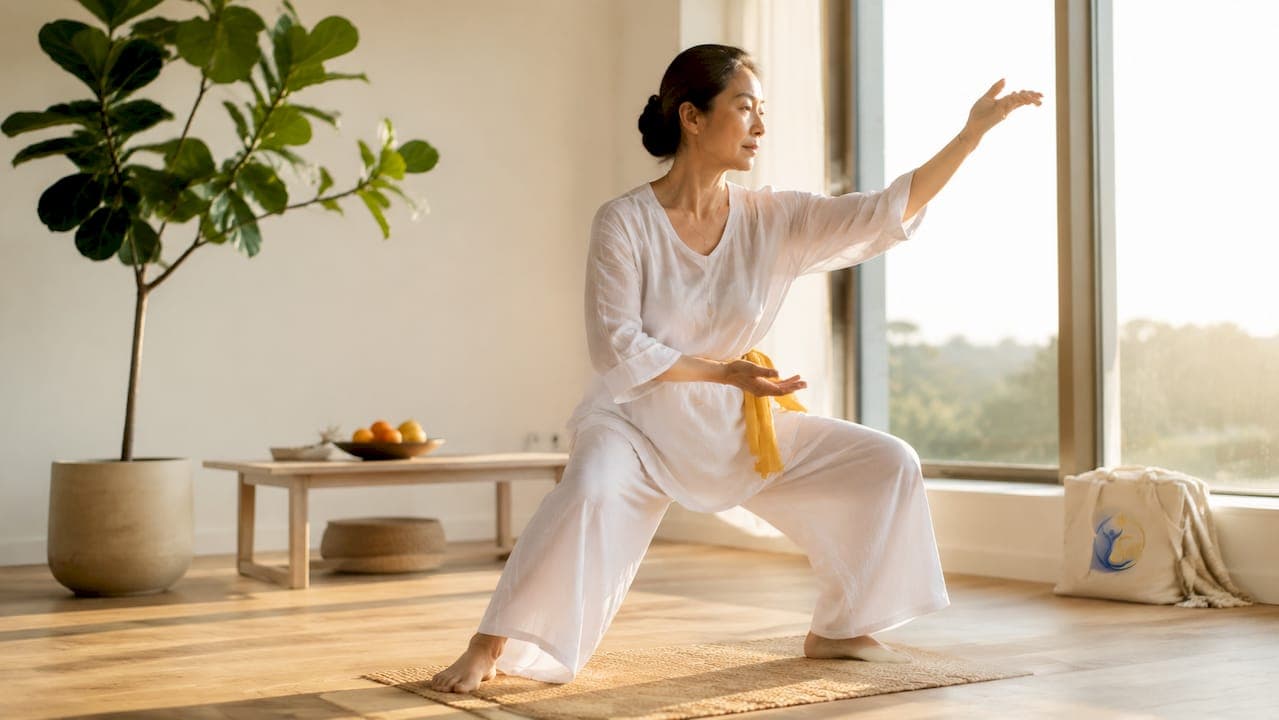
Qigong is defined as a Chinese Medicine practice that combines slow, intentional movement, breath regulation, and mental focus to cultivate and balance the body's vital energy, known as qi. When you start qigong practice at home, you need no gym membership, no special equipment, and no prior flexibility. A clear floor space, comfortable clothing, and 10–20 minutes are enough to begin. This guide walks you through setting up your space, learning foundational forms like the Eight Pieces of Brocade, building a consistent routine, and avoiding the mistakes that trip up most beginners.
What do you need to set up your home qigong practice space?
Your practice space shapes your session before you take a single breath. A calm, organized environment signals your nervous system to settle, which is exactly the state qigong is designed to deepen.
Space and flooring
A minimum of 3x4 feet of clear floor space is sufficient for one person. A 6x6 foot area gives you room for wider arm movements and stepping patterns without restriction. Flooring matters more than most beginners expect. Smooth hard floors like wood, tile, or linoleum support balance and safe footwork. Carpet creates instability underfoot and can cause ankle strain during weight shifts.
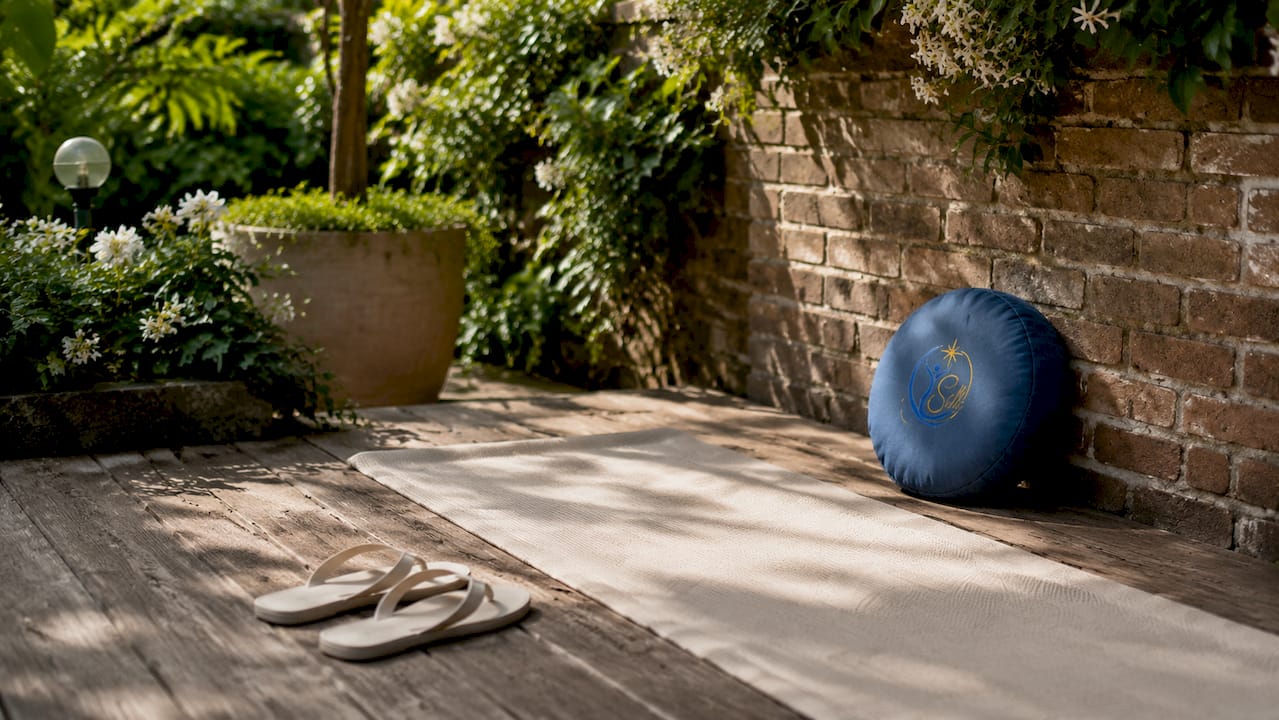
Clothing and environment
| Element | Recommendation | Why it matters |
|---|---|---|
| Clothing | Loose, non-restrictive fabric | Allows full range of motion without binding |
| Footwear | Flat-soled shoes or barefoot | Keeps you grounded and stable |
| Ventilation | Open window or gentle airflow | Fresh air supports breath regulation |
| Lighting | Natural or soft artificial light | Reduces eye strain and promotes calm |
| Distractions | Phone silenced, TV off | Protects mental focus during practice |
Practice barefoot or in flat shoes to stay connected to the ground. Avoid thick-soled sneakers, which reduce proprioception and make balance harder. Keep the room well-ventilated. Stale air makes breath work feel labored rather than natural.
Pro Tip: Designate one specific corner or room for practice. Returning to the same spot each session creates a mental cue that tells your body it is time to slow down and focus. This environmental anchor builds the habit faster than willpower alone.
How to start learning basic qigong movements and build a routine
The most common beginner mistake is trying to learn everything at once. A phased approach protects you from frustration and physical strain.
Step-by-step learning progression
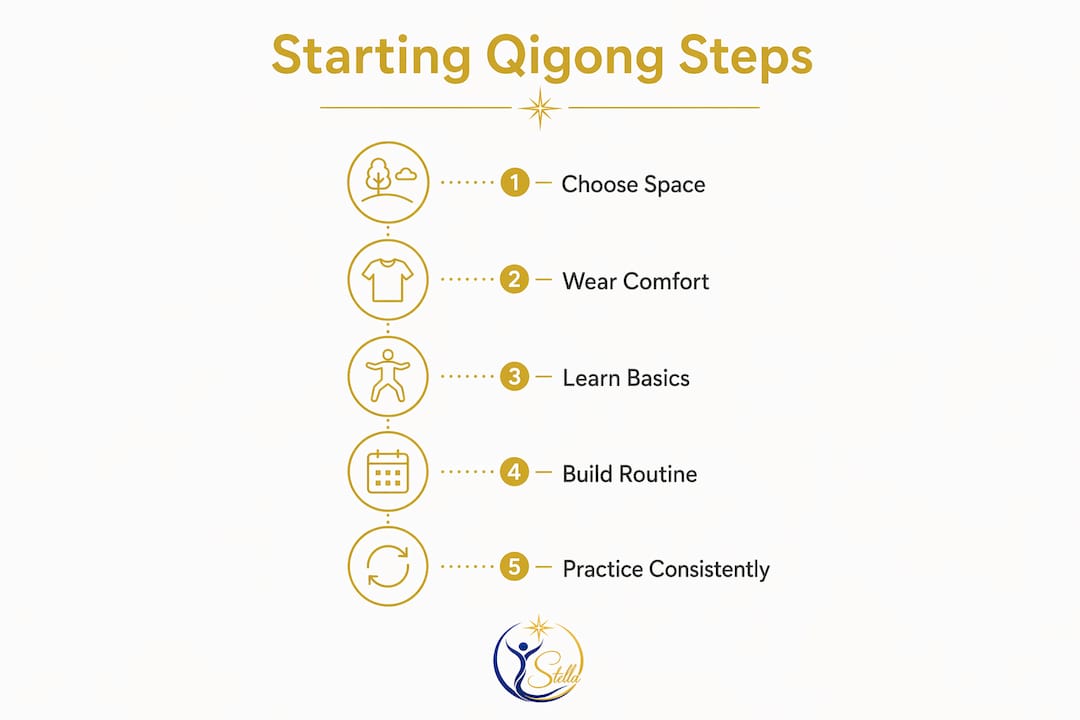
- Choose a beginner form. The Eight Pieces of Brocade, known in Chinese as Baduanjin, is the ideal starting point. Its eight symmetrical movements are learnable within 12–20 minutes and carry documented benefits including improvements in blood pressure, balance, and stress reduction.
- Master the physical shapes first. Spend your first 2–4 weeks learning the postures and transitions without worrying about breath. Forcing breath coordination too early creates tension in the chest and shoulders.
- Add a warm-up. A 2–3 minute warm-up of gentle neck rolls, shoulder circles, hip rotations, and knee bends prepares your joints and signals your body to shift into practice mode.
- Layer breathing gradually. Once the movements feel natural, begin matching your inhale and exhale to the flow of each posture. This typically happens around weeks 3–4 for most beginners.
- Close with stillness. End each session with 1–2 minutes of quiet standing or seated rest. This allows your nervous system to absorb the session's calming effects.
Session length and frequency
Start with 10–20 minute sessions, two to three times per week. Consistency matters far more than duration at this stage. Once the routine feels natural, short daily sessions of 10–15 minutes build the habit more effectively than longer, infrequent workouts.
- Begin with 2–3 sessions per week for the first month
- Keep each session between 10 and 20 minutes
- Add a fourth or fifth session only after the routine feels effortless
- Track your sessions in a simple notebook to see your progress
Pro Tip: Move at a pace that feels pleasant throughout. If your muscles ache or you feel breathless, you are working too hard. Qigong calms the nervous system through ease, not effort.
When and where should you practice qigong at home?
Timing affects how much you get from each session. Your body's energy rhythms are real, and working with them rather than against them produces noticeably better results.
Morning practice
Traditional qigong teaching favors the hours between 6 and 8 AM. This window aligns with rising yang energy in the body, which supports alertness and physical vitality. A morning home qigong routine also sets a calm, focused tone for the rest of the day. That said, a strained early session when you are exhausted is less effective than a relaxed session at 9 AM when you are fully awake.
Evening practice
Evening practice, done 1–2 hours before sleep, shifts the nervous system from active to restful. This makes it particularly useful for people dealing with stress or sleep disruption. Avoid practicing immediately before bed, as some forms can be mildly energizing.
- Morning (6–8 AM): Best for energy cultivation and mental clarity
- Midday: Good for a stress reset between work blocks
- Evening (1–2 hours before bed): Supports relaxation and sleep quality
- Avoid: Practicing when fatigued, immediately after eating, or right before sleep
Pro Tip: Notice when you feel most calm and willing during the day. That window, whatever time it falls, is your best practice time. Rigid schedules that fight your natural rhythm create resistance, not results.
How do you troubleshoot common beginner mistakes and stay motivated?
Most people who quit qigong in the first month do so for the same handful of reasons. Knowing them in advance puts you ahead.
The most common pitfalls
- Rushing breath coordination. Mastering physical movement first, then layering breath over 2–4 weeks, prevents the chest tightness that makes beginners feel like they are doing something wrong.
- Overexertion. Qigong movements are gentle by design. Muscular fatigue or breathlessness signals that you are forcing the form rather than flowing through it.
- Skipping sessions after a break. Missing two or three days does not erase your progress. Return to your routine without guilt and continue from where you left off.
- Comparing progress to others. Home practice is personal. Your nervous system responds to your own pace, not someone else's timeline.
Staying consistent over time
Consistency beats intensity for beginners. A mindful, pleasant session that leaves you feeling calm is more valuable than a long, effortful one that leaves you drained. Guided videos and online qigong classes provide structure and feedback that solo practice cannot replicate, especially in the early weeks.
"The body knows how to heal. Qigong gives it permission."
Pro Tip: Keep a short practice journal. After each session, write two or three sentences about how your body felt and what shifted emotionally. Over weeks, this record becomes your most honest measure of progress and your strongest motivation to continue.
Connecting with a guided resource, whether a video series, a live class, or a structured course, also reduces the guesswork that causes many beginners to plateau. Platforms like Qigongstar offer beginner-friendly courses in White Tiger Qigong and Five Animal Qigong, both rooted in Chinese Medicine and designed for stress relief and gentle movement. You can also explore stress-relief practices that complement your qigong routine as your practice grows.
Key Takeaways
Starting qigong at home requires a clear space, a beginner-friendly form like the Eight Pieces of Brocade, and consistent short sessions that prioritize ease over effort.
| Point | Details |
|---|---|
| Space requirements | A 3x4 ft minimum on hard flooring is enough; 6x6 ft gives more freedom of movement. |
| Best beginner form | The Eight Pieces of Brocade offers eight simple movements learnable in 12–20 minutes. |
| Session length | Start with 10–20 minutes, two to three times per week, then build toward daily practice. |
| Learning sequence | Master physical postures for 2–4 weeks before adding breath coordination. |
| Timing flexibility | Morning practice harnesses rising energy, but practicing when alert beats any fixed schedule. |
What I have learned from watching beginners start at home
The students who progress fastest are almost never the ones who practice longest. They are the ones who practice gently and return the next day. When I first started teaching home practice, I expected the biggest challenge to be the movements themselves. It turned out to be permission. Most adults need explicit permission to move slowly, to stop before they are tired, and to call a 12-minute session a complete success.
The hesitation I see most often is the feeling that qigong will be complicated or that you need to understand Chinese Medicine theory before you can begin. You do not. The body responds to gentle, rhythmic movement long before the mind understands why. I have watched people release years of held tension in their shoulders within three sessions, simply by learning to let their arms float rather than grip.
My honest advice: start smaller than you think you should. A 10-minute session three times a week, done with genuine attention, will change how you feel within a month. You do not need to earn the right to practice. You just need to begin.
— Stella
Qigongstar courses to support your home practice
Ready to move beyond solo exploration? Guided instruction makes a real difference in the early weeks, giving you clear cues, proper form feedback, and a sense of community that keeps you coming back.
Qigongstar offers beginner-friendly online qigong courses designed specifically for stress relief and gentle movement, taught by Stella, a certified White Tiger Qigong instructor. Whether you are drawn to the flowing sequences of Five Animal Qigong or want a structured path through foundational forms, the courses are available on demand so you practice on your own schedule. Each program is rooted in Chinese Medicine and built for adults who want real, lasting results without pushing their bodies hard.
FAQ
What is the best qigong form for beginners at home?
The Eight Pieces of Brocade (Baduanjin) is the most recommended starting form. Its eight symmetrical movements are learnable in 12–20 minutes and have documented benefits for stress, balance, and blood pressure.
How much space do I need to practice qigong at home?
A clear area of at least 3x4 feet on a hard floor is sufficient for one person. A 6x6 foot space gives you more room for wider movements and stepping patterns.
How often should a beginner practice qigong?
Start with two to three sessions per week, each lasting 10–20 minutes. Once the routine feels natural, short daily sessions of 10–15 minutes build the habit most effectively.
Should I coordinate breath and movement from the start?
No. Spend your first 2–4 weeks mastering the physical movements without forcing breath coordination. Adding breath gradually, once the postures feel natural, prevents tension and makes the practice sustainable.
Is morning or evening better for home qigong practice?
Morning practice between 6 and 8 AM aligns with rising energy in the body. Evening practice 1–2 hours before bed supports relaxation and sleep. The best time is whichever window you feel most alert and willing to practice.