

Wellness routines create transformation by giving your nervous system a reliable, repeatable framework that reduces stress, regulates hormones, and builds lasting behavioral change. This is not motivational theory. The Diabetes Prevention Program demonstrated that structured lifestyle changes reduce type 2 diabetes incidence by 58% through personalized goal-setting and consistent daily habits. That number reflects what happens when the body receives the same calming signals day after day. Understanding why wellness routines create transformation means understanding how your biology responds to repetition, not willpower.
Why wellness routines create transformation at the nervous system level
Your nervous system is always scanning for signals of safety or threat. Predictable routines send a clear message: everything is okay. That message activates the parasympathetic nervous system, the branch responsible for rest, digestion, and recovery. When your body feels safe, it stops flooding your bloodstream with cortisol and starts doing the quiet repair work that builds real health.
UCLA Health research confirms that structured daily routines lower anxiety and depression, improve sleep quality, and reduce decision fatigue. Decision fatigue is the mental exhaustion that builds when you face too many choices throughout the day. A morning routine that removes those choices, what to eat, when to move, how to start, frees up mental energy for everything that actually matters.

The benefits go deeper than mood. Predictable routines improve parasympathetic activity, which supports digestion, balances hormones, and strengthens immune regulation. This is why people who keep consistent routines tend to get sick less often and recover faster. Their bodies are not constantly bracing for the next disruption.
Behavioral activation, a core technique in cognitive behavioral therapy, uses routines to boost mood and reduce depression symptoms. The mechanism is simple: scheduled, meaningful activity interrupts the cycle of withdrawal and low energy. Routine is not just comfort. It is a clinical tool.
- Parasympathetic activation calms the stress response and supports digestion and immune function
- Reduced decision fatigue preserves mental energy for creative and emotional demands
- Hormonal balance improves when cortisol spikes are replaced by predictable daily rhythms
- Sleep quality deepens when your body learns to expect rest at the same time each night
- Mood stability increases as behavioral patterns replace reactive, unstructured days
Pro Tip: Start your morning with one fixed anchor, whether that is a glass of water, five minutes of breathwork, or a short walk outside. That single consistent act begins training your nervous system to recognize the day as safe and manageable.
What biological patterns drive lasting wellness transformation?
The body learns through repetition. Every time you repeat a health-supporting behavior, your metabolism and hormonal systems adapt slightly. Over weeks and months, those adaptations compound into measurable change. This is what Amy Myers MD describes as metabolic and hormonal memory: the body literally remembers what you do consistently and begins to expect it.
The biggest mistake people make when starting a wellness practice is falling into the intensity trap. They overhaul their diet, start a demanding exercise program, and commit to daily meditation all at once. The nervous system perceives that kind of sudden, intense effort as stress. It does not distinguish between a hard workout and a threat. The result is burnout, not transformation.
"Sustained success in wellness arises from small, consistent habits layered gradually rather than large simultaneous changes." — MAKJournal on daily wellbeing
Small, consistent habits practiced daily outperform sporadic intense efforts in improving mood and reducing stress. The compounding effect is real and measurable within weeks. A ten-minute walk every morning for thirty days creates more lasting neurological and metabolic change than three intense gym sessions followed by two weeks of rest.
Here is a practical layering sequence that works with your biology rather than against it:
- Week 1–2: Set a consistent wake time and stick to it every day, including weekends. This single habit begins regulating your circadian rhythm and cortisol patterns.
- Week 3–4: Add five minutes of morning light exposure outdoors. Natural light within thirty minutes of waking anchors your body clock and lifts mood.
- Week 5–6: Introduce a short movement practice, ten to fifteen minutes of gentle qigong, walking, or stretching. Keep it gentle enough that you never dread it.
- Week 7–8: Layer in a mindful eating habit, such as eating your first meal without screens. This supports digestion and parasympathetic activation.
- Week 9 onward: Add one new habit every two to three weeks, only after the previous one feels automatic.
This sequence works because each habit stabilizes before the next one arrives. Your nervous system adapts without feeling overwhelmed.
Which daily wellness routines have the strongest proven impact?
Not all wellness habits carry equal weight. Some create a foundation that makes every other habit easier. Others amplify the effects of what you are already doing. The table below compares the most evidence-supported daily routines by their primary mechanism and transformation benefit.
| Routine | Primary Mechanism | Key Transformation Benefit |
|---|---|---|
| Consistent sleep schedule | Circadian rhythm regulation | Hormonal repair, cognitive clarity, immune strength |
| Morning light exposure | Cortisol and melatonin alignment | Energy in the morning, deeper sleep at night |
| Daily gentle movement | Parasympathetic activation | Stress reduction, metabolic balance, mood lift |
| Mindful eating practice | Digestive nervous system support | Reduced bloating, improved gut-brain signaling |
| Digital breaks | Cortisol and dopamine regulation | Lower anxiety, better sleep, improved focus |
| Breathwork or meditation | Vagal nerve stimulation | Rapid stress relief, emotional regulation |
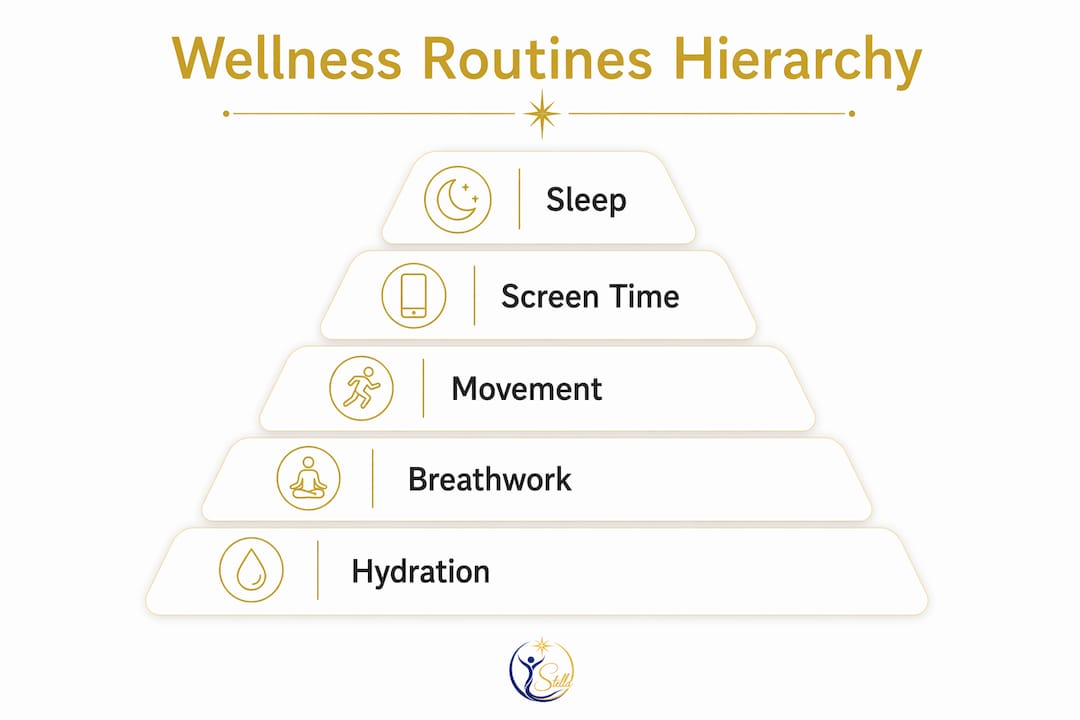
A consistent sleep schedule is the single most foundational routine for long-term wellness. Stable sleep and wake times regulate the biological processes that govern everything else, from hunger hormones to immune response to emotional resilience. Without it, every other habit works harder for smaller returns.
Limiting screen time reduces depression symptoms, lowers stress, and improves sleep quality. Devices keep the nervous system in a low-grade alert state. Scheduled digital breaks are not optional extras. They are recovery periods your brain genuinely needs.
Pro Tip: Pair your most important wellness habit with something you already do automatically. If you always make coffee in the morning, do five minutes of breathwork while it brews. Attaching new habits to existing ones removes the need for willpower entirely.
How do you build and sustain a transformative wellness routine?
Building a routine that actually lasts requires a different approach than most people expect. The goal is not discipline. The goal is automation. Simple, repeatable daily habits reduce reliance on motivation and increase long-term follow-through. When a habit becomes automatic, you stop spending energy deciding whether to do it.
A sustainable wellness practice is built on three principles: start small, attach habits to anchors, and plan for disruption. Starting small means choosing a version of the habit so easy you cannot say no. Attaching habits to anchors means linking them to existing behaviors like waking up, eating, or brushing your teeth. Planning for disruption means deciding in advance what you will do when life gets in the way.
Here is what that looks like in practice:
- Choose one habit and practice it daily for two to three weeks before adding anything new
- Use an anchor habit as your trigger: after I wake up, I will do X; after lunch, I will do Y
- Create a backup plan for disrupted days, such as a five-minute version of your usual practice
- Track your streak loosely without turning it into pressure. Missing one day is normal. Missing two in a row is the pattern to interrupt.
- Avoid the all-or-nothing mindset. A shortened or modified version of your routine still sends calming signals to your nervous system.
Structured recovery from lifestyle lapses is integral to sustainable transformation. Personalized recovery plans reduce relapse and support long-term adherence. The people who transform their health are not the ones who never miss a day. They are the ones who return to their routine quickly and without self-judgment.
A mind-body routine that integrates gentle movement, breath awareness, and consistent timing gives your nervous system the full spectrum of calming signals it needs. Qigong, in particular, combines all three in a single practice, making it one of the most efficient tools for nervous system regulation available.
Key takeaways
Wellness routines create transformation because consistent, low-intensity habits signal nervous system safety, which drives the biological and behavioral changes that produce lasting health.
| Point | Details |
|---|---|
| Nervous system safety drives change | Predictable routines activate the parasympathetic system, enabling digestion, hormone balance, and recovery. |
| Consistency beats intensity | Small daily habits compound into measurable transformation faster than sporadic intense efforts. |
| Layer habits gradually | Add one new habit every 2–3 weeks to prevent burnout and build lasting behavioral change. |
| Sleep is the foundation | A consistent sleep schedule regulates every other biological process that supports wellness. |
| Plan for disruption | Having a backup routine reduces the risk of a missed day becoming a missed month. |
What i've learned about routines that most articles won't tell you
I have worked with hundreds of people who came to qigong after years of trying harder and getting less. They had tried intense cleanses, demanding fitness programs, and strict protocols. Most of them were exhausted before they even started with me.
The shift that changed everything for them was not adding more. It was slowing down enough to let the body actually respond. Gentle, consistent movement practiced at the same time each day does something that no high-intensity program can replicate. It teaches the nervous system that calm is the default state, not something you earn after suffering.
The intensity trap is real, and it is seductive. We are conditioned to believe that transformation requires struggle. But the biology tells a different story. Your body adapts to what it receives repeatedly, not to what it endures occasionally. A ten-minute qigong practice every morning for sixty days will reshape your stress response more profoundly than a month of punishing workouts followed by collapse.
The other thing I have seen consistently is that people underestimate patience. Real transformation is quiet. It does not announce itself. One day you realize you slept through the night, your digestion has settled, and you feel calm in situations that used to unravel you. That is the holistic wellness routine working. Not dramatically. Deeply.
Be gentle with yourself. The routine is not a test you pass or fail. It is a conversation you keep returning to.
— Stella
Gentle qigong routines to begin your transformation
If you are ready to put these principles into practice, Qigongstar offers structured online courses designed specifically for nervous system regulation, stress relief, and digestive wellness.

The 5 Animal Qigong program draws on ancient Chinese Medicine to awaken your energy through five distinct movement sequences, each targeting a different organ system and emotional pattern. It is gentle enough for beginners and deep enough to sustain a lifelong practice. For those seeking a more structured path, the online Qigong classes at Qigongstar offer flexible, on-demand access to courses that fit naturally into any daily routine. You do not need experience. You need ten minutes and a willingness to begin.
FAQ
Why do wellness routines create lasting transformation?
Wellness routines create transformation by repeatedly signaling safety to the nervous system, which enables hormonal balance, immune regulation, and behavioral change. Consistency, not intensity, is the mechanism that drives lasting results.
How long does it take for a wellness routine to show results?
Small, consistent habits practiced daily produce measurable improvements in mood and stress within weeks. Biological changes like improved sleep and hormonal balance typically stabilize within four to eight weeks of consistent practice.
What is the most important habit to start with?
A consistent sleep schedule is the most foundational wellness habit because it regulates circadian rhythms, hormones, and cognitive repair. Every other routine builds more effectively once sleep is stable.
Can gentle practices like qigong really transform health?
Yes. Gentle, low-intensity practices like qigong activate the parasympathetic nervous system and create the metabolic and hormonal memory that supports physical and emotional transformation over time.
What should i do when i miss a day in my routine?
Return to your routine the next day without self-judgment. Structured recovery from lapses is a core part of sustainable wellness transformation, and missing one day does not erase the progress your nervous system has already built.