

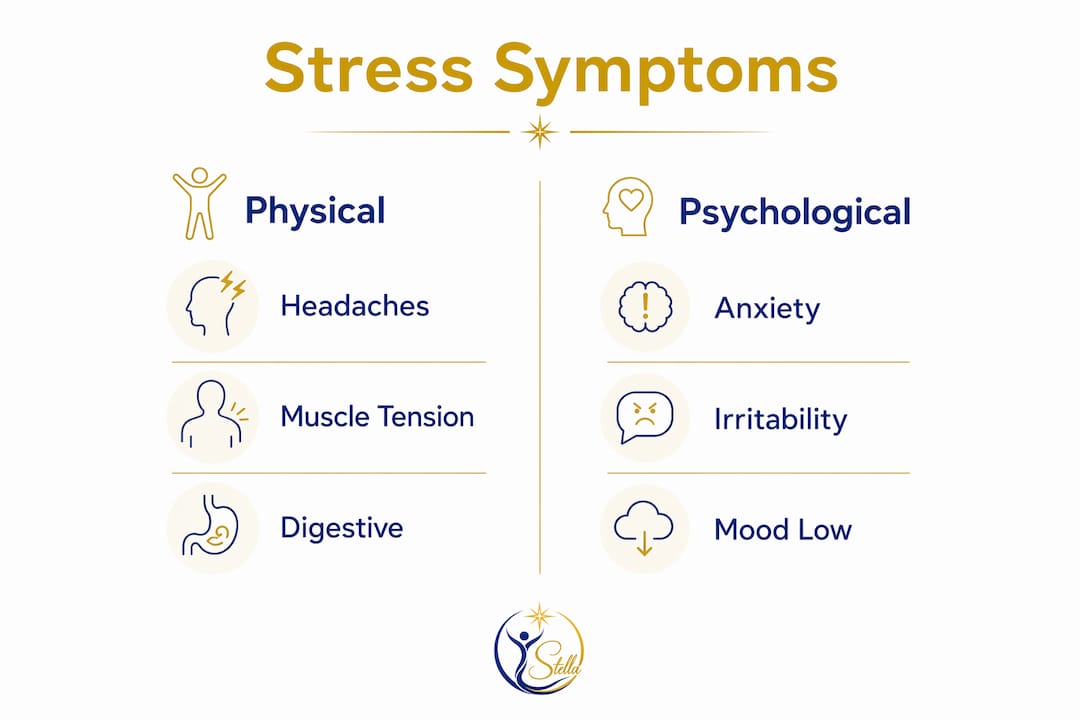
Stress causes physical symptoms because your body responds to perceived threats by flooding your bloodstream with adrenaline and cortisol, triggering a cascade of changes across nearly every major system. Your heart pounds, your muscles tighten, your digestion slows. These are not random reactions. They are the fight-or-flight response working exactly as designed, preparing you to face or flee danger. The problem is that your nervous system cannot tell the difference between a charging predator and a looming work deadline. When that alarm stays on for a prolonged period, the same survival machinery that once protected you begins to wear you down.
Key immediate physical symptoms triggered by the stress response include:
- Increased heart rate and elevated blood pressure
- Muscle tension, especially in the neck, shoulders, and jaw
- Rapid or shallow breathing
- Headaches and dizziness
- Digestive upset, including nausea, diarrhea, or constipation
- Sweating and dry mouth
- Fatigue and disrupted sleep
Understanding why these symptoms appear is the first step toward releasing the tension your body has been holding.
What stress actually is, and why it comes in different forms
Stress is your body's biological response to any demand that disrupts its natural balance. The World Health Organization describes it as a state of worry or mental tension caused by a difficult situation, though the physical response is just as real as the emotional one. Not all stress is harmful. A short burst before a presentation can sharpen your focus and lift your energy. The trouble begins when stress stops being brief.

Acute stress is short-lived and tied to a specific event, like a near-miss in traffic or a difficult conversation. Your body activates, responds, and then settles back down. Chronic stress is the kind that lingers for weeks or months, driven by ongoing pressures like financial strain, a difficult relationship, or a demanding job. MedlinePlus notes that chronic stress keeps the body alert even when no real danger exists, and that sustained alertness is where health problems take root.
Common sources of stress include:
- Work pressure, job loss, or retirement transitions
- Relationship difficulties, divorce, or caregiving responsibilities
- Financial strain or unexpected expenses
- Serious illness, injury, or grief
- Major life changes, even positive ones like having a baby or moving
Stress also has an adaptive side. Short-term activation builds resilience and motivates action. It becomes maladaptive when the stressor is intense, repeated, or prolonged, at which point the stress response turns detrimental to physiology rather than protective.
Why stress causes physical symptoms across your whole body
Stress does not stay in your head. It moves through your nervous system, your hormones, and your organs, leaving a physical trail that is well documented in clinical research.

| Body system | What stress does | Common symptoms |
|---|---|---|
| Cardiovascular | Elevates heart rate and blood pressure; promotes inflammation | Chest pain, palpitations, headaches |
| Gastrointestinal | Alters gut motility and mucosal barrier integrity | Diarrhea, constipation, nausea, IBS flares |
| Immune | Suppresses pro-inflammatory cytokines; delays wound healing | Frequent illness, slow recovery, skin rashes |
| Musculoskeletal | Increases muscle tension; inhibits osteoblast activity | Tension headaches, jaw pain, back pain, fatigue |
| Endocrine | Elevates cortisol and epinephrine; disrupts insulin | Weight gain, blood sugar fluctuations, fatigue |
| Reproductive | Disrupts hormonal cycles | Irregular periods, reduced libido |
The NHS lists headaches, muscle tension, stomach problems, and chest pain among the most common physical effects of stress. What makes these symptoms so easy to miss is that they often feel like separate health problems rather than a single underlying cause.
Physical symptoms by category:
- Head and neck: tension headaches, dizziness, jaw clenching, stiff neck
- Chest and heart: faster heartbeat, chest tightness, shortness of breath
- Digestive: upset stomach, bloating, diarrhea, constipation, nausea
- Skin: hives, acne flares, eczema worsening
- Whole body: fatigue, disrupted sleep, weight changes, low libido
Stress-induced skin reactions like hives are often mistaken for allergies but actually stem from inflammatory cascades triggered by stress hormones, and they tend to recur if the underlying stress goes unaddressed.
Common causes of stress and what happens when it goes unmanaged
The causes of stress are deeply personal. What overwhelms one person barely registers for another, and that variability makes stress harder to recognize and easier to dismiss. Still, certain triggers appear consistently across adults in the United States: workplace pressure, financial insecurity, relationship conflict, health concerns, and major life transitions.
When stress remains unmanaged over time, the body pays a steep price. Chronic stress increases the risk of conditions such as high blood pressure, heart disease, diabetes, and can contribute to weight gain. It also weakens immunity, making you more vulnerable to infections and slower to heal. Beyond the physical, prolonged stress raises the likelihood of anxiety, depression, and cognitive decline.
Possible complications of chronic, unmanaged stress:
- Cardiovascular disease, including hypertension and stroke
- Type 2 diabetes and metabolic disruption
- Weakened immune function and increased susceptibility to illness
- Musculoskeletal deterioration, including muscle wasting and reduced bone density
- Gastrointestinal disorders, including stomach ulcers and IBS
- Mental health conditions such as anxiety and depression
- Sleep disorders and chronic fatigue
Stress also shapes behavior in ways that compound physical damage. People under chronic stress tend to sleep less, move less, eat poorly, and sometimes turn to alcohol or tobacco. These indirect behavioral changes layer additional harm on top of the direct hormonal effects, creating a cycle that can be difficult to interrupt without deliberate support.
How stress is diagnosed and when to seek help
There is no single blood test for stress. Diagnosis relies on a combination of symptom recognition, clinical conversation, and ruling out other medical causes. A healthcare provider will typically ask about the duration and pattern of your symptoms, your sleep quality, your mood, and the pressures present in your daily life.
Physical symptoms like jaw clenching, tension headaches, and digestive distress often appear before a person consciously recognizes they are stressed. Your body sends the signal first. Paying attention to these early somatic cues gives you a window to intervene before emotional overwhelm sets in.
Signs that suggest stress may be affecting your health:
- Persistent headaches or muscle pain with no clear physical cause
- Ongoing digestive complaints that worsen during difficult periods
- Frequent illness or unusually slow recovery from minor infections
- Trouble falling or staying asleep, or sleeping far more than usual
- Unexplained weight changes or shifts in appetite
- Difficulty concentrating, irritability, or a sense of being constantly on edge
Seek professional support when symptoms persist for more than a few weeks, when they interfere with daily functioning, or when you find yourself relying on alcohol, medication, or other substances to cope. A primary care physician, psychologist, or licensed counselor can help you assess the full picture and build a plan that fits your life.
Practical ways to manage stress and support your body
Managing stress well means addressing both the physical symptoms and the underlying activation patterns driving them. Lifestyle changes form the foundation, and they work best when practiced consistently rather than reserved for crisis moments. The most effective management combines multiple approaches rather than relying on a single fix.
Proven stress management strategies include:
- Regular physical movement: walking, swimming, yoga, or qigong all lower cortisol and support cardiovascular recovery
- Consistent sleep: seven to nine hours per night helps regulate the HPA axis and restore hormonal balance
- Mindful breathing: slow, diaphragmatic breathing activates the parasympathetic nervous system, the body's natural "brake"
- Social connection: talking with trusted people reduces the perceived intensity of stressors
- Cognitive behavioral therapy (CBT): a well-researched approach for reshaping stress-related thought patterns
- Medication: short-term options may be appropriate for severe symptoms, always under medical supervision
- Journaling and reflection: externalizing worries reduces their grip on the nervous system
Natural stress relief approaches can be highly effective when practiced with intention and regularity. Recovery from stress symptoms often requires professional support, particularly when symptoms have been present for a long time.
Pro Tip: Start tracking your physical symptoms alongside your stress levels in a simple daily log. Patterns often emerge within two weeks, giving you and your healthcare provider much clearer information for building an effective plan.
How qigong and mind-body practices soothe stress at the source
Qigong works on stress at a physiological level, not just a psychological one. Gentle, rhythmic movement combined with conscious breath regulation activates the parasympathetic nervous system, lowers cortisol, and releases deep-held tension from the muscles and fascia. Unlike high-intensity exercise, which can temporarily spike cortisol, qigong calms the nervous system while still moving energy through the body.
Practices like Five Animal Qigong and White Tiger Qigong, both offered through Qigongstar's online qigong classes, are specifically designed to address the physical patterns stress creates: tight shoulders, a constricted chest, a sluggish digestive system. Each movement sequence works with the body's natural energy pathways, drawing on principles from Traditional Chinese Medicine to restore balance rather than simply suppress symptoms.
Mind-body techniques that support stress relief:
- Qigong: combines slow movement, breath, and intention to regulate the nervous system
- Tai chi: similar principles to qigong, with a focus on flowing transitions and postural awareness
- Meditation: even ten minutes of focused attention daily reduces cortisol and improves emotional regulation
- Progressive muscle relaxation: systematically tensing and releasing muscle groups to melt away accumulated tension
- Yoga: integrates breath and movement to calm the autonomic nervous system and improve body awareness
- Guided imagery: uses visualization to shift the nervous system out of alert mode
Building stress resilience with qigong is not about eliminating stress entirely. It is about training your body to return to calm more quickly after activation, so that tension does not accumulate into chronic symptoms.
Pro Tip: Practice five minutes of slow qigong breathing first thing in the morning, before checking your phone. This sets a calm baseline for your nervous system that carries through the rest of the day.
The psychological symptoms that often travel with physical ones
Physical and psychological stress symptoms rarely arrive alone. When your body is under strain, your mind usually reflects it, and vice versa. Recognizing the emotional dimension of stress helps you see the full picture rather than chasing individual symptoms in isolation.
Common psychological symptoms of stress include anxiety, persistent worry, irritability, low mood, and a sense of being overwhelmed. Difficulty concentrating, forgetfulness, and a loss of motivation are also frequent companions. The WHO notes that stressful situations can cause or worsen anxiety and depression, particularly when stress becomes chronic and starts affecting daily functioning at work or at home.
The relationship runs in both directions. Psychological distress amplifies the perception of physical pain, and physical discomfort deepens emotional strain. Addressing both layers together, rather than treating the headache separately from the anxiety, produces more lasting relief.
The physiological mechanisms behind stress-induced symptoms
Two systems drive most of the physical effects of stress: the sympathetic-adrenomedullary (SAM) axis and the hypothalamic-pituitary-adrenal (HPA) axis. When your brain perceives a threat, the hypothalamus signals the adrenal glands to release epinephrine (adrenaline) almost instantly. Heart rate climbs, blood vessels constrict, muscles tense, and glucose floods the bloodstream. This is the SAM axis at work, fast and powerful.
If the threat persists, the HPA axis takes over. The hypothalamus releases corticotropin-releasing hormone (CRH), which prompts the pituitary to release ACTH, which in turn signals the adrenal cortex to produce cortisol. Cortisol keeps the body on high alert, suppresses digestion and immune function, and mobilizes energy stores. According to StatPearls research on stress physiology, chronic activation of this axis leads to elevated cortisol and epinephrine that promote oxidative stress, endothelial dysfunction, and inflammation, all of which accelerate cardiovascular disease.
The body moves through three recognizable stages under prolonged stress. The alarm stage brings the initial fight-or-flight surge. The resistance stage follows, with the body adapting to sustain elevated stress hormones, often producing poor concentration and irritability. If the stressor continues, the exhaustion stage arrives, marked by burnout, fatigue, and a significantly weakened immune system.
How inflammation and muscle tension connect stress to specific symptoms
Cortisol's relationship with inflammation is one of the most clinically significant pathways linking stress to physical illness. In the short term, cortisol suppresses inflammation to keep the immune system from overreacting during a crisis. Over time, however, chronic cortisol suppresses immune and inflammatory responses in ways that delay wound healing and reduce the body's ability to fight infections. The immune system becomes dysregulated rather than simply quieted.
Muscle tension follows a parallel pathway. The sympathetic nervous system keeps skeletal muscles primed for action during stress. When that activation never fully resolves, muscles stay contracted, leading to tension headaches, temporomandibular joint pain, low back pain, and conditions like fibromyalgia. Prolonged cortisol elevation also inhibits osteoblast activity, the cells that build bone, while promoting osteoclast function, which breaks it down. The result is a gradual reduction in bone density that accumulates quietly over years of chronic stress.
The gut-brain axis offers a third pathway. Stress disrupts gut motility, increases intestinal permeability, and alters the composition of the gut microbiota, all of which can trigger or worsen conditions like irritable bowel syndrome. Exploring integrative approaches to stress and digestion can help address these gut-level effects alongside the more visible symptoms.
Ready to release the tension your body has been holding?
Qigongstar's Five Animal Qigong course was designed for exactly this: a gentle, structured practice that works with your nervous system to release deep-held tension, restore digestive balance, and rebuild your body's natural vitality. Taught by a certified White Tiger Qigong instructor, the course is accessible online, beginner-friendly, and built around the same physiological principles covered in this article. Your body already knows how to heal. Qigongstar gives you the tools to support that process.
Key Takeaways
Stress causes physical symptoms by activating the fight-or-flight response, flooding the body with cortisol and adrenaline that strain the cardiovascular, immune, digestive, and musculoskeletal systems when the activation becomes chronic.
| Point | Details |
|---|---|
| Fight-or-flight is the root cause | Adrenaline and cortisol trigger heart rate, muscle tension, and digestive changes as survival responses. |
| Chronic stress compounds the damage | Sustained HPA axis activation leads to high blood pressure, weakened immunity, and muscle and bone deterioration. |
| Symptoms appear before awareness | Jaw clenching, tension headaches, and digestive distress often signal stress before you consciously recognize it. |
| Mind-body practices calm the system | Qigong and similar techniques activate the parasympathetic nervous system, lowering cortisol and releasing accumulated tension. |
| Early intervention protects long-term health | Recognizing stress-related symptoms early and seeking support prevents the progression to chronic disease. |