

Chronic stress is defined as a prolonged state of physiological and psychological tension that damages the body when left unaddressed. The best practices managing chronic stress combine regular physical activity, proven relaxation techniques, and daily lifestyle adjustments that work together at both the hormonal and cognitive levels. CDC guidelines recommend at least 2.5 hours of physical activity weekly, while the AMA confirms that deep breathing, meditation, yoga, and tai chi reduce cortisol and lift mood. These are not optional add-ons. They are the foundation of lasting stress resilience.
1. Best practices for managing chronic stress start with physical activity
Regular movement is the single most accessible tool you have for reducing stress hormones. Physical activity triggers endorphin release, which improves mood and blunts the effects of chronic stress on the body. The effect is both immediate and cumulative.

The CDC recommends 2.5 hours weekly, broken into 20–30 minute daily sessions. That structure matters because short, consistent sessions are far easier to maintain than long, infrequent workouts.
Beneficial activities include:
- Walking at a brisk pace for 20–30 minutes daily
- Aerobic exercise such as cycling, swimming, or dancing
- Yoga, which combines breath regulation with gentle movement
- Tai chi and qigong, which calm the nervous system through slow, deliberate motion
You do not need a gym membership or a rigid schedule. A 25-minute walk after dinner counts. The goal is consistency, not intensity.
Pro Tip: Start with just 10 minutes of movement each morning. Build to 20 minutes over two weeks. Small wins create lasting habits.
2. Which relaxation techniques effectively reduce chronic stress?
Relaxation techniques work by directly calming the autonomic nervous system, which is the system that drives the stress response. Deep breathing, meditation, yoga, and tai chi each reduce cortisol and improve mood through distinct but complementary mechanisms. Practiced regularly, they shift your baseline from reactive to calm.
The most effective techniques include:
- Box breathing: Inhale for 4 counts, hold for 4, exhale for 4, hold for 4. Repeat 4 times.
- Progressive muscle relaxation: Tense and release each muscle group from feet to face.
- Guided meditation: Use a structured audio program for 10–15 minutes daily.
- Mindfulness practices for stress: Focus attention on the present moment without judgment.
Short, consistent daily practices outperform sporadic, lengthy relaxation sessions. Five minutes of box breathing every morning does more for your nervous system than a 45-minute session once a week. The NHS supports structured digital programs, recommending 8-week therapist-guided interventions like SilverCloud for people managing stress, anxiety, and depression at their own pace.
Pro Tip: Anchor your relaxation practice to an existing habit, like your morning coffee or bedtime routine. Habit stacking removes the friction of starting.
3. What lifestyle habits support long-term stress management?
Daily lifestyle choices either feed chronic stress or starve it. The WHO identifies alcohol moderation, a nutritious diet, quality sleep, and social connection as the four pillars of long-term stress resilience. None of these require dramatic change. Small, consistent adjustments compound over time.
Key lifestyle habits to build:
- Limit alcohol: CDC guidelines cap intake at no more than 2 drinks per day for men and 1 drink or less per day for women. Alcohol disrupts sleep and amplifies anxiety, making stress harder to manage.
- Eat to support your nervous system: Prioritize whole foods, lean proteins, and leafy greens. Avoid blood sugar spikes from processed foods, which worsen mood swings.
- Protect your sleep: Keep a consistent bedtime, limit screen exposure 60 minutes before bed, and keep your room cool and dark.
- Stay connected: Regular contact with friends, family, or a community group buffers the emotional weight of chronic stress.
- Reduce news consumption: Set a specific window for checking news, such as 15 minutes in the morning. Constant exposure to distressing content sustains the stress response.
These habits work best as a package. Improving sleep alone helps, but pairing it with reduced alcohol and stronger social ties creates a much more stable foundation. You can find evidence-based daily routines that weave these habits together naturally.
4. How does tracking stress with a diary help you manage it?
A stress diary is one of the most underused tools in stress management. Keeping a stress diary for 2–4 weeks helps you identify specific triggers and evaluate your responses with far more accuracy than memory alone. Stress diaries provide objective behavioral data that outperforms memory-based recollections.
Here is how to use one effectively:
- Record the context: Note the time, place, and situation when stress peaks.
- Describe your feelings: Write what you felt physically and emotionally.
- Rate your stress level: Use a simple 1–10 scale for each entry.
- Note your response: Record what you did to cope and whether it helped.
- Review weekly: Look for patterns across entries to identify recurring triggers.
After two weeks, most people are surprised by what they find. A specific meeting, a commute, or a social situation often emerges as a consistent trigger. That clarity is the first step toward changing your response. Without the diary, those patterns stay invisible.
5. What cognitive strategies build resilience against chronic stress?
Resilience is not a personality trait you either have or lack. Harvard Health confirms that resilience is a capacity that can be learned and developed through deliberate practice. That reframing alone changes everything. You are not stuck with your current stress response.
Building an antifragile mindset means actively engaging with stressors rather than avoiding them. Stanford research shows that identifying solvable challenges within a stressful situation restores a sense of agency. Agency reduces the feeling of helplessness that makes chronic stress so damaging.
Practical cognitive strategies include:
- Gratitude practice: Daily gratitude calms stress and reframes negative thought patterns. Write three specific things you are grateful for each morning.
- Cognitive reframing: Ask yourself, "Is this threat real or perceived?" Most chronic stress comes from anticipated problems, not present ones.
- Problem-solving focus: Break large stressors into small, solvable steps. Action dissolves anxiety.
- Mindful acceptance: Acknowledge what you cannot control and redirect energy toward what you can.
"The goal of stress management is not eliminating all stress but building resilience to function well under pressure." — Harvard Health
You can deepen these skills with stress resilience practices that combine cognitive work with gentle movement for a more complete approach.
Key takeaways
Managing chronic stress effectively requires combining physical movement, daily relaxation habits, lifestyle moderation, self-monitoring, and cognitive resilience practice into a consistent routine.
| Point | Details |
|---|---|
| Physical activity is foundational | Aim for 2.5 hours weekly, split into 20–30 minute daily sessions, to reduce cortisol. |
| Short daily relaxation beats long sessions | Five minutes of box breathing daily regulates the nervous system more reliably than weekly sessions. |
| Lifestyle habits compound over time | Limiting alcohol, improving sleep, and staying socially connected build lasting stress resilience. |
| Stress diaries reveal hidden triggers | Track context, feelings, and ratings for 2–4 weeks to identify patterns you cannot see otherwise. |
| Resilience is a skill, not a trait | Gratitude practice, cognitive reframing, and active problem-solving build stress resilience over time. |
What I have learned about stress management that most articles miss
Most stress management advice focuses on what to add: more exercise, more meditation, more journaling. What I have found, after years of working with people through qigong and mind-body practices, is that subtraction matters just as much. Removing one chronic stressor, whether that is a draining relationship, a habit of late-night news scrolling, or an overloaded schedule, often does more than adding three new wellness practices.
The second thing most articles miss is the body-first principle. When your nervous system is locked in a stress response, cognitive strategies like reframing and gratitude feel hollow. The body needs to calm down before the mind can follow. That is exactly why practices like qigong and tai chi work so well. They use breath and gentle movement to signal safety to the nervous system before asking anything of the mind.
The third insight is this: stress management is not a project you complete. It is a practice you maintain, the same way you maintain your physical health through movement and nutrition. The people I see make the most lasting progress are not the ones who do the most. They are the ones who do something small, every single day, without skipping. Consistency is the only strategy that actually holds.
If you are just starting out, I would point you toward natural stress relief methods that do not require medication or expensive programs. Start there, build your baseline, and layer in more as you go.
— Stella
Qigongstar online classes for stress relief and wellness
Chronic stress responds well to gentle, consistent movement rooted in breath and body awareness.
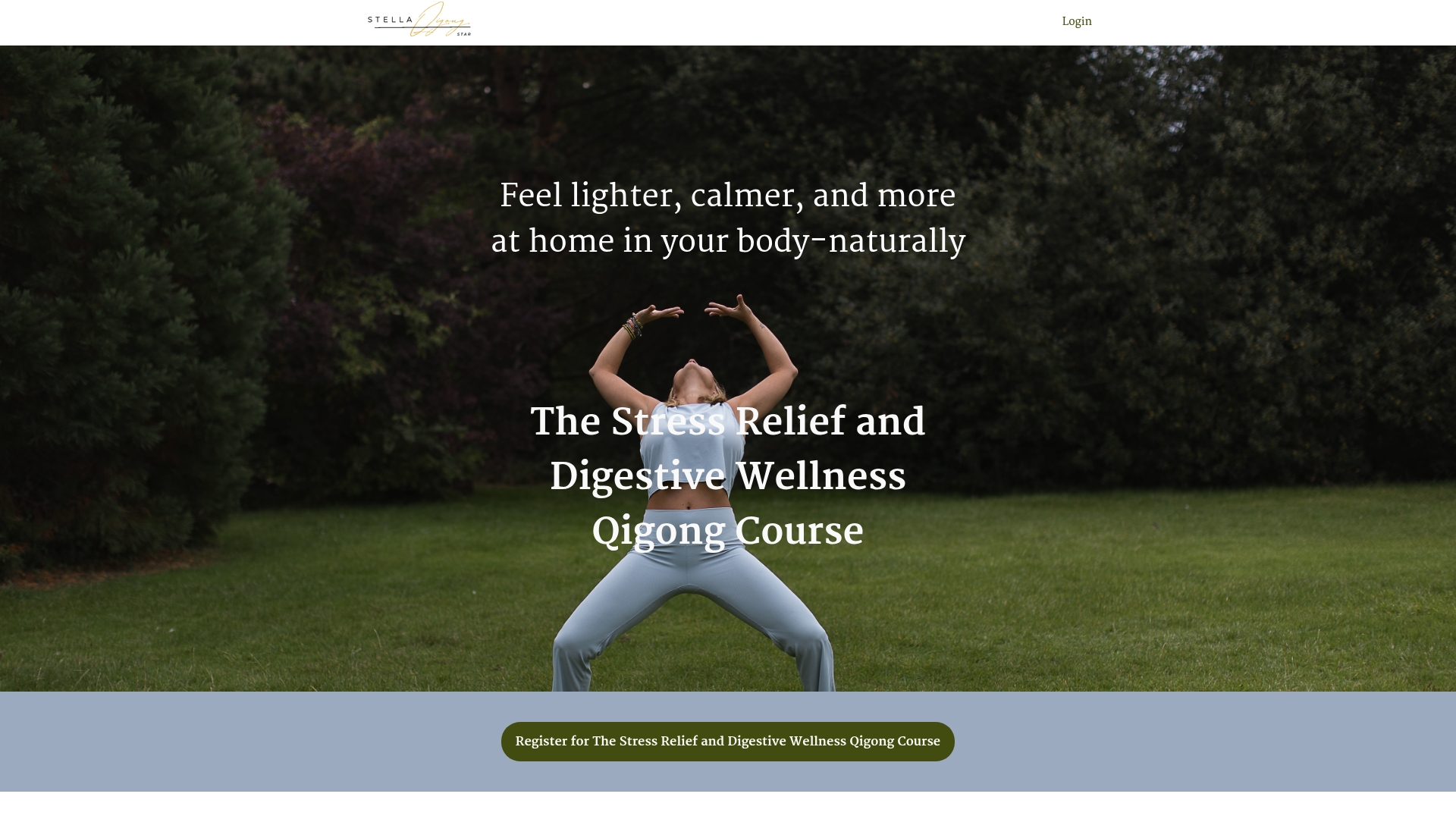
Qigongstar offers online qigong classes designed specifically for stress relief and digestive wellness, taught by Stella, a certified White Tiger Qigong instructor. The 5 Animal Qigong course combines flowing movement sequences with breath regulation to calm the nervous system and restore energy balance. Classes are beginner-friendly, on-demand, and accessible from anywhere. Whether you are looking to release deep-held tension or build a daily calming practice, Qigongstar provides a structured, nurturing path forward.
FAQ
What are the signs of chronic stress?
Chronic stress shows up as persistent fatigue, irritability, disrupted sleep, muscle tension, and difficulty concentrating. Physical symptoms like headaches and digestive issues are also common signs that stress has become long-term.
How much exercise helps reduce chronic stress?
The CDC recommends at least 2.5 hours of physical activity per week, broken into 20–30 minute daily sessions. Even brisk walking counts and produces measurable reductions in stress hormones.
What is the most effective relaxation technique for stress?
Deep breathing, including box breathing, is one of the most effective and accessible techniques because it directly activates the parasympathetic nervous system. Practiced daily for just 5 minutes, it produces consistent results.
How do I manage stress better without medication?
Combining regular movement, daily relaxation practice, quality sleep, and social connection addresses stress at both the physiological and cognitive levels without medication. Structured programs and mind-body practices like qigong offer additional support.
Can resilience to stress really be learned?
Harvard Health confirms that resilience is a developable capacity, not a fixed trait. Deliberate practices like gratitude journaling, cognitive reframing, and active problem-solving build it over time.