

Most people think gut health is just about avoiding bloating or taking a probiotic. What is holistic gut healing, then? It's something far more layered. Your gut influences your energy, your mood, your immune response, and even how clearly you think. True gut restoration means treating the whole system: what you eat, how you sleep, how you manage stress, and how much you move. This article walks you through the science, the practical frameworks, and the lifestyle shifts that genuinely restore gut health from the inside out.
Table of Contents
- Key takeaways
- What holistic gut health actually means
- The 5R framework for gut healing
- Lifestyle factors that shape gut healing
- Natural dietary strategies and supplements
- My take on why gut healing actually fails
- Support your gut with movement and breath
- FAQ
Key takeaways
| Point | Details |
|---|---|
| Gut health affects everything | A balanced microbiome shapes your energy, immunity, and mental clarity, not just digestion. |
| The 5R framework works in sequence | Skipping steps or starting with supplements before removing triggers leads to stalled progress. |
| Lifestyle is not optional | Sleep, hydration, stress reduction, and movement are as critical as any dietary change. |
| Supplements support, not substitute | Tools like L-glutamine and probiotics accelerate healing but cannot replace diet and lifestyle. |
| Real healing takes time | Expect 8 to 16 weeks for meaningful restoration, with early symptom relief appearing in 2 to 4 weeks. |
What holistic gut health actually means
Most digestive advice stops at food. Holistic gut health goes much further. It treats the gut as a living ecosystem where bacteria, lining integrity, nerve signals, and immune activity are all connected. When one part is disrupted, the whole system feels it.
At the center of this ecosystem is your microbiome. A balanced gut microbiome produces compounds that regulate inflammation, produce neurotransmitters like serotonin, and protect the gut lining. Diversity matters as much as quantity. A gut with hundreds of bacterial species handles stress, infection, and dietary changes far better than one with only a few dominant strains.
The gut lining itself plays an equally critical role. It acts as a selective barrier, letting nutrients through while keeping harmful particles out. When that barrier becomes too permeable (often called "leaky gut"), undigested proteins and bacterial fragments enter the bloodstream and trigger systemic inflammation. You may feel this as fatigue, brain fog, skin flares, or joint aches, not just stomach pain.
Here is what shapes this ecosystem on a daily basis:
- Diet: What you eat feeds or starves different bacterial populations. Processed foods and refined sugars favor harmful microbes.
- Stress: Chronic stress worsens gut dysfunction by shifting the body away from rest-and-digest states, slowing motility and absorption.
- Medications: Antibiotics, NSAIDs, and acid-blocking drugs can disrupt bacterial balance and damage the lining.
- Sleep: Poor sleep alters microbiome composition within days.
Understanding holistic gut care means recognizing that no single pill or food can fix a system influenced by this many variables.
How the gut differs from simple digestion
Digestion is the mechanical and chemical process of breaking down food. Gut health is the broader state of that entire system, including immune regulation, hormonal signaling, and neural communication. They are related but not the same. You can have regular bowel movements and still have a dysbiotic, inflamed gut undermining your mental health and immune function.
The 5R framework for gut healing
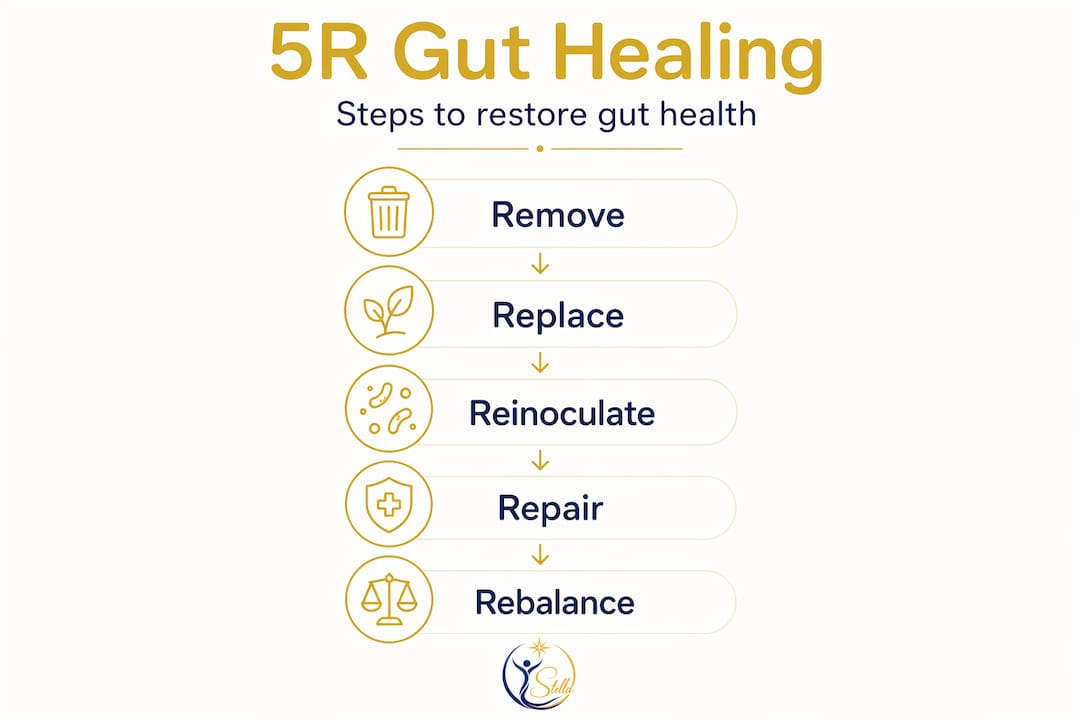
The most widely respected structure for how to heal the gut naturally is the 5R framework, used in functional and integrative medicine. It works because sequence matters. Applying repair before removing triggers leads to failure and stalled progress every time.
Here are the five steps in order:
-
Remove: Clear out what is harming the gut. This includes inflammatory foods like gluten and processed sugar, gut-irritating medications where possible, pathogens, and chronic stressors. Eliminating inflammatory triggers is the non-negotiable first move. Nothing else works sustainably until this step is done.
-
Replace: Restore what the gut needs to digest properly. This means supporting stomach acid, bile production, and digestive enzyme activity, either through dietary adjustments or targeted supplements like digestive enzymes and bitters.
-
Reinoculate: Reintroduce beneficial bacteria through fermented foods (kimchi, sauerkraut, kefir) and targeted probiotic supplements. Prebiotics like asparagus and green bananas also feed existing good bacteria, supporting the intestinal lining and producing short-chain fatty acids that reduce inflammation.
-
Repair: Now you address the lining itself. L-glutamine is the most researched amino acid for gut wall repair. Zinc carnosine, collagen peptides, and aloe vera also support tissue recovery. This step only delivers results once the gut is no longer being actively irritated.
-
Rebalance: The final step is about sustainable lifestyle integration. Sleep, stress management, movement, and mindfulness practices all regulate the gut-brain axis and prevent the triggers from returning.
Consistent daily adherence over 3 to 6 months is what separates meaningful long-term restoration from temporary symptom relief. Most people notice early improvements within 2 to 4 weeks, but full repair requires 8 to 16 weeks of sustained effort. Setting that expectation upfront prevents the discouragement that leads most people to quit too soon.
Pro Tip: Track your symptoms alongside your habits in a simple daily log. Because gut triggers vary so widely between individuals, tracking symptoms with habits is the most reliable way to identify your personal patterns and adjust accordingly.
Lifestyle factors that shape gut healing
Food is only one piece. The non-dietary elements of gut healing practices are where most people leave healing on the table.

Your gut and brain are in constant two-way communication via the vagus nerve, the enteric nervous system, and the gut microbiome itself. This is the gut-brain axis. When you are stressed, anxious, or sleep-deprived, your nervous system shifts into a sympathetic (fight-or-flight) state. Digestion slows, gut permeability increases, and the microbiome shifts toward less beneficial populations. Daily diaphragmatic breathing before meals actively shifts your nervous system into rest-and-digest mode, improving motility and nutrient absorption in a matter of minutes.
Sleep is equally non-negotiable. Research consistently links 7 to 9 hours of quality sleep to healthier microbiome diversity and reduced gut inflammation. Disrupted sleep, even for a few nights, measurably alters bacterial composition.
Here is a practical lifestyle checklist for gut healing practices:
- Breathwork before meals: Three to five slow diaphragmatic breaths calm the nervous system and prime digestion.
- Consistent sleep schedule: Going to bed and waking at the same time each day stabilizes circadian rhythms that regulate gut motility.
- Hydration: Daily intake of 4 to 6 cups of water supports the mucosal lining and keeps things moving.
- Mindful eating: Slowing down and chewing thoroughly reduces digestive strain and enhances enzyme activity.
- Regular movement: 150 to 270 minutes of moderate activity per week improves microbiome diversity and promotes intestinal stem cell regeneration.
Pro Tip: You do not need an intense workout to benefit your gut. A 30-minute walk after meals significantly improves gastric emptying and blood sugar regulation, both of which protect the gut lining over time.
Gentle movement practices like qigong and tai chi are particularly well-suited for people with gut-related stress because they combine physical activity with breath regulation and nervous system calming. This is a core reason why mind-body practices at home are gaining recognition in integrative gut care.
Natural dietary strategies and supplements
Natural gut healing methods begin with food, not supplements. A multi-layered treatment approach is far more effective than relying on any single intervention.
What to eat for gut repair
Focus on three food categories that consistently show up in the research:
- Fermented foods: Kimchi, sauerkraut, kefir, miso, and plain yogurt introduce live beneficial bacteria and reduce inflammatory markers.
- Prebiotic fibers: Garlic, onion, leeks, asparagus, oats, and green bananas feed your existing good bacteria. They are the substrate your microbiome uses to produce butyrate, a short-chain fatty acid that repairs the gut lining.
- Cysteine-rich proteins: Eggs, legumes, and sunflower seeds provide cysteine, which supports glutathione production and gut tissue repair.
How supplements fit in
| Supplement | Primary role | Best used when |
|---|---|---|
| L-glutamine | Repairs intestinal lining | After removing triggers, during Repair phase |
| Probiotics | Reintroduces beneficial bacteria | During Reinoculate phase |
| Digestive enzymes | Supports nutrient breakdown | During Replace phase |
| Zinc carnosine | Reduces gut inflammation | During Repair phase |
| Prebiotics (fiber) | Feeds good bacteria | Throughout all phases |
Supplements like L-glutamine and probiotics function as "training wheels." They accelerate recovery and ease symptoms, but they require a diet and lifestyle foundation beneath them to produce lasting results. A probiotic taken alongside a diet full of sugar and refined flour is mostly wasted money. The food you eat every day either supports or undermines everything the supplement is trying to do.
What are gut health strategies that actually last? The ones built on a nutrient-dense diet, consistent lifestyle habits, and targeted supplementation used as tools rather than crutches. That combination, applied through the 5R framework, is what restores the gut from the ground up.
My take on why gut healing actually fails
I've worked with enough people chasing gut health that I've started recognizing a very specific pattern. They arrive overwhelmed, having already tried three probiotics, two elimination diets, and a round of gut supplements they read about online. Nothing worked. And when I ask whether they slept well or managed their stress during that time, the answer is almost always no.
Here's what I've come to understand: most gut healing failures are not supplement failures. They are sequencing and consistency failures. People skip the Remove step because it feels inconvenient. They start with Repair supplements before their gut has stopped being actively inflamed. They expect 90-day results in 30 days. And when they don't see them, they move on to the next protocol.
In my experience, the people who genuinely restore their gut health share three qualities. They commit to the process for at least three months without jumping ship. They treat sleep and stress as seriously as diet. And they accept that the gut's signals, the bloating, the fatigue, the brain fog, are information to work with, not symptoms to suppress.
The gut is often called the second brain. That framing changes how you approach healing. You wouldn't try to fix a stressed mind with supplements alone. The same logic applies here.
Holistic gut healing isn't a sprint. It's a slow, steady process of removing what harms, rebuilding what's been depleted, and creating a life where your gut can actually thrive. Every step forward, even a small one, is worth taking.
— Stella
Support your gut with movement and breath
Nourishing your gut goes beyond what's on your plate. At Qigongstar, we teach that stress regulation and gentle movement are just as critical as any dietary protocol, and the practices of qigong offer both in one practice.
The 5 Animal Qigong course is designed specifically to soothe the nervous system, release tension held in the digestive organs, and awaken your body's natural healing energy through breath and movement. If you are ready to complement your gut healing protocol with something that actually addresses the stress layer, explore Qigongstar's online qigong classes to find a practice that fits where you are right now. Gentle, beginner-friendly, and grounded in Chinese Medicine tradition.
FAQ
What is holistic gut healing in simple terms?
Holistic gut healing is a whole-body approach to restoring gut health by addressing diet, lifestyle, stress, sleep, and microbial balance together rather than treating symptoms in isolation.
How long does holistic gut healing take?
Most people notice early symptom relief within 2 to 4 weeks, but full gut restoration generally requires 8 to 16 weeks of consistent effort across diet, lifestyle, and any targeted supplementation.
What are the first steps to heal the gut naturally?
The first step is removing the triggers that are actively damaging your gut, including inflammatory foods, high sugar intake, and chronic stressors, before adding supplements or repair nutrients.
Can stress really affect gut healing?
Yes. Chronic stress shifts your nervous system away from the rest-and-digest state, slowing motility, reducing nutrient absorption, and increasing gut permeability. Stress management is a non-negotiable part of any effective gut healing protocol.
Do you need supplements to heal the gut?
Supplements like probiotics, L-glutamine, and zinc carnosine can accelerate gut repair, but they work as supportive tools. A nutrient-dense diet and sustainable lifestyle habits are the foundation that makes supplementation effective.