
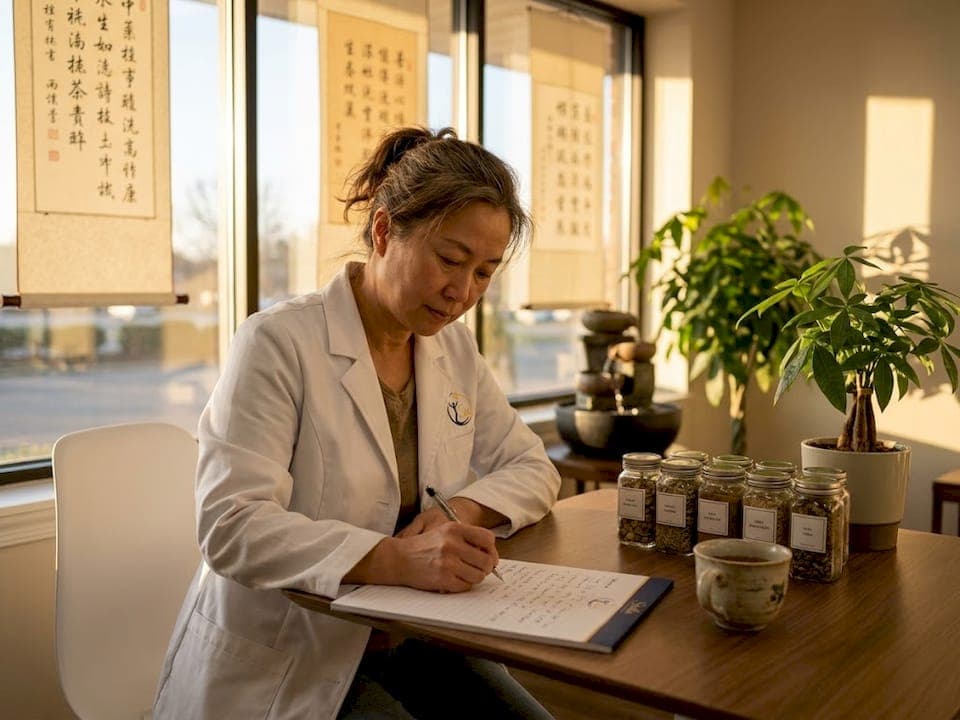
If you've tried every elimination diet, probiotic, and antacid on the market and still can't get your gut to calm down, you're not alone. The reason why Chinese medicine treats gut dysfunction differently comes down to one core idea: your digestive system doesn't operate in isolation. Traditional Chinese Medicine (TCM) sees the gut as part of a whole-body network of energy, organ relationships, and emotional patterns. Once you understand that lens, the approach stops feeling foreign and starts feeling like the missing piece you've been looking for.
Table of Contents
- Key takeaways
- Why Chinese medicine treats gut health as a system
- What modern science says about TCM and digestion
- Pattern diagnosis: why no two gut treatments look alike
- Practical TCM approaches you can start today
- How TCM and Western medicine work together
- My honest take on TCM and gut healing
- Support your gut health with qigong
- FAQ
Key takeaways
| Point | Details |
|---|---|
| Gut as systemic reflection | TCM treats the gut as a mirror of whole-body balance, not an isolated organ to fix. |
| Emotion affects digestion | Stress and unresolved emotional tension directly disrupt gut function through Liver Qi stagnation. |
| Research backs TCM mechanisms | Studies show TCM herbs and acupuncture reduce inflammation and restore gut microbiota balance. |
| Treatment is individualized | Two people with bloating may receive completely different herbal formulas based on pattern diagnosis. |
| Lifestyle changes amplify results | Warm foods, gentle movement, and mindful eating reinforce and sustain TCM treatment outcomes. |
Why Chinese medicine treats gut health as a system
Most people assume TCM is about treating symptoms with herbs the same way Western medicine uses pills. That assumption misses the entire foundation of how TCM works. To understand Chinese medicine gut health, you need to start with two concepts: Qi and Yin-Yang balance.
Qi is the body's vital energy. When it flows freely, your organs communicate, digest, and repair themselves with ease. When Qi stagnates or becomes deficient, digestion falters. Food sits in the stomach too long. Bloating builds. Fatigue follows every meal. Yin-Yang balance refers to the dynamic interplay between warming and cooling forces in the body. Healthy digestion needs enough Yang warmth to "cook" food and enough Yin moisture to keep the gut lining nourished.

In TCM, the organs most responsible for digestive health are the Spleen, Stomach, Liver, and Kidneys. These aren't just physical organs as Western medicine defines them. They're functional systems with emotional and energetic roles. The TCM Five Elements framework maps out how each organ system interacts and supports the others.
Here's how each system contributes to gut function:
- Spleen and Stomach: Transform food into Qi and blood. Spleen Qi deficiency is the most common pattern behind bloating, loose stools, and fatigue after eating.
- Liver: Regulates the smooth flow of Qi throughout the body. When stress causes Liver Qi to stagnate, it directly attacks the digestive system, causing cramping, nausea, and irregular bowel movements.
- Kidneys: Provide the warming Yang energy that powers digestion. Without it, the gut feels cold, sluggish, and unable to fully process food.
Chronic gut issues often stem from dysregulation upstream in nervous and regulatory systems well beyond the gut itself. That's why treating the gut in TCM always means treating the whole person.
Pro Tip: If you feel worse after eating raw salads or cold drinks, this may indicate Spleen Yang deficiency. Switching to warm, cooked meals is one of the fastest lifestyle shifts you can make to support TCM gut treatment.
What modern science says about TCM and digestion
TCM isn't just ancient philosophy. Researchers are now uncovering the biological mechanisms behind why it works, particularly through the gut-brain axis.
The gut-brain axis is the two-way communication highway between your digestive system and your central nervous system. When this pathway is disrupted by inflammation or microbial imbalance, both mood and digestion suffer simultaneously. TCM therapies appear to calm this disruption at multiple levels.
| TCM Mechanism | Biological Effect | Clinical Outcome |
|---|---|---|
| Herbal formulas | Suppress IL-6, TNF-α, IL-1β | Reduced gut inflammation |
| Acupuncture | Modulates vagal nerve tone | Calmer gut-brain signaling |
| Oral TCM formulations | Reshape gut microbiota pre-absorption | Restored gut barrier integrity |
| Combined herbal and diet therapy | Harmonize Qi and blood flow | Improved mood and digestion |
TCM interventions regulate the gut-brain axis by suppressing pro-inflammatory cytokines and restoring microbial balance, which alleviates both digestive disorders and depressive symptoms. This explains something TCM practitioners have observed for centuries: a patient who heals their gut often notices their anxiety lifting too.
Oral TCM formulations interact with gut microbiota before the herbs are even fully absorbed, actively reshaping microbial communities and restoring gut barrier integrity. That's not metaphor. That's pharmacology.
"Harmonizing Qi and blood flow through formulas like Xiaoyaosan and Chaihu-Shugan-San shows measurable improvement in gut microbiota composition, linking emotional and digestive healing in a single treatment pathway." Traditional Chinese Medicine Ameliorates Depression via Gut-Brain Axis, PMC
Integrated TCM herbal formulas alongside standard care have also been shown to reduce IBD flare-ups by 37% over 12 months in clinical studies. That's not a small number for people whose lives revolve around managing flares.
Pattern diagnosis: why no two gut treatments look alike
Here's something that surprises most people encountering TCM for the first time. Two patients can walk into a clinic with the exact same complaint, say, daily bloating and loose stools, and walk out with completely different herbal formulas and acupuncture prescriptions.
That's not inconsistency. That's precision.
TCM uses pattern diagnosis to identify the root of a symptom, not just its surface expression. A TCM practitioner evaluates your pulse quality, tongue coating and color, symptom timing, emotional state, dietary habits, and energy levels before deciding on a treatment. This process is called differentiation, and it's the cornerstone of treating gut issues with Chinese herbs effectively.
Common gut-related patterns include:
- Spleen Qi deficiency: Fatigue, loose stools, pale complexion, poor appetite. This is the most commonly seen pattern in Western patients with poor diets and high stress.
- Dampness accumulation: Heavy, foggy feeling, bloating that doesn't resolve, sticky tongue coating. Often linked to overconsumption of sugar, dairy, and processed foods.
- Liver Qi stagnation: Stress-related gut symptoms, cramping that worsens with anxiety, alternating bowel habits. The Liver's role in regulating emotional Qi makes this pattern extremely common.
- Yin deficiency: Dry mouth, constipation, burning sensations, worsening symptoms in the evening. Often seen in people who have been chronically ill or overworked.
The formula Si Jun Zi Tang, for instance, has been shown in clinical trials to improve stool frequency and reduce bloating specifically in patients diagnosed with Spleen Qi deficiency IBS. It doesn't work the same way for someone with Dampness or Liver stagnation. That specificity is intentional.
Acupuncture follows the same logic. Points like LV3 (Taichong) and ST36 (Zusanli) are selected not just for their local effects but for their systemic reach. Acupuncture at these points has been shown in randomized controlled trials to reduce both anxiety scores and abdominal pain simultaneously, confirming that the treatment works through the gut-brain axis, not just on the gut itself.
Pro Tip: Ask your TCM practitioner to explain your pattern diagnosis in plain language. Understanding why you're receiving a specific formula gives you insight into lifestyle choices that will amplify or undermine your treatment.
Practical TCM approaches you can start today
You don't need a prescription to begin applying Chinese medicine digestive support principles. Several evidence-backed lifestyle adjustments align directly with TCM gut theory and can create noticeable shifts even before you see a practitioner.
- Eat warm, cooked foods at every meal. TCM holds that the Spleen needs warmth to transform and transport nutrients. Cold, raw foods tax this system. Swap morning smoothies for warm oatmeal or congee and notice how your digestion responds within a week.
- Remove processed and sugary foods. These generate Dampness in TCM terms, which translates biologically to dysbiosis and increased gut permeability. Reducing them clears the way for herbal and lifestyle treatments to work faster.
- Practice gentle movement after meals. A short walk or gentle qigong sequence after eating helps Qi move through the digestive system. Sitting still traps Qi and slows motility. Even ten minutes makes a measurable difference.
- Reduce eating while stressed. The Liver attacks the Stomach and Spleen when Qi stagnates under emotional pressure. Eating while anxious or rushed literally disrupts digestion at an energetic and physiological level.
- Explore commonly used TCM digestive herbs. Ginger (Sheng Jiang) warms the Stomach and stops nausea. Atractylodes (Bai Zhu) strengthens Spleen Qi and resolves Dampness. Aged citrus peel (Chen Pi) moves Qi and relieves bloating. These are often combined in formulas but also appear in culinary use across Asian cultures.
Pattern-based herbal prescriptions combined with diet and lifestyle adjustment consistently lead to sustainable gut repair rather than temporary symptom relief. The lifestyle piece isn't optional. It's what makes the treatment hold.
You can explore how integrative health practices combine acupuncture, herbal therapy, and movement to create a complete digestive wellness protocol.
How TCM and Western medicine work together
TCM and Western medicine are not at war. They solve different problems, and understanding that distinction helps you use both intelligently.
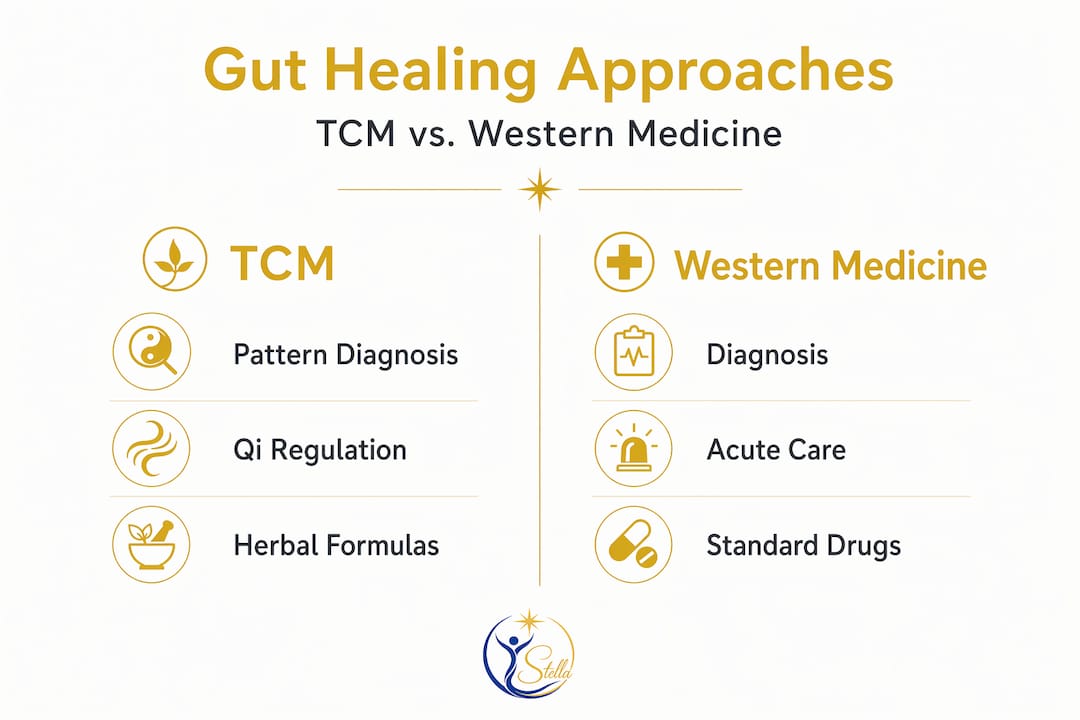
Western medicine excels at diagnosis, emergency care, and managing acute disease states. It classifies gut conditions precisely, which is critical when ruling out structural or pathological causes of symptoms. TCM excels at functional, pattern-based treatment. It addresses the terrain, the underlying conditions that allow symptoms to take hold and persist.
| Approach | Strength | Limitation |
|---|---|---|
| Western medicine | Accurate diagnosis, acute symptom control | Less effective for chronic functional disorders |
| Chinese medicine | Root-cause, individualized pattern treatment | Requires time and patient commitment |
| Integrated care | Comprehensive symptom and root management | Requires skilled coordination between providers |
The evidence for integration is growing. TCM combined with Western medicine has shown improved survival and reduced recurrence across multiple conditions, pointing to the value of combined approaches rather than either-or thinking.
For people with chronic conditions like IBS, IBD, or SIBO, TCM's strength lies in strengthening the body's own healing mechanisms rather than suppressing symptoms. That systemic rebuilding is what makes relief feel lasting rather than temporary. Always discuss any complementary approach with your primary care provider, particularly if you're on medication.
My honest take on TCM and gut healing
I've worked with people who came to qigong and TCM practices after years of frustration with their gut. Scopes came back clear. Labs looked fine. But they felt terrible every single day. What I've seen, time and time again, is that the missing conversation was never about the gut at all. It was about the Liver holding tension from unresolved stress. It was about Kidneys depleted from years of overwork and poor sleep. The gut was just the place where that systemic imbalance showed up most loudly.
What I've learned is that patience is not passive. It's the most active thing you can bring to a TCM treatment plan. The people who see the most profound shifts are the ones willing to stop chasing symptom suppression and start asking what their body is trying to restore. That reframe alone changes outcomes.
I also think the gap between TCM and modern science is smaller than most people assume. When you read that herbs reshape gut microbiota before absorption, or that acupuncture calms inflammatory cytokines, it's not mysterious anymore. It's ancient clinical wisdom that held up long enough for science to catch up. For anyone experiencing qigong for IBS and related gut issues, the mind-body dimension isn't a soft add-on. It's central to why the healing holds.
— Stella
Support your gut health with qigong
If TCM principles resonate with you, movement is the next natural step. At Qigongstar, the online courses are built around exactly this philosophy: calming the nervous system, freeing stagnant Qi, and nurturing the organ systems that support digestion.
The White Tiger Qigong and Five Animal Qigong courses integrate breath, movement, and TCM organ theory in gentle, beginner-friendly sequences you can practice from home. These aren't intense workouts. They're mindful routines designed to melt away stress and awaken your body's natural vitality. If you're ready to add a supportive, evidence-aligned movement practice to your gut health plan, explore the full range of online qigong courses at Qigongstar and find the class that feels right for where you are today.
FAQ
Why does Chinese medicine focus on the gut so much?
In TCM, the gut reflects the state of the entire body's Qi, organ balance, and emotional health. Treating it addresses upstream causes rather than isolated symptoms.
Can Chinese herbs actually improve digestion?
Yes. Clinical trials show that pattern-matched herbal formulas like Si Jun Zi Tang significantly improve IBS-D symptoms including stool frequency and bloating over eight weeks.
How does acupuncture help gut health?
Acupuncture uses distal points to regulate the gut-brain axis and calm systemic inflammation, reducing both abdominal pain and stress-related digestive symptoms simultaneously.
Is TCM safe to use alongside Western gut treatments?
Generally yes, though coordination with your healthcare provider is wise. Integrated approaches have shown improved outcomes in conditions like IBD without interfering with standard care.
How long does TCM take to improve gut issues?
Most people notice shifts within four to eight weeks of consistent treatment. Sustainable results come from combining herbal therapy, dietary changes, and lifestyle practices rather than herbs alone.