
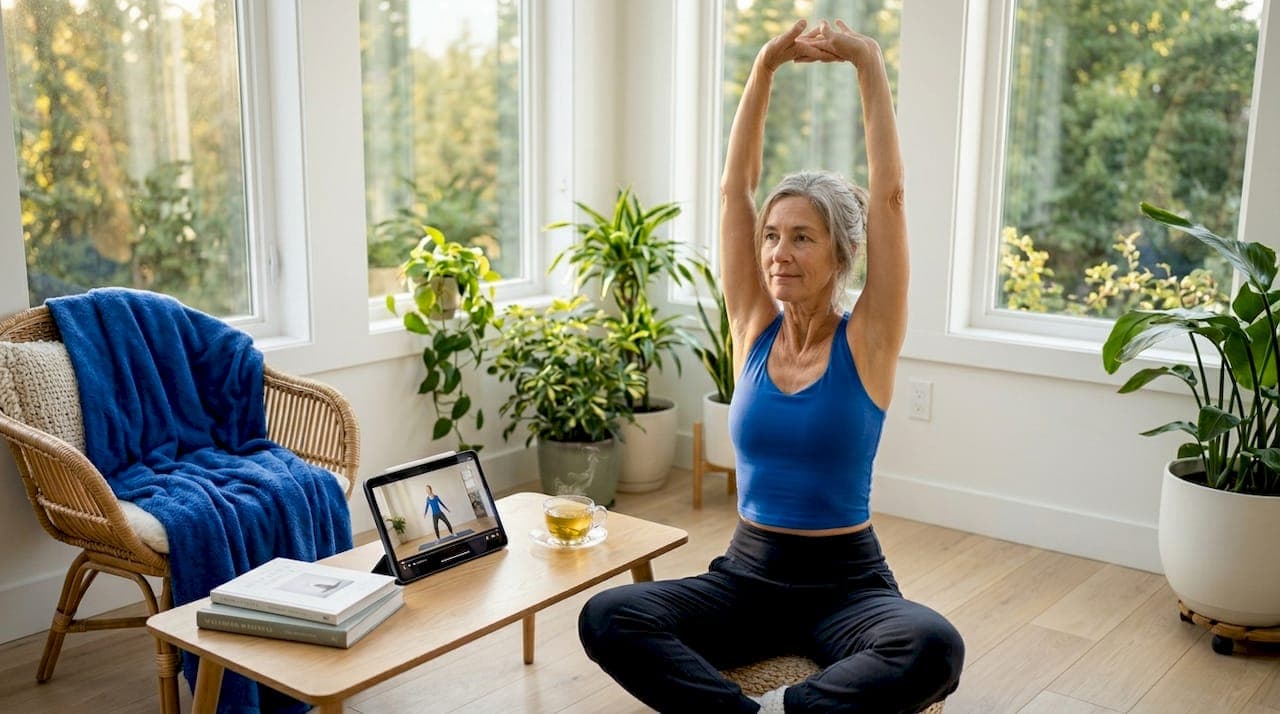
Living with chronic pain is exhausting in a way that goes far beyond the physical. You try one remedy, get temporary relief, then find yourself back at square one weeks later. The cycle of short-term fixes, whether pills, patches, or passive treatments, leaves many people frustrated and searching for something that actually sticks. The good news is that mind-and-body approaches like tai chi, yoga, and mindfulness show real, measurable benefits for chronic pain symptoms. This guide walks you through a practical, evidence-based framework for building a holistic practice that addresses pain at its roots, not just its surface.
Table of Contents
-
How to know it’s working: Measuring progress and troubleshooting
-
A practitioner’s take: What most holistic programs get wrong
Key Takeaways
| Point | Details |
|---|---|
| Combine gentle methods | Holistic pain relief is most effective when integrating movement, mindfulness, and behavioral tools. |
| Personalize your routine | Adapt your approach based on your preferences, abilities, and daily needs for lasting results. |
| Track steady progress | Monitor comfort, mood, and function—small, steady improvements add up over time. |
| Start small, stay consistent | Short, daily sessions are better than expecting instant change from rare, intense efforts. |
How a holistic approach works for chronic pain
The word “holistic” gets used so loosely that it can feel meaningless. Here, it has a specific definition: treating pain as a physical, psychological, and behavioral experience all at once, rather than targeting just one layer. This is called the biopsychosocial model, and it recognizes that how you think, feel, and move all shape how much pain you experience day to day.
Why does this matter? Because pain is not simply a signal from damaged tissue. It is also shaped by stress levels, sleep quality, past experiences, and even social connection. A purely physical treatment misses most of that picture. A truly holistic approach fills in the gaps.
Current guidelines back this up strongly. Nonpharmacologic, multi-component approaches are now recommended as first-line strategies for chronic musculoskeletal pain, meaning they should be tried before or alongside medications, not as a last resort. Research also confirms that combining movement, mind-body, and behavioral techniques produces better outcomes than any single method alone.
Here is a quick comparison of the main components and what each one contributes:
| Method | Primary benefit | Best for |
|---|---|---|
| Gentle movement (qigong, tai chi) | Reduces stiffness, improves circulation | Physical pain, mobility limits |
| Mindfulness meditation | Lowers pain perception, reduces stress | Anxiety, pain catastrophizing |
| Cognitive Behavioral Therapy (CBT) | Reshapes pain-related thoughts | Depression, avoidance behaviors |
| Breathwork | Activates the parasympathetic nervous system | Tension, sleep disruption |
| Self-management education | Builds long-term coping skills | Sustained independence |
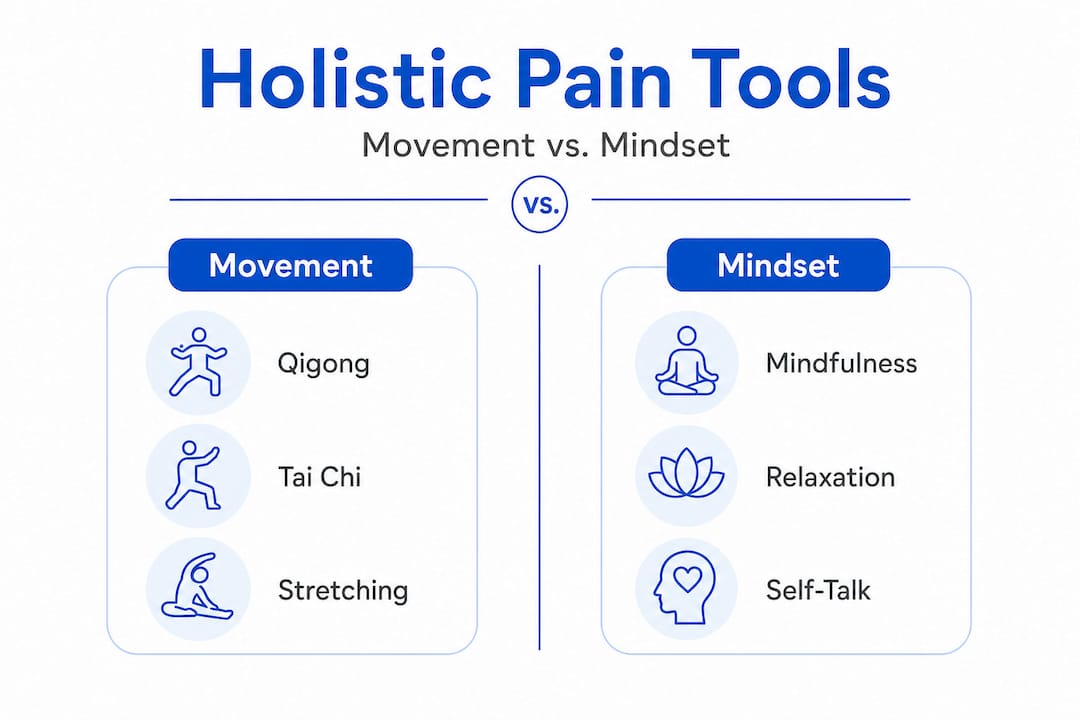
The most effective holistic programs pull from at least two or three of these columns. Movement-based techniques like qigong combine physical movement with breath and mental focus, giving you three benefits in one practice. That kind of layering is exactly what the research supports.
Key components to prioritize in any holistic program include:
-
Gentle movement: Low-impact, joint-friendly exercise that does not spike pain
-
Mind-body regulation: Practices that calm the nervous system and shift pain perception
-
Behavioral self-management: Daily habits and tracking that build resilience over time
-
Social or community support: Group classes or online communities that reduce isolation
Qigong for pain is particularly well-suited to this model because it was designed from the ground up to integrate movement, breath, and awareness simultaneously.
Essential tools and steps to get started
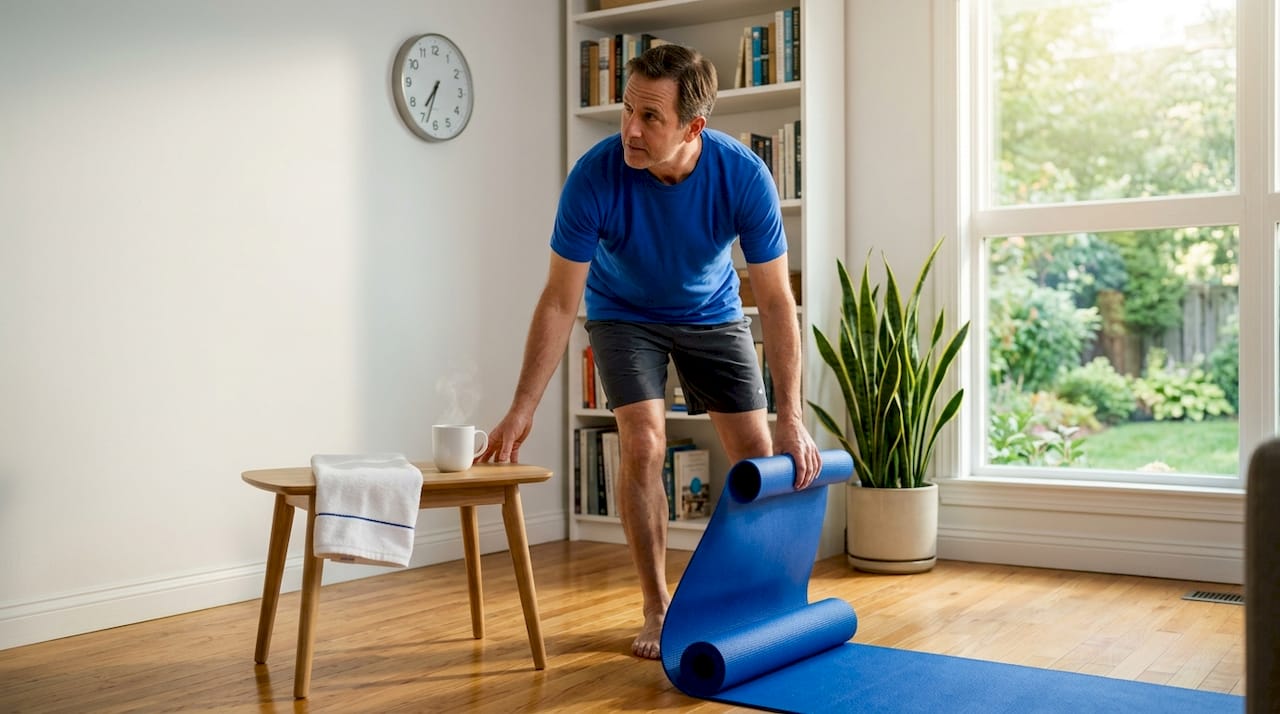
Starting a holistic practice does not require expensive equipment or a gym membership. The barrier to entry is genuinely low, and that is intentional. Here is what you actually need:
| Item | Why it matters | Budget-friendly option |
|---|---|---|
| Comfortable, loose clothing | Allows full range of motion | Any soft, stretchy outfit |
| Quiet, clear floor space | Reduces distraction, prevents trips | Living room with furniture moved |
| Guided instruction | Ensures correct form and pacing | Online video course or app |
| Pain and comfort journal | Tracks patterns and progress | Notebook or phone notes app |
| Timer | Keeps sessions manageable | Phone timer |
Once you have those basics, follow these steps to prepare yourself physically and mentally before your first session:
-
Talk to your healthcare provider. Share your plan to start gentle movement and mind-body practice. Ask about any specific movements to avoid given your diagnosis.
-
Set a realistic starting goal. Commit to five minutes a day, three days a week. Tiny goals build the habit without overwhelming your system.
-
Choose your practice. Gentle exercises like tai chi and yoga are strongly recommended as initial options for chronic low-back pain. Qigong fits into the same category and offers similar benefits.
-
Prepare your space. Clear enough room to stretch your arms wide and take a few steps in any direction. Dim lighting and quiet help signal to your nervous system that this is a calming time.
-
Schedule it like an appointment. Pick a specific time each day and put it in your calendar. Morning tends to work well because it sets a calming tone before daily stressors build up.
-
Start your journal. Before your first session, write down your current pain level on a scale of one to ten, your mood, and your energy. This baseline makes future progress visible.
Mindset is just as important as the physical setup. Approach your practice with curiosity rather than urgency. You are not trying to eliminate pain in week one. You are learning to listen to your body and respond with gentleness instead of force. That shift in relationship with your body is itself therapeutic.
Pro Tip: Rate your pain and comfort level before and after every session, even if the change feels tiny. Over weeks, those small shifts add up to a clear pattern that motivates you to keep going and helps you identify which practices work best for your body.
Starting a movement practice can feel intimidating when you are in pain, but gentle qigong is specifically designed to work with your body’s current limits, not against them.
Step-by-step holistic strategies for relief
Now that your foundation is solid, here is how to build a daily routine that actually moves the needle on chronic pain. Think of each component as a module you can mix and match based on how you feel each day.
-
Begin with gentle movement (5 to 15 minutes). Start with slow, flowing exercises that warm up your joints without loading them heavily. White Tiger Qigong methods use spiraling, wave-like movements that mobilize the spine and hips gently. Focus on how each movement feels, not on doing it perfectly.
-
Layer in breath awareness (3 to 5 minutes). Once your body is warm, shift attention to your breath. Slow, diaphragmatic breathing activates the parasympathetic nervous system, which directly lowers pain sensitivity. Inhale for four counts, hold briefly, exhale for six counts. This simple ratio shifts your nervous system out of fight-or-flight mode.
-
Add a mindfulness or body scan (5 minutes). Sit or lie comfortably and mentally scan from your feet to your head, noticing sensation without judgment. Research shows that mindfulness-based therapy and CBT produce comparable improvements in low back pain and can even reduce opioid use in people with chronic pain. You do not need a therapist to start; guided audio recordings work well.
-
Practice one cognitive tool (3 to 5 minutes). CBT-based techniques like thought records or pain reframing help you notice when your brain is amplifying pain signals through catastrophic thinking. A simple version: when a pain thought arises, ask yourself, “Is this thought helpful or accurate?” Then replace it with something more balanced. Studies confirm that CBT, mindfulness, and tai chi each show evidence for reducing pain intensity and disability.
-
Close with relaxation or gratitude (2 to 3 minutes). End each session by lying still and allowing your body to absorb the practice. Some people find that writing down one small thing their body did well that day, even just getting up and moving, builds a more positive relationship with their physical self over time.
-
Track and adjust weekly. Review your journal at the end of each week. Are there patterns? Does pain spike on days you skip movement? Does sleep improve after breathwork? Use this data to refine your routine.
Safety note: Stop any practice immediately if it causes a sharp increase in pain, numbness, or dizziness. Mild muscle soreness after movement is normal; new or intense pain is not. Always consult your healthcare provider if you are unsure.
Multicomponent self-management with relaxation, stretching, and psychological tools is strongly recommended over no treatment, which means even an imperfect daily practice beats waiting for a perfect plan.
Pro Tip: Start with just three to five minutes of movement on your hardest days. Consistency over months matters far more than session length. A three-minute practice you do every day will outperform a 30-minute session you do once a week.
Explore 5 Animal Qigong forms as a structured, beginner-friendly way to weave movement and breath together in one daily sequence.
How to know it’s working: Measuring progress and troubleshooting
Progress in holistic pain management rarely looks like a dramatic overnight shift. It is more like the tide going out slowly. You might notice that your worst pain days are less frequent, that you can walk a bit farther, or that you reach for pain medication less often.
Signs that your holistic approach is working include:
-
Reduced pain peaks: Your highest pain scores are lower than they were a month ago
-
Better daily function: You can complete tasks that used to be impossible or exhausting
-
Improved sleep quality: Falling asleep more easily or waking less often from pain
-
Less reliance on medication: Fewer days where you need rescue doses
-
Improved mood and resilience: Feeling less defeated by pain, more in control
-
Shorter recovery time: Flare-ups resolve faster than before
Outcomes vary by person and depend heavily on regularity and the specific approach used. Some people see meaningful shifts within a few weeks; for others, it takes several months of consistent practice before the pattern becomes clear. That variability is normal, not a sign that the approach is failing.
Common roadblocks and how to handle them:
Motivation dips are universal. If you miss a few days, do not treat it as failure. Simply return to your practice without self-criticism. Research shows that CBT is more effective than usual care at reducing pain and disability, but results differ across individuals, which is why troubleshooting your routine matters.
If a specific movement consistently causes discomfort, swap it for a gentler variation. If mindfulness feels frustrating, try a body scan instead of breath focus. The goal is to find the combination that works for your nervous system and your lifestyle.
Safety reminder: If you develop new or severe pain, stop your practice and contact your healthcare provider before resuming. Your safety always comes first.
Reading pain relief successes from others who have walked this path can also help you stay motivated during the slower stretches.
A practitioner’s take: What most holistic programs get wrong
Here is something most wellness content will not tell you: the biggest failure in holistic pain care is not the methods themselves. It is the assumption that one structured program will work equally well for every body.
We see this constantly. Someone reads about the benefits of qigong or mindfulness, commits to a rigid 30-day program, and then quits when their results do not match what they expected. The problem is not the practice. It is the one-size-fits-all delivery.
Pain mechanisms differ enormously from person to person. Central sensitization (where the nervous system itself becomes hypersensitive) responds differently than localized joint inflammation. Psychological history, stress load, sleep quality, and even social environment all shape how someone responds to a given practice. Experts caution that integrative pain care must avoid overpromising and stay grounded in evidence-based methods rather than chasing trends.
What actually works over the long term is a program that adjusts. One that lets you dial up the intensity on good days and scale back on hard ones. One that incorporates provider input when something is not working. One that treats you as the expert on your own body, with the practitioner serving as a guide rather than a rule-setter.
Tailored movement programs that offer multiple forms and difficulty levels are far more sustainable than rigid protocols. Look for programs that build in flexibility, encourage self-monitoring, and connect you with a community that normalizes the ups and downs of the process. Safe, steady progress beats chasing intensity every single time.
Discover more: Holistic movement courses for pain relief
If this guide has sparked something in you, the next step is finding a structured, guided practice that meets you where you are.

At QigongStar.com, we offer online holistic courses designed specifically for people who want gentle, evidence-informed movement without the overwhelm. Our 5 Animal Qigong program blends flowing movement, breath regulation, and mindful awareness into a single daily practice you can do from your living room. Whether you are brand new to qigong or returning after a break, our courses are built to adapt to your body’s current reality, not an idealized version of it. Certified instructors, a supportive online community, and on-demand access make it easy to build consistency at your own pace.
Frequently asked questions
Is a holistic approach safe for all types of chronic pain?
Most gentle, holistic methods are safe for common forms of chronic pain, but always consult your provider for individual risks or red flags, since approaches should be tailored to your preferences, accessibility, and safety profile.
How quickly will I feel results with holistic practices?
Many people notice small improvements within a few weeks, but meaningful change often takes months of regular practice, and research shows that improvements last through 12 months with consistent mindfulness or CBT-based approaches.
Can holistic pain relief replace medications?
Some people can reduce medication use with holistic approaches, but do not stop prescriptions without medical guidance, as opioid dose reductions seen in research always occur under careful medical supervision.
What if my pain gets worse after starting a holistic routine?
Stop the activity and consult a healthcare provider, because while some muscle soreness is normal, new or severe pain is not, and regimens should be adjusted to individual needs and safety considerations.
How do I choose between yoga, tai chi, or qigong for pain relief?
All three offer real benefits for chronic pain, so pick the practice you genuinely enjoy and can sustain long-term, since guidelines conditionally recommend multiple modalities based on personal preference rather than ranking one above another.