

A non-invasive health practice is any procedure or therapy that does not break the skin, enter body cavities, or require surgical incision. The formal medical definition, recognized by sources including MedlinePlus, draws a clear line: no skin penetration, no internal contact, no trauma. This matters because adults exploring wellness options often face a confusing mix of medical procedures, holistic therapies, and lifestyle protocols, all labeled "non-invasive." Understanding what that term actually means helps you choose approaches that are safe, evidence-based, and right for your body. Practices like qigong, acoustic wave therapy, and dietary protocols all qualify, and each works through very different mechanisms.
What is non-invasive health practice, and what are common examples?
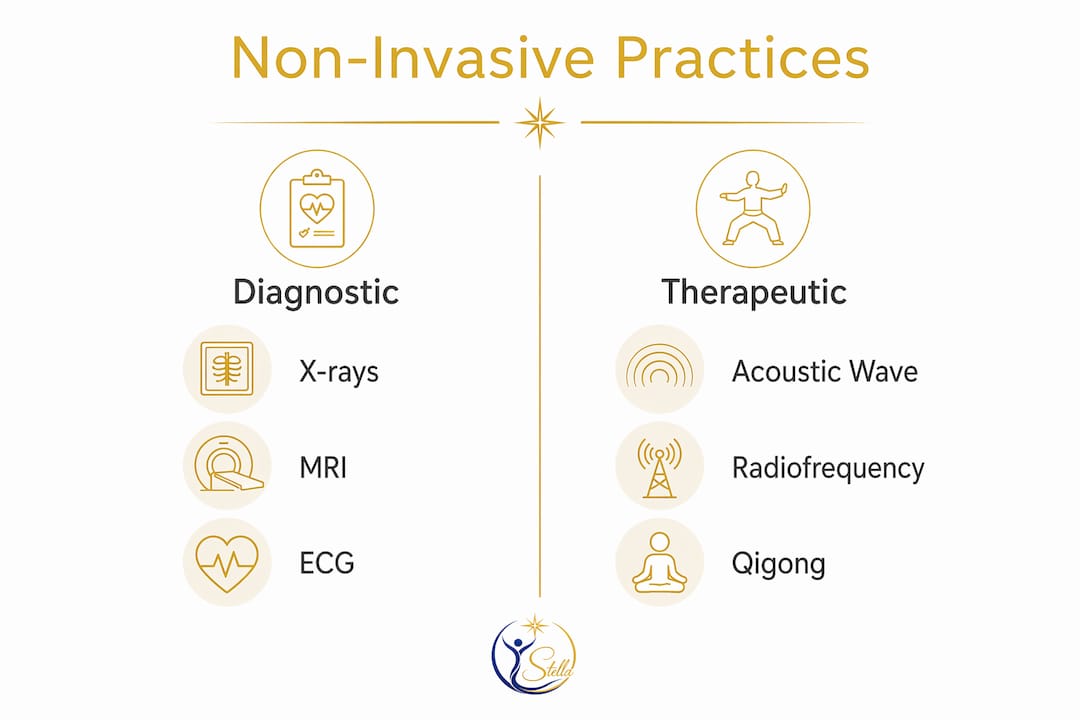
Non-invasive health practices split into two broad categories: diagnostic procedures and therapeutic or wellness protocols. Diagnostic examples include X-rays, MRI scans, CT scans, and ECGs. None of these break the skin. They gather information about your body's internal state using external technology.
Therapeutic non-invasive methods go further. Acoustic wave therapy uses high-frequency sound waves to promote soft tissue repair, with sessions typically under 30 minutes and minimal recovery time. Non-invasive radiofrequency therapy (NIRF) delivers electromagnetic energy to improve tissue metabolism and circulation, offering a regenerative path for musculoskeletal and neurological conditions without cutting or ablating tissue.
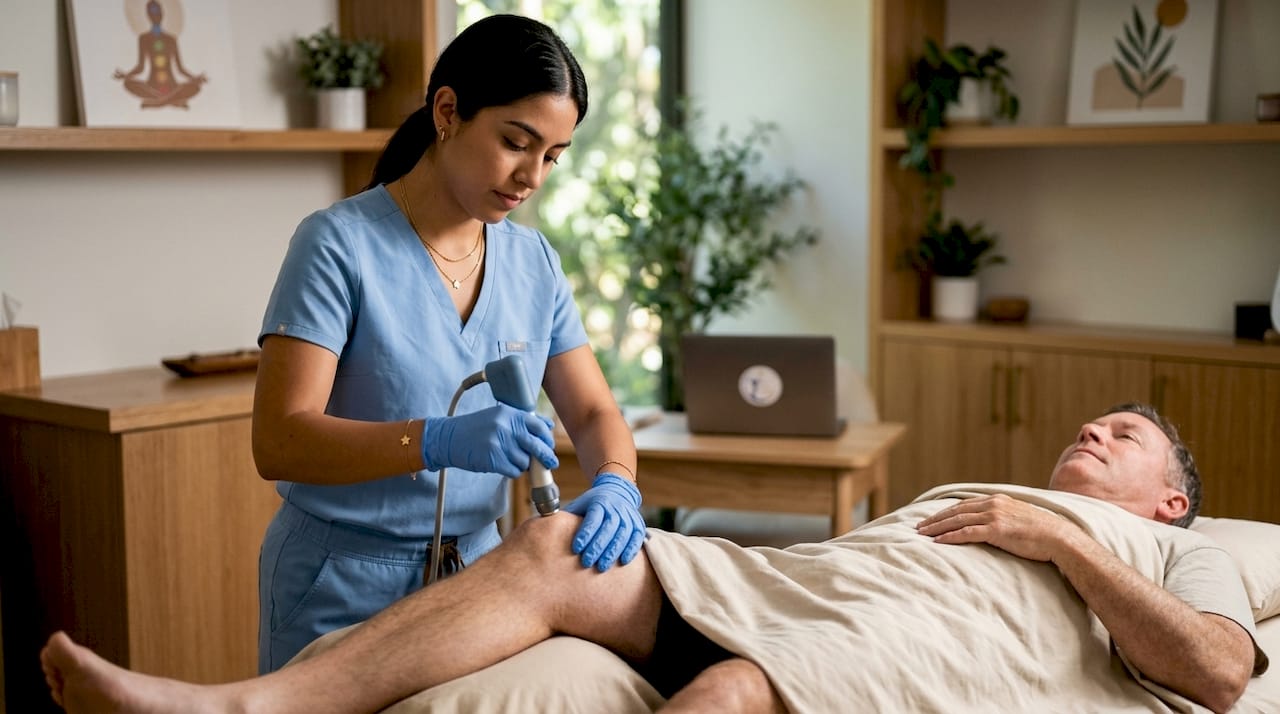
On the wellness side, non-pharmacological interventions (NPIs) represent a structured, evidence-based category of their own. NPIs include practices like qigong, dietary shifts, and psychological therapies. They are standardized protocols supervised by qualified professionals, not just casual lifestyle habits. The NPIS Model, accepted by 31 scientific societies and 3 health authorities, provides a formal framework for evaluating these approaches.
| Category | Examples | Primary Goal |
|---|---|---|
| Diagnostic medical | X-ray, MRI, CT scan, ECG | Monitor and assess health status |
| Energy-based therapeutic | Acoustic wave therapy, radiofrequency therapy | Stimulate tissue repair and circulation |
| Mind-body NPIs | Qigong, meditation, breathing practices | Regulate stress, energy, and nervous system |
| Dietary and lifestyle | Anti-inflammatory diets, sleep hygiene | Support chronic condition management |
| Psychological therapies | Cognitive behavioral therapy, guided relaxation | Address mental and emotional wellness |
- Diagnostic procedures are passive. You receive information without any active treatment.
- Energy-based therapies are active but external. They stimulate the body from the outside.
- Mind-body NPIs require your active participation. You are the instrument.
Pro Tip: When researching non-invasive options, ask whether a practice is diagnostic, therapeutic, or a lifestyle NPI. Each serves a different purpose, and combining all three tends to produce the best results.
How does non-invasive therapy work to promote health?
Non-invasive therapies work by stimulating the body's own repair and regulatory systems from the outside. Imaging devices like MRI use magnetic fields and radio waves to create detailed pictures of internal structures without touching them. ECGs read the heart's electrical signals through sensors placed on the skin. No intrusion required.
Energy-based therapies go a step further by actively triggering biological responses. Radiofrequency therapy delivers electromagnetic currents that increase local circulation, reduce inflammation, and support tissue regeneration. Acoustic wave therapy sends pressure pulses into soft tissue, breaking down calcifications and stimulating growth factors. Both approaches work with your body's natural healing capacity rather than overriding it.
Mind-body NPIs like qigong work through a different but equally real mechanism. Gentle movement, breath regulation, and focused attention calm the nervous system, lower cortisol, and improve gut-brain communication. These are not vague wellness claims. They reflect measurable physiological changes that build over consistent practice.
| Therapy type | Typical session length | Recovery time | Primary mechanism |
|---|---|---|---|
| Acoustic wave therapy | Under 30 minutes | Minimal | Sound wave tissue stimulation |
| Radiofrequency therapy | 20–45 minutes | None to minimal | Electromagnetic tissue metabolism |
| Qigong / mind-body NPI | 20–60 minutes | None | Nervous system and breath regulation |
| Diagnostic imaging | 15–60 minutes | None | External signal reading |
Pro Tip: Consistency matters more than intensity with most non-invasive therapies. A short daily qigong session produces more lasting change than an occasional long one.
What are the key benefits and limitations of non-invasive treatments?
The benefits of non-invasive treatments are real and well-documented. Safety is the most obvious. No incisions mean no infection risk, no anesthesia, and no surgical recovery. Most non-invasive therapies can be performed in outpatient settings or even at home. They also work well alongside conventional medical care, filling gaps that medication or surgery cannot address.
"Non-invasive therapies' effectiveness increases with integration of exercise and other lifestyle modifications." — Systematic Review, MDPI Journal of Clinical Medicine
That finding carries a practical implication. Non-invasive methods rarely work as stand-alone solutions. The strongest outcomes come from multimodal, personalized approaches that combine therapeutic techniques with lifestyle change. Treating a non-invasive therapy as a one-time fix usually leads to disappointment.
Limitations exist and deserve honest attention. Emerging modalities like non-invasive neuromodulation (TMS, tDCS) show promise but still lack the rigorous clinical guidelines needed for consistent application. Evidence quality varies widely across different practices. Some therapies are well-studied; others rely on tradition or early-stage research.
Key questions to ask before starting any non-invasive practice:
- Does the provider hold recognized credentials in this specific modality?
- Is there published evidence supporting this approach for your condition?
- Does the provider recommend combining this therapy with lifestyle changes?
- Are realistic timelines and outcome expectations clearly communicated?
- Is the practice supervised or guided, especially at the start?
Pro Tip: Ask your provider which specific studies support their recommended protocol for your condition. A good practitioner welcomes that question.
How can you incorporate non-invasive practices into your wellness routine?
Starting well means starting with clarity about your health needs. Baseline medical testing, such as blood work or imaging, gives you and any practitioner a clear picture of where you are before you begin. This is standard practice in naturopathy and integrative medicine, and it makes your non-invasive regimen safer and more targeted.
Integrative health practices for stress and digestion offer a practical starting point for adults who want to combine therapeutic and lifestyle approaches. Qigong, for example, addresses both stress and gut health through the same gentle movement and breath practice. You do not need separate programs for every concern.
Here is a practical sequence for building a non-invasive wellness routine:
- Identify your primary health goal. Stress relief, digestive support, chronic pain management, and general vitality each call for different combinations of practices.
- Consult a qualified healthcare professional. Get baseline diagnostics and discuss which non-invasive therapies are appropriate for your condition.
- Choose one primary practice. Start with a single NPI like qigong or a dietary protocol rather than layering multiple new approaches at once.
- Set a realistic session frequency. Most mind-body NPIs show measurable benefit with three to five sessions per week over at least six to eight weeks.
- Track your progress. Keep a simple log of energy, sleep, stress, and any symptoms. This data helps you and your practitioner adjust the approach.
- Verify credentials before adding energy-based therapies. For acoustic wave or radiofrequency treatments, confirm the provider's training and ask about their outcomes data.
- Integrate lifestyle support. Sleep, nutrition, and movement amplify every non-invasive therapy you add. None of them work well in isolation.
Naturopathy's core philosophy centers on working with the body's natural healing ability through the least invasive methods available, tailoring plans individually even when two people present with identical symptoms. That principle applies equally well to any non-invasive wellness plan you build.
Key Takeaways
Non-invasive health practices are most effective when they combine evidence-based therapeutic methods, consistent lifestyle support, and professional supervision tailored to your specific health goals.
| Point | Details |
|---|---|
| Clear definition matters | Non-invasive means no skin penetration, no body cavity entry, and no surgical incision. |
| Two main categories | Diagnostic procedures gather information; therapeutic NPIs and energy-based methods actively promote healing. |
| Consistency drives results | Mind-body practices like qigong require regular sessions over weeks to produce lasting physiological change. |
| Multimodal beats single-method | Combining non-invasive therapies with lifestyle changes produces stronger outcomes than any single approach alone. |
| Verify before you commit | Always check provider credentials and ask for condition-specific evidence before starting a new non-invasive therapy. |
Why non-invasive health is more nuanced than most people realize
I have spent years guiding people through qigong and other gentle health practices, and the most common mistake I see is treating "non-invasive" as a synonym for "risk-free" or "immediately effective." It is neither. The term simply describes the absence of physical intrusion. What it does not guarantee is quality, evidence, or results.
The practices that genuinely change people's health share a few things in common. They are consistent. They are personalized. And they are part of a broader lifestyle, not a replacement for one. I have watched students arrive with chronic stress and digestive issues, skeptical that something as gentle as Five Animal Qigong could make a real difference. After eight weeks of regular practice, the change in their nervous system tone is visible. Their sleep improves. Their gut settles. Their energy steadies.
The future of non-invasive health lies in better integration, not more options. Conventional medicine and complementary practices like qigong are not opposites. They address different layers of the same person. The adults who get the best results are the ones who stop choosing between them and start combining them thoughtfully. That is the direction the evidence points, and it matches everything I have seen in practice.
— Stella
Qigongstar's approach to gentle, non-invasive wellness
If you are ready to experience what a structured, non-invasive practice feels like in your own body, Qigongstar offers a clear and welcoming path forward.
Stella's online qigong classes are designed for adults who want real results without medication, surgery, or complicated equipment. The 5 Animal Qigong courses are beginner-friendly, rooted in Chinese Medicine, and specifically structured to address stress, anxiety, and digestive wellness through gentle movement and breath regulation. Classes are available on demand, so you can practice at your own pace from anywhere. Stella is certified by the White Tiger Qigong School and Yoga Alliance, bringing professional standards to every session. This is non-invasive health practice at its most accessible.
FAQ
What is a non-invasive health practice?
A non-invasive health practice is any procedure or therapy that does not break the skin, enter body cavities, or require surgical incision. Examples range from diagnostic imaging like MRI to wellness practices like qigong and dietary protocols.
Are non-invasive treatments actually effective?
Non-invasive treatments are effective when they are evidence-based, consistently applied, and combined with lifestyle support. Outcomes vary by modality and condition, so professional guidance and realistic expectations are both necessary.
What are the most common examples of non-invasive practices?
Common examples include X-rays, MRI scans, ECGs, acoustic wave therapy, radiofrequency therapy, qigong, meditation, and dietary interventions. Each serves a different purpose within a broader wellness or medical plan.
How long does it take to see results from non-invasive therapies?
Most mind-body practices like qigong show measurable benefit after six to eight weeks of regular sessions, typically three to five times per week. Energy-based therapies like acoustic wave treatment often show results within a shorter course of sessions.
Is qigong considered a non-invasive health practice?
Qigong is a non-pharmacological intervention (NPI) and a fully non-invasive health practice. It uses gentle movement, breath regulation, and focused attention to regulate the nervous system, support digestion, and reduce stress without any physical intrusion.