
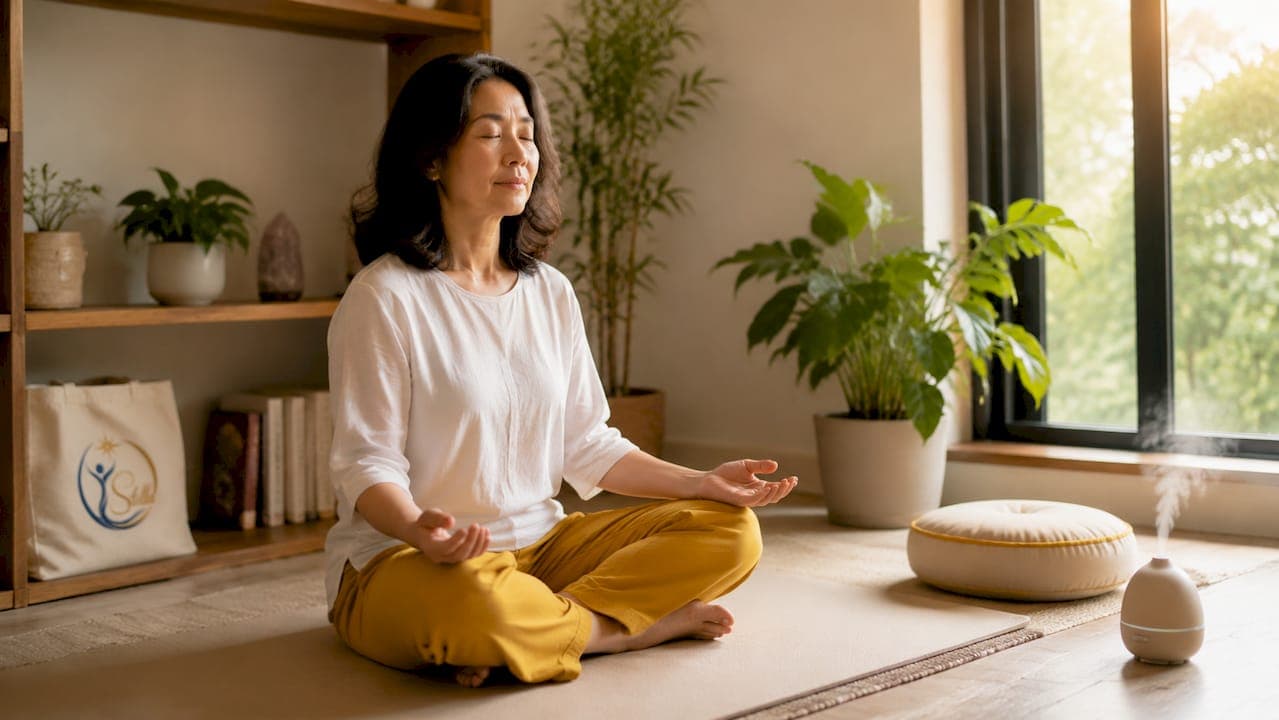
Daily rituals are defined as intentional, repeated practices that send consistent safety signals to the nervous system, reducing stress and supporting emotional regulation. The role of daily ritual in wellness goes far deeper than simple routine. When you repeat a meaningful action each day, your brain begins to predict it, your amygdala quiets, and your body shifts from a state of low-grade threat into one of calm readiness. Research confirms that rituals reduce nervous system strain by removing the element of surprise from your day. That predictability is not a small thing. It is the foundation of lasting mental and physical health.
How do daily rituals affect the brain and body to promote wellness?
Rituals work on the brain by quieting the amygdala, the region responsible for detecting threats. When the amygdala is less active, anxiety drops and your capacity for clear thinking rises. Simple acts like morning breathing exercises or making your bed each day have been shown to increase calm and reduce perceived stress. The effect is not psychological placebo. It reflects measurable changes in brain activity.
The vagus nerve is the second key player. This long nerve runs from your brainstem through your heart, lungs, and gut. Slow, repeated ritualistic actions stimulate the vagus nerve, which regulates heart rate, improves digestion, and deepens sleep. That stimulation also lowers cortisol, the body's primary stress hormone, and reduces systemic inflammation. Lower cortisol means better mood, clearer focus, and a body that recovers faster from daily demands.

The body responds better to repetition and safety signals than to willpower or strict schedules. Rituals stabilize cortisol patterns and improve vagal tone without requiring major effort. That is why a two-minute breathing practice done daily outperforms a 45-minute workout done once a week for stress relief. Consistency is the active ingredient.
Pro Tip: Try three slow, deep exhales before your morning coffee. Exhaling longer than you inhale directly activates the vagus nerve and shifts your nervous system toward calm within seconds.
Three rituals that reliably trigger these neurological benefits include:
- Slow diaphragmatic breathing (3–5 minutes): lowers cortisol and activates the vagus nerve
- Mindful movement such as Walking Qigong: links breath, body, and attention to soothe the nervous system
- Consistent sleep and wake times: anchors circadian rhythms and reduces background physiological strain
What distinguishes rituals from habits and routines in wellness practice?
Rituals are not the same as habits, and the difference matters for your health. A habit is automatic. You brush your teeth without thinking. A ritual carries emotional meaning and conscious intention. You choose it. You show up for it. Rituals are elevated by intention and emotional meaning, which is what makes them powerful for combating isolation and overstimulation in modern life.
"Viewing wellness rituals as obligations misses their power. True benefit comes from intentional connection with self." — Awaken
That distinction has real consequences. When you rush through a morning stretch just to check it off a list, you lose the neurological benefit. The amygdala stays alert. Cortisol stays elevated. The ritual becomes a stressor rather than a soother. Intention is not a soft concept. It is the mechanism that makes the practice work.
Rituals also differ from rigid routines. A routine is a schedule. A ritual is a relationship with yourself. The qualities that keep a ritual alive include:
- Emotional connection: you feel something when you do it, even briefly
- Flexibility: you can shorten it on hard days without abandoning it
- Presence: you are mentally there, not mentally elsewhere
- Personal meaning: it reflects something you value, not something you were told to do
The risk of turning rituals into obligations is real. When a practice starts to feel like a chore, its wellness value dissolves. The solution is not to push through. The solution is to simplify, shorten, or gently reshape the ritual until it feels like a gift to yourself again.
What are practical examples of daily wellness rituals you can start today?
The most effective wellness rituals are short, specific, and easy to begin. Micro-rituals under five minutes effectively support emotional regulation and stress reduction because their brevity makes consistency possible. You do not need an hour. You need two minutes and a clear intention.
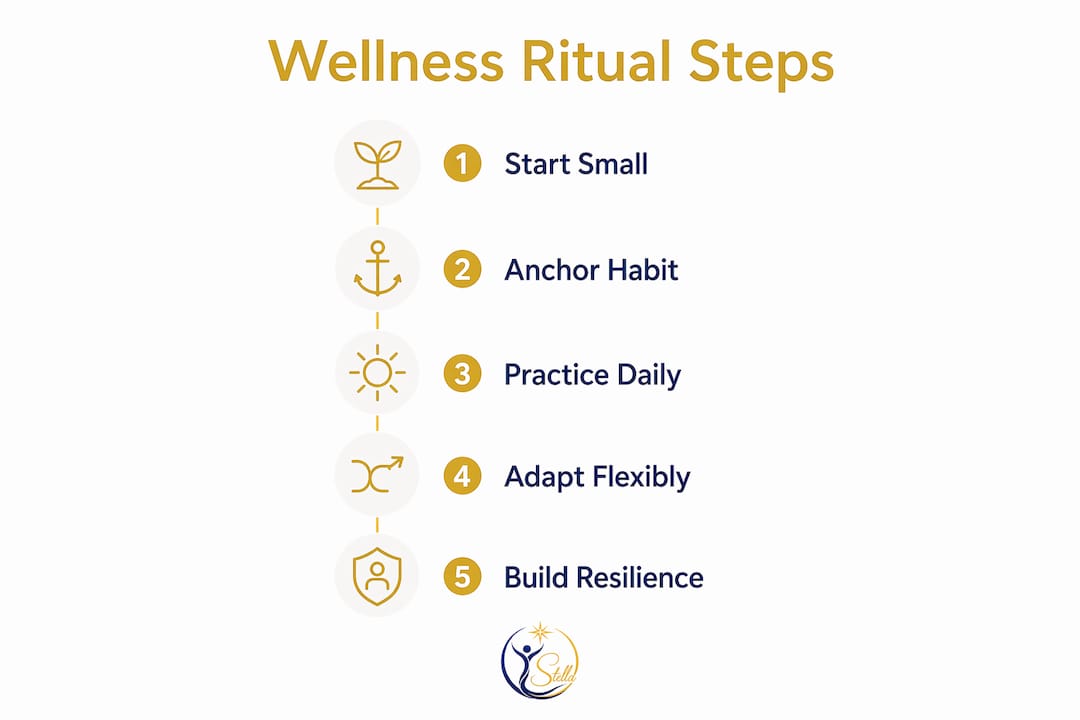
Habit stacking: the easiest way to build a new ritual
Habit stacking means attaching a new ritual to an existing automatic behavior. Using existing neural pathways reduces the mental energy needed to start something new. For example, after you pour your morning coffee, you take three slow breaths. After you sit down for lunch, you pause for 30 seconds of gratitude. The existing behavior acts as a trigger, and the new ritual rides in behind it.
Here are four rituals worth building into your day:
- Morning breath ritual (2 minutes): Before checking your phone, sit upright and take five slow, deep breaths. This sets a calm tone for the nervous system before the day's demands arrive.
- Mindful meal pause (1 minute): Before eating, take one breath and notice the food in front of you. This activates the parasympathetic nervous system and prepares your gut for digestion.
- Evening wind-down movement (5–10 minutes): Gentle qigong or slow stretching signals to the body that the active day is ending. Practices like Five Animal Qigong are designed specifically for this kind of calming, restorative movement.
- Gratitude close (2 minutes): Write or speak three specific things you noticed that day. Specificity matters. "The warmth of sunlight on my hands" works better than "I'm grateful for today."
Pro Tip: Start with one ritual, not four. Anchor it to an existing behavior and practice it for two weeks before adding anything new. Stacking too many rituals at once is the most common reason people abandon them.
| Ritual type | Time needed | Primary benefit | Ease of entry |
|---|---|---|---|
| Morning breathing | 2–3 minutes | Lowers cortisol, calms amygdala | Very easy |
| Mindful movement | 5–10 minutes | Vagus nerve stimulation, digestion | Easy |
| Gratitude practice | 2 minutes | Emotional regulation, mood lift | Very easy |
| Consistent sleep time | Ongoing | Circadian rhythm stability | Moderate |
| Meal pause ritual | 1 minute | Gut health, presence | Very easy |
What common mistakes do people make with daily rituals?
The most common mistake is overcomplicating the ritual before it has taken root. A 45-minute morning routine sounds inspiring on paper. In practice, it collapses the moment life gets busy. Simple, consistent two-minute rituals outperform lengthy routines that feel like a second job. Complexity is the enemy of consistency.
A second mistake is treating rituals as performance. When you practice a ritual to prove something to yourself or others, the emotional connection disappears. The nervous system reads effort and strain, not safety and calm. The ritual stops working. Wellness habits need to feel supportive, not punishing.
Watch for these warning signs that a ritual has stopped serving you:
- You feel relief when you skip it
- You rush through it without any sense of presence
- You feel guilty rather than nourished afterward
- You have not adjusted it in months despite life changes
Rituals adapt to energy and health conditions. On a day when you are fatigued or unwell, a five-minute ritual shortened to one minute still counts. Showing up in a smaller way preserves the neural pathway and the emotional relationship. Skipping entirely, especially out of guilt, breaks both.
Pro Tip: Keep a "minimum viable ritual" version of each practice. If your full morning routine takes 15 minutes, define a two-minute version for hard days. Having that fallback prevents the all-or-nothing thinking that derails most wellness habits.
Key takeaways
Daily rituals work because they signal safety to the nervous system, reduce cortisol, and build emotional resilience through consistent, intentional repetition.
| Point | Details |
|---|---|
| Rituals calm the brain | Repeated intentional actions quiet the amygdala and lower stress hormones. |
| Vagus nerve is the key pathway | Slow, rhythmic rituals stimulate the vagus nerve, improving digestion, sleep, and heart rate. |
| Intention separates rituals from habits | Emotional meaning and conscious choice make rituals more effective than automatic behaviors. |
| Short rituals outperform long ones | Two-minute micro-rituals done daily deliver more benefit than complex routines done inconsistently. |
| Habit stacking builds rituals faster | Attaching new rituals to existing behaviors reduces the effort needed to start and sustain them. |
Why I believe the smallest rituals carry the most weight
I have worked with people who arrived at wellness practice carrying years of stress, digestive trouble, and a deep sense of disconnection from their own bodies. The ones who made lasting change were rarely the ones who committed to the most ambitious programs. They were the ones who found one small thing, a breath before breakfast, a minute of gentle movement before bed, and they protected it.
What I have seen, again and again, is that the ritual is not the practice itself. The ritual is the act of choosing yourself, briefly and consistently, every day. That choice builds something in the nervous system that no single long session can replicate. It is cumulative. It is quiet. And it works in ways that are hard to measure but impossible to miss.
The seasons of life will shift your rituals. What serves you in a calm month will need to soften during illness or grief. That is not failure. That is wisdom. A ritual that bends with you is far more powerful than one you have to abandon. The goal is not a perfect practice. The goal is a living one.
If there is one thing I would ask you to take from this: do not wait until you have the perfect morning or the perfect space. Start with one breath. Mean it. Do it again tomorrow.
— Stella
Qigongstar online courses for stress relief and daily wellness
If you are ready to build a daily ritual that genuinely calms your nervous system and supports your gut health, Qigongstar offers structured online courses designed for exactly that.
Stella's online Qigong classes guide you through gentle, breath-centered movement practices rooted in Chinese Medicine, including White Tiger Qigong and Five Animal Qigong. Each course is structured to help you build a sustainable daily practice that fits real life, whether you have five minutes or fifty. Classes are available on demand, beginner-friendly, and certified by the White Tiger Qigong School and Yoga Alliance. You can also explore the full range of Qigongstar courses to find the right fit for where you are right now.
FAQ
What is the role of daily ritual in wellness?
Daily rituals signal safety to the nervous system, reduce cortisol, and support emotional regulation through consistent, intentional repetition. Their primary role is to create predictability that calms the brain and body over time.
How long does a daily wellness ritual need to be?
Micro-rituals as short as 2–5 minutes effectively support stress reduction and emotional regulation when practiced consistently. Brevity paired with intention outperforms length without presence.
How are rituals different from habits?
Habits are automatic behaviors performed without conscious thought. Rituals carry emotional meaning and intentional presence, which activates different neurological pathways and produces deeper wellness benefits.
What is habit stacking and how does it help build rituals?
Habit stacking means attaching a new ritual to an existing automatic behavior, such as taking three slow breaths right after pouring your morning coffee. This method uses existing neural pathways to reduce the effort needed to start a new practice.
Can daily rituals help with digestion and gut health?
Yes. Slow, repeated practices like mindful breathing and gentle movement stimulate the vagus nerve, which directly regulates digestive function and reduces gut-related stress responses.