
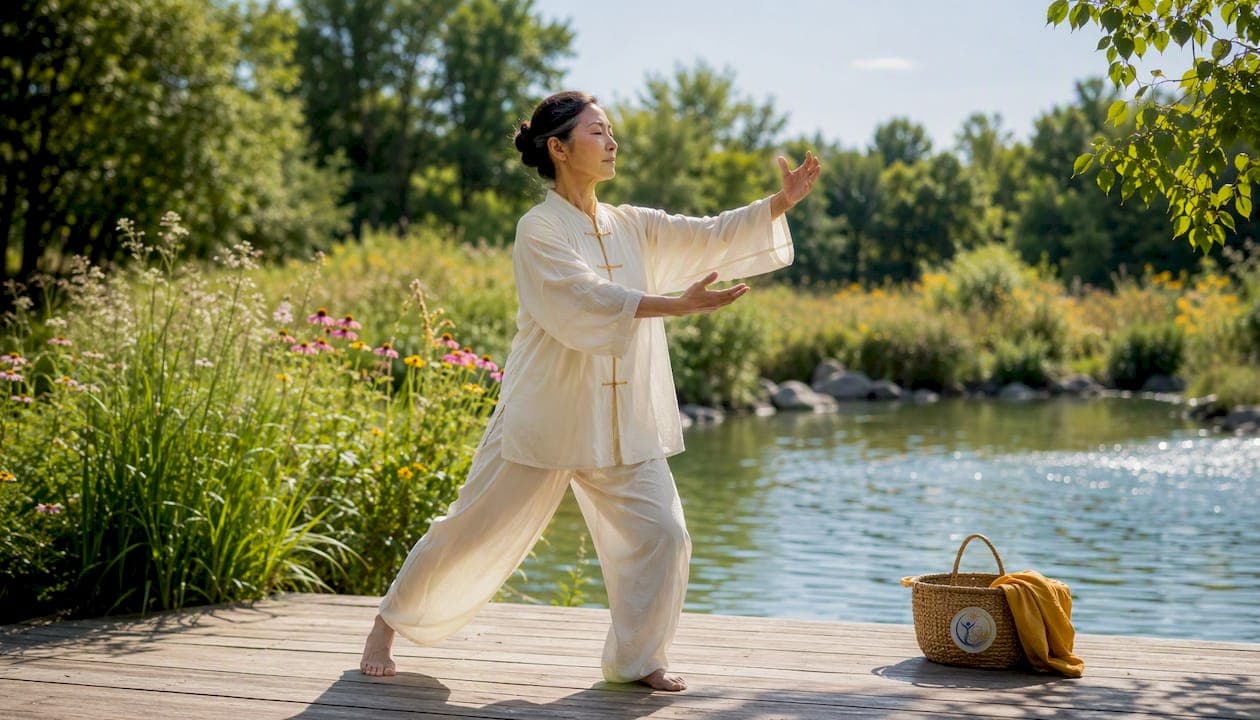
Adapting your qigong practice to the season is not complicated, but it does require knowing one core principle: your body follows the same rhythms as the natural world. The Five Phases framework — Wood, Fire, Earth, Metal, and Water — maps each season to specific organs, emotions, and movement qualities. Pair that with the Chinese concept of jiéqì (the 24 two-week mini-seasons of the solar year), and you have a precise, living calendar for your practice. Checking your internal season daily — not just the calendar date — is the single most useful habit you can build.
Here is what each seasonal qigong variation calls for at a glance:
- Wood (Spring): Expansive, rising movements; lateral stretches; longer inhales to awaken liver qi
- Fire (Summer): Expressive, open-hearted movements; faster rhythms; dispersing yang energy through the arms
- Earth (Late Summer): Grounding, circular, centering movements; balanced breath; nourishing the spleen
- Metal (Autumn): Inward, refining movements; longer exhales; releasing and letting go through the lungs
- Water (Winter): Slow, restorative, conserving movements; deep kidney breathing; maximum rest between postures
A 5-step practice you can try right now (10 minutes):
- Stand with feet shoulder-width apart. Close your eyes and take three slow breaths, noticing which season your body feels like today — not which month it is.
- Gently sway side to side for two minutes, letting your arms hang loose. This wakes up the lateral body (Wood/liver meridian lines).
- Raise both arms overhead on an inhale, then slowly lower them on a long exhale. Repeat eight times, matching the exhale to the season: shorter in spring, longer in autumn and winter.
- Place both palms over your lower abdomen (the dantian). Breathe here for two minutes, feeling warmth gather.
- Finish with three slow neck rolls in each direction, then stand still for one minute. Notice how your energy has settled.
Stella QigongStar's teacher-led routines — rooted in White Tiger Qigong and Five Animal Qigong — build on exactly this structure, giving you guided seasonal sequences you can follow at home.
Table of Contents
- Why does seasonal qigong actually work? Five Phases and jiéqì explained
- What should your practice look like each season?
- How do you adjust intensity, breath, and timing as seasons change?
- What lifestyle habits support your seasonal qigong practice?
- When should you modify, pause, or seek professional guidance?
- Two sample seasonal routines from Stella QigongStar
- Key Takeaways
- Why I teach seasonal qigong — and the one shift that changes everything
- Ready to practice with seasonal guidance from Stella QigongStar?
- Useful sources and further reading
Why does seasonal qigong actually work? Five Phases and jiéqì explained
The Chinese medicine tradition does not recognize four seasons — it recognizes five. Jiéqì divides the solar year into 24 two-week windows, and some traditions teach 24 mini-exercises mapped to each of those windows, so your practice shifts gradually rather than flipping overnight. The broader Five Phases model groups those windows into five seasonal energies, each with its own organ pair, emotional quality, and movement character.
The table below shows the full mapping:
| Phase | Season | Primary Organs | Emotional Quality | Movement Quality |
|---|---|---|---|---|
| Wood | Spring | Liver, Gallbladder | Creativity, frustration | Rising, expansive, lateral |
| Fire | Summer | Heart, Small Intestine | Joy, agitation | Open, expressive, faster |
| Earth | Late Summer | Spleen, Stomach | Nurturing, worry | Circular, grounding, centered |
| Metal | Autumn | Lungs, Large Intestine | Grief, letting go | Inward, refining, descending |
| Water | Winter | Kidneys, Bladder | Willpower, fear | Slow, conserving, restorative |
These phases flow in a generating cycle: Wood feeds Fire, Fire creates Earth (ash), Earth holds Metal, Metal carries Water, and Water nourishes Wood. This means your autumn practice naturally prepares the kidneys for winter, and your winter stillness seeds the liver energy that rises in spring. Skipping a season's practice is a bit like missing a gear — the next season's energy has less to build on. Gradual transition across each jiéqì window (roughly two weeks) lets your nervous system and organ systems shift smoothly rather than lurching between extremes.
A few quick rules for applying this theory:
- Do match your practice intensity to the season's natural energy level — high in summer, low in winter.
- Do use the organ-emotion pairing as a diagnostic: if you feel unusual grief in summer, your Metal energy may need attention regardless of the calendar.
- Don't force vigorous Fire-phase movements when your body signals Water (exhaustion, cold, low libido, deep fatigue).
- Don't skip the Earth/Late Summer phase — it is the pivot point that grounds all transitions and is the most commonly overlooked.
The role of nature in Chinese medicine is not metaphorical here. These mappings are the structural logic behind every seasonal qigong adjustment you will make.
What should your practice look like each season?
Spring: Wood phase — awaken and expand
Spring practice is about rising energy. The liver governs the smooth flow of qi through the body, and after winter's conservation, it wants to move outward and upward. Your movements should feel like a plant pushing through soil: gentle at first, then increasingly expansive.
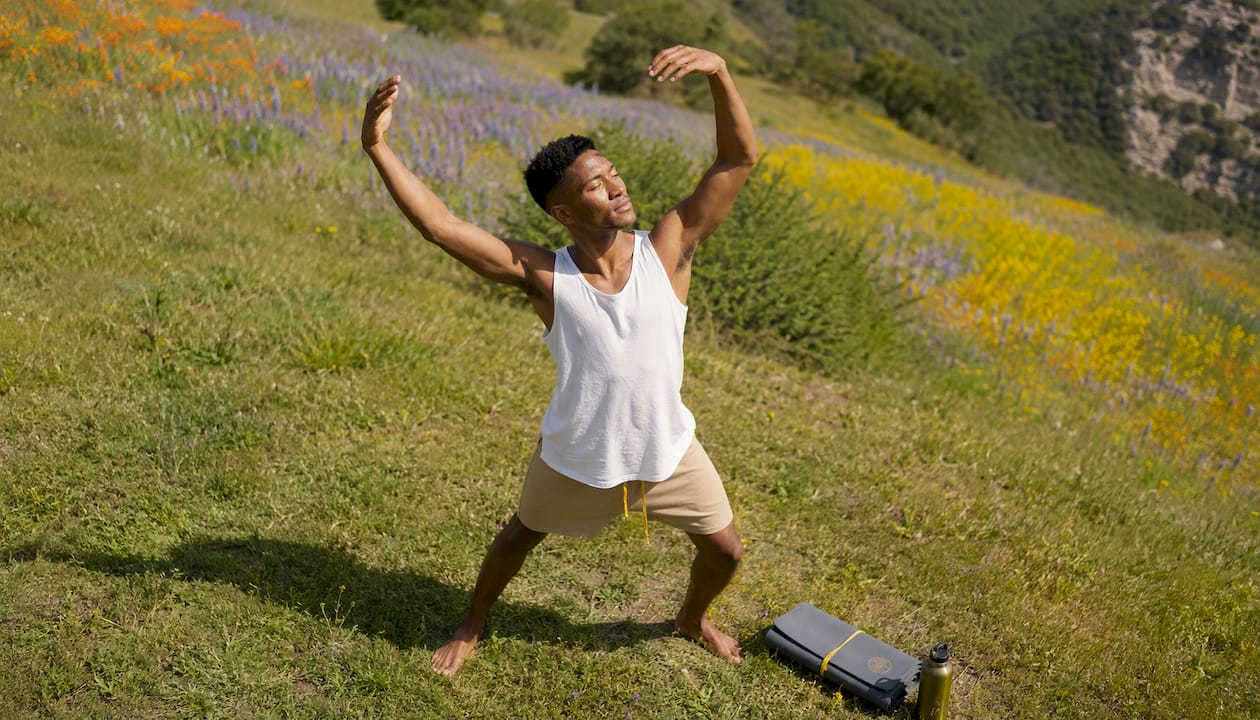
Sample exercise — Liver Stretch (5 minutes): Stand with feet wider than hip-width. Inhale and sweep both arms up and out to the sides, reaching as wide as possible. Exhale and fold forward slowly, letting your arms hang. Hold for three breaths, feeling the stretch along the outer legs and sides of the torso (the gallbladder meridian line). Rise slowly on an inhale. Repeat six times. If you have lower back sensitivity, keep a soft bend in the knees throughout.
Practice timing in spring leans toward morning, ideally between 5 AM and 7 AM when liver qi peaks. Sessions of 20–30 minutes work well, five days a week. Beginners with joint stiffness can keep the forward fold shallow and use a chair for support.
As the jiéqì windows shift through spring (roughly March through May), you can progressively lengthen sessions and deepen the lateral stretches over each two-week period rather than making a sudden jump.
Summer: Fire phase — open the heart
Summer is the most yang season. The heart and small intestine meridians govern this phase, and summer sequences often prioritize heart and small intestine meridian opening, thoracic mobility, and movements that disperse yang energy through the arms. Think wide, open gestures — arms spreading like wings, chest lifting, the body radiating outward.
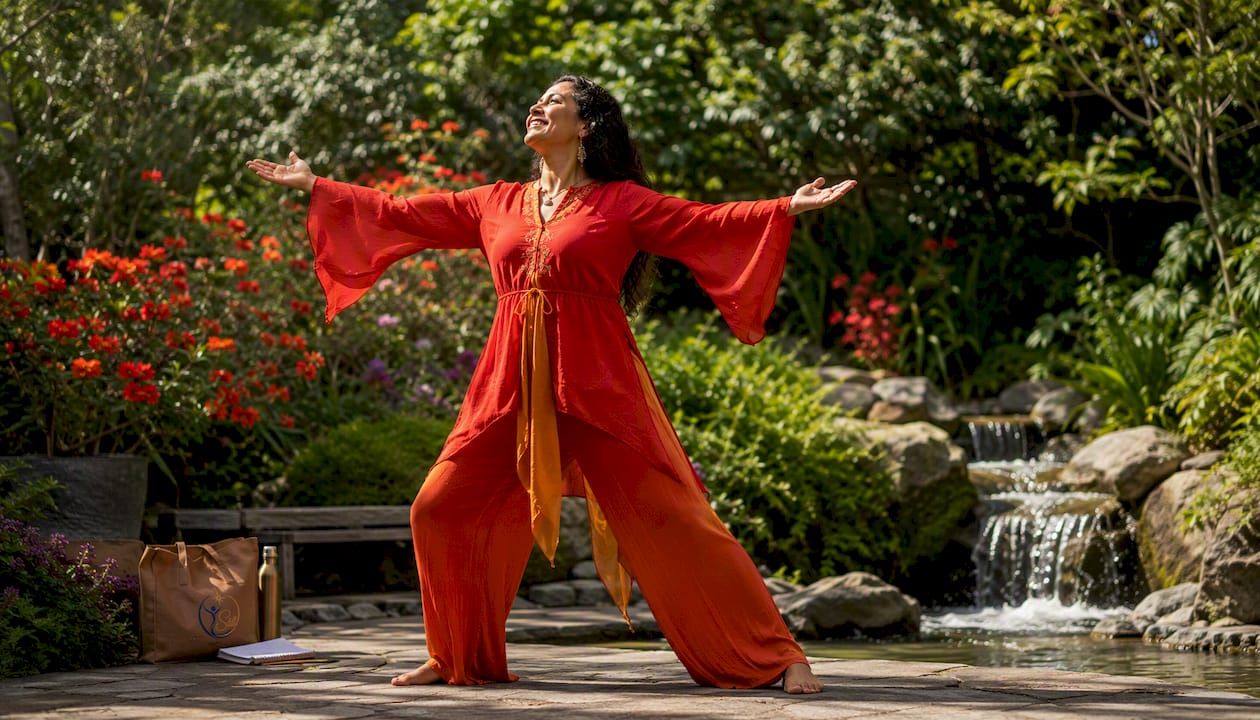
Sample exercise — Heart Opening Swing (5 minutes): Stand relaxed. Inhale and open both arms wide to the sides at shoulder height, palms facing forward, chest lifting gently. Exhale and let the arms swing loosely across the front of the body, hands crossing at the wrists. Let the movement build a gentle rhythm over 20–30 repetitions. The swing should feel joyful, not effortful. For anyone with shoulder impingement, keep the arms below shoulder height and reduce the arc.
Practice timing shifts to early morning or late evening to avoid the peak heat of the day. Sessions can run 25–35 minutes, but if you feel overheated or agitated (signs of excess Fire), shorten to 15 minutes and add a cooling, grounding close.
Late Summer: Earth phase — come back to center
Late Summer is the season most people skip because it does not appear on a Western calendar. In Chinese medicine, it spans roughly the last weeks of August through mid-September — the harvest pivot between the heat of summer and the cool descent of autumn. The spleen and stomach govern this phase, and the emotional quality is nurturing mixed with worry.
Earth-phase practice is circular and grounding. Movements trace gentle spirals from the center of the body outward, then return. Breath is balanced: equal inhale and exhale, no forcing. A simple standing practice of slow weight shifts from foot to foot, with the arms tracing large horizontal circles at waist height, captures the Earth quality beautifully. Hold each weight shift for a full breath cycle before moving.
Sessions of 15–20 minutes, practiced daily, suit this transitional phase well. If you tend toward digestive discomfort or anxiety (both spleen-related imbalances), Earth-phase practice is worth extending even when the calendar has moved into autumn.
Autumn: Metal phase — refine and release
Autumn asks you to let go. The lungs and large intestine govern Metal, and the emotional work of this season is releasing what no longer serves — grief, attachment, stagnant patterns. Movements become more inward and descending: arms drawing down and in, the chest softening rather than opening.
Sample exercise — Lung Breath Press (5 minutes): Stand with feet hip-width apart. Inhale slowly for a count of four, raising both hands to chest height, palms facing down. Exhale for a count of six, pressing the palms slowly downward toward the thighs. Feel the chest soften and the shoulders release on every exhale. Repeat 10 times. The longer exhale is deliberate — it activates the parasympathetic nervous system and supports the lung's descending function.
Practice timing shifts toward late morning or early afternoon. Sessions of 20–30 minutes, four to five times a week, work well. As the jiéqì windows deepen into November, begin reducing session length by five minutes and adding more stillness at the close.
Winter: Water phase — restore and conserve
Winter is peak Yin. Viewing it this way helps you intentionally slow down, conserve energy, and prioritize restoration rather than forcing activity — a reframe that matters enormously for nervous system care across the whole year. The kidneys and bladder govern Water, and kidney qi is the root of all vitality in Chinese medicine. Depleting it in winter means starting spring with an empty tank.
Water-phase practice is slow, low, and inward. Movements stay close to the body's center. Long pauses between postures are not laziness — they are the practice. A simple kidney-nourishing sequence involves standing with knees slightly bent, hands resting on the lower back (kidney area), and breathing deeply into the back body for five minutes. Follow this with slow, deliberate spinal rolls: fold forward vertebra by vertebra on a long exhale, hang for three breaths, and rise on a slow inhale. Six repetitions is enough.
Practice timing in winter leans toward mid-morning, after the body has warmed naturally. Sessions of 15–20 minutes, three to four times a week, are sufficient. More is not better in Water season.
How do you adjust intensity, breath, and timing as seasons change?
The practical rules are simpler than they sound. Scale intensity up during Yang seasons (spring and summer) and down during Yin seasons (autumn and winter). A rough guide: if your summer practice feels like a 7 out of 10 in effort, your winter practice should feel like a 3 or 4. Reducing intensity and session length during Yin seasons while favoring longer exhales supports parasympathetic activation — the nervous system's rest-and-digest mode.
Seasonal intensity and timing rules:
- Spring/Summer: Practice in the morning; sessions of 25–35 minutes; intensity moderate to vigorous; inhale-to-exhale ratio roughly equal (4:4 or 4:5).
- Autumn/Winter: Practice mid-morning or early afternoon; sessions of 15–25 minutes; intensity gentle to moderate; favor longer exhales (4:6 or 4:8 ratio).
- Daily: Check your internal season before you start. If you feel exhausted in June, practice Water-phase movements regardless of the calendar.
- Frequency: Daily practice suits spring and summer. Three to four times a week is enough in autumn and winter.
- Transitions: Use each jiéqì two-week window to shift gradually — add five minutes of the incoming season's movements while reducing the outgoing season's by five minutes.
Sample monthly transition plan (Summer to Autumn, September):
- Weeks 1–2: 80% Fire-phase movements, 20% Metal-phase (add one lung breath exercise at the close).
- Weeks 3–4: 50% Fire, 50% Metal. Begin extending exhales. Shift practice time from early morning to mid-morning.
Pro Tip: If you work shifts or have a disrupted sleep cycle, anchor your practice to your personal wake time rather than the clock. The key signal is practicing within 90 minutes of waking — this aligns your practice with your own cortisol peak regardless of what time that falls, and it preserves the energizing benefit of morning practice even when "morning" is 2 PM.
What lifestyle habits support your seasonal qigong practice?
Practice does not happen in a vacuum. What you eat, when you sleep, and how you dress all send signals to the same organ systems your qigong is working with.
Spring and Summer
Favor lighter, fresher foods in spring: leafy greens, sprouts, and lightly cooked vegetables support liver qi. In summer, cooling foods like cucumber, watermelon, and mint help disperse excess heat. Sleep slightly less than in winter — rising earlier aligns with the yang energy of these seasons. Dress in layers for outdoor morning practice, since spring mornings can be deceptively cold. Practicing outside in nature amplifies the Wood and Fire energies naturally.
Late Summer and Autumn
Warm, cooked, easily digestible foods suit the Earth phase: soups, root vegetables, and whole grains support spleen function. As autumn deepens, add warming spices like ginger and cinnamon. Sleep begins to lengthen. Dress warmly for outdoor practice, especially protecting the neck and lower back (kidney area). This is the season to begin moving practice indoors as temperatures drop.
Winter
Warming broths, bone broth, dark leafy greens, and kidney-nourishing foods like black beans and walnuts align with Water-phase support. Sleep longer and prioritize it. Keep the lower back warm at all times during outdoor practice — cold directly depletes kidney qi in Chinese medicine. If you practice outside, choose the warmest part of the day.
On grounding (earthing): Standing barefoot on grass or soil during practice is recommended by some teachers as a way to ground the nervous system, and preliminary evidence suggests it may support sleep and reduce inflammation, though the research remains small. Treat it as a pleasant optional adjunct, not a prescription.
On herbs and supplements: Seasonal herbs like astragalus (winter), chrysanthemum (summer), and hawthorn berry (autumn) are used in Chinese medicine to support the corresponding organ systems. If you are considering any herbal supplement, consult a licensed acupuncturist or herbalist first, especially if you take prescription medications. This article offers general wellness information, not medical advice — always confirm specific guidance with a qualified practitioner.
When should you modify, pause, or seek professional guidance?
Most people can begin gentle seasonal qigong safely, but some situations call for extra care or a conversation with a healthcare provider before starting.
Modify or seek clearance if you have:
- Pregnancy (especially the first trimester — avoid strong downward-pressing or twisting movements)
- Active fever or acute infection (pause practice entirely until resolved)
- Recent surgery or injury (work with a teacher one-on-one before resuming)
- Unstable cardiovascular conditions, uncontrolled hypertension, or active cancer treatment
- Severe osteoporosis (avoid deep forward folds and twisting without medical clearance)
Season-specific cautions:
- Avoid vigorous Fire-phase heating practices during any febrile state or acute inflammation — they amplify heat and can worsen symptoms.
- In Water season, avoid cold outdoor practice if you have kidney deficiency signs (frequent urination, lower back ache, cold extremities) without warming up thoroughly indoors first.
- Metal-phase breathwork with extended exhales can occasionally cause lightheadedness in people with low blood pressure — sit down if this occurs.
When choosing a teacher, look for certification through the White Tiger Qigong School or Yoga Alliance affiliation as baseline trust signals. These credentials indicate training in both the movement forms and the safety protocols that protect students with health conditions.
Stop practice immediately and seek medical attention if you experience: sudden chest pain or tightness, dizziness that does not resolve within a minute of stopping, sudden shortness of breath unrelated to exertion, numbness or tingling in the arms or face, or any symptom that feels acute and unfamiliar. Qigong is gentle, but your body's warning signals always take priority over completing a session.
Two sample seasonal routines from Stella QigongStar
Stella QigongStar is a certified White Tiger Qigong instructor and Yoga Alliance-affiliated teacher whose Five Animal Qigong and White Tiger Qigong courses are designed specifically for practitioners who want to work with seasonal energy at home. Both routines below draw on the Five Phases and jiéqì structure described throughout this article.
Routine 1: Daily seasonal check-in (10–15 minutes)
This short practice works for any season and any level. Its purpose is to sense your internal season before committing to a longer session.
- Opening stillness (2 minutes): Stand with feet shoulder-width apart, eyes soft or closed. Breathe naturally and scan your body from feet to crown. Notice: do you feel expansive (Wood/Fire) or contracted (Metal/Water)? Warm or cool? This reading guides the rest of the session.
- Spinal wave (3 minutes): Gently undulate the spine forward and back, letting the movement travel from the tailbone to the crown. Keep it slow and fluid. This wakes up the governing vessel and du mai channel, which runs along the spine and connects all yang meridians.
- Seasonal core movement (5 minutes): Choose based on your internal season reading. Expansive? Do the Liver Stretch or Heart Opening Swing from the season-by-season section above. Contracted? Do the Lung Breath Press or the kidney-nourishing back-breathing sequence.
- Closing dantian hold (2–3 minutes): Both palms over the lower abdomen. Breathe slowly, letting qi settle. Three final slow exhales, each a little longer than the last.
This daily stress-reduction structure is the foundation Stella builds all seasonal work on.
Routine 2: Full seasonal session (30–40 minutes)
This session is structured for a single season — the example below is for autumn (Metal phase), but the template applies to any season by swapping the core movements.
- Warm-up (5–7 minutes): Gentle joint rotations from ankles to wrists. Slow neck rolls. Three rounds of the spinal wave from Routine 1.
- Meridian activation (8–10 minutes): Tap lightly along the lung meridian line (inner arm, from shoulder to thumb) and the large intestine line (outer arm, from index finger to shoulder). This prepares the organ channels for the seasonal work ahead.
- Core Metal-phase movements (12–15 minutes): Lung Breath Press (10 repetitions). Then a slow "gathering and releasing" arm sweep: inhale and gather both arms wide, exhale and draw them in to the chest, then press downward. Eight repetitions. Follow with a standing twist: feet planted, arms loose, rotate the torso gently left and right for two minutes, letting the arms swing freely.
- Stillness and integration (5–7 minutes): Sit or stand quietly. Place one hand on the chest, one on the lower abdomen. Breathe with a 4:6 inhale-to-exhale ratio for three minutes. Then simply rest, noticing the quality of your energy.
- Closing (3 minutes): Three slow bows forward from the waist, hands at heart center. A final dantian hold.
Stella's online classes follow this same arc, with live and on-demand options available through Qigongstar's online classes page. If you want guided seasonal sequences rather than self-directed practice, that is the natural next step.
Key Takeaways
Adapting your qigong to the Five Phases and jiéqì mini-seasons — not just the calendar — is the most reliable way to sustain energetic balance and nervous system health year-round.
| Point | Details |
|---|---|
| Check your internal season first | Your body's felt sense (expansive vs. contracted, warm vs. cold) should guide practice choice, not just the date. |
| Match intensity to the season | Yang seasons (spring, summer) support longer, more vigorous sessions; Yin seasons (autumn, winter) call for shorter, gentler practice with longer exhales. |
| Transition gradually across jiéqì | Shift practice over each two-week jiéqì window — blend outgoing and incoming seasonal movements rather than switching abruptly. |
| Support practice with lifestyle | Align food, sleep timing, and clothing with the active phase; consult a licensed practitioner before adding seasonal herbs. |
| Qigongstar for guided routines | Stella QigongStar's White Tiger Qigong and Five Animal Qigong courses offer teacher-led seasonal sequences for home practice. |
Why I teach seasonal qigong — and the one shift that changes everything
Most practitioners who come to seasonal qigong arrive because they notice something is off: their spring practice feels heavy, their winter practice feels restless, and no amount of effort seems to fix it. The conventional answer is to push harder or try a new style. The seasonal approach says something different: the practice is not broken — the timing is.
What I find most underestimated in seasonal practice is the gap between knowing the Five Phases intellectually and actually feeling them in the body. Many students can recite the organ-emotion mappings within a week. Far fewer can stand still for two minutes and honestly sense whether their internal season matches the calendar. That sensing capacity is the real skill, and it takes longer to develop than any movement sequence.
The practical implication is this: start with the internal season check before every session, even when it feels unnecessary. Over weeks, you will notice patterns — perhaps you consistently feel Water-phase energy in the days before your menstrual cycle, or Metal-phase energy after a period of grief regardless of the month. These patterns are information. They tell you which organ systems need the most support and when. A Five Elements integration practice built on that self-knowledge becomes genuinely adaptive rather than formulaic.
One teaching cue that helps students sense their internal season quickly: before practice, ask yourself, "If my body were weather right now, what would it be?" Students who feel like a grey, still November day in July know immediately that Water-phase movements are what they need. The metaphor bypasses the analytical mind and lands in the body faster than any checklist.
Ready to practice with seasonal guidance from Stella QigongStar?
Reading about seasonal qigong variations gives you the map. Practicing with a teacher gives you the felt sense that makes the map useful. Stella QigongStar's White Tiger Qigong and Five Animal Qigong courses are structured around exactly the Five Phases framework described in this article, with seasonal movement sequences, breath cues, and organ-specific work built into every session.
New students can start with an on-demand course and work through the seasonal material at their own pace, or join a live virtual class to practice in real time with Stella's guidance. Both options are available through the online classes page, where you can find current schedules and course details. If you are unsure where to begin, the Five Animal Qigong course is a gentle, structured entry point that introduces all five elemental movement qualities in a single program.
Useful sources and further reading
The sources below informed this article and offer reliable paths for deepening your seasonal practice:
- Build Stress Resilience With Qigong — Qigongstar blog: Practical breath and intensity guidance for adapting practice across seasons.
- How to Integrate Five Elements Theory into Wellness — Qigongstar blog: Step-by-step guidance for applying Five Elements in daily life and home practice.