
You wake up exhausted, your digestion feels off, and no amount of green smoothies or gym sessions seem to fix the underlying sense of imbalance. This is exactly where learning to integrate Five Elements Theory into your wellness practice can shift everything. Rooted in Traditional Chinese Medicine, this ancient framework maps your body, emotions, and environment onto five dynamic natural forces: Wood, Fire, Earth, Metal, and Water. Rather than chasing isolated symptoms, it asks you to look at the whole pattern. This guide walks you through each step, from understanding the theory to living it daily.
Table of Contents
- Key takeaways
- How to integrate Five Elements theory into wellness
- Assessing your current elemental balance
- Practical steps for daily Five Elements integration
- Monitoring progress and adjusting over time
- My experience with Five Elements in real wellness practice
- Bring Five Elements theory to life with Qigong
- FAQ
Key takeaways
| Point | Details |
|---|---|
| Five Elements are relationships | Each element connects to organs, emotions, and seasons, creating a map of how your whole body interacts. |
| Self-assessment comes first | Journaling symptoms, moods, and seasonal patterns helps you identify which elements need the most attention. |
| Start with one change | Adjusting one meal or movement practice per week avoids overwhelm and builds lasting habits. |
| Seasonal alignment is the most sustainable path | Matching food and lifestyle to the current season supports your body's natural rhythms rather than fighting them. |
| Movement practices like Qigong bring it to life | Mindful movement aligned with each element translates theory into felt physical and emotional benefit. |
How to integrate Five Elements theory into wellness
The Five Elements framework, known in Chinese as Wu Xing, is not a list of ingredients. It is a relational grammar of balance, where each element supports and regulates the others in ongoing cycles. Understanding this changes how you approach your own wellness.
Here is how each element maps to the body and inner life:
- Wood governs the liver and gallbladder, relates to the emotion of anger or frustration, and aligns with spring. When Wood is balanced, you feel clear vision, creativity, and forward momentum.
- Fire governs the heart and small intestine, relates to joy and connection, and aligns with summer. Imbalance shows up as anxiety, insomnia, or emotional volatility.
- Earth governs the spleen and stomach, relates to worry and overthinking, and aligns with late summer. Digestive issues and mental looping are classic Earth imbalances.
- Metal governs the lungs and large intestine, relates to grief and letting go, and aligns with autumn. Tight breathing, skin issues, and difficulty releasing the past are Metal signals.
- Water governs the kidneys and bladder, relates to fear, and aligns with winter. Chronic fatigue, lower back tension, and persistent anxiety point to Water depletion.
The Wu Xing framework maps physiological function, emotional tone, and seasonal rhythm onto these five interconnected nodes. This multilayered view is what makes it so useful. When you treat an emotion as data rather than a problem, and link it back to an organ and season, you start seeing patterns you never noticed before. You can explore these Five Element theory applications in more depth to understand how this translates into practical health care.
Pro Tip: If you repeatedly experience a specific emotion, like worry or grief, note which season it tends to peak in. That correlation is often your clearest signal of which element to focus on.
Assessing your current elemental balance
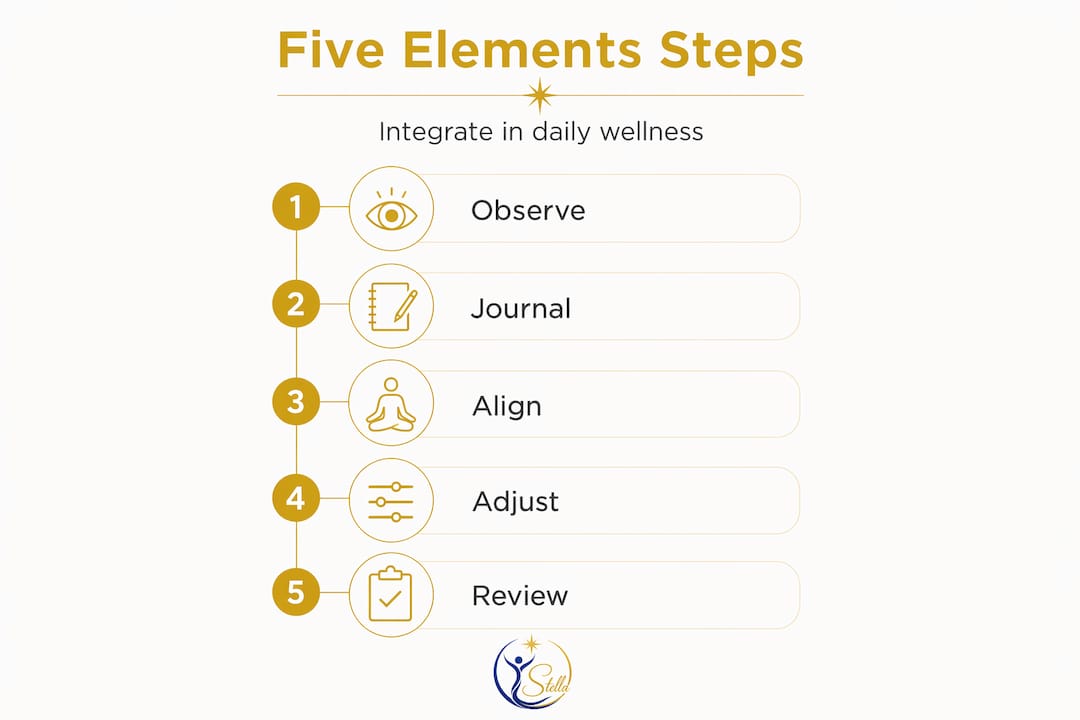
Before you change anything, you need to know where you are starting. Most people skip this step and wonder why their wellness habits do not stick. Modern lifestyle disruptions create disharmony among the elements, manifesting in physical and emotional symptoms that can feel confusing when looked at in isolation.
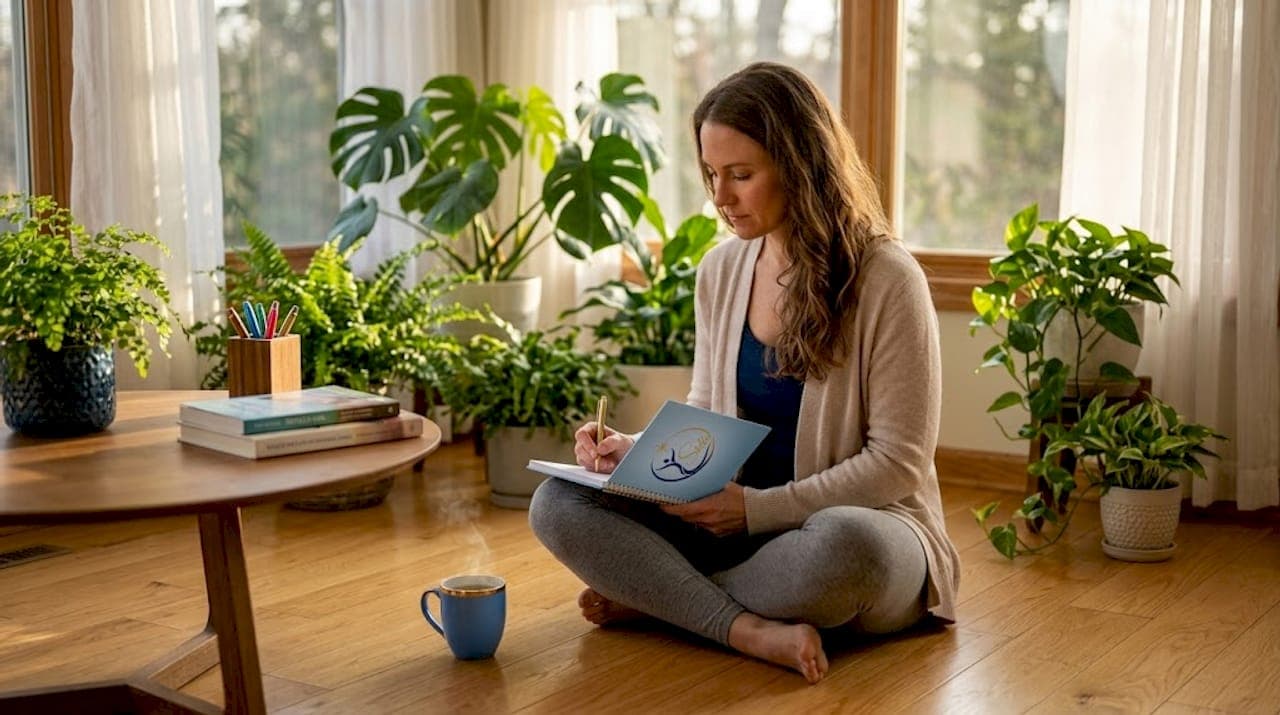
A simple self-assessment begins with honest journaling. Spend one week tracking these four areas each day:
- Physical symptoms: Digestion, sleep quality, energy levels, pain location, breathing ease
- Emotional patterns: Which emotions arise most often? Do they feel stuck or do they flow and release?
- Seasonal sensitivity: Do you feel notably worse or better at a particular time of year?
- Cravings and aversions: Each element has a corresponding taste. Cravings for sour foods often signal Wood; a craving for salty foods often signals Water.
After a week, look for the most consistent threads. If you wake tired regardless of how much you sleep, and your lower back aches persistently, Water may need support. If you overthink everything after meals and your digestion is sluggish, Earth is asking for attention.
This is where the Five Elements framework acts preventively, catching subtle imbalances before they become clinical illness. Dr. Maoshing Ni advises starting small rather than attempting a total lifestyle overhaul, and that wisdom holds. You are looking for the one or two elements that need the most gentle support right now.
Pro Tip: Use a simple 1-to-5 rating scale for each element's characteristics in your journal. Tracking trends over two to four weeks reveals far more than any single snapshot assessment.
Practical steps for daily Five Elements integration
This is where theory becomes lived experience. The goal is not to overhaul your life. It is to layer elemental awareness into what you already do, one step at a time.
Element-specific eating and seasonal rhythms
Food is one of the most direct ways to nourish or calm an element. Practitioners recommend starting with seasonal alignment each week, adjusting just one meal to match the current season and its corresponding element. In spring, focus on lightly cooked greens and foods with a gentle sour quality to support Wood and the liver. In winter, warming soups, root vegetables, and lightly salted broths nourish Water and the kidneys.

| Element | Season | Supportive Foods | Emotion to Soothe |
|---|---|---|---|
| Wood | Spring | Leafy greens, lemon, sprouts | Frustration, irritability |
| Fire | Summer | Berries, bitter greens, red foods | Anxiety, overexcitement |
| Earth | Late summer | Root vegetables, whole grains, squash | Worry, overthinking |
| Metal | Autumn | Pears, white foods, spices like ginger | Grief, difficulty releasing |
| Water | Winter | Bone broth, seaweed, black beans | Fear, chronic fatigue |
Mindful movement for each element
Movement is where Qigong truly shines as a Five Elements practice. Gentle, breath-centered movement directly stimulates the organ meridians associated with each element. Five Animal Qigong, for example, draws on the Tiger, Deer, Bear, Monkey, and Crane to embody qualities of each element through physical form and breath.
Here is a simple sequence to build into your week:
- Morning Wood practice: Slow side stretches and gentle twisting movements to awaken liver energy and encourage the body's natural forward drive.
- Midday Fire practice: Open-chested breathing, gentle backbends, or a five-minute walking meditation outside to let the heart feel spacious.
- After meals for Earth: Gentle abdominal massage in a clockwise direction and diaphragmatic breathing to support digestion and ease mental chatter.
- Evening Metal practice: Extended exhale breathing exercises to release tension held in the lungs and prepare the body to let go before sleep.
- Rest for Water: Restorative postures, long holds, and stillness to replenish kidney energy, especially important during winter months.
Emotional and environmental practices
Your environment speaks to your nervous system constantly. For Metal, decluttering one drawer or surface per week creates literal and energetic spaciousness. For Earth, creating a consistent mealtime routine without screens signals safety to the spleen-stomach system.
Breathwork deserves special mention for Fire. Even five minutes of slow, coherent breathing reduces heart rate variability and calms the Fire element's tendency toward agitation. The TCM principles for everyday wellness offer grounded, gentle guidance for layering these practices without overwhelm.
Pro Tip: Rather than addressing all five elements simultaneously, choose the element that matches the current season and focus there for four to six weeks before shifting attention.
Monitoring progress and adjusting over time
The most common mistake people make is expecting dramatic change too quickly, then abandoning the practice when nothing seems to shift. The truth is that small consistent changes based on Five Element principles can produce noticeable shifts in energy, digestion, and mood within as little as one week, but the deeper benefits accumulate over months.
Signs that your integration is working include:
- Waking with more natural energy before the alarm goes off
- Digestion feeling calmer and more regular
- Emotional responses feeling less extreme or stuck
- A greater sense of groundedness during stressful moments
- Seasonal transitions feeling smoother rather than draining
When you hit a plateau or feel like things are shifting backwards, that is normal. Clinicians using Five Elements for complex chronic health issues consistently note that progress is rarely linear. The body reorganizes in layers.
"Track the relationships between your symptoms, emotions, and seasons, not isolated parts. That relational view is where real insight lives."
Adjust your practices seasonally rather than waiting until something feels broken. If autumn arrives and you are still eating raw summer salads, your Metal element will likely feel the cost in the form of respiratory tightness or skin sensitivity. Seasonally adapting food, movement, and rest is the core skill of long-term Five Elements wellness.
When to seek professional guidance: if symptoms persist, intensify, or include anything medically urgent, work with a licensed practitioner. Acupuncture, one of the primary clinical applications of Five Elements Theory, shows strong evidence for reducing chronic pain, with effects comparable to pharmaceutical interventions for conditions like low back pain and migraines.
My experience with Five Elements in real wellness practice
By Stella
I have worked with Five Elements as both a practitioner and a student long enough to know where people get tripped up. The most common mistake is treating this framework like a checklist. You read about Metal, you declutter your closet, you feel good for a week, and then you wonder why nothing has fundamentally changed.
What I have learned is that the real power lives in the relational aspect. When I stopped treating my own fatigue as a Water problem and started asking what was generating the Water depletion, everything opened up. It was Metal. I was not grieving something I had lost, not releasing it properly, which left my Water reservoir constantly running on empty. That is the cycle of generation in action, and you cannot see it if you are only looking at isolated symptoms.
I also want to gently push back on the idea that you need to feel balanced before you can start. In my experience, the practice itself creates the conditions for balance. Start with five minutes of breathwork and one seasonal meal adjustment. The understanding deepens as you move.
The Five Elements are not a rigid prescription. They are an invitation to become curious about your own patterns, season by season, year by year. That curiosity is what sustains a wellness practice over a lifetime.
— Stella
Bring Five Elements theory to life with Qigong
If you are ready to move beyond reading and start feeling the Five Elements in your body, Qigongstar's online classes are built exactly for this.
Every practice at Qigongstar is rooted in the same Chinese Medicine principles you have been reading about here. The online Qigong classes for stress relief and digestive wellness directly target Earth, Water, and Metal imbalances through gentle, breath-centered movement. Whether you are brand new to Qigong or deepening an existing practice, the courses are beginner-friendly, on-demand, and designed to fit into a real life. Explore the full range of online courses and classes to find the right starting point for where you are right now. Your energy is ready to awaken.
FAQ
What are the Five Elements in Traditional Chinese Medicine?
The Five Elements are Wood, Fire, Earth, Metal, and Water. Each corresponds to specific organs, emotions, seasons, and life functions, forming an interconnected system used to assess and restore health.
How do I know which element is out of balance?
Track recurring physical symptoms, emotional patterns, and seasonal shifts over one to two weeks. Consistent signals, like digestive sluggishness paired with worry, often point to a specific element needing support, such as Earth.
Can Five Elements theory improve digestion and stress?
Yes. Earth element practices such as consistent meal timing, whole grain foods, and gentle abdominal breathing directly support digestion. Fire and Water practices calm the nervous system, reducing the physiological markers of chronic stress.
How quickly can I expect results from integrating elemental practices?
Noticeable shifts in energy and mood can appear within one week of consistent, element-aligned changes. Deeper benefits in digestion, emotional resilience, and sleep quality typically build over one to three months.
Is Qigong the best movement practice for Five Elements wellness?
Qigong is one of the most direct embodied expressions of Five Elements principles, using breath, intention, and gentle movement to stimulate specific organ meridians. It is also low-impact, making it accessible regardless of fitness level or age.