
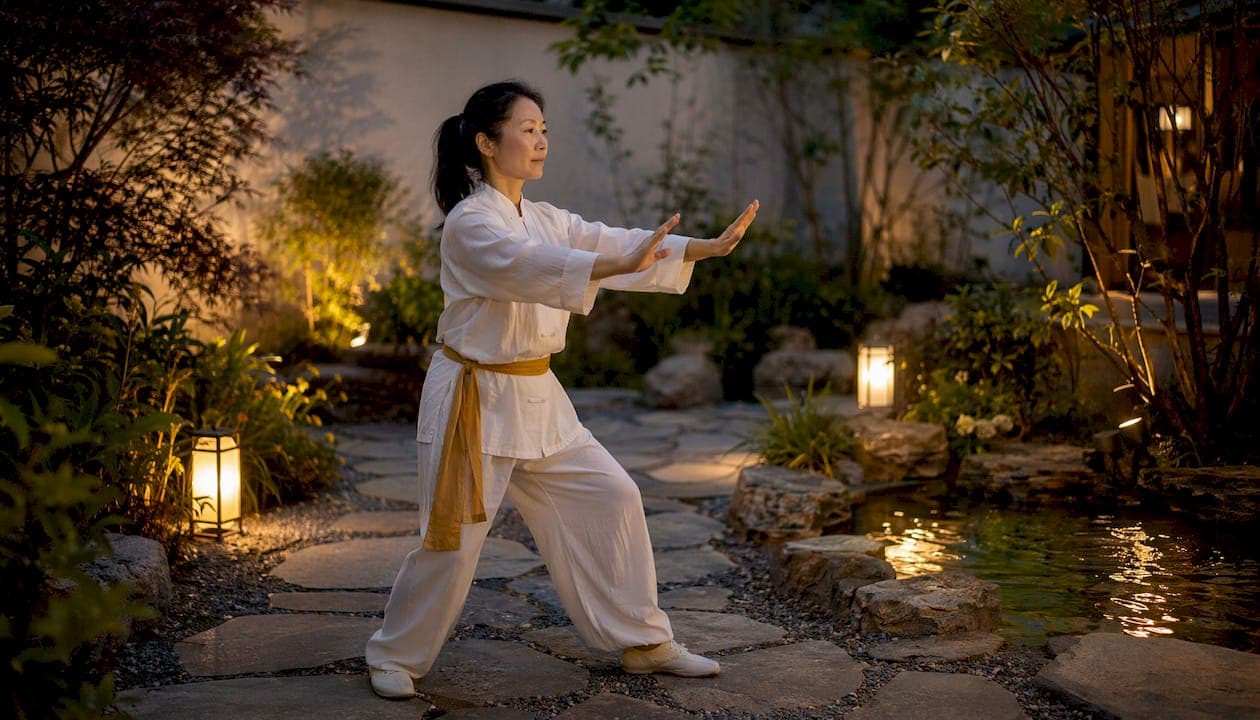
A daily qigong routine for stress reduction is defined as a structured practice combining slow movement, breath regulation, and focused attention to shift the nervous system from a stress state to a calm, recovered state. Research shows that 12 minutes of daily practice reduces salivary cortisol by 22–27%, improves heart rate variability by 31%, and delivers a 32% drop in GAD-7 anxiety scores over 12 weeks. These are not marginal gains. They are the kind of measurable shifts that change how you feel by midday. Qigong, rooted in Traditional Chinese Medicine, coordinates body, breath, and awareness in ways that purely cognitive methods like journaling or meditation apps cannot replicate. Qigongstar teaches this practice with beginner-friendly courses designed for adults who need real relief, not theory.
How does a daily qigong routine reduce stress?
Qigong is not stretching with breathing added on top. It is a coordinated practice that trains the nervous system to respond differently to stress. The technical term in Traditional Chinese Medicine is qigong (气功), meaning "energy cultivation," and modern neuroscience now maps its effects directly onto measurable physiological changes.
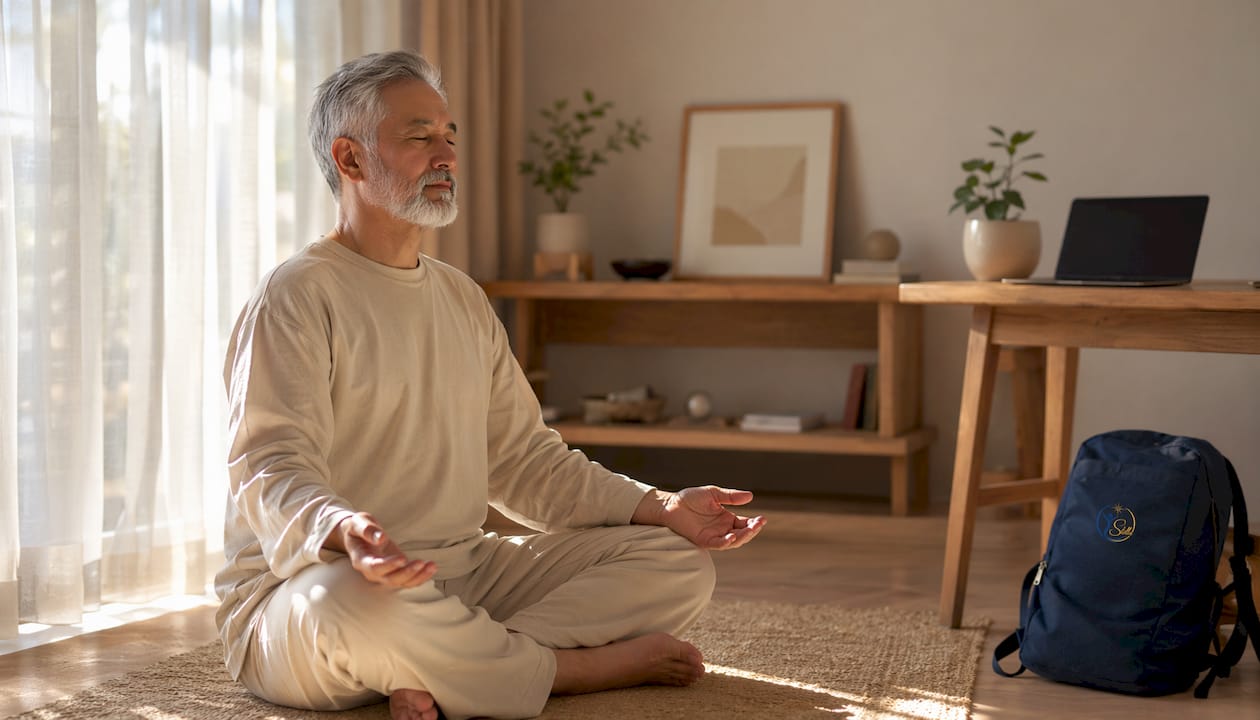
The core mechanism is vagal nerve stimulation. When you synchronize slow, rhythmic breath with gentle movement, your body shifts from sympathetic to parasympathetic dominance within 90 seconds. That shift drops your heart rate, relaxes your muscles, and quiets the mental noise that stress creates. EMG studies confirm that even a 90-second Zhan Zhuang standing meditation reduces muscle bracing in the trapezius and jaw, two places where most adults silently hold chronic tension.
Qigong also builds interoception, which is your ability to sense subtle signals inside your body, like the feeling of your feet on the floor, the softening of your jaw, or the rhythm of your breath. That internal awareness is what makes qigong different from a mindfulness app. You are not just thinking calming thoughts. You are reprogramming the nervous system through embodied experience.
"Qigong acts as nervous system firmware. It doesn't just calm you in the moment. It retrains your default stress response from fight-or-flight to pause-and-respond, so over time, you react less and recover faster."
The long-term benefits extend beyond stress relief. Qigong improves prefrontal cortex activation, supports better sleep architecture, and reduces inflammatory cytokines, all of which contribute to sustained stress recovery. These effects compound. Each session builds on the last.
Key physiological effects of a consistent qigong practice include:
- Cortisol reduction of 22–27% after 10 days of 12-minute sessions
- Heart rate variability improvement of 31%, signaling stronger vagal tone
- Reduced muscle tension in the jaw and shoulders within 90 seconds
- Improved prefrontal cortex activation, supporting clearer thinking under pressure
- Better sleep quality through reduced inflammatory markers
How to build a beginner qigong routine for stress relief
The most common mistake beginners make is starting too big. A 45-minute session sounds impressive but rarely survives a stressful Tuesday. The approach that actually works is progressive layering, starting with micro-practices and adding length only when the habit feels effortless.
A 7-day starter plan
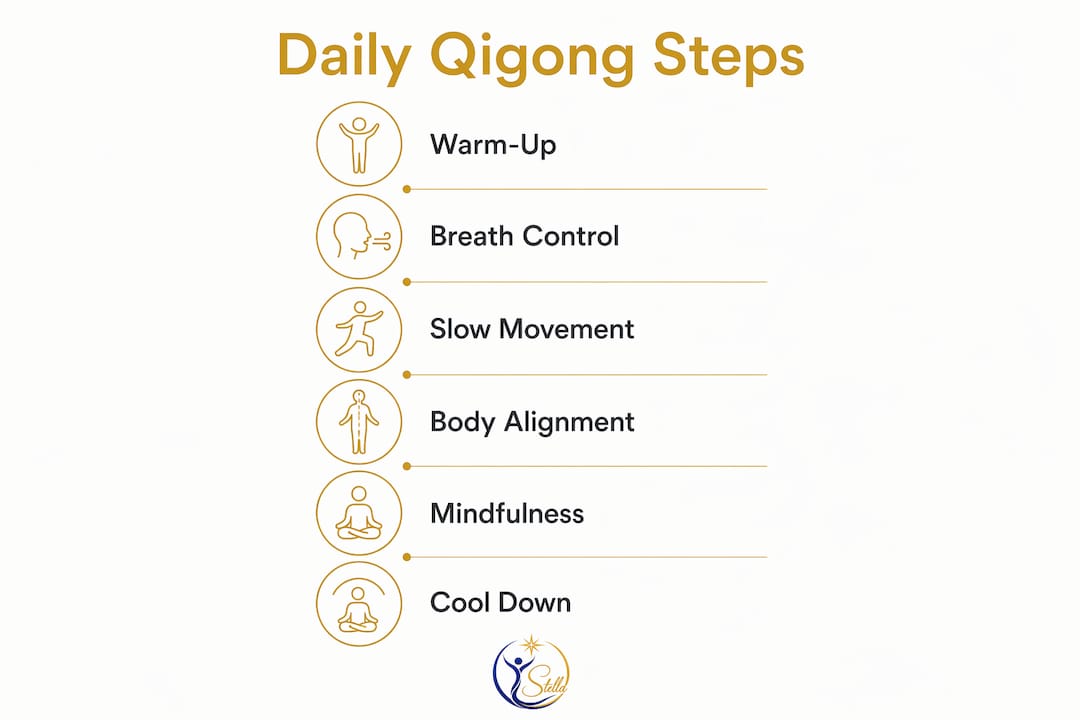
- Days 1–2: Practice Zhan Zhuang, the standing meditation, for 90 seconds. Stand with feet shoulder-width apart, knees soft, arms relaxed at your sides. Focus on the feeling of your feet on the floor and let your jaw unclench. Do this once in the morning and once after lunch.
- Days 3–4: Add abdominal breathing. Inhale for four counts, expanding your belly. Exhale for six counts, letting the belly fall. Pair this with the standing posture for a total of three minutes.
- Days 5–6: Introduce "Two Hands Hold Up the Heavens," a gentle arm-raise movement coordinated with your inhale and exhale. This movement opens the chest and stimulates the vagus nerve through slow, full-body extension.
- Day 7: Add a two-minute stillness phase at the end. Stand or sit quietly, hands resting on your lower belly. This integration phase is where your nervous system encodes the relaxation shift. Skipping this phase is the most common beginner error, and it undermines the whole session.
Best times and settings
| Time of day | Setting | Practice | Duration |
|---|---|---|---|
| Morning waking | Bedroom or living room | Zhan Zhuang + abdominal breathing | 5–10 minutes |
| Midday break | Office, standing at desk | 90-second micro-break with breath sync | 90 seconds |
| Afternoon slump | Any quiet space | Lymphatic tapping (Pai Ba Xu) | 3–5 minutes |
| Pre-sleep | Bedroom floor or bed edge | Stillness and slow breath | 5 minutes |
Micro-practices of 60–90 seconds integrated with existing daily triggers, like your morning coffee or the moment before a meeting, improve habit formation more reliably than scheduled long sessions. Attach the practice to something you already do, and it stops feeling like another task.
Pro Tip: Set a single recurring phone alarm labeled "90-second reset." When it goes off, stand up, soften your knees, and breathe slowly for six breaths. That is a complete micro-practice. Consistency over six weeks builds the neural circuitry that makes calm your new default.
What do you need to practice qigong at home?
Qigong requires no special equipment. That is not a marketing claim. It is a structural feature of the practice. You need a space roughly the size of a yoga mat, comfortable clothing that does not restrict your belly, and a way to track 90 seconds, either a phone timer or a mental count.
The most effective locations are the ones you already use every day:
- Living room floor: Ideal for full movement sequences and the stillness phase
- Office desk area: Perfect for standing micro-breaks and seated breath work
- Bedroom: Excellent for pre-sleep wind-down and morning activation
- Outdoors: Grass or a quiet sidewalk adds grounding sensory input that deepens interoception
One practice worth adding early is self-massage and lymphatic tapping, known in Chinese Medicine as Pai Ba Xu. Three to five minutes of gentle tapping along the arms, legs, and torso stimulates parasympathetic signaling and reduces perceived stress within 90 seconds. Avoid tapping directly over varicose veins or surgical sites.
Pro Tip: If you practice in an office, keep your shoes on and simply soften your knees slightly. No one around you will notice, and you still get the vagal benefit from slow breath and gentle postural release.
A note on physical conditions: if you have vertigo, recent surgery, or severe joint pain, start with seated versions of every movement. Qigong adapts to your body, not the other way around. The stress resilience benefits are available regardless of fitness level or mobility.
How do you track progress and troubleshoot your practice?
Progress in qigong shows up in subtle ways before it shows up in obvious ones. Most people notice reduced jaw tension and fewer afternoon energy crashes within the first two weeks. Deeper sleep and a calmer response to frustrating situations typically follow by weeks three and four.
Signs your practice is working:
- You wake up with less physical tension in your neck and shoulders
- You recover from stressful moments faster than you used to
- Your afternoon mental fog lifts more easily
- You notice your breath naturally slowing during tense moments
Common beginner mistakes that slow progress include rushing through movements, forcing the breath instead of allowing it, and skipping the stillness phase at the end. Rushing defeats the purpose. The nervous system needs slow, predictable input to shift state. If you feel impatient during practice, that impatience is the stress response itself. Staying with the slowness is the practice.
Short daily sessions outperform longer, sporadic ones for building neural plasticity and stress resilience. A six-minute daily session beats a 40-minute session twice a week. The nervous system responds to frequency, not volume.
For people with physical limitations, every movement in a standard qigong sequence has a seated version. Zhan Zhuang becomes a seated posture with hands resting on thighs. "Two Hands Hold Up the Heavens" becomes a gentle arm float from a chair. The breath coordination and interoceptive focus remain identical. The qigong for professionals approach applies the same logic to desk-bound workdays.
Pro Tip: Track one subjective marker each week. Ask yourself: "How quickly did I recover from the most stressful moment this week?" That single question reveals more about your nervous system progress than any app or wearable.
Key Takeaways
A consistent daily qigong practice reduces stress by retraining the nervous system through breath, movement, and body awareness, with measurable results appearing within 10 days.
| Point | Details |
|---|---|
| Start with micro-practices | 90-second sessions attached to daily triggers build lasting habits faster than long, scheduled sessions. |
| Physiology changes quickly | Cortisol drops 22–27% and HRV improves 31% after just 10 days of 12-minute daily practice. |
| No equipment needed | A shoulder-width space and comfortable clothing are the only requirements for a full practice. |
| The stillness phase matters | Ending each session with two minutes of quiet integration encodes the relaxation shift in the nervous system. |
| Consistency beats duration | Daily short sessions build stress resilience more effectively than occasional long ones. |
What I've learned from teaching qigong to stressed adults
Teaching qigong to adults who are genuinely exhausted has shown me one thing above all else: the biggest barrier is not time, and it is not fitness. It is the belief that you need to feel ready before you start. You do not.
The people who benefit most from a daily practice are the ones who begin on their worst days. When your nervous system is flooded with stress, even 90 seconds of slow breath and soft knees creates a measurable shift. You can feel it. That feeling builds trust in the practice, and trust is what keeps you coming back.
I have also noticed that beginners consistently undervalue the stillness phase. They move through the breathing and the gentle sequences, then immediately check their phone. That two-minute pause at the end is where the nervous system actually encodes what just happened. Without it, the session is incomplete. Think of it as the save button after you have done all the work.
The science confirms what practitioners have known for centuries: small, consistent micro-practices aligned with your existing day create cumulative benefits that compound over weeks and months. You are not trying to become a qigong master. You are giving your nervous system a daily chance to remember what calm feels like. That is enough. Start there.
— Stella
Qigongstar's online classes for daily stress relief
Knowing the principles is one thing. Having a skilled guide walk you through each breath and movement is something else entirely. Qigongstar's online qigong classes are designed for adults who want real, structured support for building a daily stress relief practice from scratch.
The courses are beginner-friendly, on-demand, and accessible from any device. You can practice in your living room, your office, or anywhere you have five minutes and a quiet corner. Stella's Five Animal Qigong program is particularly well suited to stress reduction, weaving together breath work, gentle movement sequences, and the stillness integration that makes each session genuinely restorative. Certified by the White Tiger Qigong School and Yoga Alliance, Qigongstar brings both traditional depth and modern accessibility to every class.
FAQ
How long does it take for qigong to reduce stress?
Research shows cortisol reductions of 22–27% and a 32% drop in anxiety scores after 10–12 weeks of daily 12-minute practice. Most people notice reduced muscle tension and faster stress recovery within the first two weeks.
Can beginners practice qigong for stress relief without prior experience?
Qigong requires no prior experience, no equipment, and no fitness level. Beginners start with 90-second micro-practices like Zhan Zhuang standing meditation and abdominal breathing, then build gradually.
What is the best time of day to practice qigong for stress?
Morning practice sets a calm baseline for the day, while a midday micro-break prevents afternoon cortisol buildup. Pre-sleep practice supports better sleep architecture by activating the parasympathetic nervous system.
How is qigong different from meditation for stress relief?
Qigong combines movement, breath, and body awareness, which trains the nervous system through physical experience rather than thought alone. This somatic approach produces measurable changes in vagal tone and cortisol that purely cognitive methods do not reliably replicate.
Do I need a class or can I practice qigong on my own?
You can practice basic micro-routines independently using the 7-day starter framework. Guided classes accelerate progress by correcting common errors like rushing movements or skipping the stillness phase, which are the two habits that most limit beginner results.