
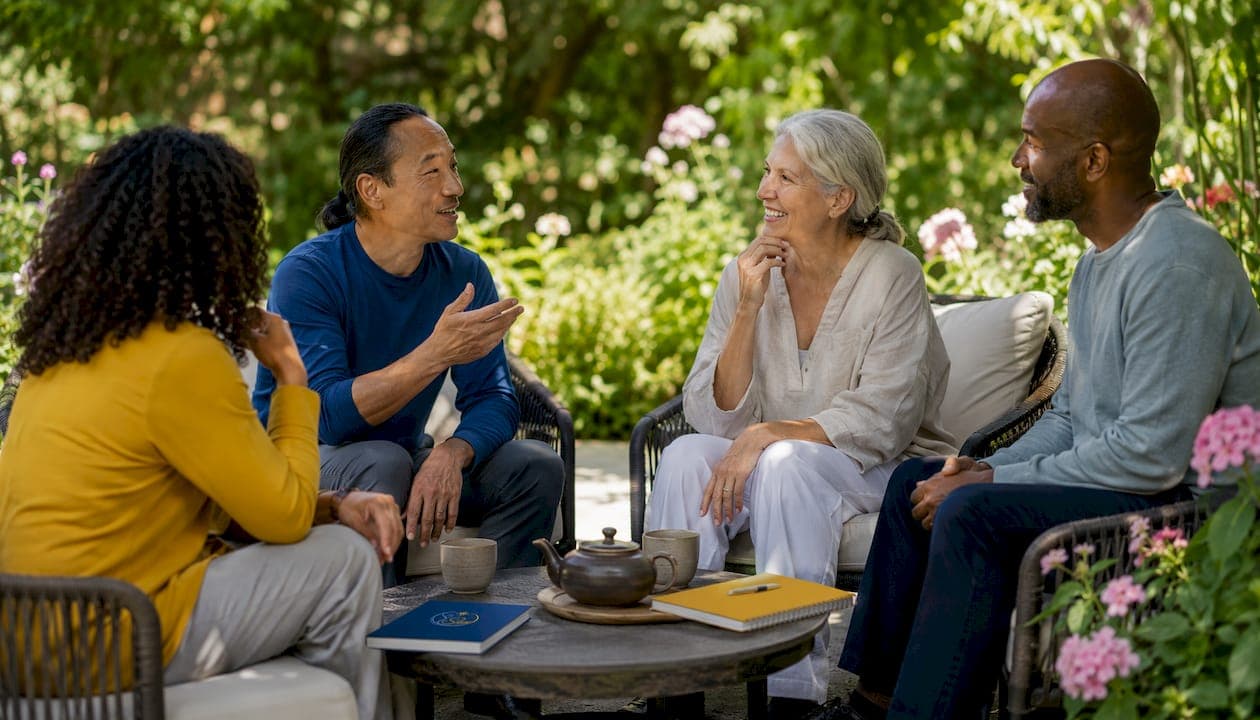
How community plays a central role in stress recovery
Community is one of the most powerful forces in stress recovery, and the science behind it is clear. When you feel genuinely connected to others, your brain perceives fewer situations as threatening, your body releases less cortisol, and your capacity to bounce back from hardship grows measurably stronger. The WHO Commission on Social Connection confirmed in 2025 that 1 in 6 people worldwide experience loneliness, with an estimated 100 deaths every hour linked to it. That figure reframes community not as a comfort, but as a health necessity.
Social support works through three distinct channels, each addressing a different dimension of stress:
- Emotional support: The warmth of being heard, validated, and cared for by others, which directly soothes the nervous system and reduces feelings of overwhelm.
- Informational support: Guidance, advice, and shared knowledge that help you navigate difficult situations with greater clarity and confidence.
- Instrumental support: Practical help, whether that is a meal, a ride, or someone who shows up when life feels unmanageable.
Together, these forms of support create a buffer between you and the full weight of life's stressors. Research from the APA shows that giving support to others may improve personal longevity just as much as receiving it, a finding that reframes community as a two-way source of healing. The U.S. Surgeon General's advisory on loneliness describes social connection as a fundamental human need, as essential to survival as food and water. When your community is strong, stress does not disappear, but your ability to carry it and recover from it transforms.
How social support reduces stress and protects your mental health
Social support does not just make you feel better emotionally. It changes your body's response to stress at a biological level. When you feel supported, your brain is less likely to interpret a difficult situation as a genuine threat, which keeps your stress hormone response proportionate rather than overwhelming. The CDC confirms that stable, supportive relationships improve your ability to manage stress, anxiety, and depression, and that people with stronger social bonds are more likely to live longer, healthier lives.
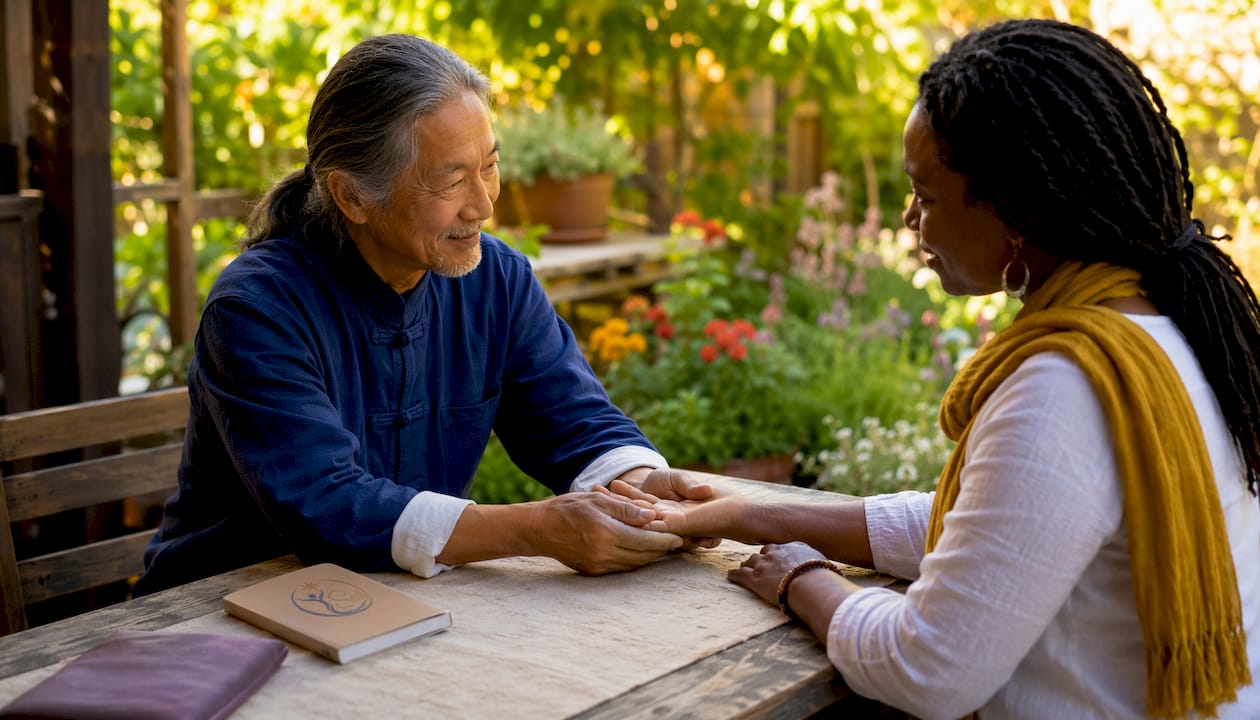
The physiological effects go deeper than mood. Providing social support to others yields measurable biological benefits, including lowered stress hormones, improved immune function, and positive changes in gene expression. This is why communities that care for one another tend to be physically healthier, not just emotionally warmer.
| Type of support | Primary mental health benefit | What the research shows |
|---|---|---|
| Emotional support | Reduces anxiety and perceived threat | Lowers cortisol response; improves mood regulation |
| Informational support | Builds coping confidence | Helps reframe stressors; reduces helplessness |
| Instrumental support | Decreases practical burden | Frees cognitive resources; reduces overwhelm |
| Peer support | Normalizes experience; reduces shame | Accelerates recovery from trauma and crisis |
A 2022 study cited by the APA found that high social support significantly improves resilience to stress, lowering anxiety and depression symptoms across diverse populations. What makes this finding particularly meaningful is that the benefit applies regardless of whether the support comes from a close friend, a faith community, a support group, or even a neighbor you greet regularly.
Key finding: Social connection buffers against maladaptive stress responses and reduces the long-term health effects of chronic stress, according to the U.S. Surgeon General's advisory on loneliness and isolation.
The type of support matters less than the quality of the connection itself. A single trusted relationship can shift your entire stress response. That said, variety in your support network, having people who offer different kinds of help, tends to produce the most resilient outcomes over time.
How community engagement strengthens your recovery from mental distress
Active participation in community life does more than reduce loneliness. It rebuilds your sense of identity, restores a feeling of purpose, and gives you a social role that anchors you during periods of mental distress. Recovery from anxiety, depression, or trauma rarely happens in isolation. It happens in relationship.
Research on wildfire-affected populations found that individuals with more social group memberships showed faster mental health recovery after the disaster, with community identification and the continuity of social ties explaining much of the effect. This is not simply about having friends nearby. It is about belonging to something that persists even when your personal world feels fractured.
Statistic: Loneliness is linked to an estimated 871,000 deaths annually worldwide, underscoring how profoundly the absence of community affects health outcomes at every level.
Positive social support also reduces the risk of PTSD and psychological distress after disasters and crises. A BMC Public Health study demonstrated that social capital has a protective effect on mental well-being during pandemics and natural disasters, with communities that maintained strong bonds recovering more quickly and with fewer lasting psychological wounds.
One nuance worth understanding: immediately after a crisis, community members who step up to help others may experience a temporary increase in stress from the caregiving load. This is real, and it is worth acknowledging. But research consistently shows that this early investment leads to faster recovery rates over time, both for the individual and for the community as a whole. Giving, even when it costs you something, tends to return more than it takes.
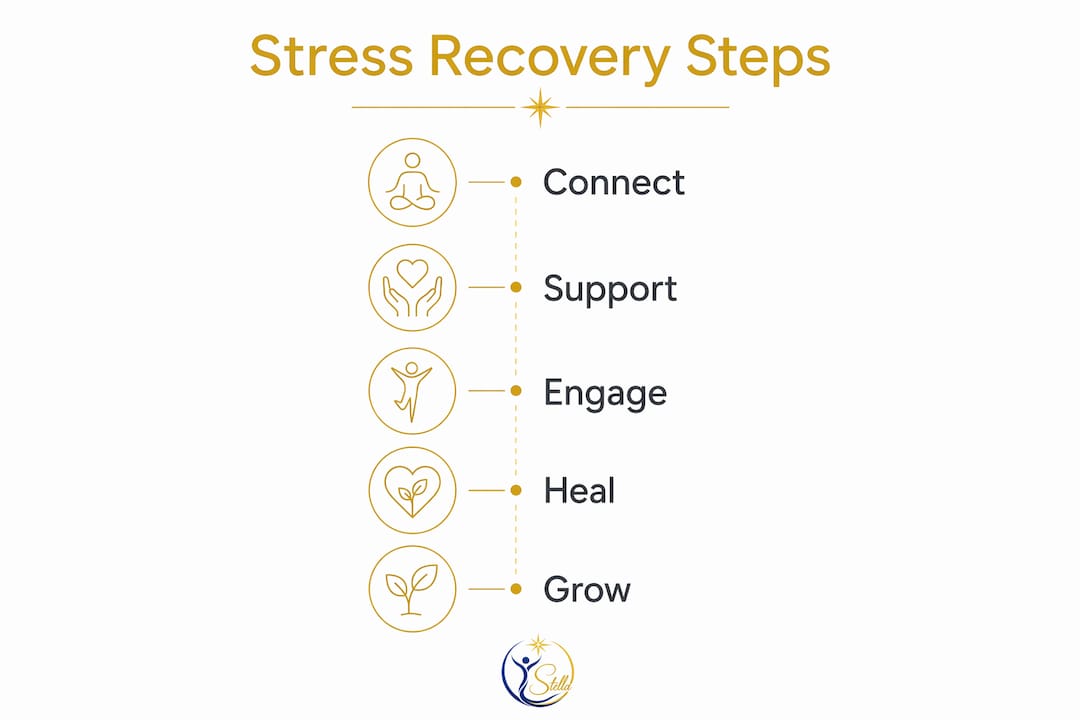
Distal connections matter too, not just your closest relationships. Hobby groups, faith communities, neighborhood associations, and even acquaintances create what researchers describe as a social safety net that prevents isolation from taking hold during vulnerable periods. Close friendships provide depth; broader connections provide reach.
How to build and sustain a community that genuinely supports your recovery
Building a supportive community is not about collecting contacts. It is about cultivating the kinds of connections that actually show up when life gets hard. The good news is that you do not need a large network to experience real benefit. A small, intentional circle of genuine relationships tends to outperform a wide but shallow one.
Here are the most effective strategies for growing and maintaining connections that support your stress recovery:
- Start with proactive, low-pressure outreach. APA experts emphasize that small social initiatives, like texting a friend, greeting a neighbor, or joining a local group, build meaningful connections more reliably than waiting for others to reach out first.
- Join groups organized around shared interests or values. Book clubs, community gardens, faith groups, volunteer organizations, and wellness classes all create natural, recurring contact that deepens over time without requiring forced intimacy.
- Volunteer. Giving your time to others activates what researchers call the "helper's high," a psychological lift from contributing to someone else's well-being that can equal or exceed the benefit of receiving help yourself.
- Diversify your support network. Different people offer different kinds of support. One friend may be your emotional anchor; another may be your practical problem-solver. Recognizing these roles helps you reach out to the right person at the right moment.
- Address social anxiety with gradual exposure. If crowds or new social situations feel overwhelming, start with one-on-one interactions or small groups. Online communities can serve as a gentle entry point before transitioning to in-person connection.
- Explore virtual and online communities. Digital spaces, including wellness forums, live-streamed classes, and peer support groups, offer genuine connection for people whose geography, mobility, or schedule limits in-person options. The community wellness resources at Qigongstar explore this dimension in depth.
- Nurture existing relationships intentionally. Consistency matters more than grand gestures. A regular check-in, a shared meal, or a weekly class together builds the kind of trust that holds during difficult times.
Pro Tip: If social engagement feels daunting, commit to one small act of connection per day for two weeks. Research on proactive social behavior shows that these micro-interactions compound into genuine community bonds over time, without the pressure of a big social commitment.
Barriers to community connection are real. Social anxiety, past relational wounds, geographic isolation, and cultural differences can all make reaching out feel risky. Recognizing these barriers as common, not personal failures, is the first step toward moving through them. A personalized support plan can help you identify which types of connection feel most accessible and build from there.
How group mind-body practices like Qigong deepen your stress recovery
Healing rarely happens in a straight line, and it rarely happens alone. When you combine a calming, body-centered practice with the warmth of a shared group experience, something shifts that neither element produces on its own. Group-based integrative practices, particularly Qigong, offer exactly this kind of layered support.
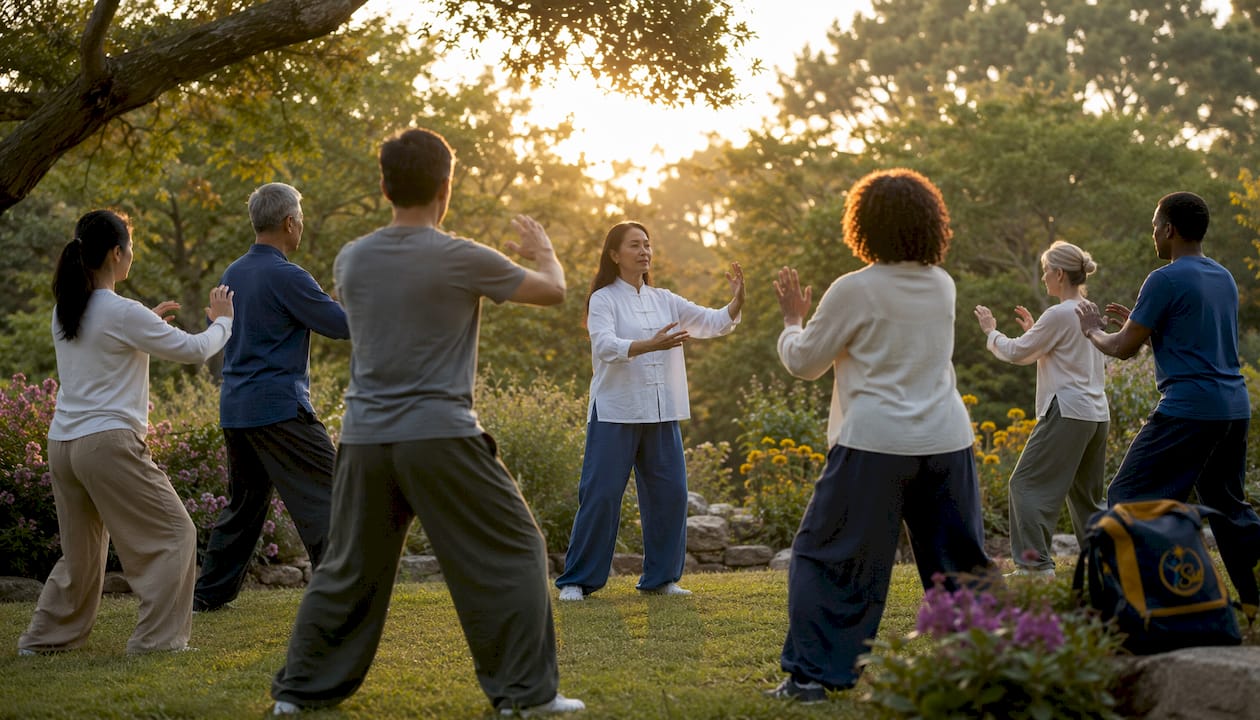
Qigong works by regulating breath, releasing tension held in the body, and gently awakening your energy through slow, intentional movement rooted in Chinese Medicine. In a group setting, these effects are amplified. You move together, breathe together, and share a collective intention to heal. Practice groups that engage in group Qigong report improved stress management and enhanced psychological well-being, with the social belonging of the group reinforcing the physical and mental benefits of the practice itself.
The synergy between emotional support and mindful movement is not incidental. When you feel safe in a group, your nervous system relaxes more deeply into the practice. When the practice calms your body, you become more open to the connection around you. Each element reinforces the other.
| Practice element | Individual benefit | Community benefit |
|---|---|---|
| Breath regulation | Activates parasympathetic nervous system | Creates shared rhythm that deepens group calm |
| Gentle movement | Releases physical tension | Builds nonverbal attunement and belonging |
| Mindful attention | Reduces rumination | Encourages collective presence and focus |
| Consistent group practice | Builds personal resilience | Strengthens social bonds and mutual accountability |
Qigongstar offers live and on-demand online Qigong classes designed specifically for stress relief, making this kind of community-supported healing accessible wherever you are. The White Tiger Qigong and Five Animal Qigong programs both draw on centuries of Chinese Medicine wisdom, delivered by Yoga Alliance-certified instructors in a format that welcomes beginners and experienced practitioners alike. You do not need to be in the same room to feel the warmth of a shared practice. You just need to show up.
For those navigating stress recovery alongside others in a structured community setting, the Grantham Mental Health and Wellbeing Hub offers an example of how community spaces can facilitate genuine psychological recovery, complementing the kind of gentle, body-centered work that Qigongstar provides.
Ready to experience the calming power of community-supported Qigong? Explore Qigongstar's online courses and classes and find the practice that meets you where you are.
Key Takeaways
Community is one of the most evidence-backed tools for stress recovery, working through emotional, informational, and instrumental support to reduce perceived stress, lower cortisol, and build lasting mental resilience.
| Point | Details |
|---|---|
| Community buffers stress biologically | Social support lowers stress hormones, improves immune function, and reduces the body's threat response. |
| Loneliness carries serious health risks | The WHO links loneliness to a significant number of deaths annually, making connection a genuine health priority. |
| Giving support heals the giver too | Providing help to others improves personal longevity and activates psychological benefits equal to receiving support. |
| Small, proactive steps build real bonds | Greeting a neighbor or sending a text builds meaningful community more reliably than waiting for others to reach out. |
| Group mind-body practice amplifies recovery | Qigong in a group setting combines physical stress relief with social belonging, deepening both benefits simultaneously. |