

Yes, you can reliably evoke the relaxation response at home using qigong, breathwork, and simple body-awareness practices, no formal therapy required. StatPearls describes the relaxation response as a trainable physiological state of deep rest, and the Mayo Clinic confirms that regular short sessions build a lasting reserve of calm. Qigongstar's courses in White Tiger Qigong and Five Animal Qigong are built around exactly this goal.
TL;DR:
- Qigong, breathwork, and body-scan practices are clinically recognized relaxation techniques that activate the parasympathetic nervous system.
- Mayo Clinic and StatPearls both confirm that consistency, not session length, drives results.
- Start in 60 seconds: stand or sit tall, inhale slowly for four counts, exhale for six. Repeat three times.
- Qigongstar offers guided courses for stress relief and digestive wellness if you want structured support.
Table of Contents
- How does qigong actually produce the relaxation response?
- Your beginner 5-minute qigong routine to try right now
- Breathing and micro-practices you can use anytime
- White Tiger and Five Animal Qigong for stress and digestion
- Adapting qigong for IBS, reflux, and digestive sensitivity
- Safety and contraindications: when to get professional advice
- How to make your practice stick: a four-week plan
- Key Takeaways
- Why qigong for stress and digestion is worth your attention
- Qigongstar courses for stress relief and digestive wellness
- Further reading and primary sources
How does qigong actually produce the relaxation response?
Qigong pairs slow, intentional movement with breath regulation, and that combination is precisely what shifts the nervous system from a reactive state into parasympathetic recovery. Heart rate drops, blood pressure eases, and muscle tension releases. These are not subtle effects; they are measurable physiological changes.
"Relaxation techniques intentionally evoke the relaxation response — a physiological state of deep rest that can be actively trained." — StatPearls / NCBI
Harvard Health lists movement arts, including qigong and tai chi, alongside breath focus and body scan as validated methods for eliciting this response. What makes qigong particularly effective is the breath-movement coupling: each posture guides the breath, and each breath deepens the postural release. The Mayo Clinic notes that regular practice trains this response so it becomes easier to access over time, not just during sessions but throughout the day.
Your beginner 5-minute qigong routine to try right now
This routine is safe for most beginners. If you have a recent injury or surgery, see the safety section below first.
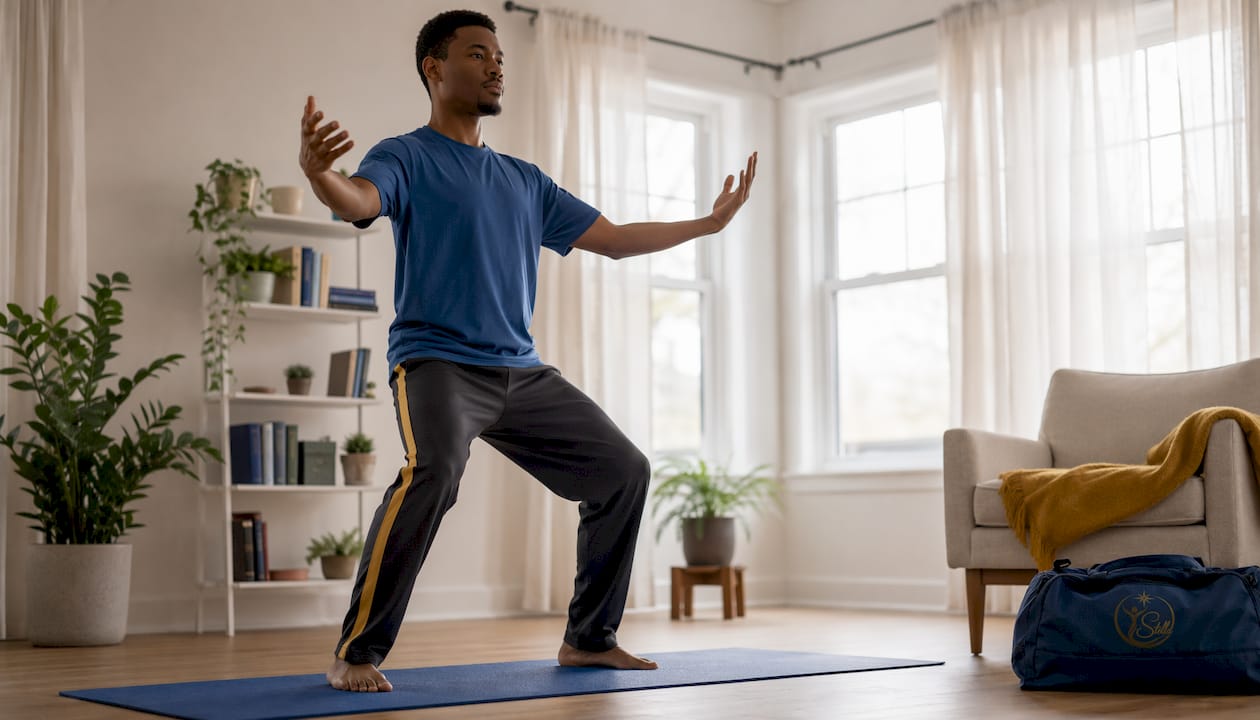
- Find your stance. Stand with feet shoulder-width apart, knees soft, spine tall. If standing is uncomfortable, sit on the edge of a firm chair with your feet flat on the floor.
- Opening breath. Inhale through your nose for four counts, letting your belly expand. Exhale through your mouth for six counts, softening your shoulders. Repeat twice.
- Sway and settle (1 minute). Gently sway side to side, letting your arms hang loose. Feel the weight shift through your feet. This wakes up the body without demanding anything from it.
- Lifting the sky (2 minutes). Raise both arms slowly overhead on a four-count inhale, palms facing up. Lower them on a six-count exhale, palms pressing gently toward the earth. Repeat six times.
- Belly massage rotation (1 minute). Place both hands on your lower abdomen. Rotate your torso slowly in small circles, three clockwise, three counterclockwise. Keep the breath easy and natural.
- Closing breath. Return to stillness. Inhale for four counts, exhale for eight. Place one hand on your heart and one on your belly. Notice the quiet.
Modifications:
- Seated version: all movements can be done in a chair; skip the sway and simply rock gently.
- Limited shoulder mobility: keep arm raises below shoulder height during "Lifting the sky."
Practice frequency: Once daily, even five minutes, builds the relaxation response more effectively than a long session twice a week.
Pro Tip: Choose one specific corner of a room or a single chair as your practice spot. A consistent environment acts as a contextual cue that helps your nervous system down-regulate faster each time you return to it.
Breathing and micro-practices you can use anytime
One thing the Cleveland Clinic makes clear: scrolling your phone is not rest. True physiological recovery requires intentional, focused practice. These micro-practices take two minutes or less and fit into any part of your day.
- Belly breathing (desk break). Sit tall, place one hand on your abdomen. Inhale slowly so your hand rises, exhale so it falls. Three to five cycles resets the nervous system mid-afternoon.
- 4-4-6 breath (before meals). Inhale for four counts, hold for four, exhale for six. The extended exhale stimulates vagal tone and gently prepares the digestive system. Do this two minutes before eating.
- Quick body scan (bedtime). Lying down, mentally move from your feet to your scalp, releasing each area on the exhale. Takes 90 seconds and signals the brain that the day is done.
- Standing micro-qigong pause (any transition). Between tasks, stand, roll your shoulders back once, and take three slow breaths with your eyes soft. This interrupts the stress cycle before it compounds.
- Jaw and hand release. Unclench your jaw, spread your fingers wide, then let both soften. Tension hides in these spots; releasing them sends a rapid calm signal through the body.
"Breath-focused and body-scan methods can cause distress for people with respiratory conditions, recent surgery, or certain eating disorders." — Harvard Health
If any breath technique causes dizziness, tingling, or anxiety, stop and breathe normally. These practices suit most people, but not every technique fits every body.
60-second desk-break script: Sit back from your screen. Feet flat. Inhale through your nose for four counts. Hold for two. Exhale through your mouth for six. Drop your shoulders. Repeat three times. Open your eyes slowly and return.
White Tiger and Five Animal Qigong for stress and digestion
Both styles taught at Qigongstar are rooted in Chinese medicine and designed to move qi through the body's meridian pathways, with particular attention to the organs associated with stress and digestion.
Qigong and tai chi are widely recommended for stress reduction, improved flexibility, and balance. White Tiger Qigong and Five Animal Qigong each approach these goals differently.
| Feature | White Tiger Qigong | Five Animal Qigong |
|---|---|---|
| Movement tempo | Fluid, continuous flow | Distinct animal-character postures |
| Digestive emphasis | Strong; abdominal spiraling is central | Moderate; Bear and Crane forms target gut |
| Best-fit students | Those who prefer flowing movement | Those who enjoy expressive, varied forms |
| How to modify | Reduce range of motion; stay seated | Slow each animal transition; use a chair |
White Tiger Qigong key moves:
- Spinal wave: undulates the spine from tailbone to crown, massaging the digestive organs with each repetition.
- Tiger claw press: engages the hands and forearms while deepening the breath, releasing upper-body tension.
- Abdominal spiral: slow, circular torso rotation that directly stimulates gut motility.
Five Animal Qigong key moves:
- Bear sway: grounded, heavy side-to-side movement that calms the nervous system and warms the lower abdomen.
- Crane balance: single-leg standing with slow arm lifts; builds focus and regulates breath rhythm.
- Deer stretch: gentle spinal rotation that opens the hips and lower back, areas where stress accumulates.
Instructors certified through the White Tiger Qigong School and Yoga Alliance carry verifiable training standards, which matters when you are choosing a guide for therapeutic movement. Qigongstar's instructors hold both credentials.
Adapting qigong for IBS, reflux, and digestive sensitivity
Timing and posture make a significant difference when gut conditions are part of the picture. Relaxation practices can lower blood pressure, heart rate, and stress-related digestive symptoms, but the wrong approach at the wrong moment can temporarily worsen discomfort.
General timing rules:
- Wait at least 60–90 minutes after a full meal before any standing qigong or abdominal rotation.
- Light breathwork and body scans are safe immediately after eating; keep them gentle and seated.
- Morning practice on an empty or lightly nourished stomach tends to suit most people with IBS.
Specific modifications:
- IBS flare: shorten sessions to three to five minutes; prioritize belly breathing over movement.
- Reflux: avoid full forward folds and deep abdominal compressions; keep the torso upright.
- Bloating or cramping: Bear sway and gentle spinal rocking are often soothing; avoid inversions.
Red flags — stop and seek guidance if you experience:
- Sharp or worsening abdominal pain during practice
- Dizziness, chest tightness, or shortness of breath
- Nausea that does not resolve within a few minutes of stopping
- Any symptom that feels new or alarming
These are signals to consult your primary care provider before continuing self-guided sessions. For somatic release work that complements gentle qigong, fascial and lymphatic therapy can be a useful addition for readers managing chronic tension alongside gut issues.
Safety and contraindications: when to get professional advice
Most healthy adults can begin a gentle qigong or breathwork practice without medical clearance. Some conditions require a conversation with a clinician first.
Pause or modify if you have:
- Recent abdominal, thoracic, or spinal surgery (wait for clearance)
- Unstable cardiac conditions or uncontrolled hypertension
- Serious respiratory disease (COPD, severe asthma) — breath-retention techniques are not appropriate
- Active eating disorder history — body-scan practices may require adapted guidance
- Severe osteoporosis — avoid deep spinal flexion or rotation without physical therapy input
Who to consult: your primary care physician for general clearance, a cardiologist for cardiac concerns, a physical therapist for post-surgical or musculoskeletal issues, and a certified qigong instructor for movement adaptations. Harvard Health notes that some techniques can increase distress in specific conditions; if a practice feels wrong, trust that signal and stop.
This article is general wellness information, not medical advice. Confirm any practice with your healthcare provider if you have an existing condition.
How to make your practice stick: a four-week plan
Consistency beats session length every time. The Mayo Clinic is clear that short daily sessions build a more stable relaxation response than sporadic long ones. Five to ten minutes daily is the target, not an hour on weekends.
| Week | Daily duration | What to expect |
|---|---|---|
| Week 1 | 5 minutes | Mild novelty; some restlessness is normal |
| Week 2 | 5 minutes | Breath begins to slow more naturally |
| Week 3 | — | Noticeable post-practice calm; better sleep onset |
| Week 4 | — | Relaxation response activates more quickly |
How to build the habit:
- Anchor practice to an existing routine: right after brushing your teeth, before your first coffee, or at your lunch break.
- Keep your practice space ready: mat unrolled, chair in position, phone on silent.
- Track one marker each week: sleep quality, morning tension level, or how quickly you calm after a stressful moment.
- Use a daily qigong routine as a reference once you are ready to extend beyond five minutes.
For a broader framework on building a lasting mind-body routine, habit-stacking and environment design are the two most reliable levers.
Key Takeaways
Qigong and breathwork reliably evoke the relaxation response when practiced daily for as little as five minutes, making them effective self-care relaxation methods for stress and digestive wellness.
| Point | Details |
|---|---|
| Relaxation response is trainable | StatPearls confirms it is a physiological state you can actively develop with consistent practice. |
| Five minutes daily is enough | Mayo Clinic guidance shows short daily sessions outperform sporadic long ones for nervous system training. |
| Adapt for digestion | Wait 60–90 minutes after meals for movement; belly breathing and body scans are safe immediately. |
| Know your safety flags | Stop practice and consult a clinician if you experience sharp pain, chest tightness, or worsening symptoms. |
| Qigongstar for guided learning | White Tiger Qigong and Five Animal Qigong courses offer structured, beginner-friendly instruction for stress and gut health. |
Why qigong for stress and digestion is worth your attention
Most stress-relief content treats the gut as an afterthought. That is a significant gap, because the gut-brain axis means chronic stress and digestive distress feed each other in a loop that breath and passive rest alone rarely break. Qigong, particularly the abdominal-focused forms in White Tiger and Five Animal traditions, addresses both ends of that loop simultaneously: it calms the nervous system while physically stimulating the digestive organs through movement and breath.
What I find most underestimated is how quickly the body responds when the practice is consistent and embodied rather than effortful. Scrolling a meditation app while half-distracted is not the same as standing, breathing, and moving with intention. The active relaxation distinction the Cleveland Clinic draws is real and worth taking seriously. Certification through the White Tiger Qigong School and Yoga Alliance matters here too, because the depth of instruction shapes whether a student learns to feel the practice or just perform it.
Qigongstar courses for stress relief and digestive wellness
If the routines in this article resonate with you, Qigongstar's structured programs take you further without requiring any prior experience. The online courses and classes catalog includes on-demand video lessons you can follow at your own pace, plus live virtual sessions for real-time guidance.
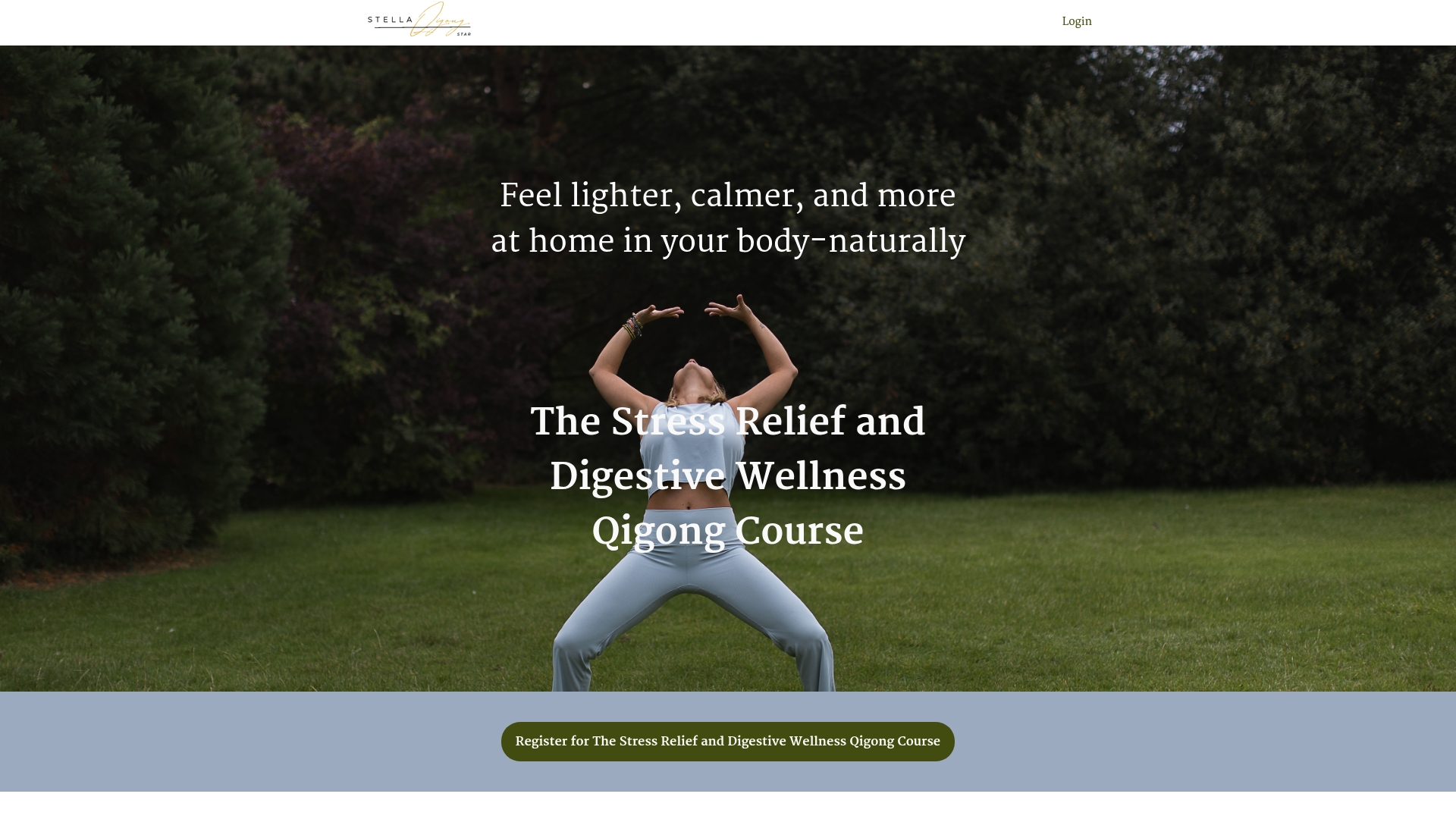
The Five Animal Qigong program is a strong starting point for digestive wellness, walking you through Bear, Crane, Deer, and the other animal forms with clear movement cues and breath instruction. The White Tiger Qigong course suits those drawn to flowing, continuous movement with a strong abdominal focus. Both are accessible from anywhere in the United States, on demand, with no equipment needed. Visit the stress relief and digestive wellness course page to find the program that fits where you are right now.
Further reading and primary sources
- StatPearls / NCBI: Relaxation Techniques — Clinical overview of the relaxation response and validated techniques; the primary scientific reference for this article.
- Mayo Clinic: Relaxation Techniques — Practical guidance on practice frequency and consistency; highly readable for non-clinical audiences.
- Harvard Health: Six Relaxation Techniques — Covers technique suitability and safety caveats, including contraindications.
- Cleveland Clinic: How to Relax — Explains the difference between passive rest and active relaxation.
- MedlinePlus: Relaxation Techniques — Patient-friendly guidance on environment, movement arts, and practice setup.
- Qigongstar: Stress Relief Without Medication — Broader context on natural, medication-free stress management through qigong.
- Qigongstar: Somatic Stress Release Examples — Body-based techniques that pair well with the routines in this article.
- Mobility Restoration Checklist for Athletes — Supplementary reading on progressive mobility work and movement modifications.