
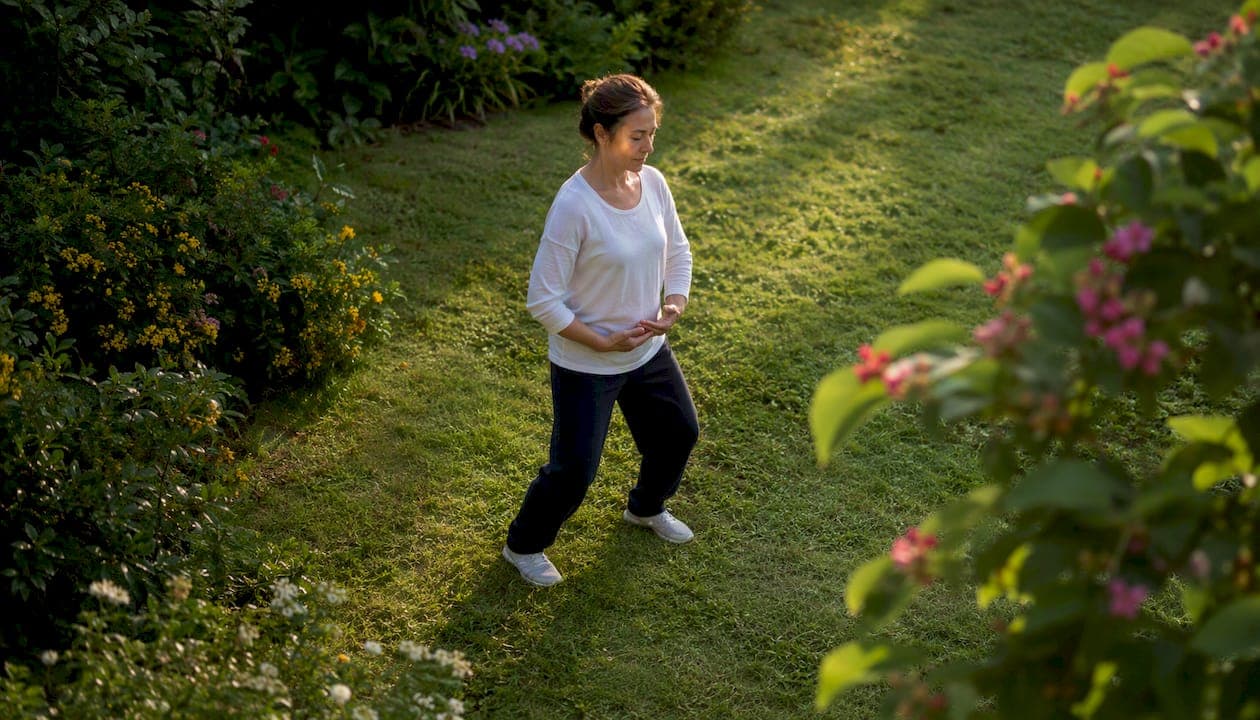
Gentle Qigong can meaningfully reduce knee pain and improve joint function when practiced regularly, and the research backs this up. Start with a 10-minute daily routine, seated or standing, and add two short quadriceps-strengthening moves three to five times per week. Within four to eight weeks, most people notice less stiffness and more ease of movement.
Three things to do right now:
- Start seated if standing feels uncertain. A chair gives you support and lets you focus on breath and gentle movement without loading the knee.
- Avoid deep knee bends. Keep your knees soft and slightly bent, never past 90 degrees, especially in the first few weeks.
- Stop for sharp or shooting pain. Mild aching or warmth is normal. Sharp, stabbing, or sudden pain is a signal to pause and reassess.
Pro Tip: For the first two weeks, tie your practice to something you already do every morning, like brewing tea or sitting down after breakfast. Habit-stacking is one of the most reliable ways to build consistency before motivation fades.
Key Takeaways
Qigong for knee pain works best when practiced consistently at a gentle pace and combined with targeted quadriceps strengthening from week five onward.
| Point | Details |
|---|---|
| Start with 10 minutes daily | A seated or standing 10-minute routine, practiced daily, builds the habit and proprioceptive gains that underpin longer-term relief. |
| Combine with strengthening | Adding seated leg extensions twice weekly from week five produces greater pain and function improvements than Qigong alone. |
| Expect results by weeks 8–12 | Pain scores typically begin shifting between weeks 4 and 8; functional gains consolidate between weeks 8 and 12. |
| Know your red flags | Stop for sharp pain, sudden swelling, or a feeling of instability, and seek medical assessment before resuming. |
| Qigongstar offers guided courses | Qigongstar's Five Animal and White Tiger Qigong programs include seated modifications and certified instruction suited to knee pain and limited mobility. |
Table of Contents
- What the clinical research says about Qigong for knee pain
- How Qigong can soothe your knees and restore movement
- Which Qigong styles work best for knee pain?
- Beginner-friendly Qigong exercises you can start today
- How often to practice: an 8–12 week progressive plan
- Practicing safely: what to watch for and when to seek care
- How to choose a Qigong teacher or online course for knee pain
- Key studies on Qigong and knee pain: what the evidence actually shows
- What I've seen work for people with knee pain
- Guided Qigong courses designed with your knees in mind
- Sources
What the clinical research says about Qigong for knee pain
The evidence is genuinely encouraging, though not without caveats. Multiple randomized controlled trials (RCTs) and systematic reviews show that regular Qigong practice reduces pain scores, improves physical function, and enhances proprioception in adults with knee osteoarthritis (KOA). The most-studied outcome measures are the WOMAC (Western Ontario and McMaster Universities Osteoarthritis Index) and the VAS (Visual Analog Scale for pain), both of which show consistent improvement across trials.
Clinical guidance from InformedHealth.org, backed by evidence summaries, confirms that strength and mobility exercises are a cornerstone therapy for knee OA, and that low-impact activities such as Tai Chi and Qigong are appropriate, safe options for many patients. This aligns with guidance from the Arthritis Foundation and the CDC, both of which recommend regular, gentle exercise as a primary, non-pharmacological treatment.
A key finding from a quasi-experimental trial of 128 older adults showed that combining Baduanjin Qigong with quadriceps strengthening produced greater pain reduction and functional improvement over six months than either intervention alone. That synergy matters: Qigong supports movement quality and adherence, while strengthening addresses the muscle deficits that drive KOA progression.
The honest summary: Qigong is not a cure, and most trials are small with short follow-up periods. Heterogeneity across Qigong styles makes direct comparison difficult. Still, the direction of evidence is consistent, and the safety profile is excellent for older adults and those with limited mobility.
Statistic spotlight: A 12-week Baduanjin program (3 sessions per week) produced significant improvements in WOMAC function and knee proprioception at both Week 8 and Week 12 (p < 0.05) compared to controls, in a group of 50 older adults with KOA.
How Qigong can soothe your knees and restore movement
Qigong works on several levels at once, which is part of why it tends to suit people with chronic knee pain better than high-impact exercise. Here are the key mechanisms:
- Improved proprioception and balance. Slow, mindful weight shifts train the sensory receptors in and around the knee joint to send clearer signals to the brain. Better proprioception means better joint protection during everyday movement.
- Increased local circulation. Gentle, rhythmic movement pumps synovial fluid through the joint and encourages blood flow to the surrounding soft tissue, which can ease morning stiffness and support tissue nourishment.
- Low-impact mobility and flexibility. Qigong moves the knee through a comfortable, controlled range without the compressive forces of running or jumping. This keeps the joint mobile without aggravating inflamed tissue.
- Reduced central sensitization via stress reduction. Chronic pain is partly a nervous system phenomenon. The slow breathing and meditative focus of Qigong calm the stress response, which can lower the brain's pain amplification. Research on mind-body mechanisms confirms this pathway.
- Improved self-efficacy and adherence. People who feel capable of managing their own pain tend to do better long-term. Qigong builds that confidence gradually, which is why combined programs show stronger results over months rather than weeks.
Some Qigong forms may not always outperform standard exercise on objective physical-function scores in every trial, but research consistently shows psychological benefits, including reduced stress, anxiety, and depression, that are directly relevant to managing chronic knee pain.
Pro Tip: During practice, notice whether your knee feels warmer and more fluid after five minutes of gentle movement. That sensation of increased circulation is a reliable early signal that the practice is working, and noticing it builds the motivation to continue.
Which Qigong styles work best for knee pain?
Not all Qigong styles are equally suited to knee rehabilitation. Here is a practical comparison of the styles most commonly used and studied for KOA, including how they fit different needs.
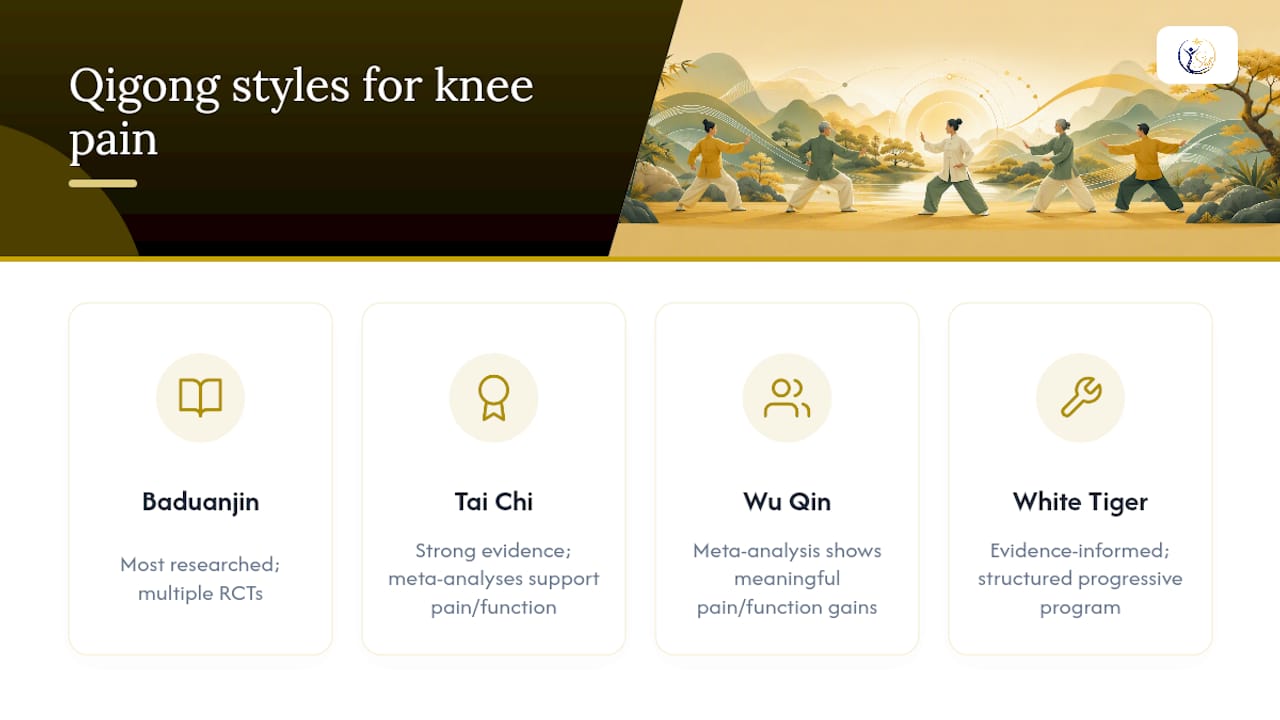
Baduanjin (Eight Brocades) This is the most researched style for knee OA. Its eight flowing movements include gentle knee bends, hip rotations, and weight shifts that directly address joint mobility and proprioception. Suitable for beginners and older adults; most moves can be adapted to a seated position. Evidence strength: multiple RCTs and a quasi-experimental trial with positive outcomes on WOMAC and proprioception.
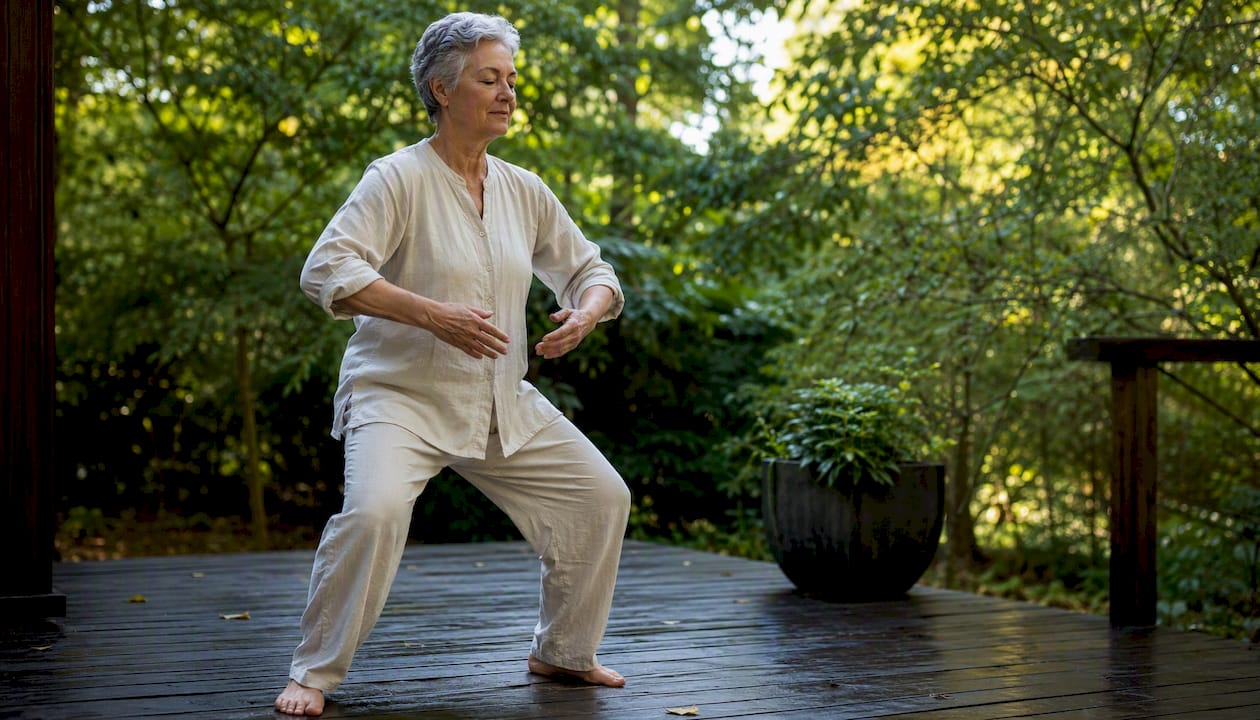
Tai Chi Widely recommended by the Arthritis Foundation for knee OA, Tai Chi shares many movement principles with Qigong: slow, continuous motion, mindful breathing, and low-impact loading. It requires slightly more coordination than Baduanjin and benefits from instructor guidance, especially early on. Evidence strength: strong, with multiple meta-analyses supporting pain and function benefits. You can read more about how it compares to other mind-body healing modalities for joint health.
Wu Qin Xi (Five Animal Frolics) A traditional form that mimics the movements of five animals: tiger, deer, bear, monkey, and crane. A systematic review and meta-analysis found clinically meaningful improvements in pain and function for people with KOA, though heterogeneity across trials means results vary. The bear and deer movements are particularly gentle on the knees. Moderate instructor guidance recommended for beginners.
Five Animal Qigong Closely related to Wu Qin Xi, Five Animal Qigong emphasizes fluid, animal-inspired movement patterns that mobilize the hips, knees, and ankles without deep flexion. Well-suited to adults who want variety in their practice and a more expressive movement style. Qigongstar's Five Animal Qigong program offers structured, beginner-friendly instruction with seated and standing options.
White Tiger Qigong A contemporary, evidence-informed system that integrates traditional Qigong with modern anatomy and movement science. Its sequences include knee-friendly stance work, spinal mobilization, and breath-led joint opening. Particularly well-suited to adults who want a structured, progressive program with clear anatomical cues. Qigongstar's White Tiger Qigong courses are taught by a certified White Tiger Qigong School instructor.
External Qigong Therapy (EQT) EQT is a distinct modality in which a trained practitioner projects or channels Qi toward the patient rather than the patient practicing movement themselves. Early controlled trials reported symptom reduction in OA, but the evidence is older, less consistent, and mechanistically different from self-practice Qigong. It is not a substitute for a regular movement practice.
Pro Tip: If a pain flare stops you from standing, switch to seated Baduanjin or gentle Five Animal arm and hip movements from a chair. Keeping the breath-movement connection alive during flares maintains your practice habit and prevents the deconditioning that often follows a pain episode.
Beginner-friendly Qigong exercises you can start today
The following exercises draw from Baduanjin, Five Animal Qigong, and White Tiger Qigong. Each includes a seated variation. Breathe slowly throughout: inhale for four counts, exhale for four counts.
1. Seated knee circles
Sit upright in a firm chair, feet flat on the floor. Lift one foot slightly and draw slow, smooth circles with your knee, six times clockwise and six times counterclockwise. Keep the movement small and pain-free. Switch legs. Modification: keep the foot on the floor and simply rock the knee gently side to side if lifting causes discomfort.
2. Standing weight shift (Baduanjin foundation)
Stand with feet hip-width apart, knees softly bent. Slowly shift your weight to the right foot, hold for two breaths, then shift left. Keep your knees tracking over your second toe. Repeat 8–10 times per side. Seated version: rock your pelvis gently left and right in the chair, feeling the weight shift through each sit bone.
3. Bear walk (Wu Qin Xi / Five Animal)
Stand with feet shoulder-width apart. Slowly step forward with your right foot, letting your right shoulder drop slightly as you do, mimicking a bear's rolling gait. Take four slow steps forward, then four back. Keep knees soft throughout. Seated version: march in place with exaggerated shoulder rolls, coordinating breath with each step.
4. Crane balance (White Tiger stance variation)
Stand near a wall or chair for support. Shift weight to your left foot, lift the right foot just one to two inches off the floor, and hold for three breaths. Lower and switch. This trains single-leg proprioception gently. Modification: keep the toes of the raised foot lightly touching the floor if full lift feels unstable.
5. Knee-friendly bow stance (Baduanjin)
Step your right foot forward about 18 inches. Bend the front knee slightly (no more than 45 degrees) while keeping the back leg straight. Hold for two breaths, feeling the gentle stretch in the back hip. Return to center and switch. Seated version: extend one leg forward with a soft knee and gently flex and point the foot.
6. Spinal wave with knee softening (White Tiger)
Stand with feet hip-width apart. Begin a slow wave from the base of your spine upward, letting your knees soften and straighten gently with each wave. Coordinate with breath: soften on the inhale, extend on the exhale. Eight repetitions. This mobilizes the whole kinetic chain without loading the knee.
7. Hip circle with knee tracking (Five Animal)
Hands on hips, feet hip-width apart. Draw slow, large circles with your hips, keeping your knees soft and tracking forward. Six circles in each direction. Seated version: seated hip circles on the chair, lifting slightly off the seat on each forward arc.
8. Closing breath and knee press
Sit or stand. Place both palms gently on your knees. Inhale and imagine warmth flowing from your palms into the joint. Exhale and soften any tension you feel there. Repeat six times. This is a simple self-care closing ritual that also reinforces the mind-body connection central to Qigong practice.
Your two ready-to-use routines
10-minute daily routine (beginner)
- Seated knee circles (2 minutes)
- Seated weight shift or standing weight shift (2 minutes)
- Bear walk or seated march (2 minutes)
- Crane balance with wall support (2 minutes)
- Closing breath and knee press (2 minutes)
20-minute practice (weeks 3 onward)
- Seated breath and joint warm-up (3 minutes)
- Standing weight shift (3 minutes)
- Bear walk (3 minutes)
- Knee-friendly bow stance (3 minutes)
- Spinal wave with knee softening (3 minutes)
- Short quad set: seated leg extensions, 2 sets of 10 reps each leg (3 minutes)
- Closing breath and knee press (2 minutes)
Pro Tip: Learning how to practice mind-body exercises at home safely is as much about your environment as your technique. Clear a 6-by-6-foot space, place a sturdy chair nearby, and practice in bare feet or flat-soled shoes for better proprioceptive feedback.
Safety note: Keep knee flexion under 90 degrees in all standing moves. If any exercise causes sharp pain, swelling, or a feeling of instability, stop immediately and rest. Mild muscle fatigue or gentle warmth in the joint is normal.
How often to practice: an 8–12 week progressive plan
Consistency matters more than intensity. The trials showing the clearest benefits used three sessions per week of 40 minutes each, but even a daily 10-minute practice produces measurable gains in proprioception and pain scores by weeks 8–12.
Progression principles to follow:
- Increase session length by no more than five minutes per week.
- Add balance challenges (single-leg stance, eyes closed) only after two weeks of pain-free standing practice.
- Integrate quadriceps strengthening (seated leg extensions, mini-squats to 45 degrees) twice weekly from week five onward, as combined programs produce stronger outcomes than Qigong alone.
- If pain increases after a session, reduce duration by five minutes and stay at that level for one more week before progressing.
When to expect results: Pain scores typically begin to shift between weeks 4 and 8. Functional improvements, such as easier stair climbing and reduced morning stiffness, tend to consolidate between weeks 8 and 12, consistent with the timeline seen in the Baduanjin RCT data.
Pro Tip: Attach your practice to a fixed daily cue, such as right after your morning shower or before your evening meal. Research on habit formation consistently shows that environmental cues reduce the mental effort of starting, which is the biggest barrier in the first month.
Practicing safely: what to watch for and when to seek care
Qigong is one of the gentlest movement practices available, but knee pain has many causes, and not all of them respond to the same approach. These principles keep you safe.
Core safety principles:
- Keep pain at or below 4 out of 10 during practice. Mild discomfort is acceptable; anything sharper is a signal to modify or stop.
- Avoid deep knee flexion (past 90 degrees) in all standing exercises until you have built strength and confidence over several weeks.
- Use a chair or wall for balance support in any standing move, especially in the first four weeks.
- Warm up for at least three to five minutes with seated breath and gentle joint circles before any standing work.
- Pace yourself: shorter, more frequent sessions are safer than long, infrequent ones when you are starting out.
Red flags: stop and seek care if you notice:
- Sharp, shooting, or stabbing pain during or after practice
- Sudden swelling or significant increase in existing swelling
- A feeling of the knee "giving way" or instability
- Fever alongside joint pain (possible infection)
- Pain that worsens progressively over several days of practice
When to see a clinician before starting: If you have had recent knee surgery, cannot bear weight on the leg, suspect a ligament or meniscus injury, or have been told you have severe bone-on-bone OA, get medical clearance before beginning any new exercise program, including Qigong. A physiotherapist can also help you identify which movements to modify for your specific anatomy.
Modifications for common conditions:
- Hip OA alongside knee OA: reduce the range of hip circles and bow stances; keep all movements small and pain-guided.
- Prior knee surgery (e.g., knee replacement): follow your surgeon's range-of-motion guidelines and begin with seated-only exercises for the first six to eight weeks post-clearance.
- Balance impairment: always practice near a wall or with a chair in reach; skip single-leg balance moves until your physiotherapist confirms it is safe.
How to choose a Qigong teacher or online course for knee pain
A good teacher makes the difference between a practice that helps and one that inadvertently aggravates your knee. Here is what to look for.
Questions to ask before you commit:
- Do you have experience teaching students with knee osteoarthritis or chronic knee pain?
- Can you offer seated modifications for all standing exercises?
- What are your credentials? (Look for White Tiger Qigong School certification, Yoga Alliance registration, or equivalent.)
- How large are your classes? (Smaller groups allow more individual attention and safer cueing.)
- Is there a trial class or refund policy if the course is not suitable?
- Do you have experience teaching older adults or those with limited mobility?
- If in-person, do you hold current CPR and first-aid certification?
Credentials checklist:
- Certified by a recognized Qigong school (White Tiger Qigong School, National Qigong Association, or equivalent)
- Yoga Alliance registration (for instructors who also teach movement-based Qigong)
- Documented experience with therapeutic or rehabilitative Qigong
- Positive reviews or testimonials from students with joint conditions
- Willingness to adapt the curriculum to your specific needs
Live classes vs. recorded courses:
Live classes, whether in-person or virtual, allow real-time correction of alignment and knee-loading errors, which matters most in the first four to six weeks. Recorded courses offer flexibility and the ability to pause, rewind, and repeat at your own pace, which suits people with unpredictable pain levels. The ideal approach for most beginners is to start with a few live sessions to establish safe form, then supplement with on-demand recordings for daily practice.
Pro Tip: Treat the first session as an interview. Notice whether the teacher asks about your health history before you begin, offers a seated option without being asked, and cues breath before movement. These three habits signal a teacher who understands therapeutic Qigong rather than just performance Qigong.
Key studies on Qigong and knee pain: what the evidence actually shows
Here is a concise summary of the most relevant trials and reviews, with practical takeaways for each.
-
Baduanjin + Quadriceps Strengthening (PMC8008642, n=128, 6 months): Three-arm quasi-experimental trial. The combined group outperformed both Qigong-alone and strengthening-alone groups on pain, function, and self-efficacy. Takeaway: combining modalities produces better outcomes than either alone. Limitation: non-randomized design.
-
Baduanjin RCT (PMC6966958, n=50, 12 weeks): Randomized controlled trial, 3 sessions per week. Significant improvements in WOMAC function and knee proprioception at weeks 8 and 12. Takeaway: proprioception benefits appear before pain scores fully shift. Limitation: small sample.
-
Baduanjin Frontiers RCT (2019, 12 weeks, 3×/week, 40 minutes): Instructor-led then home practice model. Significant proprioception and WOMAC improvements at weeks 8 and 12. Takeaway: a 40-minute, 3×/week model is the most-studied effective dose. Limitation: protocol details limit generalizability.
-
External Qigong Therapy RCT (PMC2582590): Early controlled trial reporting symptom reduction in knee OA. Takeaway: EQT shows a signal but is a distinct modality from self-practice Qigong. Limitation: older evidence, smaller samples, mechanistic differences from movement-based practice.
-
InformedHealth.org / NCBI Bookshelf (NBK544978): Guideline-level summary confirming exercise as first-line therapy for knee OA, with Tai Chi and Qigong listed as appropriate low-impact options. Takeaway: Qigong is not fringe; it sits within mainstream clinical recommendations for KOA management.
A note on limitations across the evidence base: Most trials are small (under 100 participants), short (12 weeks or less), and conducted in older Asian populations, which may limit direct generalizability to all U.S. adults. Larger, longer, multicenter RCTs are needed. That said, the consistency of direction across studies, combined with an excellent safety profile, makes Qigong a reasonable, evidence-informed choice for knee pain management.
What I've seen work for people with knee pain
The clinical evidence is clear enough, but what the studies cannot fully capture is the texture of what actually changes for people who stick with a Qigong practice for three months or more. The most consistent pattern is not dramatic pain elimination. It is a quieter shift: mornings feel less stiff, stairs feel less daunting, and there is a growing sense of trust in the body's capacity to move without bracing for pain.
What tends to derail people early is expecting too much too fast. The first two weeks often feel unremarkable, and that is precisely when most people stop. The proprioceptive improvements that show up in the research at week 8 are real, but they are built on dozens of small, consistent sessions that feel almost too gentle to be doing anything. They are doing something. The breath-first approach, where you establish a slow, steady exhale before you move the joint, is one of the most underrated cues in therapeutic Qigong. It reduces protective muscle guarding around the knee before the movement even begins, which makes the movement itself safer and more effective.
Combining Qigong with even a modest quadriceps strengthening routine, two sets of seated leg extensions twice a week, produces noticeably better results than Qigong alone. The strength work addresses the muscle deficit that drives joint loading; the Qigong addresses the movement quality and nervous system regulation that makes the strength work sustainable. Neither is optional if you want lasting relief.
Pro Tip: Start with micro-progressions: add just one new exercise or one extra minute per week. The people who make the most progress over twelve weeks are rarely the ones who started hardest. They are the ones who started gently and never stopped.
Guided Qigong courses designed with your knees in mind
If you want the safety of structured, progressive instruction without having to piece together a program yourself, Qigongstar's Five Animal Qigong and White Tiger Qigong courses offer exactly that. Both programs include seated and standing variations, clear anatomical cues, and breath-led progressions that suit beginners, older adults, and anyone managing limited mobility or joint sensitivity.
Stella, a certified White Tiger Qigong School instructor, teaches every course with therapeutic application in mind. The programs are available online, on-demand, so you can practice at your own pace, pause when you need to, and return without pressure. Whether you are brand new to Qigong or returning after a pain flare, the courses meet you where you are. To take the next step, visit the online classes page and choose the program that fits your current mobility and goals.
Sources
The following sources were used in preparing this article. Each is directly relevant to Qigong, knee osteoarthritis, or exercise-based management of knee pain.
- The effects on pain, physical function, and quality of life of quadriceps strengthening exercises combined with Baduanjin qigong in older adults with knee osteoarthritis: a quasi-experimental study - PMC
- The Effects of Baduanjin Qigong on Postural Stability, Proprioception, and Symptoms of Patients With Knee Osteoarthritis: A Randomized Controlled Trial - PMC
- Frontiers in Medicine: Yijinjing/Qigong research article (2021)
- Effect of Wu Qin Xi exercises on pain and function in people with knee osteoarthritis: A systematic review and meta-analysis
- Osteoarthritis of the knee: Learn More – What can you do to strengthen your knees? - InformedHealth.org - NCBI Bookshelf
This article provides general information about Qigong and knee pain management. It is not a substitute for professional medical advice. Please consult a qualified healthcare provider before beginning any new exercise program, particularly if you have a diagnosed joint condition, recent surgery, or other health concerns.