
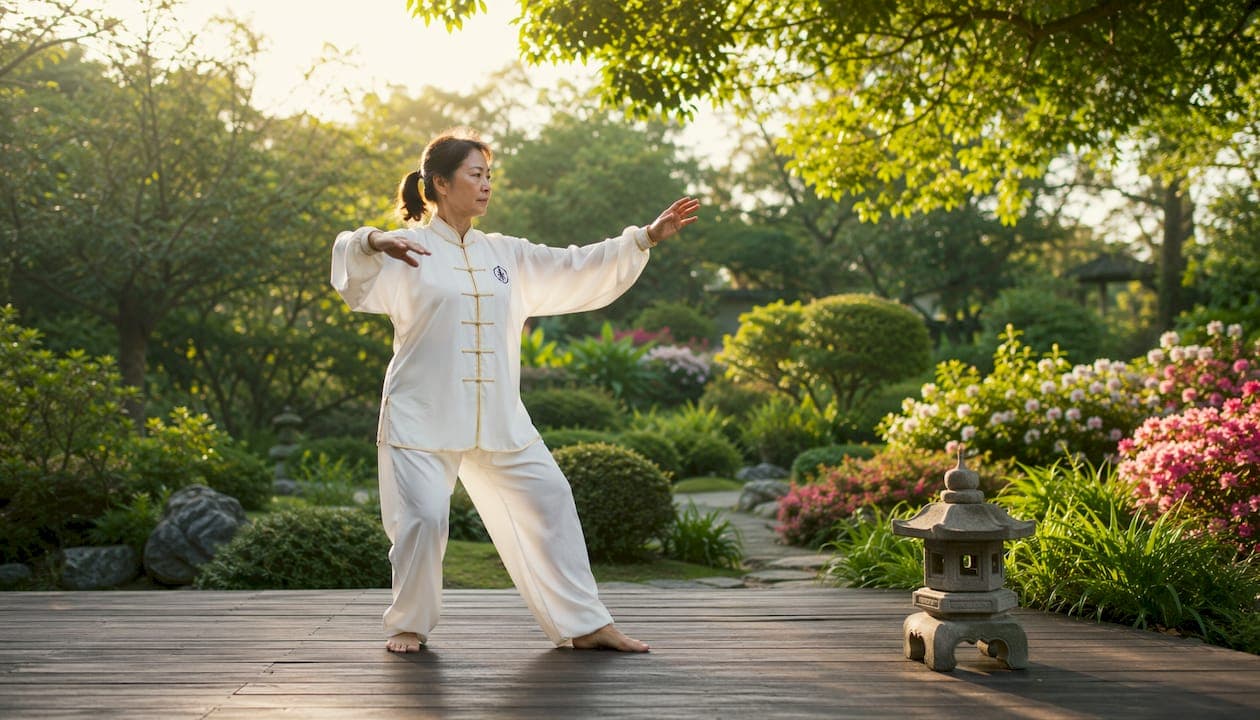
What is Qigong, and why should you start today?
Qigong (pronounced "chee-gong") is a 4,000-year-old Chinese practice that blends slow, intentional movement with breath regulation and focused awareness. Its core purpose is to cultivate Qi, the vital life energy that traditional Chinese medicine describes as flowing through every body. When Qi moves freely, the body heals and balances itself. When it stagnates, discomfort and illness tend to follow.
What makes Qigong so welcoming for beginners is its simplicity. You do not need a mat, special clothing, or any prior fitness experience. The movements are gentle enough for older adults and people managing chronic conditions, yet rich enough to hold the attention of seasoned wellness practitioners for a lifetime. This qigong for complete beginners guide covers everything you need to start practicing with confidence, from the foundational concepts to your first four movements.
Here is what Qigong practice actually involves:
- Posture: A relaxed, upright stance that supports energy flow without muscular strain
- Breath regulation: Slow, deep nasal breathing that calms the nervous system
- Mindful movement: Gentle, repeated sequences that coordinate body and breath
- Focused intention: Directing awareness inward to sense and guide Qi
- Meditation: Both active (moving) and passive (still) forms are valid practice
- Accessibility: Adaptable for all fitness levels, including chair-based variations
Table of Contents
- What health benefits can you expect from Qigong?
- What is Medical Qigong, and how does it support healing?
- How does Qigong compare to Tai Chi and yoga?
- How to practice Qigong: the basics every beginner needs
- Simple Qigong exercises to start with right now
- Who should practice Qigong with caution or consult a doctor first?
- Getting started: which type of Qigong is right for you?
- How to build a Qigong practice at home that actually sticks
- Common mistakes beginners make and how to avoid them
- Tips for building a regular Qigong practice routine
- How to find and evaluate quality Qigong instruction
- Qigongstar offers a gentle, certified path into Qigong practice
- Key Takeaways
What health benefits can you expect from Qigong?
The benefits of Qigong reach across body, mind, and mood, and they tend to arrive sooner than most beginners expect. A meta-analysis pooling results from multiple randomized controlled trials found that brief daily Qigong practice produced measurable improvements in anxiety, sleep quality, and systolic blood pressure within weeks of consistent practice.
The mechanism behind this is direct. Qigong activates the parasympathetic nervous system within roughly 90 seconds, shifting the body from fight-or-flight into rest-and-digest mode. Stay in that state for ten minutes daily and your baseline stress response gradually recalibrates. Clinical studies also link Qigong with improved balance, gait, and reduced fall risk, particularly in older adults. A 2023 review found that regular practice changes the hippocampus and prefrontal cortex in ways that may support memory, focus, and information processing.
Statistic callout: A meta-analysis of randomized trials found consistent improvements in anxiety, sleep, and blood pressure from daily Qigong sessions practiced for a short duration within weeks of regular practice.
Key benefits beginners commonly notice:
- Reduced stress and anxiety through parasympathetic activation
- Better sleep quality, often within the first few weeks
- Lower blood pressure with consistent daily practice
- Improved balance, coordination, and fall prevention
- Sharper mental focus and clearer thinking
- Gentle support for digestive health and gut-related discomfort
- A sustained sense of calm that carries into daily life
What is Medical Qigong, and how does it support healing?
Medical Qigong is a specialized branch of the broader practice, focused specifically on using Qi cultivation to address health conditions and support recovery. Where general Qigong builds overall vitality and wellbeing, Medical Qigong targets particular imbalances, working alongside conventional medical treatment rather than replacing it. The National Center for Complementary and Integrative Health classifies Qigong as a complementary approach, and Medical Qigong fits squarely within that framing.
Practitioners trained in Medical Qigong may work with clients experiencing chronic illness, pain, or post-surgical recovery, using specific movement sequences, breath patterns, and meditative techniques tailored to the condition. This is distinct from the spiritual forms of Qigong, which focus on cultivating the Taoist path rather than treating symptoms. As a beginner, you do not need to choose a lane immediately. The foundational movements serve both purposes, and your practice will naturally deepen over time.
Healing applications of Medical Qigong include:
- Chronic pain management and rehabilitation support
- Stress-related conditions such as anxiety and burnout
- Digestive disorders including IBS and gut inflammation
- Cardiovascular support as a complement to medical care
- Sleep disorders and fatigue recovery
- Immune system support during illness or treatment
One important note: Medical Qigong practitioners are not licensed physicians. Always consult your healthcare provider before using Qigong as part of a treatment plan for any diagnosed condition.
How does Qigong compare to Tai Chi and yoga?
Beginners often arrive at Qigong after exploring Tai Chi or yoga, and the distinctions matter for choosing where to start. Tai Chi originated as an ancient martial art and is technically one of the hundreds of forms of Qigong. Its movement sequences are longer, more complex, and require more memorization than basic Qigong forms. For a complete beginner, Qigong's shorter, repeated movements are easier to learn and practice independently. You can find a deeper look at mind-body practice comparisons to help you decide what fits your goals.
Yoga, by contrast, emphasizes static postures held over time, with breathwork woven through a sequence of stretches and strength poses. Qigong keeps the body in continuous, flowing motion, which makes it gentler on joints and more accessible for people who find floor-based poses difficult. Both practices calm the nervous system, but Qigong's emphasis on energy cultivation and its rapid parasympathetic activation give it a distinct edge for stress relief and nervous system rebalancing.
| Practice | Movement style | Learning curve | Primary focus |
|---|---|---|---|
| Qigong | Gentle, repeated flows | Low | Energy cultivation, nervous system |
| Tai Chi | Complex, sequential forms | Moderate to high | Martial roots, balance, health |
| Yoga | Static poses, held stretches | Low to moderate | Flexibility, strength, breath |
Why beginners often choose Qigong first:
- Movements are simpler and easier to remember than Tai Chi forms
- No floor work required, making it accessible for all mobility levels
- Faster nervous system benefits compared to more effort-based practices
- Can be practiced in ten minutes with no equipment
- Gentle enough for chronic illness, injury recovery, and older adults
How to practice Qigong: the basics every beginner needs
Starting Qigong requires almost nothing in terms of equipment. You need a quiet space large enough to extend both arms, flat shoes or bare feet, and comfortable clothing that does not restrict movement. That is genuinely all. No mat, no props, no gym membership.
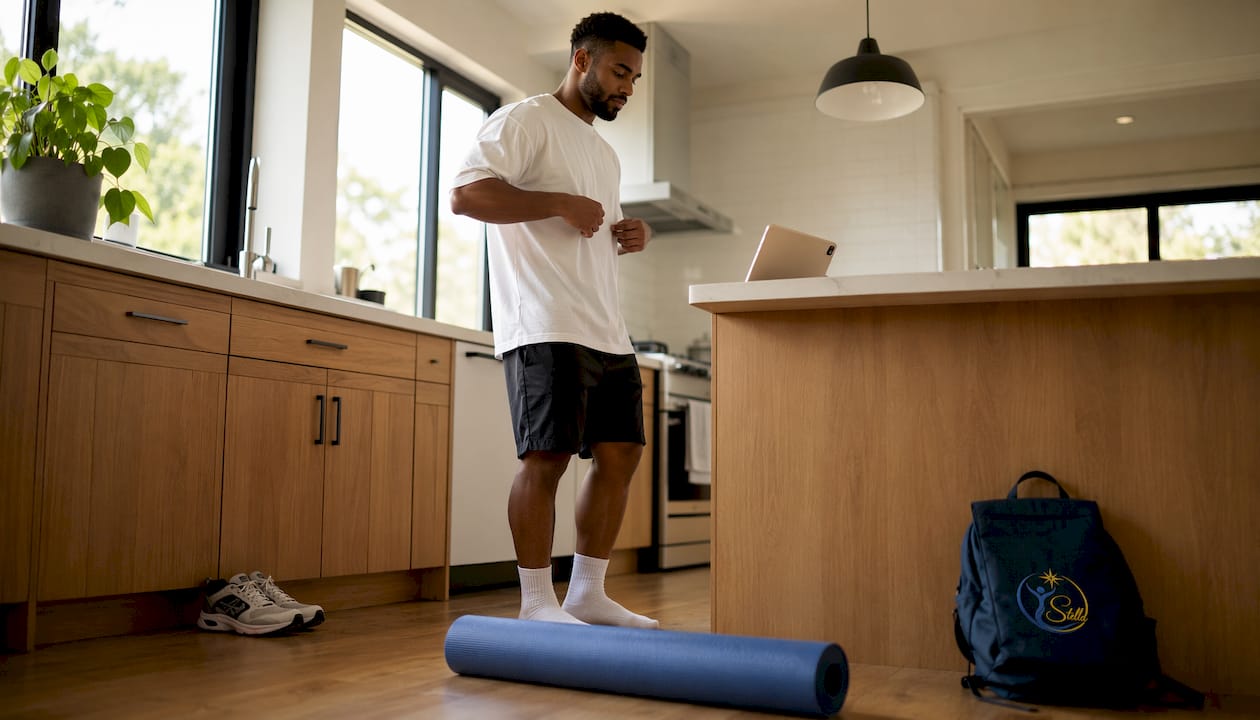
Session length matters less than frequency. Consistency beats duration: ten focused minutes every morning produces more nervous system change than one long weekly session, because Qigong trains the body through repetition, not intensity. Aim for daily practice, even if some days are only five minutes. The body learns through rhythm, not effort.
Pro Tip: Think of your posture as a puppet held gently by a string from the crown of your head. The spine lifts without tension, the shoulders drop, and the knees stay soft. This "relaxed structure" is the foundation of every Qigong movement. Slumping collapses the energy channels; forcing an upright posture creates muscular tension that blocks them. The sweet spot is effortless alignment.
Practical steps to begin:
- Choose a consistent time, ideally morning before the day's demands accumulate
- Start with 10 minutes and build gradually as the practice feels natural
- Breathe through the nose, slow and deep, letting the belly expand on the inhale
- Keep movements slower than feels necessary; speed is the most common beginner error
- Focus on the sensation of movement rather than achieving perfect form
- Practice outdoors when possible; fresh air amplifies the calming effect
Simple Qigong exercises to start with right now
These four foundational movements form a complete beginner routine. Together they take about ten minutes and can be practiced tonight. Move through them in order, from stillness to movement and back to stillness.
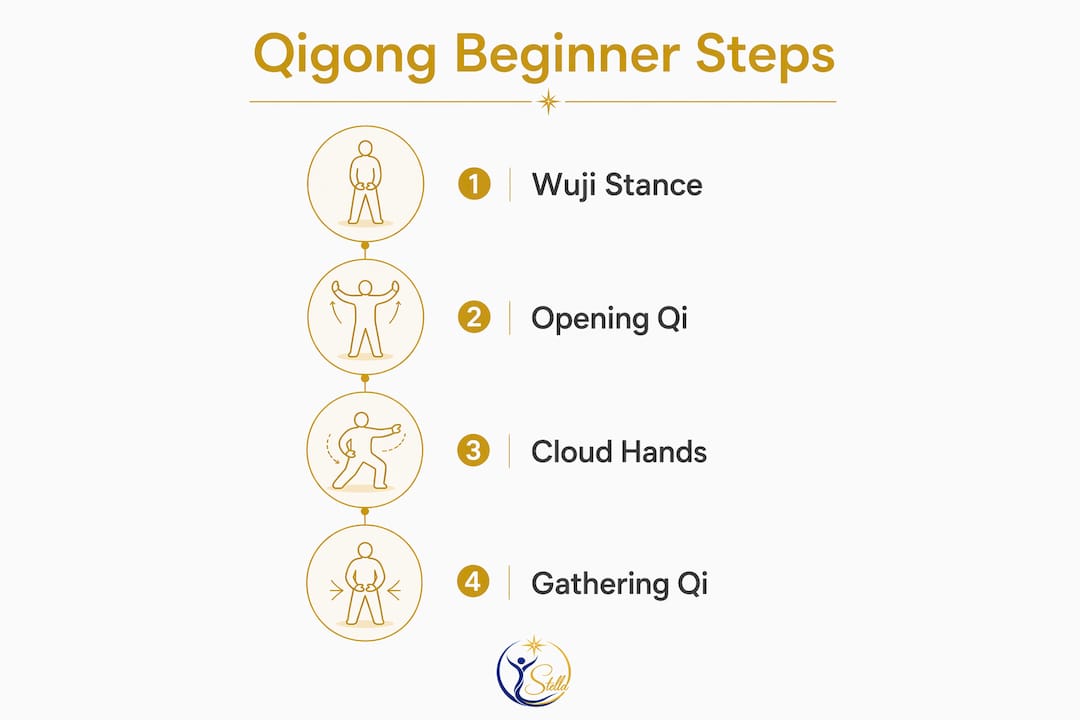
1. Wuji stance (minutes 0–2)
Stand with feet shoulder-width apart, knees slightly soft, arms relaxed at your sides. Close your eyes or soften your gaze toward the floor. Let your weight sink into the soles of your feet. Breathe naturally through the nose. This is not passive waiting. Wuji is active stillness, the foundation from which all Qigong movement arises.
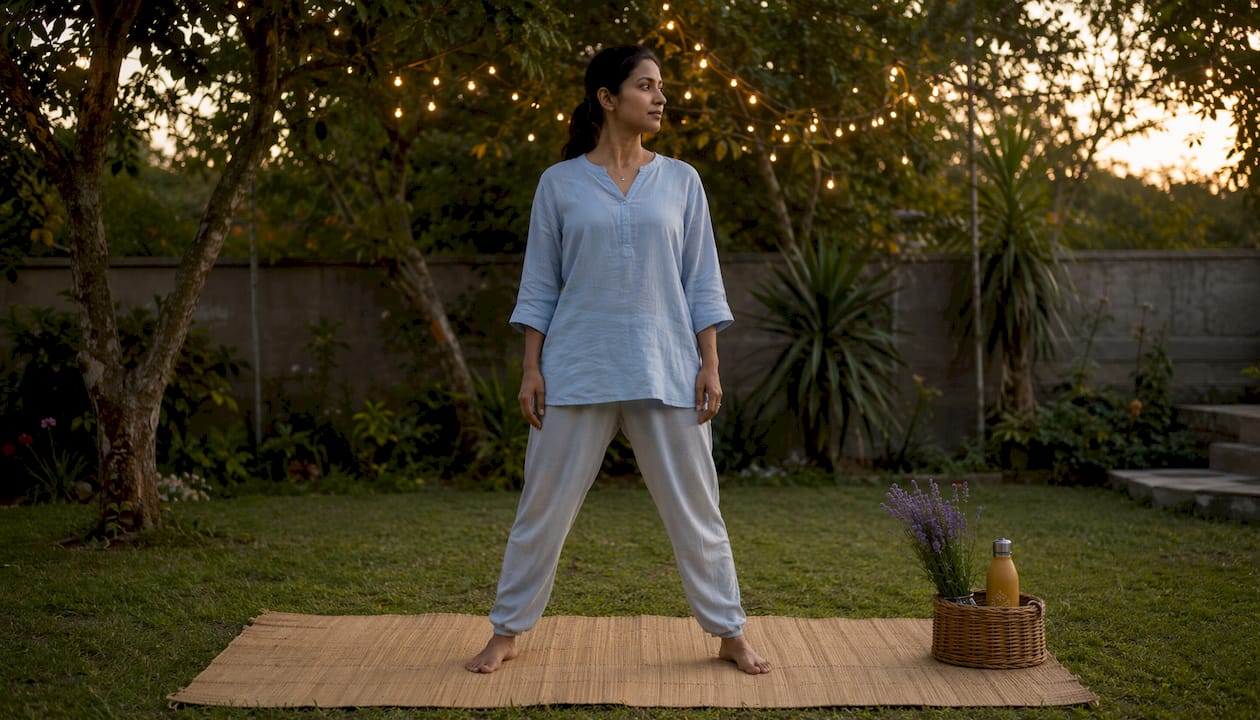
2. Opening Qi (minutes 2–4)
Slowly raise both arms forward to shoulder height as you inhale, palms facing down. Lower them back to your sides as you exhale. One full cycle should take a few seconds. Repeat the movement continuously for about two minutes. Keep the motion continuous and unhurried. This movement opens the lung and heart meridians and teaches your breath to follow your body.
3. Cloud Hands (minutes 4–7)
Shift your weight onto your right leg as you turn your torso slightly right. Raise your right hand to eye level, palm facing you, while your left hand floats at waist level, palm facing up. Slowly shift your weight left, letting your hands swap positions like clouds drifting past each other. Continue the slow, flowing movement for several minutes, focusing on smooth transitions and breath coordination. Keep everything slower than feels natural. Cloud Hands is among the most studied Qigong movements in Western research, linked to meaningful balance improvements in older adults.
4. Gathering Qi (minutes 7–10)
Stand still again, feet shoulder-width apart. Slowly raise both arms out to the sides, palms up, until they meet above your head. Turn palms down and lower them in front of your body, past your face, your chest, and down to your lower abdomen. This area is the dantian, the energy center Taoists call the body's battery. Rest your palms gently there for one final minute of stillness.
What beginners typically notice over time:
- Week 1: Shoulders drop, jaw softens, breath deepens without effort
- Weeks 2–3: Sleep improves, morning anxiety eases
- Week 4: Balance sharpens, lower back tension fades
- Weeks 6–8: Resting heart rate and blood pressure measurably lower
- Week 12+: A sense of internal calm that persists outside practice
Who should practice Qigong with caution or consult a doctor first?
Qigong is safe for most people and adaptable for nearly every fitness level. That said, certain conditions call for a conversation with your healthcare provider before you begin. This is not a reason to delay indefinitely. It is simply good sense to practice with awareness of your body's current state.
Chair-based Qigong is a genuine option for anyone who cannot stand for extended periods. The breath and intention work remain fully intact even when the movement is modified. People managing pain alongside their practice may also find guidance from resources like gentle strength training for chronic pain useful as a complement to their Qigong routine.
Consult your doctor before starting if you have:
- A recent surgery or acute injury, particularly to joints or the spine
- Severe osteoporosis or significant balance impairment
- Uncontrolled high blood pressure or a recent cardiac event
- Active cancer treatment (Qigong may be appropriate but needs medical clearance)
- Severe anxiety disorders or psychosis (some meditative practices require supervision)
- Pregnancy, particularly in the first trimester, where certain movements need modification
- Any chronic illness where new physical activity requires medical guidance
Getting started: which type of Qigong is right for you?
Qigong divides broadly into three categories, and knowing which one you are drawn to helps you find the right program from the start.
Health Qigong focuses on physical wellness, improving strength, flexibility, balance, and organ function through structured movement sequences. The Eight Pieces of Brocade (Ba Duan Jin) is one of the most widely taught Health Qigong systems and an excellent starting point for absolute beginners. Five Animal Qigong, also known as Wu Qin Xi, is another beginner-friendly system with deep historical roots, using movements inspired by the tiger, deer, bear, monkey, and crane to work different organ systems.
Medical Qigong targets specific conditions and is best pursued with a trained practitioner rather than independently, at least initially.
Spiritual Qigong emphasizes Taoist cultivation and meditation, often building on a foundation of Health Qigong practice.
For most beginners, Health Qigong is the natural entry point. White Tiger Qigong is a certified system that bridges Health and Spiritual Qigong, offering structured programs with instructor certification through the White Tiger Qigong School and Yoga Alliance. These credentials matter because Qigong is unregulated in the United States with no national licensing standard, meaning anyone can call themselves a Qigong teacher. Certification from a recognized body is one of the clearest signals of genuine training.
When evaluating any program or instructor, ask:
- What style or system do they teach, and what is its lineage?
- How long have they been practicing and teaching?
- Do they hold certification from a recognized organization such as the White Tiger Qigong School, Yoga Alliance, or the National Qigong Association?
- Do they have experience working with beginners or people with your specific health concerns?
- Is the program structured for gradual progression, or does it assume prior knowledge?
How to build a Qigong practice at home that actually sticks
The most effective home practice starts before the first movement. Simple joint rotations through the neck, shoulders, hips, and knees signal the nervous system to shift into rest-and-digest mode, making the Qigong movements that follow far more effective. Beginners who skip the warm-up often find their mind stays busy and their body stays tense throughout the session. Two minutes of gentle rotation changes that completely.
Your environment shapes your practice more than you might expect. A consistent spot in your home, even a corner of a bedroom, becomes associated with calm over time. Natural light helps. Silence or soft ambient sound works better than music with lyrics. Keep the space clear enough to extend both arms without obstruction.
Pro Tip: Beginners often rush toward learning complex sequences, assuming the warm-up is just preparation. The warm-up is the practice. The joint rotations and the first minutes of stillness are where the nervous system shift actually happens. Treat them with the same attention you give the main movements.
Progression from physical form to meditative awareness happens naturally with consistency. In the first two weeks, your attention will be mostly on the movements themselves. By week four, breath and body start to synchronize without effort. By week eight, the meditative quality arrives on its own. You do not need to force it. Patience and regularity are the only tools required.
Practical home practice tips:
- Set a fixed time and treat it like an appointment you keep with yourself
- Begin with the four foundational movements before adding new sequences
- Keep a simple journal noting how you feel before and after each session
- Use on-demand Qigong resources to maintain consistency when life disrupts your schedule
- Women may find that pairing Qigong with other daily rituals for hormonal health deepens the overall benefit
Common mistakes beginners make and how to avoid them
Moving too fast is the single most common error. Slow is not a preparation for Qigong. Slow is the practice itself. If your movements feel slow to you, slow down further. The goal is the unhurried flow of honey off a spoon, not the brisk pace of a morning walk.
Holding the breath is the second pitfall. New practitioners often unconsciously freeze their breath when concentrating on a movement. The breath should stay natural, through the nose, slightly deeper than resting. If you notice you have been holding it, a gentle smile reflexively resumes normal breathing. This is a genuine technique, not a metaphor.
Feeling awkward early on is completely normal. The goal in the first weeks is body awareness and breath-movement connection, not perfect form. Chasing perfect form too early creates the muscular tension that Qigong is specifically designed to release.
Other mistakes worth knowing:
- Skipping the warm-up: Joint rotations are not optional. They prime the nervous system for everything that follows.
- Practicing inconsistently: Three sessions one week and none the next produces almost no cumulative benefit. Daily short practice beats sporadic long sessions every time.
- Confusing relaxation with collapse: True Qigong posture is relaxed structure, not slumping. The spine lifts gently while the muscles release.
- Comparing progress to others: Qigong is an internal practice. What you feel matters far more than what you look like doing it.
- Stopping too soon: Most beginners feel something shift around week three. Many quit in week two.
Tips for building a regular Qigong practice routine
Consistency is the single factor that separates people who feel Qigong's benefits from those who do not. Ten minutes every day for eight weeks produces measurable physiological change. Ten minutes once a week for eight weeks produces almost none. The nervous system learns through repetition, and repetition requires a routine.
Anchor your practice to an existing habit. Morning tea, waking up, or the transition from work to home are all natural anchors. Attaching Qigong to something you already do reliably removes the decision-making that causes most people to skip. A daily stress reduction practice built around Qigong works best when it feels automatic rather than effortful.
Set realistic early goals. For the first month, the goal is simply to show up. Not to feel transformed, not to master the movements, just to practice. Progress in Qigong is cumulative and often invisible until it suddenly becomes obvious, usually around week four or five when someone comments that you seem calmer or you notice you slept through the night without waking.
A few practical strategies that help:
- Start with five minutes if ten feels like too much. Five minutes done daily beats ten minutes done occasionally.
- Track your practice on a simple calendar. Seeing a streak of consecutive days is genuinely motivating.
- Find a practice partner or community, even online, for accountability and encouragement.
- Revisit the same four foundational movements for at least the first month before adding new forms.
- Give yourself permission to have a rough session. A distracted ten minutes still counts.
How to find and evaluate quality Qigong instruction
Because Qigong is unregulated in the United States with no national certification standard, the quality of instruction varies widely. A thoughtful evaluation process protects you from wasting time on poorly structured programs and, more importantly, from learning habits that are hard to unlearn.
In-person classes offer real-time correction and the social energy of a group, both of which accelerate learning. Medical expert Dr. Lin of Cleveland Clinic notes that beginners can also learn effectively through consistent use of reputable online videos, which makes Qigong genuinely accessible regardless of where you live. The key word is reputable. Free videos vary enormously in quality, and a poorly cued movement practiced daily becomes a deeply ingrained bad habit.
When evaluating online courses or apps, look for:
- Clear instructor credentials and named certification bodies (White Tiger Qigong School, Yoga Alliance, National Qigong Association)
- Structured progression from foundational to more advanced movements
- Explicit attention to breath coordination and posture alignment, not just movement choreography
- A beginner-specific track rather than a general library where you must figure out where to start
- Transparent instructor background, including how long they have been practicing and teaching
For video-based learning, online Qigong classes from certified instructors offer the structure of a course with the flexibility of on-demand access. This format works particularly well for beginners who want guided progression without committing to a fixed class schedule. If you are ready to start Qigong practice at home, a structured course from a certified instructor is the most reliable path to building correct habits from the beginning.
Qigongstar offers a gentle, certified path into Qigong practice
If you have read this far, you are ready to practice. The question now is where to find instruction you can genuinely trust.
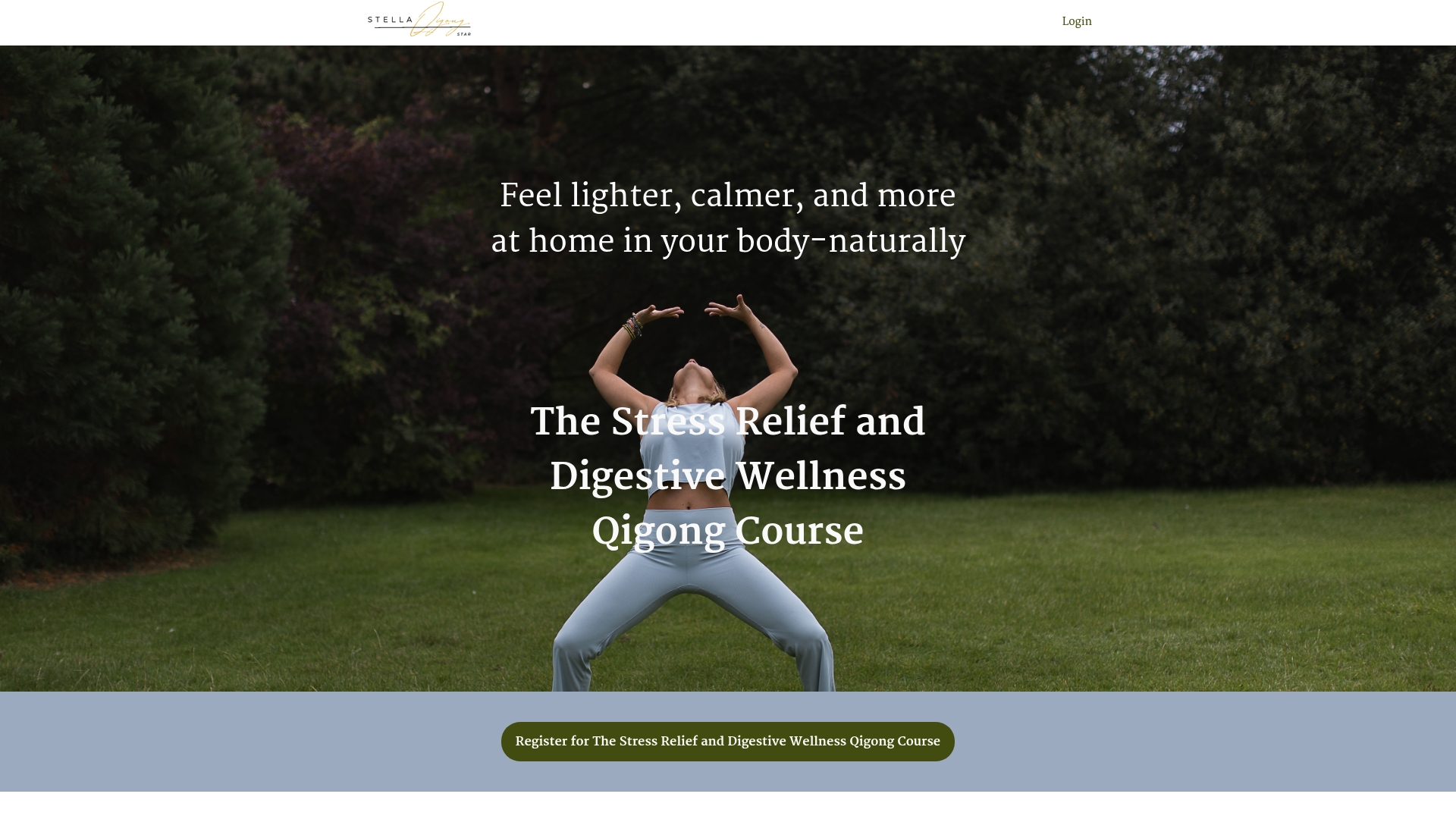
Qigongstar offers certified online courses in White Tiger Qigong and Five Animal Qigong, two of the most historically grounded and beginner-friendly systems available. The instructor holds certification through the White Tiger Qigong School and Yoga Alliance, bringing both professional standards and lived experience to every course. Unlike a general video library where you are left to piece together your own path, Qigongstar's courses are structured for gradual, confident progression from your very first session.
The focus is on stress relief, digestive wellness, and energetic balance, making these courses particularly well suited to anyone managing anxiety, gut-related discomfort, or the kind of chronic tension that accumulates quietly over years. Live classes and on-demand options mean you can practice on your schedule, from wherever you are. Browse the online Qigong courses and choose the program that fits where you are right now.
Key Takeaways
Daily Qigong practice of ten minutes produces measurable improvements in anxiety, sleep, and blood pressure within 8 to 12 weeks when practiced consistently.
| Point | Details |
|---|---|
| Start with ten minutes daily | A 2022 meta-analysis of 22 randomized controlled trials found consistent benefits from daily Qigong sessions practiced for ten minutes within 8 to 12 weeks of regular practice. |
| Consistency over duration | Short daily sessions retrain the nervous system more effectively than long, infrequent practice. |
| Warm-up is the practice | Joint rotations through the neck, shoulders, hips, and knees prime the nervous system before any Qigong movement begins. |
| Verify instructor credentials | Qigong is unregulated in the US; look for certification from bodies like the White Tiger Qigong School or Yoga Alliance. |
| Qigongstar for beginners | Qigongstar offers certified White Tiger Qigong and Five Animal Qigong courses structured for gradual, confident beginner progression. |