

Qigong is defined as a traditional Chinese Medicine practice that heals the body by coordinating breath, movement, and focused awareness to activate the body's natural repair systems. Known formally as qìgōng (气功), it works by shifting your nervous system, moving vital fluids, and reducing chronic inflammation through gentle, intentional motion. Unlike exercise that demands muscular effort, qigong heals through subtlety. Research shows that consistent practice of 30–40 minutes daily over 6–8 weeks produces measurable healing benefits. Qigongstar teaches these principles through structured online courses rooted in White Tiger Qigong and Five Animal Qigong, making this ancient medicine accessible to anyone ready to feel better.
How qigong heals the body: the physiological mechanisms
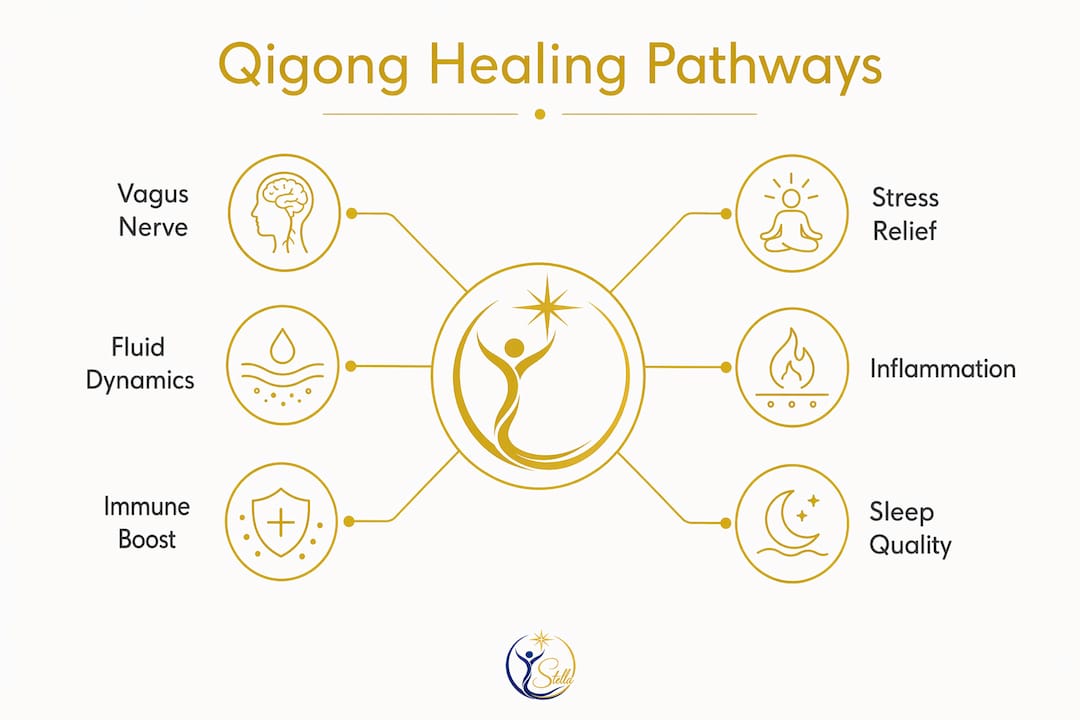
Qigong heals the body through at least eight distinct biological pathways, not through mysticism or vague energy concepts. Each pathway maps to a measurable physiological process. Understanding these mechanisms helps you practice with intention rather than guesswork.
The most significant pathway is vagus nerve activation. When you breathe slowly and move gently, your vagus nerve signals the body to shift from fight-or-flight into rest-and-repair mode. This parasympathetic shift lowers cortisol, slows heart rate, and creates the internal conditions your body needs to heal tissue and regulate immune function.

A second, often overlooked mechanism is epigenetic modulation. Qigong down-regulates the NF-kB pathway, a master switch for chronic inflammation. This means regular practice can quiet inflammatory gene expression at the cellular level. That is not a metaphor. It is measurable molecular biology.
Three more mechanisms work together to nourish your tissues:
- Microcirculation enhancement: Gentle rhythmic movement triggers nitric oxide release in blood vessel walls, widening capillaries and improving nutrient delivery to cells.
- Lymphatic pumping: The lymphatic system has no internal pump. Qigong's rhythmic compression and decompression of tissues moves stagnant waste fluid that would otherwise contribute to tissue degradation.
- Neurological remodeling: Regular practice improves connectivity between brain regions involved in emotional regulation, body awareness, and pain processing.
"Qigong practice can be a nervous system firmware update, switching the default stress response from fight-or-flight to rest-and-repair. This shift is not temporary. With consistent practice, it becomes your new baseline."
Regular practice also raises natural killer cell activity, strengthening immune surveillance. The body's capacity to recognize and clear damaged or abnormal cells improves with consistent qigong practice over 12 weeks. That is a meaningful immune benefit from a practice that asks nothing more than calm, mindful movement.
How does qigong affect the nervous system and stress response?
Qigong regulates the autonomic nervous system more directly than almost any other movement practice. The key is breath. Slow abdominal breathing activates baroreceptors in your chest and neck, which signal the brain to reduce sympathetic arousal. The result is a measurable drop in stress hormones and a calmer, clearer mind.
The speed of this effect surprises most people. Sessions as short as 90 seconds to 3 minutes can produce immediate improvements in vagal tone and sympathetic regulation. You do not need an hour on a mat to feel the shift. A few minutes of abdominal resonance breathing before a stressful meeting can reset your nervous system in real time.
Over weeks, the benefits compound. Studies show that heart rate variability increases by 31% and cortisol decreases by 23% after four weeks of consistent qigong practice. Higher heart rate variability means your nervous system responds flexibly to stress rather than locking into a rigid, reactive state. That flexibility is the foundation of emotional balance and mental clarity.
Pro Tip: Practice abdominal resonance breathing for two minutes before any known stress trigger, such as a difficult conversation or a busy commute. This short "nervous system update" primes your body to respond calmly rather than react automatically.
Qigong also improves sleep quality by reducing the background hum of physiological arousal that keeps many people awake. When cortisol drops and vagal tone rises, the body finds it easier to transition into deep, restorative sleep. For people managing anxiety, this nervous system regulation is often the most life-changing benefit they notice first. Qigongstar's approach to stress resilience with qigong builds on exactly these principles.
What role do fluid dynamics play in qigong's healing effects?
The body's healing depends on fluid movement, and most people never think about it. Your blood has a heart to pump it. Your lymphatic system, interstitial fluid, and synovial fluid have no dedicated pump at all. They rely entirely on movement and gravity to circulate.
Qigong fills that gap. Its gentle, rhythmic movements compress and decompress tissues in a wave-like pattern. This moves interstitial, synovial, and lymphatic fluids simultaneously, nourishing organs, joints, and tissues through a mechanism that most conventional exercise ignores entirely.
| Fluid system | What it does | How qigong helps |
|---|---|---|
| Lymphatic fluid | Clears immune waste and toxins | Rhythmic movement pumps fluid through lymph nodes |
| Interstitial fluid | Bathes and nourishes cells | Gentle compression moves nutrients to cell surfaces |
| Synovial fluid | Lubricates and cushions joints | Slow articulation distributes fluid across joint surfaces |
The practical benefits show up in joint health, tissue regeneration, and immune function. Stagnant lymphatic fluid contributes to chronic fatigue, swelling, and poor immune response. When qigong gets that fluid moving, you often feel lighter and less inflamed within days.
Key benefits of improved fluid dynamics through qigong practice include:
- Reduced joint stiffness and improved range of motion
- Faster clearance of metabolic waste from muscles and connective tissue
- Better nutrient delivery to cartilage, which has no direct blood supply
- Improved immune response through active lymphatic circulation
- Reduced tissue swelling and chronic low-grade inflammation
This is why qigong works so well for people with digestive issues, joint pain, and chronic fatigue. The biomechanical fluid movement it creates is fundamental to its healing effects, yet it remains largely unrecognized outside of Chinese Medicine and integrative health circles.
How to practice qigong effectively to maximize healing benefits
Effective qigong practice is not about effort. It is about coordination. The moment you start muscling through movements, you lose the nervous system benefits that make qigong heal. Healing happens when your body feels safe, not strained.
30–40 minutes of daily practice over 6–8 weeks produces consistent, measurable healing outcomes. That timeframe allows your nervous system to recalibrate, your fluid systems to establish new circulation patterns, and your inflammatory markers to shift. Shorter sessions still help, but the deeper healing requires that sustained commitment.
Here is a practical framework for building an effective practice:
- Start with Zhan Zhuang (standing meditation). Hold a relaxed standing posture for 5–10 minutes. This trains body awareness and calms the nervous system before movement begins.
- Add Baduanjin (Eight Brocades). This beginner-friendly form uses eight flowing movements to open the joints, stimulate fluid circulation, and regulate breath. It is one of the most studied qigong forms in clinical research.
- Coordinate breath with every movement. Inhale as you open or expand. Exhale as you close or compress. This breath-movement pairing is what activates the vagal response and makes qigong therapeutic rather than just physical.
- Move slowly and without tension. If you feel muscular effort, slow down. Healing occurs through effortless motion, not exertion. Think of guiding your body rather than driving it.
- Practice at the same time each day. Consistency trains your nervous system to expect and enter the rest-and-repair state at that time. Morning practice sets a calm tone for the day. Evening practice supports sleep.
Pro Tip: If you only have five minutes, spend them entirely on slow abdominal breathing in a relaxed standing or seated posture. Even this brief practice activates vagal tone and begins the shift toward rest-and-repair.
Qigong prioritizes intentional breath coordination and autonomic nervous system regulation over postural or muscular focus. This distinguishes it from yoga and makes it particularly effective for people who are exhausted, in pain, or managing chronic illness. You can explore Five Animal Qigong as a structured form that builds on these principles with guided movement sequences rooted in Chinese Medicine. For a broader view of how qigong compares to other mind-body practices, the 2026 healing modalities guide offers useful context.
Key Takeaways
Qigong heals the body by activating the vagus nerve, moving vital fluids, and reducing chronic inflammation through gentle, coordinated breath and movement practiced consistently over time.
| Point | Details |
|---|---|
| Nervous system regulation | Qigong shifts the body from fight-or-flight to rest-and-repair, lowering cortisol and improving heart rate variability. |
| Fluid circulation | Rhythmic movements pump lymphatic, interstitial, and synovial fluids to nourish tissues and clear metabolic waste. |
| Inflammation reduction | Qigong down-regulates the NF-kB inflammatory pathway, producing measurable changes in gene expression. |
| Practice duration | 30–40 minutes daily over 6–8 weeks produces consistent, clinically observed healing benefits. |
| Effortless movement | Healing requires gentle, intentional motion coordinated with breath, not muscular exertion or physical intensity. |
What I have learned about qigong's quiet power
Most people come to qigong looking for a workout and leave finding something far more useful: a way to feel safe in their own body again. That shift is subtle, and it is real.
What I have observed, both in my own practice and in working with students, is that the nervous system change comes first. Before the joints feel better, before digestion improves, before sleep deepens, there is a quieting. A sense that the body has stopped bracing. That is the vagal shift happening, and it is the foundation everything else builds on.
The most common beginner mistake is treating qigong like exercise. People push through movements, hold tension in their shoulders, and wonder why they do not feel different. The practice only opens when you stop trying to make it work. Effortless motion is not a poetic idea. It is the actual mechanism.
Qigong also works beautifully alongside medical care. Practicing as a supportive adjunct to acupuncture, nutrition, or sleep hygiene lowers physiological reactivity and makes the body more receptive to other healing inputs. It does not replace medicine. It prepares the body to receive it.
Trust the process. The healing is happening even when you cannot feel it yet.
— Stella
Structured qigong courses with Qigongstar
Knowing the science is one thing. Building a practice that actually sticks is another.
Qigongstar offers online qigong courses designed for people who want real results without needing prior experience. Courses in White Tiger Qigong and Five Animal Qigong guide you through the breath coordination, fluid movement, and nervous system regulation techniques covered in this article. Classes are available on demand, so you practice at your own pace and on your own schedule. Whether your focus is stress relief and digestive wellness or building a daily healing routine, Qigongstar's structured, beginner-friendly format gives you the guidance to practice with confidence from day one.
FAQ
What is qigong therapy?
Qigong therapy is the therapeutic application of coordinated breath, gentle movement, and focused awareness to support physical healing, nervous system regulation, and mental clarity. It is rooted in Chinese Medicine and used as both a standalone practice and a complement to conventional care.
How long does qigong take to heal the body?
Consistent healing benefits typically appear after 6–8 weeks of daily practice lasting 30–40 minutes. Nervous system effects, such as reduced stress and improved calm, can be felt within a single session as short as three minutes.
Is qigong effective for stress relief?
Qigong is highly effective for stress relief. Studies show it increases heart rate variability by 31% and reduces cortisol by 23% after four weeks of consistent practice, producing measurable reductions in anxiety and physiological stress.
How does qigong improve immune health?
Regular qigong practice raises natural killer cell activity over 12 weeks, strengthening the body's ability to identify and clear damaged cells. Lymphatic pumping from rhythmic movement also supports immune waste clearance throughout the body.
Can beginners practice qigong for healing?
Beginners can practice qigong for healing from the very first session. Forms like Baduanjin and Zhan Zhuang require no prior experience, and even short sessions of slow abdominal breathing produce immediate nervous system benefits.