
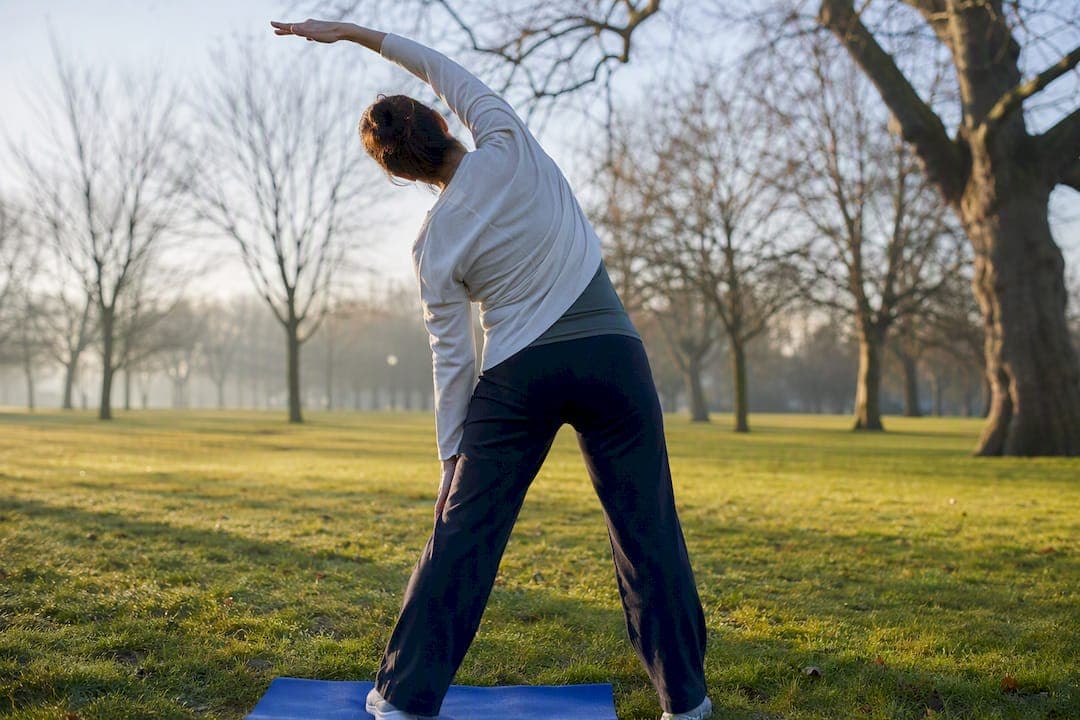
Yes, Qigong improves flexibility when you practice it consistently. It works by pairing slow, low-load movement with steady breath, which softens the guarding your muscles do when they feel tight or unsafe and gradually opens up your range of motion. The simplest way to start is a 3 to 10 minute daily micro-session, not a long, ambitious routine you will abandon by Friday.
TL;DR:
- Significant flexibility improvements can be achieved in 8 weeks through consistent Qigong practice, especially for sedentary or beginner individuals.
- Gentle, repetitive movements combined with longer exhalations calm the nervous system, enabling muscles to lengthen without resistance.
- Simple moves like Cloud Hands, Owl Look, and Hold the Moon target key areas like the neck, shoulders, hips, and lower back, with modifications for joint issues.
- Short daily micro-sessions of 3 to 10 minutes are more effective than occasional longer practice sessions for lasting flexibility gains.
- Safety concerns are minimal but require adjustments for conditions like back pain, recent surgery, or severe osteoarthritis, and expert guidance enhances progress.
Table of Contents
- How Qigong Improves Flexibility: Movement, Breath, and the Nervous System
- Beginner-Friendly Qigong Moves That Target Flexibility
- A Sample Routine: From a Quick Reset to a Full Practice
- What the Research Actually Shows About Qigong and Flexibility
- Safety First: When to Modify or Pause Your Practice
- Choosing Your Learning Route: Solo Practice, Video, or Guided Class
- Stella's Perspective: What to Realistically Expect
- Ready to Build a Flexibility Practice That Sticks?
- Sources
How Qigong Improves Flexibility: Movement, Breath, and the Nervous System
Static stretching asks a muscle to hold still at its edge. Qigong asks it to move through that edge, slowly and repeatedly, which is a very different conversation with your body. Each gentle repetition tells your nervous system that a range of motion is safe to visit again, so your muscles stop bracing against it. That is the real mechanism behind flexibility gains from Qigong: not force, but repetition without threat.
Breath is the other half of the equation. Slower, longer exhales calm the sympathetic nervous system, the branch responsible for that protective tightening you feel when a stretch goes too far too fast. A systematic review of Qigong for stress management found consistent reductions in perceived stress across trials, and that calming effect is exactly what allows muscles to lengthen without resistance.
The clinical evidence backs this up in measurable terms. An 8-week Qigong program in sedentary women with type 2 diabetes produced significant gains in trunk flexibility and leg strength compared with a control group, alongside improved walking distance. A separate 8-week study in young sedentary females showed similar increases in back and leg strength, with trunk flexibility improving within the practice group.
It helps to separate two ideas that often get blended together. Flexibility is how far a tissue can lengthen. Mobility is how well you actually control a joint through that length. Qigong trains both at once, because every flowing movement asks your joints to move actively rather than passively, which is closer to how you use your body in daily life than a held stretch ever is.
Beginner-Friendly Qigong Moves That Target Flexibility
You do not need advanced postures to loosen a stiff neck, tight shoulders, or a stubborn lower back. These eight moves cover the areas that tend to lock up first from sitting, driving, or general life stress.
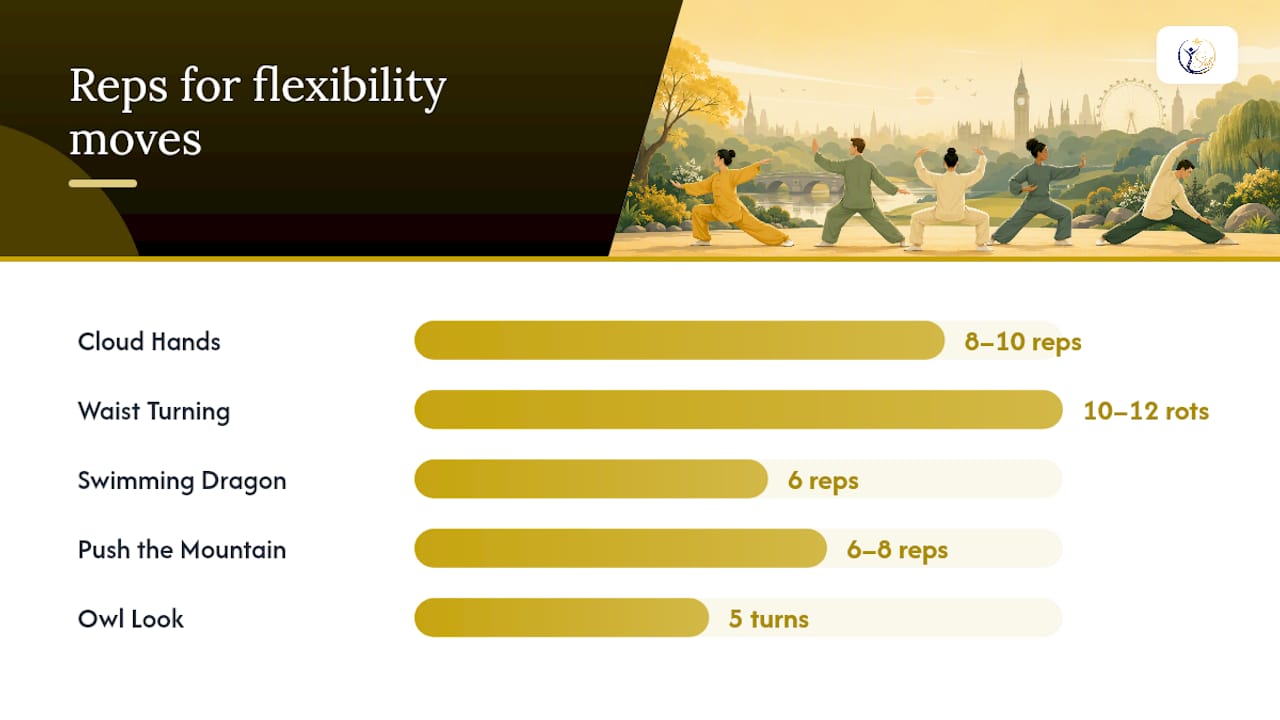
- Cloud Hands (shoulders and spine). Stand with knees soft, weight shifting side to side as your arms trace slow arcs at chest height. Inhale as one hand rises, exhale as it sinks. Repeat 8 to 10 times per side.
- Owl Look (neck). Turn your head gently side to side, following the breath, never forcing the end range. Five slow turns each direction is enough.
- Waist Turning with Arm Swing (spine and hips). Let your arms swing loosely as your torso rotates from the hips, feet planted. Do 10 to 12 rotations.
- Swimming Dragon (whole spine). A wave-like motion through the spine, knees bending as the movement flows upward. Start with 6 slow reps.
- Push the Mountain (shoulders and upper back). Extend both palms forward slowly on the exhale, then draw them back on the inhale. Six to eight reps.
- Hold the Moon (hamstrings and lower back). From a wide stance, sweep your arms in an arc while softening the knees, letting the hips settle back slightly. Avoid locking the knees straight.
- Bear Walking (hips and ankles). Weight shifts slowly from one leg to the other in a wide stance, mimicking a bear's rolling gait. Five shifts per side.
- Wild Goose Rises (hips and hamstrings). A gentle forward lean with soft knees and an active spine, rising back up on the inhale. Modify by keeping the lean shallow.
Two of these, Hold the Moon and Wild Goose Rises, are easy to adjust for hip or knee issues simply by shortening the range and keeping the knees generously bent.
Pro Tip: Lengthen your exhale slightly as you reach the edge of any movement. That small breath adjustment is often the single fastest way to stop your body from bracing and let a stretch actually deepen.
A Sample Routine: From a Quick Reset to a Full Practice
Consistency beats intensity here. A short daily habit will move your flexibility further than an occasional long session.
- The 3 to 10 minute micro-session. One minute of easy shoulder rolls and ankle circles to warm up, three to five minutes cycling through Cloud Hands, Owl Look, and Waist Turning, then one minute of standing stillness with slow, deep breathing to close.
- The 20 to 30 minute full practice. Warm up for five minutes, then work through all eight moves listed above at 8 to 12 reps each, moving at a tempo slow enough that your breath never feels rushed. Finish with two to three minutes of quiet standing or seated breathing.
- Progression over four to eight weeks. Keep the frequency daily or near daily, and let your range of motion grow on its own rather than forcing it. Add a minute or two to your session every week or two instead of pushing harder within the same session.
- Tracking progress. Skip a stopwatch on your range of motion. Notice instead whether bending to tie your shoes feels easier, whether your neck turns further when checking a blind spot, or whether a simple sit-and-reach feels less strained than it did two weeks ago.
What the Research Actually Shows About Qigong and Flexibility
Across the strongest available trials, women in 8-week Qigong programs showed statistically significant gains in trunk flexibility and leg strength compared with non-practicing control groups, along with improved antioxidant markers linked to reduced physical strain.
That finding comes from the type 2 diabetes women's trial mentioned earlier, and it lines up with the young sedentary females study, which also documented measurable strength gains after eight weeks of practice.
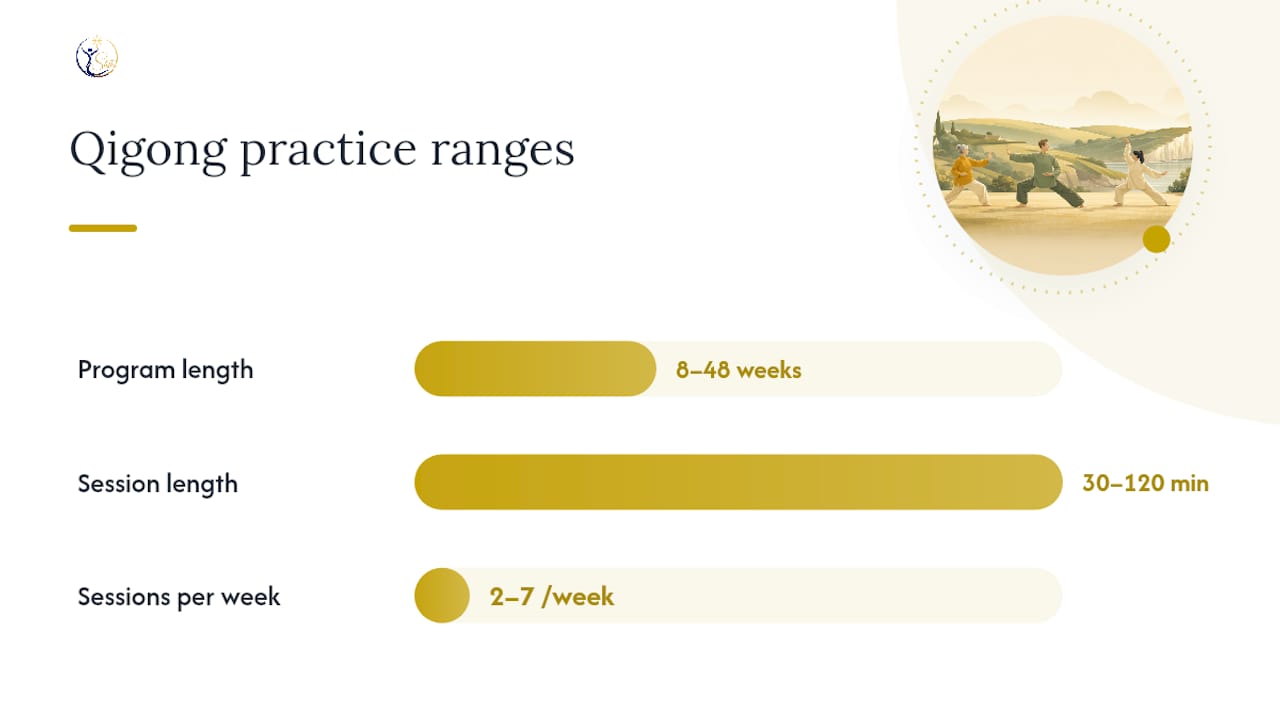
Broader systematic reviews combining Tai Chi and Qigong research confirm the pattern on balance and general physical function, though the evidence base is uneven; trial quality and program design vary a lot from study to study. The NCCIH notes that clinical Qigong programs have ranged anywhere from 8 to 48 weeks, with sessions of 30 to 120 minutes, two to seven times a week, which makes it hard to pin down one universal dose.
The honest takeaway is this: expect modest but genuinely meaningful improvements in daily-life range of motion, especially if you are sedentary, older, or new to movement practice. Qigong is not a substitute for urgent or acute medical care.
Safety First: When to Modify or Pause Your Practice
Mild muscle soreness after a new routine is normal and usually eases within a day or two of rest and gentle movement.
- If you have back pain, ease off deep forward bends and keep your spine more upright through the moves.
- After recent surgery or with severe osteoarthritis, practice seated versions and skip end-range loading entirely.
- Stop and check with a clinician if you feel sharp pain, notice swelling, or experience numbness or tingling that spreads down an arm or leg.
- When in doubt about a specific condition, review Qigongstar's contraindications guide before starting.
The Cleveland Clinic frames Qigong as a supportive practice for mobility and injury prevention that works alongside, not instead of, formal medical treatment.
Choosing Your Learning Route: Solo Practice, Video, or Guided Class
Before committing to a format, look for a few non-negotiables: a genuinely qualified instructor, a clear progression from simple to more demanding movements, explicit safety cues for each posture, and session lengths that fit your schedule.
- Free videos are convenient and fine for reinforcing moves you already know safely.
- They rarely correct your form, which matters most in your first few weeks.
- Live classes let an instructor catch bracing, forced range, or breath holding in real time.
- Daily micro-practice goals suit short guided sessions; recovery-focused goals benefit from closer instructor feedback, such as the sessions detailed in Qigongstar's beginner's guide.
A short trial class is usually the fastest way to tell which format actually fits your body and your week.
Stella's Perspective: What to Realistically Expect
Most beginners notice looser shoulders and an easier neck turn within two to four weeks, with bigger changes in hips and lower back closer to six to eight weeks of steady practice. The most common mistake I see is holding the breath while reaching for more range, which locks the exact tension you are trying to release. Slow down, exhale longer, and let the range come to you.
— Stella
Ready to Build a Flexibility Practice That Sticks?
Reading about Qigong moves is a fine start, but progress comes from guided repetition, not a list of instructions you try once and forget. Qigongstar's online courses and classes are built around exactly this kind of steady, beginner-first structure: short, progressive micro-sessions with breath cues built into every movement, plus modifications for stiff joints or previous injuries.
The Five Animal Qigong program in particular maps closely to the mobility goals covered in this guide, moving through postures that mirror the hip, spine, and shoulder work described above, taught by instructors certified through the White Tiger Qigong School and Yoga Alliance. If a short daily habit sounds more doable than a gym membership you will not use, start with a beginner class this week and feel the difference in your own range of motion within days, not months.
Sources
- Effects of qigong Training on Muscle Strengths, Flexibility, Cardiopulmonary Fitness, and Antioxidant/Oxidant Responses in Sedentary Middle-Aged and Elderly Type 2 Diabetes Mellitus Women
- Effects of Qigong exercise on muscle strengths and oxidative stress/antioxidant responses in young sedentary females: a quasi-experimental study
- Qigong: What You Need To Know | NCCIH
- What are the health benefits of Qigong? — Cleveland Clinic