
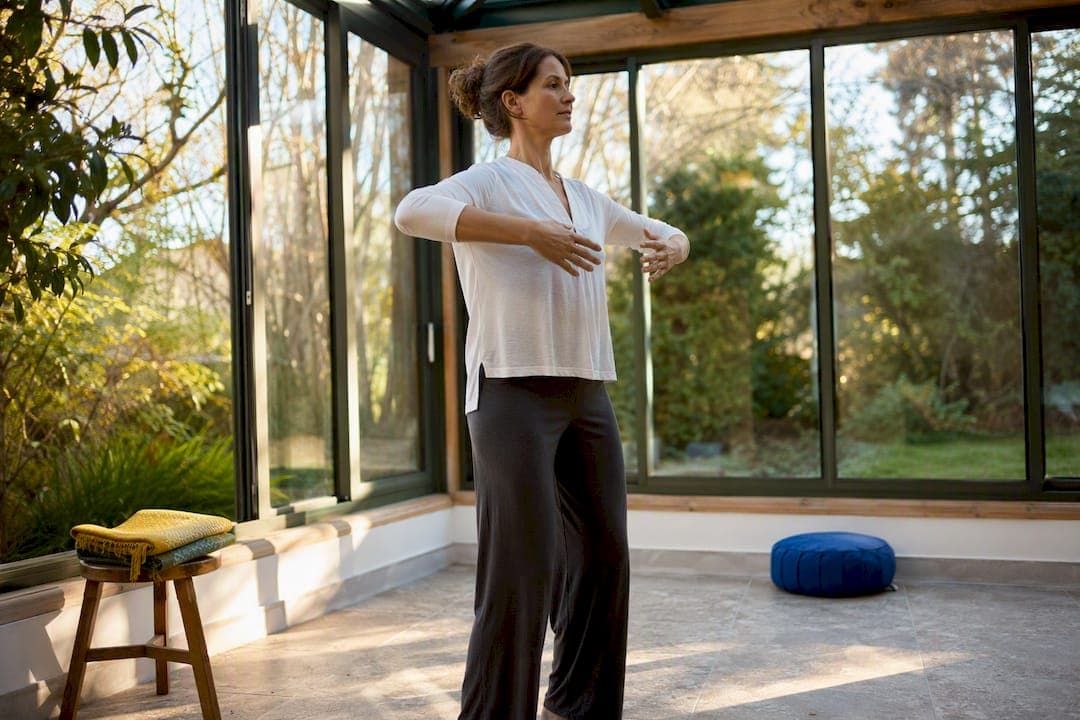
Yes, qigong can meaningfully improve shoulder mobility when you practice it gently and consistently. Start now with a short 3 to 5 minute set of slow arm swings and pendulum movements, breathing low and slow through the nose. If anything feels sharp, sudden, or unfamiliar in the joint, stop the movement and check in with a clinician before continuing.
TL;DR:
- Practicing gentle shoulder movements daily, like arm swings and circles, gradually increases mobility without forcing the joint beyond its comfort zone.
- Maintaining a neutral spine and slow, controlled breathing is crucial to prevent compensatory tension and improve scapular control.
- Red flags such as sharp pain, swelling, or weakness indicate it is time to pause and seek professional assessment before continuing.
- Consistency with a short routine and pairing it with supportive exercises, like rotator cuff strengthening, ensures sustained long-term improvement.
- Qigong's low-impact approach is accessible and safe for older adults or those with limited space, emphasizing gradual, symptom-guided mobility work over aggressive stretching.
Table of Contents
- A 5-Minute Qigong Routine for Shoulder Mobility
- Posture, Breath, and the "Soft Shoulders" Cue
- Warming Up Safely and Knowing When to Stop
- How Often to Practice and How to Measure Progress
- Meet Stella and How Her Courses Build on This Routine
- Combining Qigong With Physical Therapy and Rehab Work
- What the Research Says About Qigong and Shoulder Mobility
- Why "Soft Shoulders" Matters More Than Range
- Ready to Build on This With Guided Practice
- Sources
A 5-Minute Qigong Routine for Shoulder Mobility
You don't need a studio, a mat, or fifteen spare minutes to start loosening a stiff shoulder. You need about five minutes, a patch of floor, and a willingness to move slower than feels natural at first. This sequence follows a simple logic: warm the joint, wake up the shoulder blade, then open the front of the chest where most of us carry the day's tension.
Each move flows into the next, so treat it as one continuous practice rather than five separate exercises.
- Gentle arm swings. Stand with feet hip-width apart, knees soft. Let both arms hang and swing them forward and back like loose pendulums, inhaling as they rise, exhaling as they fall. Thirty to sixty seconds. This simply mobilizes the joint before you ask it to do anything precise.
- Shoulder circles. Raise the shoulders toward the ears on an inhale, roll them back and down on the exhale, tracing a slow circle. Six to eight circles each direction. This wakes up the scapula, the bone that so much shoulder mobility actually depends on.
- Cloud hands. Shift your weight side to side while your hands trace soft, overlapping arcs at chest height, palms slightly cupped. Continue for about a minute, breathing in on one arc and out on the next.
- Opening the chest. Reach both arms out to the sides and slightly back, palms turning upward, as you inhale and lift the chest. Exhale and let the arms float back to center. Repeat five to six times, letting the stretch feel like an invitation rather than a demand.
- Pendulum release. Fold forward slightly from the hips, letting one arm hang loose, and make small circles with the hand, letting the shoulder passively follow. Thirty seconds per side. Gravity does the work here, not muscle effort.
If standing bothers your balance or your lower back, do the entire sequence seated in a firm chair. Keep every movement inside a comfortable arc. Qigong's whole premise runs opposite to "no pain, no gain": gentle mobility exercises recommended for shoulder pain work precisely because they never force the joint past what it's ready for.
Pro Tip: Practice this sequence right after a warm shower or a short walk. Warm tissue tends to move more freely, which can help you notice an improved range of motion for the same amount of effort.
Posture, Breath, and the "Soft Shoulders" Cue
Most of the benefit in qigong for shoulder mobility comes from details smaller than the movements themselves. Get these right and even the simplest arm swing starts working the joint properly.
Begin every session by setting a neutral spine. Stand or sit tall through the crown of the head, let the chest lift naturally, but keep the lower ribs drawn gently down rather than flared forward. This one adjustment changes how the shoulder blade sits against the rib cage, which changes everything downstream.
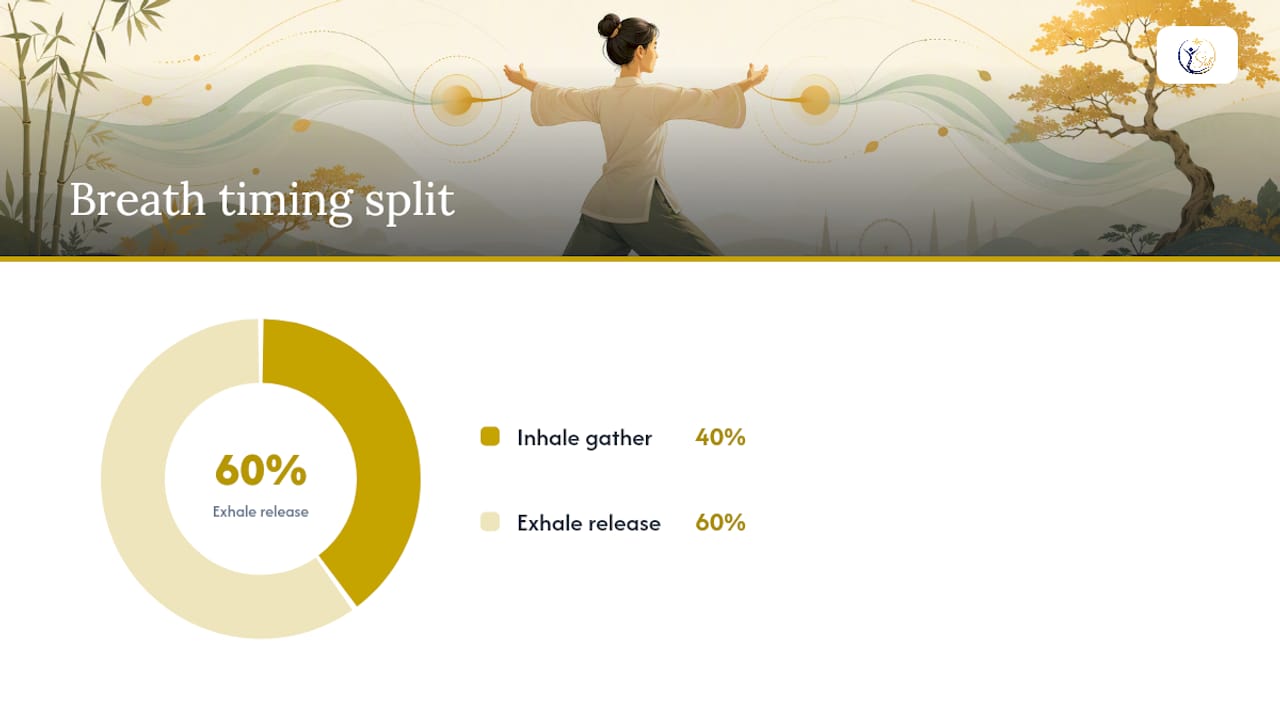
Breathe low and slow, inhaling for a count of four through the nose, exhaling for a count of six. Match the inhale to the "gathering" phase of a movement and the exhale to the "releasing" phase. This pairing isn't decorative. Slower exhales cue the nervous system to loosen the guarding that so often locks a shoulder in place, especially when stress rather than injury is the real culprit behind the tightness.
"Soft shoulders" means actively letting the upper traps, the muscles that run from neck to shoulder tip, stay quiet while the shoulder blade does the moving. Most people do the opposite without noticing.
Watch for these common mistakes:
- Shrugging on effort. If your ears creep toward your shoulders during a lift, drop them and slow down.
- Holding the breath. Breath-holding tightens the whole upper body; if you catch yourself doing it, exhale audibly and reset.
- Moving from the neck. The head should stay level and still while the arm moves independently.
- Rushing the arc. A fast swing recruits momentum instead of control, which defeats the point of the practice.
A useful cue borrowed from clinical shoulder care: deliberately let the shoulder blade "drop" on the inhale, then let the arm hinge from that dropped position on the exhale. It sounds subtle, but it's often the missing piece between practicing qigong and actually feeling looser afterward.
Warming Up Safely and Knowing When to Stop
Two to three minutes of light cardio, marching in place, or loose arm swings before your routine raises tissue temperature and makes the joint far more forgiving. Clinical guidance on shoulder impingement consistently backs this: warm, controlled movement is both safer and more effective than pushing a cold joint toward its end range.
Certain signals mean it's time to pause the routine and get assessed rather than push through:
- Sharp or stabbing pain, as opposed to a mild stretching sensation.
- Sudden weakness or a feeling the arm might give way.
- Noticeable swelling, redness, or warmth around the joint.
- Pain that wakes you at night or worsens while lying down.
If you're managing frozen shoulder, recovering from surgery, or living with a diagnosed rotator cuff tear, stay strictly within a pain-free range and follow your clinician's specific advice. NHS guidance on shoulder pain notes that many shoulder problems trace back to movement patterns and respond to gradual mobility work, but red flags like sudden weakness or severe night pain always warrant a proper assessment first.
How Often to Practice and How to Measure Progress
Consistency beats intensity here. Practice the 5-minute routine daily for the initial weeks while your shoulder adapts to regular, gentle movement. Once that feels comfortable, consider increasing the duration and frequency gradually, adding a slightly wider arc or a few extra repetitions without forcing new range too quickly.
- Add range only when the current range feels completely pain-free, never before.
- Once mobility improves, consider layering in light rotator-cuff and thoracic mobility work. Mobility alone helps range, but pairing it with rotator-cuff and scapular strengthening is what tends to secure the gains long term.
- Track three simple markers weekly: how high you can comfortably reach overhead, how far your hand travels behind your back, and whether daily tasks like fastening a bra or reaching a top shelf feel easier. A one-line pain diary catches setbacks early.
Meet Stella and How Her Courses Build on This Routine
This routine reflects the same principles Stella teaches as a certified instructor in White Tiger Qigong and Five Animal Qigong, delivered through both live and on-demand formats.
Within Qigongstar's course library, the gentle flow and breathwork modules extend the "soft shoulders" cue into fuller sequences, building the kind of scapular control and tendon resilience that a five-minute home routine can only begin. Five Animal Qigong in particular draws on movement patterns designed to restore joint fluidity gradually, without ever pushing past a comfortable range.
A structured course adds what a free routine can't: a clear progression path, correction of subtle habits like neck-driven movement, and the accountability of practicing alongside guidance rather than guesswork.
Combining Qigong With Physical Therapy and Rehab Work
Qigong and physical therapy solve different pieces of the same puzzle, and they work best together rather than as alternatives. A physical therapist typically targets a specific structure, a torn tendon, an impinged joint, a weak rotator cuff, with graded loading exercises. Qigong works at the level of whole-body coordination, breath, and the habitual bracing patterns that keep a shoulder guarded long after the original injury has healed.
Osteopathic and rehab professionals often describe qigong as a way to retrain coordination and interrupt "habitual moving," the unconscious compensations a body develops after pain, like shrugging instead of rotating a shoulder blade. That framing supports doing qigong alongside, not instead of, any exercises a therapist prescribes.
In practice, this might look like doing your therapist's rotator cuff strengthening exercises three times a week and layering in the qigong routine on the remaining days, or opening a therapy session with a few minutes of cloud hands and shoulder circles to prime the joint before loaded work. If you're recovering from surgery or managing a diagnosed injury, mention qigong to your physical therapist. Most will welcome a gentle mobility practice that respects the same pain-free range they're already asking you to stay within, and some will actively fold breath-paced movement into your existing plan.
What the Research Says About Qigong and Shoulder Mobility
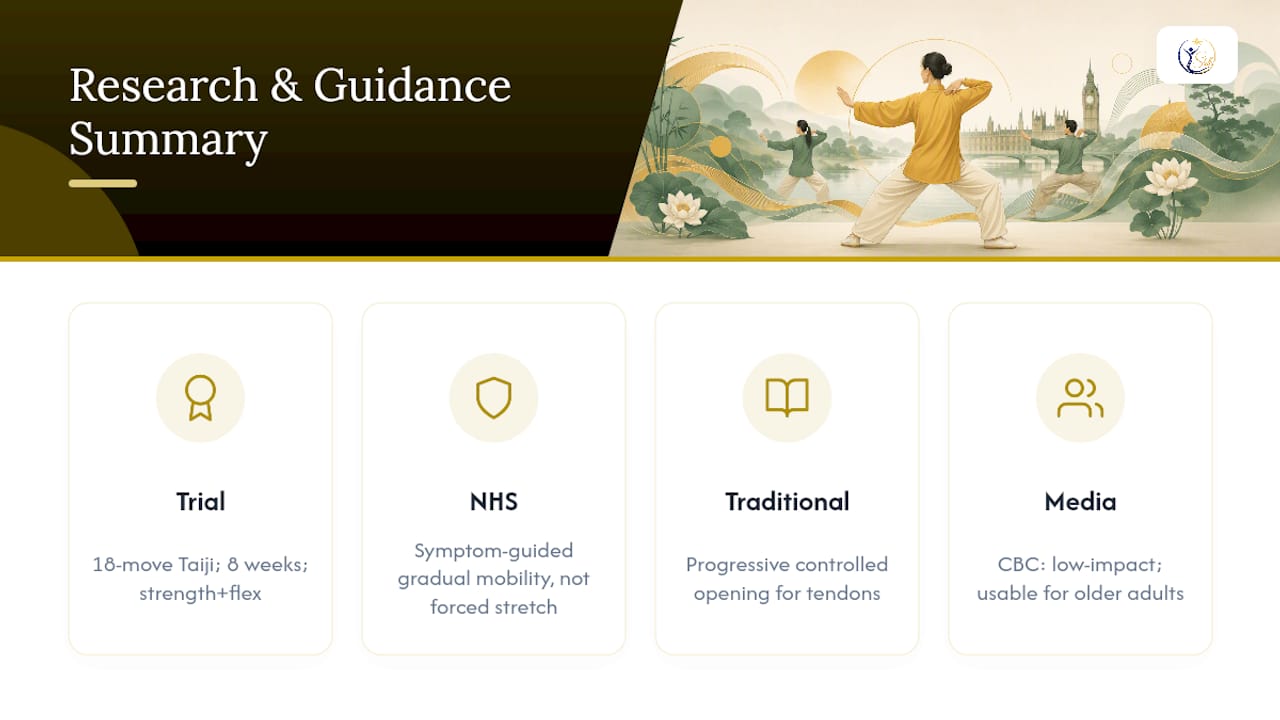
The strongest available evidence on qigong's physical effects comes from a controlled trial of an 18-movement Taiji Qigong protocol, which found statistically significant improvements in strength and trunk flexibility after eight weeks of daily practice in previously sedentary participants. That's a modest study, limited to a specific population and a specific protocol, but it's a genuine signal that regular practice changes measurable physical performance, not just how people feel.
Broader clinical guidance reinforces the mechanism rather than the specific numbers. NHS material on shoulder pain consistently frames improvement around gradual, symptom-guided mobility work rather than forced stretching, which is exactly the model qigong follows. Traditional systems like Yi Jin Jing, a qigong sequence historically used in Chinese medicine for tendon and fascial conditions, were built around this same principle centuries before clinical trials existed: progressive, controlled opening beats aggressive stretching for joint health.
Journalism covering qigong's rise in the West adds a practical note worth taking seriously. Coverage from CBC Life on qigong's accessibility highlights that its low-impact nature makes it genuinely usable for older adults and people with limited space, which matters more than any lab result if the practice needs to fit into an actual daily routine.
Why "Soft Shoulders" Matters More Than Range
The conventional advice on shoulder mobility treats range of motion as the whole goal, chase a bigger stretch, hold it longer, push a little further each week. That framing misses what actually limits most people: not tissue length, but a nervous system that's learned to guard the joint. You can stretch a shoulder for months and barely move the needle if the upper traps stay locked in a protective clench the entire time.
What this article's approach gets right is treating breath and scapular control as the primary lever, with range as the result rather than the target. That's backwards from how most fitness content frames shoulder work, and it's the reason a five-minute qigong routine can outperform a longer, more aggressive stretching session.
If you take one thing from this guide, prioritize the "soft shoulders" cue over adding movement. Get the traps to release, let the shoulder blade actually participate, and the range tends to follow on its own. Chase range first and you'll likely just be stretching around a guarded joint.
— Stella
Ready to Build on This With Guided Practice
A five-minute routine is a genuine starting point, but a shoulder that's been guarded for months or years usually benefits from more structured guidance than a blog post can offer. That's where Qigongstar's courses pick up where this article leaves off. Instead of piecing together cues from articles and videos, you get progressive sequences built specifically to restore joint fluidity and posture over weeks, not guesswork.
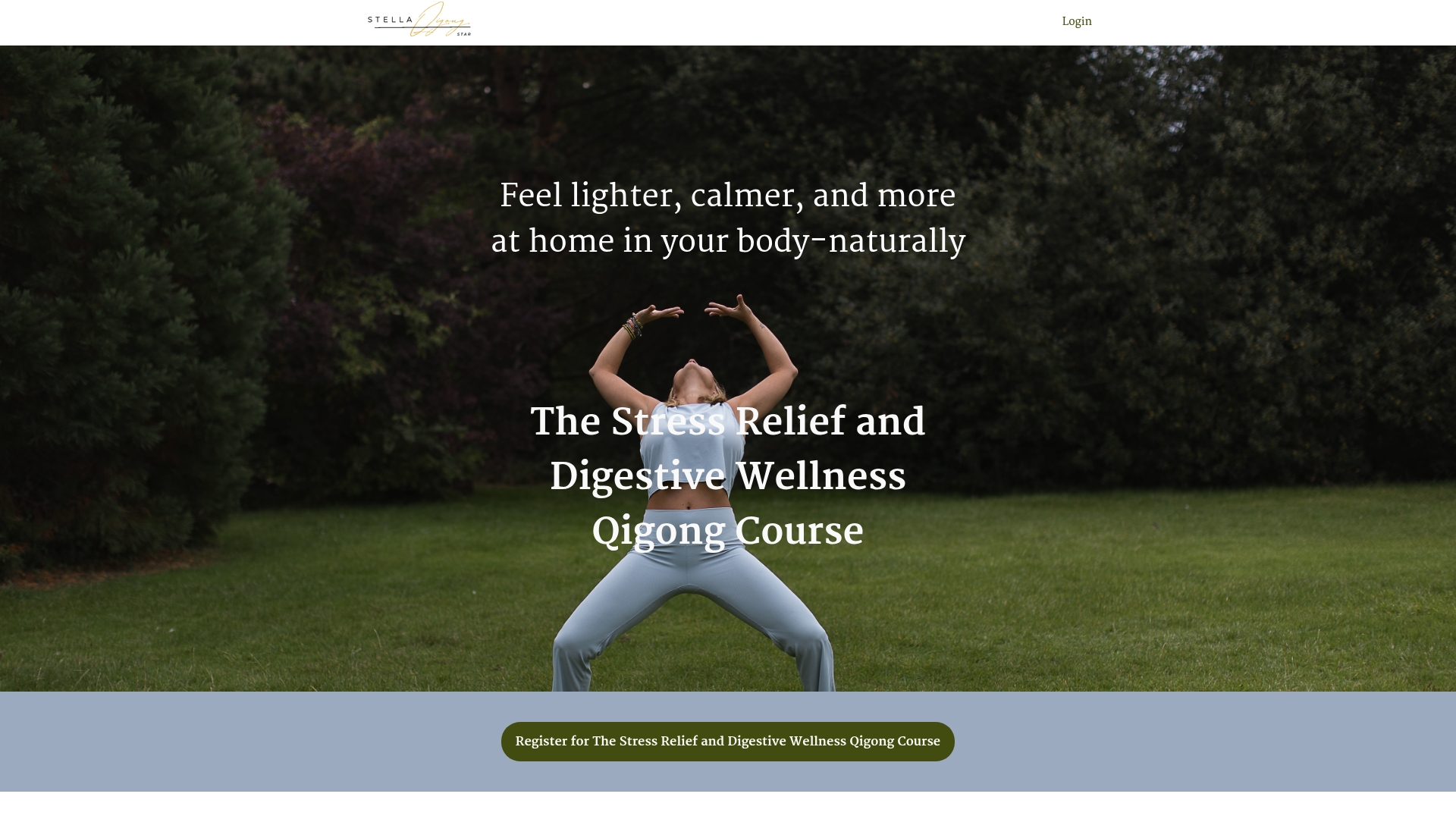
Five Animal Qigong is the natural next step if this routine felt good and you want a fuller, structured sequence built around the same gentle mobility principles. If you're drawn to deeper tendon and posture work, White Tiger Qigong extends those same ideas further. Both are taught by Stella, a certified instructor, through live and on-demand online classes, so you can start whenever your shoulder, and your schedule, are ready. If balance and safe pacing are a bigger concern for you than mobility alone, this balance training guide for older adults pairs well alongside your qigong practice. Browse the course library and pick the format that fits how you learn best.
Sources
- Effects of Qigong exercise on muscle strengths and oxidative stress/antioxidant responses in young sedentary females
- Qigong exercises to increase mobility and mindfulness | CBC Life