
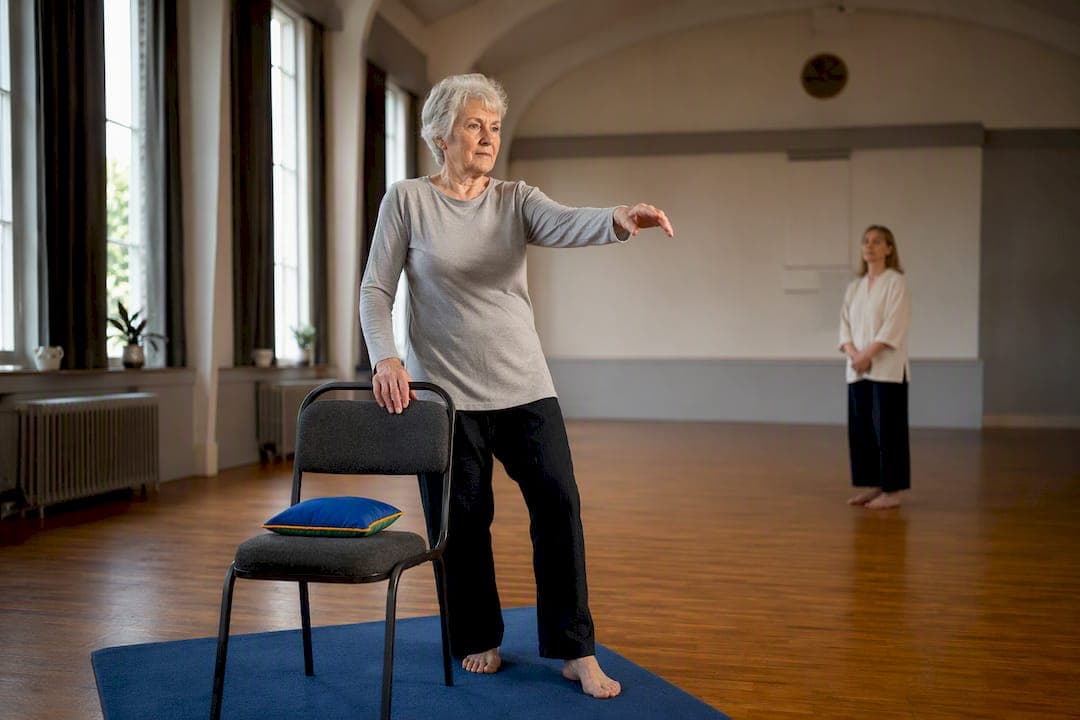
Qigong can genuinely calm many types of dizziness by retraining balance signals and softening the stress response that makes symptoms worse, but it works alongside a proper diagnosis, not instead of one. If dizziness strikes right now, sit or steady yourself against something solid, slow your breath, and avoid whipping your head around. Once you're settled, the standing routine below gives you a gentle starting point, or use the seated options if you feel unsteady on your feet.
TL;DR:
- A 12-week Qigong program can significantly improve stability, especially in people in their 60s and 70s, with an average increase of 11.9 points on balance scales.
- Slow movements that recalibrate the balance system should be practiced daily for five to ten minutes, with weekly longer sessions, and results typically appear after about 12 weeks.
- Immediate medical attention is necessary if symptoms include sudden weakness, severe headache, chest pain, or sudden hearing changes, and dangerous dizziness patterns must be professionally evaluated.
- Standing or seated routines should be adapted to individual stability, with clear guidance to prevent falls or injuries during practice, especially on days symptoms are severe.
- Qigong complements, but does not replace, medical treatment for vestibular conditions, which might require specific maneuvers such as the Epley maneuver for BPPV.
Table of Contents
- Why Qigong Helps With Dizziness and Balance
- What Are the Warning Signs You Shouldn't Ignore?
- A Simple Standing Qigong Routine You Can Try Today
- Seated Options and Breathing Techniques for Unsteady Days
- How Often Should You Practice Qigong for Dizziness Relief?
- Who's Behind This Guidance?
- Warming Up and Cooling Down Around Your Practice
- Where Qigong Fits in the Bigger Picture
- Ready to Practice With Guided Support?
- Sources
- FAQ
Why Qigong Helps With Dizziness and Balance
Your balance system relies on three things talking to each other: your inner ear, your eyes, and the proprioceptors in your joints and muscles that tell your brain where your body sits in space. Qigong's slow, deliberate movements give all three a chance to recalibrate together instead of fighting for control, which is the same principle behind formal vestibular therapy exercises used in clinics.
A 12-week Medical Qigong protocol raised participants' Community Balance and Mobility Scale scores by an average of 11.9 points overall, with people in their 60s and 70s seeing even bigger gains.
That's a meaningful shift in real-world stability, not just a lab number. Slow diaphragmatic breathing plays its own role too, calming the nervous system and easing the anxiety that so often piggybacks on dizzy spells. One caveat worth repeating: dizziness has many causes, and something like BPPV (benign paroxysmal positional vertigo) responds best to a specific repositioning maneuver, not general movement practice.
What Are the Warning Signs You Shouldn't Ignore?
Gentle movement is safe for most causes of dizziness, but a few symptoms mean you stop practicing and get help immediately. Sudden neurological changes are always a red flag for the emergency room, not a wait-and-see situation.
- Sudden weakness, numbness, or drooping on one side of the face or body
- Slurred speech, confusion, or trouble finding words
- Severe, sudden headache unlike any you've had before
- Chest pain, palpitations, or fainting
- Double vision or a sudden, severe change in hearing
Outside of an emergency, book a visit with your doctor, an ear, nose, and throat specialist, or a vestibular physiotherapist if dizziness keeps recurring, comes with hearing loss, or lingers for days. If you've been told you have BPPV, the Epley maneuver can bring fast relief, but it's a precise repositioning technique best learned from a clinician the first time. At home, always practice near a chair or wall, clear the floor space around you, and never push through a sensation that feels like the room is spinning hard.
A Simple Standing Qigong Routine You Can Try Today
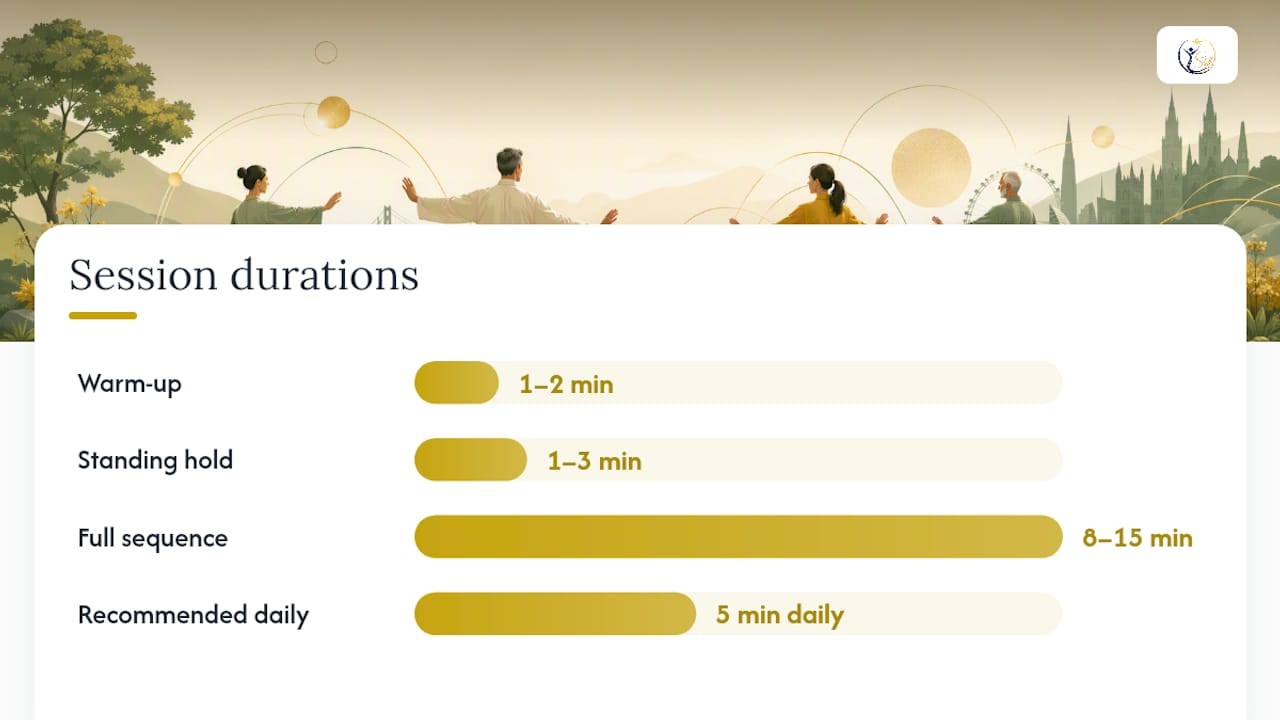
Before you begin, spend one to two minutes warming up: gentle ankle circles, a few hip loosening rotations, and slow grounding breaths to settle your nervous system. Keep a sturdy chair within arm's reach the whole time.
- Standing like a tree. Feet hip-width apart, knees soft, arms rounded as if hugging a large ball. Hold for one to three minutes, breathing slowly through your nose, and let your weight sink evenly through both feet.
- Pendulum weight shift. Slowly transfer your weight from one foot to the other, letting your hips sway gently side to side. Do five to ten slow repetitions, keeping your gaze fixed on a point ahead.
- Slow head turns with breath. Inhale, then exhale as you turn your head slowly to one side; inhale returning to center, exhale turning the other way. Four to six slow reps per side, and skip this move entirely if you have severe vertigo.
- Single-leg micro-lifts. With a chair nearby for support, lift one foot an inch off the floor and lightly tap your toes forward, then return. Three to five reps per side, staying low and controlled.
- Grounding close. Slowly sink your knees on the exhale and rise on the inhale, three to five times, then pause and notice how your body feels before opening your eyes fully.
One or two rounds of this sequence takes eight to fifteen minutes. Stop immediately if dizziness spikes rather than eases, and jot down how you felt afterward so you can track patterns over time.
Pro Tip: Practice this routine at the same time each day, like right after brushing your teeth. Balance training builds through consistency, not intensity, so five focused minutes daily beats one exhausting session on the weekend.
Seated Options and Breathing Techniques for Unsteady Days
Standing isn't always the right call, and that's fine. A seated practice still trains the same balance and calming pathways, just with your base fixed and secure.
- Seated grounding sequence: sit tall, feet flat, and slowly turn your head side to side in rhythm with long, slow breaths.
- Sound the heavenly drum: cup your palms lightly over your ears, place your fingers on the back of your skull, and gently tap with your index fingers eight to ten times. This traditional daoyin technique has long been paired with dizziness relief in classical qigong texts.
- Diaphragmatic breathing: inhale for three seconds through the nose, exhale slowly for six seconds through the mouth, repeating for two to three minutes to quiet nausea and anxiety.
- Progression: once seated practice feels calm and controlled for several sessions in a row, try the same movements standing with one hand resting on a chair back before attempting the routine unsupported.
How Often Should You Practice Qigong for Dizziness Relief?
Consistency matters more than duration when you're retraining balance.
- Practice five to ten minutes daily, plus two longer 20 to 30 minute sessions each week for deeper work.
- Expect gradual change over roughly 12 weeks, mirroring the timeline from the Medical Qigong balance study, with small check-ins every couple of weeks.
- Log your dizziness daily on a simple 0 to 10 scale alongside whether you practiced, so patterns become obvious.
- If your scores plateau or worsen after several weeks of consistent practice, that's your cue to loop in a specialist rather than pushing harder alone.
Who's Behind This Guidance?
This guidance comes from Stella, certified through the White Tiger Qigong School and registered with Yoga Alliance. Certification matters here because dizziness demands careful modification, not one-size-fits-all instruction. A trained teacher knows when to slow a movement, when to keep a student seated, and when to say "this needs a doctor, not a class." Sessions run as both live virtual classes and on-demand courses, with beginner-friendly progressions that build from seated stability toward standing balance work at your own pace.
Warming Up and Cooling Down Around Your Practice
Skipping the warm-up is where most people run into trouble, especially if dizziness is already part of the picture. A cold nervous system reacts more sharply to sudden movement, so the goal is to wake up your balance system gradually rather than jumping straight into standing holds.
Start every session with two to three minutes of easy joint mobility: slow neck rolls (skip these if head movement triggers symptoms), shoulder circles, and gentle ankle rotations while seated or holding a chair. Add ten slow breaths, in through the nose and out through the mouth, to bring your heart rate down before you move. This settles your inner ear and gives your eyes time to adjust to whatever lighting and visual field you're practicing in.
Cooling down deserves just as much attention. After your standing or seated sequence, spend two to three minutes in stillness, feet flat, hands resting on your thighs, breathing slowly and scanning your body for lingering tension or wobble. This isn't just a courtesy to your muscles. It gives your vestibular system a quiet moment to settle after the input it just received, which several vestibular specialists note is when a lot of the adaptive work actually consolidates. Skipping this step and jumping straight from movement into your next task can leave you feeling foggier than the practice itself warranted.
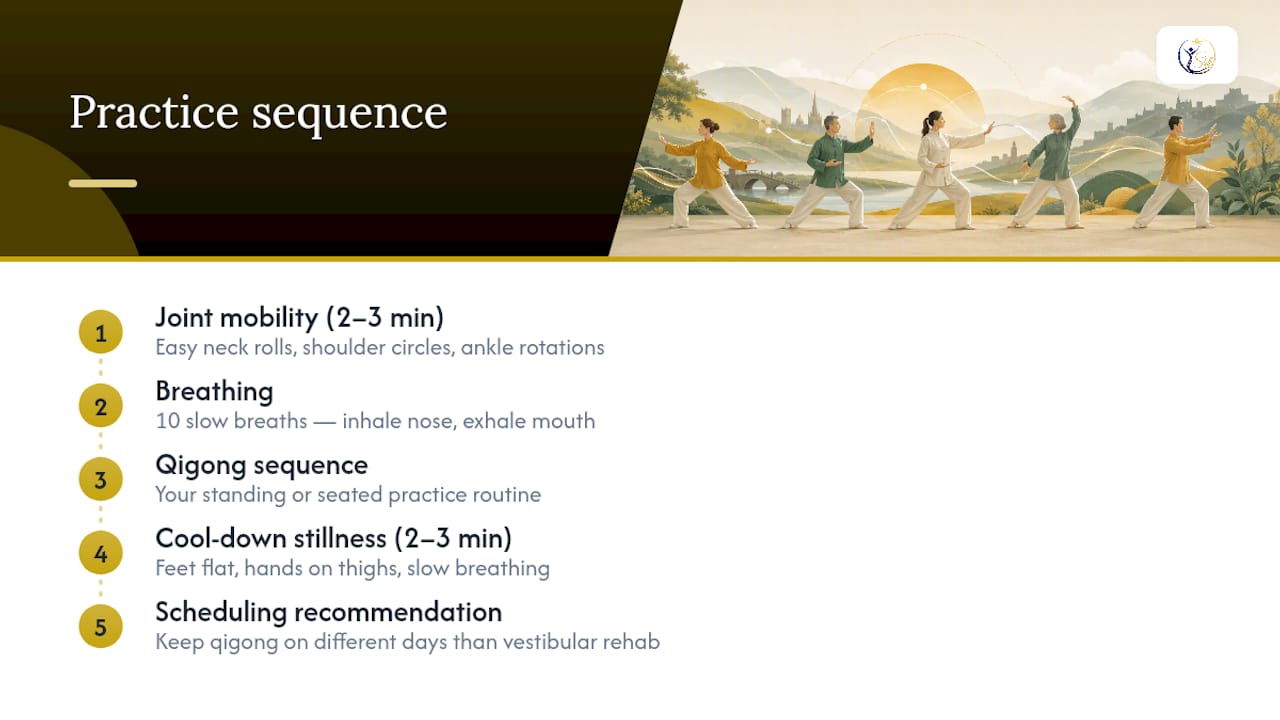
If you practice qigong alongside a formal vestibular rehabilitation program, keep your qigong sessions on separate days or well after physical therapy exercises so you're not compounding fatigue for your inner ear.
Where Qigong Fits in the Bigger Picture
I see qigong as one honest tool among several, not a cure dressed up in ancient language. The 12-week research is encouraging, and case reports of long-term practitioners easing chronic vertigo are worth paying attention to, but they're not proof this works for everyone or every diagnosis. Practice it, track it, and keep talking to your doctor about what's actually causing your dizziness in the first place.
— Stella
Ready to Practice With Guided Support?
Learning these movements from a video is one thing. Learning them from someone who adjusts your posture in real time, catches the head turn you're doing too fast, and modifies the routine for your exact situation is another. That's the gap Stella QigongStar's online qigong classes are built to close, with both live sessions and on-demand courses so you can start wherever your balance and schedule allow.
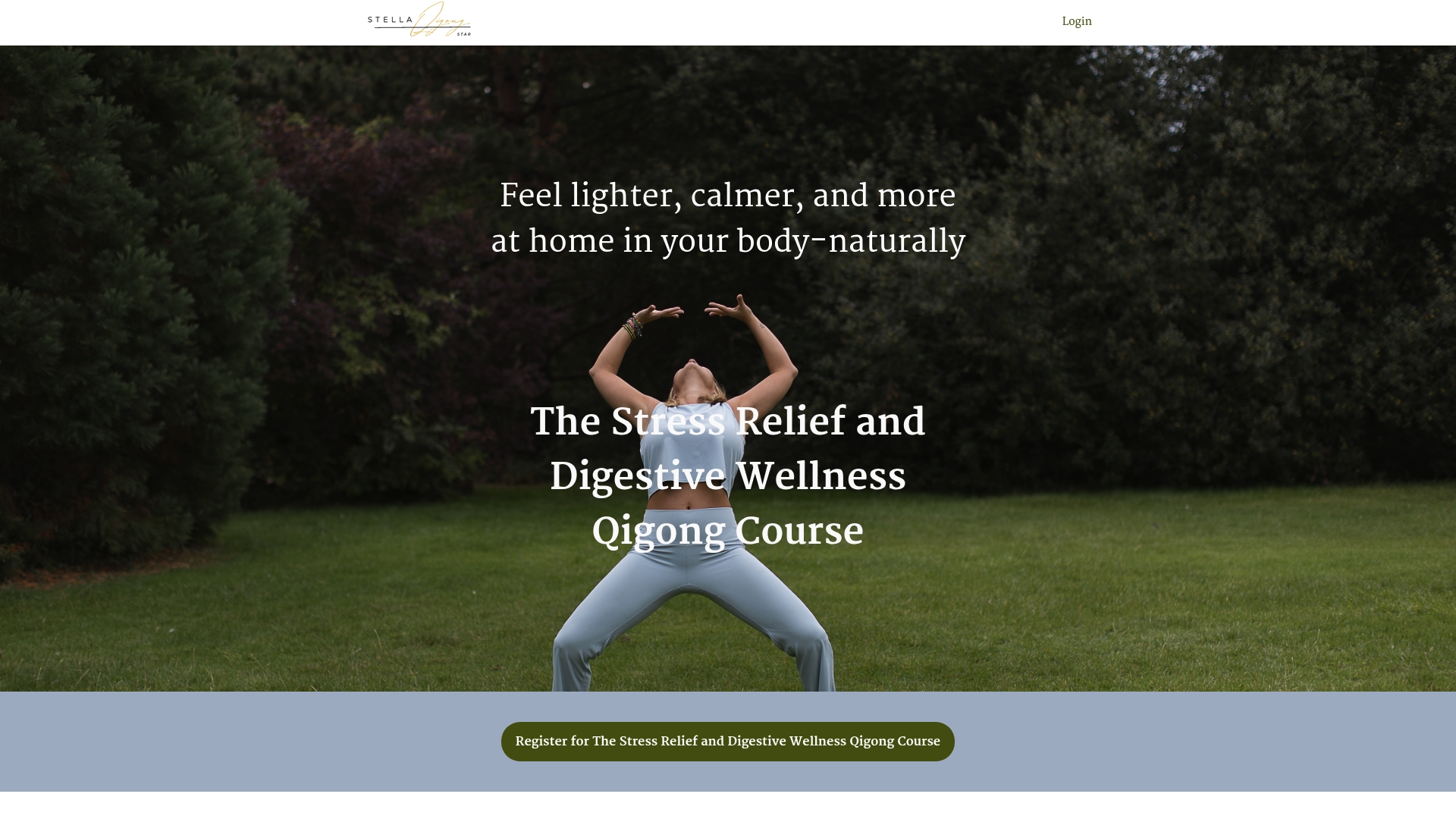
If White Tiger Qigong's balance-focused forms resonate with what you've read here, the White Tiger Qigong course walks you through progressions from seated stability to standing strength at a pace that respects where you're starting from. Curious about the instructor guiding these sessions? You can read more about Stella and her certification background before you commit. The most practical next step is simple: try a single live class or book a private session for modifications tailored to your specific dizziness pattern.
Sources
- The efficacy of QiGong practice as a treatment for vertigo / 12-week Medical Qigong study (Frontiers in Medicine)
- Vestibular therapy exercises (Stanford Health)
- Got Vertigo? Try These Home Remedies (Cleveland Clinic)
This article is general information, not a substitute for advice from a qualified doctor. Consult a qualified healthcare professional about your own circumstances before acting on anything here.
FAQ
Is There a Pressure Point That Helps Stop Dizziness?
Some traditional practices point to acupressure points near the base of the skull and behind the ears, similar to where the "sounding the heavenly drum" technique applies gentle pressure, though this works best alongside slow breathing rather than as a standalone fix.
What Can I Do Naturally to Stop Dizziness?
Sit or lie down immediately, sip water, breathe slowly, and avoid sudden head movements; gentle qigong breathing and grounding sequences can help once the acute spell passes, according to general self-care guidance for dizziness.
What Are Traditional Chinese Approaches to Dizziness?
Classical qigong texts describe specific techniques like ear-tapping and slow neck rotations paired with controlled breathing, used historically alongside broader Chinese medicine approaches to calm the body's energy and reduce dizzy spells.
What Emotion Is Often Linked to Vertigo?
Anxiety and vertigo frequently feed each other, since dizziness triggers stress and stress can worsen dizziness; breathing practices that calm the nervous system, like the diaphragmatic technique described above, address this cycle directly.
Can Qigong Replace Medical Treatment for Vertigo?
No. Qigong works well as a complementary practice for many balance issues, but conditions like BPPV or Meniere's disease need proper diagnosis and, in some cases, a specific maneuver or medical treatment first.