
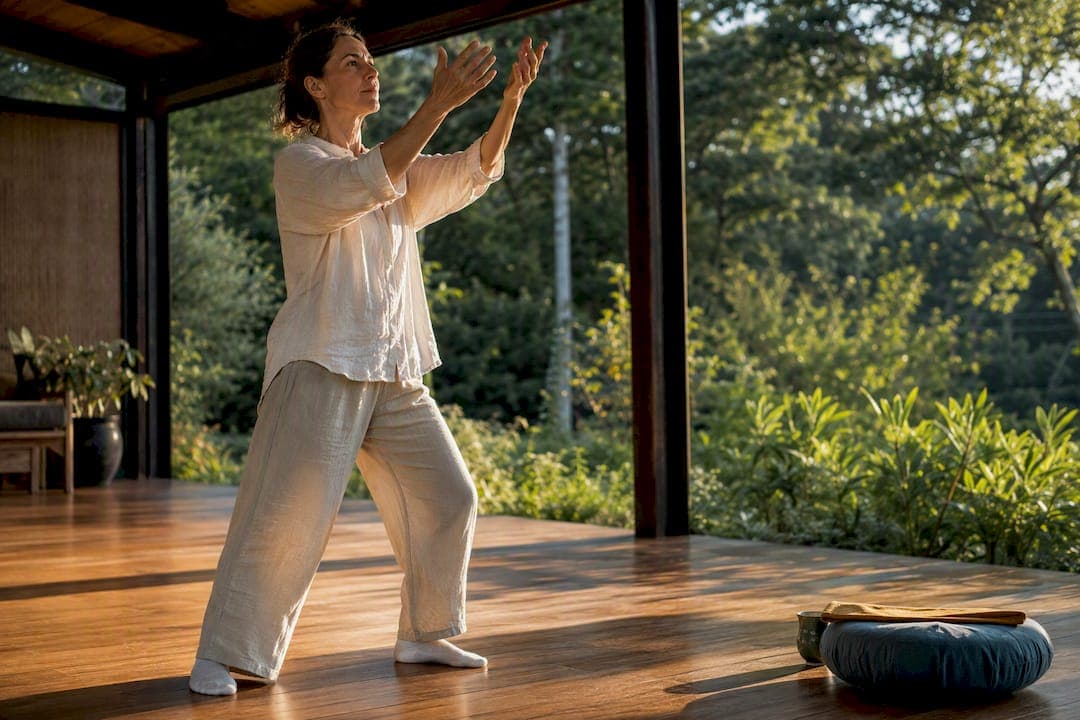
Yes, multiple systematic reviews and meta-analyses show that qigong can meaningfully reduce depressive symptoms when practiced consistently as a complementary approach alongside standard care. The effect lands in the modest-to-moderate range, built on trial protocols of roughly 45 to 60 minutes, two to three times a week, for eight to twelve weeks. Qigong is not a substitute for urgent psychiatric or medical treatment, but as a gentle, evidence-supported addition to your care, it holds up.
TL;DR:
- Consistent practice of qigong two to three times weekly for 8 to 12 weeks can produce a moderate to strong reduction in depressive symptoms, especially for mild to moderate cases.
- Movement-based qigong, like Baduanjin, is more studied and may benefit those with low energy or lethargy, while static or meditative styles suit anxiety or emotional numbness.
- Practice protocols closely resemble trial setups, starting with 10 to 20 minutes daily or full sessions of 45 to 60 minutes, focusing on breath, movement, and mindfulness.
- Qigong activates the parasympathetic nervous system, improving heart rate variability and lowering blood pressure, which helps regulate stress responses linked to depression.
- It is safest when modified for physical limitations, and should complement, not replace, professional mental health care, especially in severe or treatment-resistant depression cases.
Table of Contents
- What the Research Shows on Qigong for Depression
- How Qigong Calms the Body and Mind
- Movement Vs. Static Qigong: Which Style Fits You
- Building a Qigong Routine That Mirrors the Evidence
- Safety, Modifications, and When to Seek Professional Help
- Turning Practice Into a Habit That Sticks
- Who's Behind This Guidance and How It's Taught
- Why the Conventional Advice on Qigong Falls Short
- Ready to Practice with Guidance? Here's Where to Start
- Where This Evidence Comes From
- Sources
What the Research Shows on Qigong for Depression
The clearest signal comes from a meta-analysis of randomized controlled trials that found qigong-based therapy produced a pooled effect size of Hedges' g = −0.64 when compared against waitlist controls. In plain terms, that is a moderate reduction in depression severity, roughly comparable to what you would see with some structured psychotherapy approaches in short-term trials. The same analysis found participants practicing qigong were far more likely to respond to treatment or reach remission than those left on a waiting list.
A separate systematic review and meta-analysis found an even larger standardized mean difference of −0.75 when qigong was compared against waiting-list or usual-care groups. That review is honest about its limitations, though. Heterogeneity across the pooled trials was high, meaning studies varied in qigong style, session length, participant health status, and how depression was measured. Effect sizes this size, drawn from a mixed bag of smaller trials, deserve genuine respect but not blind faith.
Here is what stands out when you dig into the actual trial designs:
- Movement qigong sessions in most trials ran 45 to 60 minutes, two to three times weekly, for about 8 to 12 weeks.
- Static or meditative protocols in some studies used shorter daily sessions, often 30 to 50 minutes.
- Combined mindfulness and qigong programs, like the Mindfulness and Qigong Training for Self-Healing trial, reported significant drops in depressive symptoms alongside increased subjective vitality, with improvements holding at a 12 week follow-up.
- Populations studied were often people with mild to moderate depression, or depression secondary to a chronic illness, rather than treatment-resistant major depressive disorder.
Statistic Callout: Pooled trial data show a Hedges' g of −0.64 for qigong versus waitlist controls, with response odds nearly 4.4 times higher and remission odds over 8 times higher than doing nothing at all, according to the meta-analysis of randomized controlled trials.
That generalizability gap matters more than most summaries admit. If your depression is severe, treatment-resistant, or accompanied by psychotic features, the trial evidence simply was not built with your situation in mind, and the systematic review noting these limitations says so directly. The National Center for Complementary and Integrative Health frames the current evidence as limited but promising, which is the honest middle ground between "miracle cure" and "waste of time."
What can you reasonably expect? If you commit to a real practice schedule, something close to the trial dose, you have a fair shot at noticeable relief within eight to twelve weeks, particularly for mild to moderate symptoms layered on top of whatever treatment you're already receiving. It won't replace medication or psychotherapy where those are needed. It can, however, soften the daily weight depression carries and give your nervous system a different rhythm to settle into.
How Qigong Calms the Body and Mind
Depression is not only a thought pattern. It shows up in the body, in shallow breathing, tense shoulders, disrupted sleep, and a nervous system stuck in a low simmer of stress. Qigong seems to intervene at exactly that level. A systematic review and meta-analysis on the neurophysiological and psychological mechanisms of qigong found that regular practice activates the parasympathetic nervous system, the branch responsible for rest, digestion, and recovery, and that this shows up in measurable changes to heart rate variability and diastolic blood pressure.
Think of your nervous system as having two gears: one for threat, one for repair. Depression tends to leave people stuck oscillating between numb shutdown and low-grade anxious tension, rarely settling into genuine repair mode. Slow, coordinated movement paired with deliberate breathing seems to nudge the body back toward that parasympathetic state, and the physiological markers back this up:
- Heart rate variability improves with consistent practice, a sign of better autonomic flexibility.
- Diastolic blood pressure drops in several pooled studies, another marker of reduced sympathetic (stress) dominance.
- Interoceptive awareness, your ability to notice internal bodily signals like breath and muscle tension, sharpens with slow, mindful movement.
This is where qigong does something most talk therapy alone cannot. Cognitive approaches work top-down, reshaping thought patterns to influence mood and behavior. Qigong works from the bottom up, using breath and movement to shift the body's baseline state, which then feeds back into how you think and feel. One useful way to see it: qigong bridges top-down cognitive work and bottom-up bodily regulation, training breath, attention, and gentle movement together, which is exactly why instructors often describe it as a natural companion to psychotherapy rather than competition for it.
Practically, this can translate into less rumination (the mind quiets when the body isn't broadcasting alarm signals), steadier sleep, and a gradual return of energy that antidepressant medication alone sometimes struggles to restore. None of this is definitive. The mechanism research is promising and consistent across several reviews, but it is mechanistic evidence, not proof that qigong resolves depression on its own. Treat it as a genuinely plausible explanation for why the clinical results hold up, not as settled science.
Movement Vs. Static Qigong: Which Style Fits You
Qigong splits broadly into two families, and choosing the right one matters more than most beginners realize. Movement qigong involves flowing, repeated postures, often set to breath, designed to build circulation and gently raise energy. Static or meditative qigong involves stillness, often seated or standing, with the work happening internally through breath and visualization.
Baduanjin, or the "Eight Pieces of Brocade," is the most extensively studied movement form and appears repeatedly in the clinical trials behind the effect sizes discussed earlier. It combines eight distinct postures, each targeting a different area of the body, performed slowly with coordinated breathing. Its familiarity to researchers and its standardized structure make it one of the more reliable entry points if you want a form with real trial backing behind it.
Choosing between styles comes down to how your depression tends to present:
- Lethargic, heavy, low-energy depression often responds better to movement qigong like Baduanjin, which builds circulation and gently activates the body.
- Overstimulated, anxious, or emotionally numb states often respond better to static, meditative qigong, which grounds attention and slows an overactive nervous system.
- Many practitioners benefit from both, rotating movement sessions earlier in the week with static practice on higher-anxiety days.
Pro Tip: If you genuinely don't know which state you're in most days, start with movement qigong. It's easier to sense progress in, and most beginner programs, including Baduanjin sequences, are built around it.
Building a Qigong Routine That Mirrors the Evidence
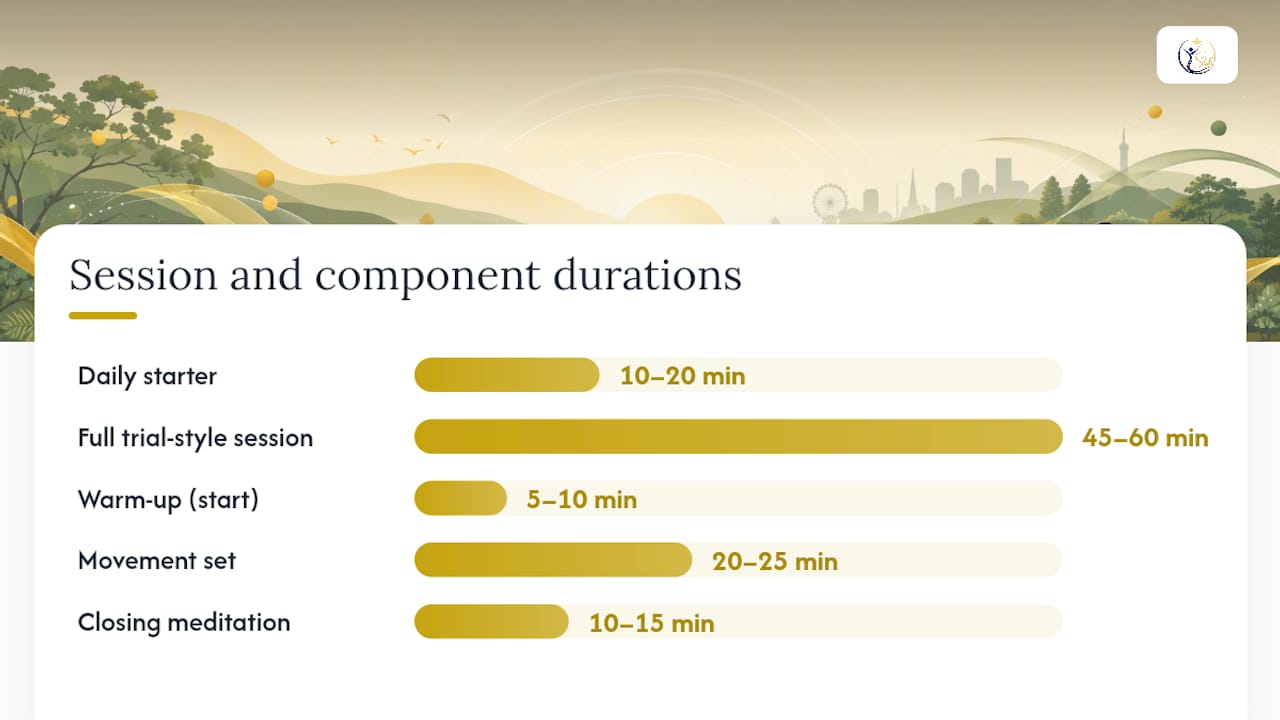
You do not need to replicate a full clinical trial to get meaningful benefit, but a rough approximation of the trial dose gives you the best shot at similar results. Two templates work well depending on your energy and schedule.
A 10 to 20 minute daily starter:
- Stand or sit comfortably and take five slow breaths, letting your exhale run longer than your inhale.
- Perform six to eight gentle movements, such as raising the arms overhead while inhaling and lowering them while exhaling.
- Add a few rounds of shoulder rolls and gentle spinal twists to release tension.
- Close with one to two minutes of quiet breathing, noticing where your body feels different than when you started.
A 45 to 60 minute trial-style session, closer to what the research protocols used:
- Begin with five to ten minutes of warm-up, joint rotations, and easy walking in place.
- Move through a full movement set, such as a complete Baduanjin sequence, for 20 to 25 minutes.
- Shift into dedicated breathwork, using specific breathing techniques to deepen the parasympathetic response.
- Close with 10 to 15 minutes of seated or lying meditation, letting the nervous system settle fully before returning to your day.
Aim for the full session two to three times weekly, and use the shorter version on the days between. Most trials ran this pattern for 8 to 12 weeks, and that window is a reasonable target for your own reassessment. A daily routine built specifically for stress reduction can give you a ready-made structure if building your own feels like one more task on a hard day.
Pro Tip: Track three things after each session: mood, energy, and how easy it was to show up. If adherence is dropping, shrink the session before you abandon it entirely.
Safety, Modifications, and When to Seek Professional Help
Qigong carries a strong safety record. Trial data show low rates of adverse events when movements are modified appropriately for physical limitations, but a few precautions matter.
- Modify or avoid deep squats and prolonged standing postures if you have significant joint pain, recent surgery, or balance issues, and check specific contraindications before starting if you have a cardiac condition or chronic dizziness.
- Expect that slowing down and turning inward can occasionally surface uncomfortable emotions. That's a normal part of body-based practice, not a sign something is wrong, though you should pause and breathe through it rather than pushing forward.
- Seek urgent professional help immediately if you experience suicidal thinking, a severe decline in your ability to function day to day, or symptoms of psychosis. Qigong is a complementary practice, never a substitute for emergency psychiatric care.
Turning Practice Into a Habit That Sticks
Depression often steals the exact resources you need to build a new habit: motivation, energy, and follow-through. That's precisely why the strategy matters as much as the technique.
- Anchor a tiny habit first. Two minutes of standing breathwork right after brushing your teeth beats a 45-minute session you keep postponing.
- Attach practice to an existing cue. Right after your morning coffee, right before bed, whatever is already automatic in your day.
- Set micro-goals, not mood goals. "I showed up for five minutes" is a win even on days when your mood doesn't budge.
- Build a relapse plan in advance. Decide now what a bad week looks like: maybe it's dropping to a two-minute breathing practice instead of skipping entirely.
- Track lightly. A simple weekly note on mood, sleep, and energy shows you patterns that daily mood swings hide.
Pro Tip: Pair practice with someone else, even virtually. A quick weekly check-in with a friend or an online class community does more for adherence than any app reminder.
Who's Behind This Guidance and How It's Taught
This guide draws on peer-reviewed systematic reviews and meta-analyses rather than anecdote, and it's taught through Qigongstar by Stella, a certified instructor through the White Tiger Qigong School and registered with Yoga Alliance. That dual grounding, traditional lineage training plus a recognized teaching standard, shapes how the trial protocols above get translated into actual classes.
Qigongstar runs both live virtual sessions and on-demand courses, which matters because different learners need different structures. If you thrive on accountability and real-time correction, live classes replicate the guided consistency that trial participants had with in-person instructors. If your energy is unpredictable, a self-paced on-demand format lets you practice on your terms without missing a scheduled session and feeling like you've failed.
Why the Conventional Advice on Qigong Falls Short
Most articles on qigong for depression stop at "it's calming" and leave you there, or they swing the other way and imply it works like a prescription. Neither does the evidence justice. The honest read is that qigong performs like a moderately effective adjunct therapy, backed by real effect sizes, not vague wellness talk.
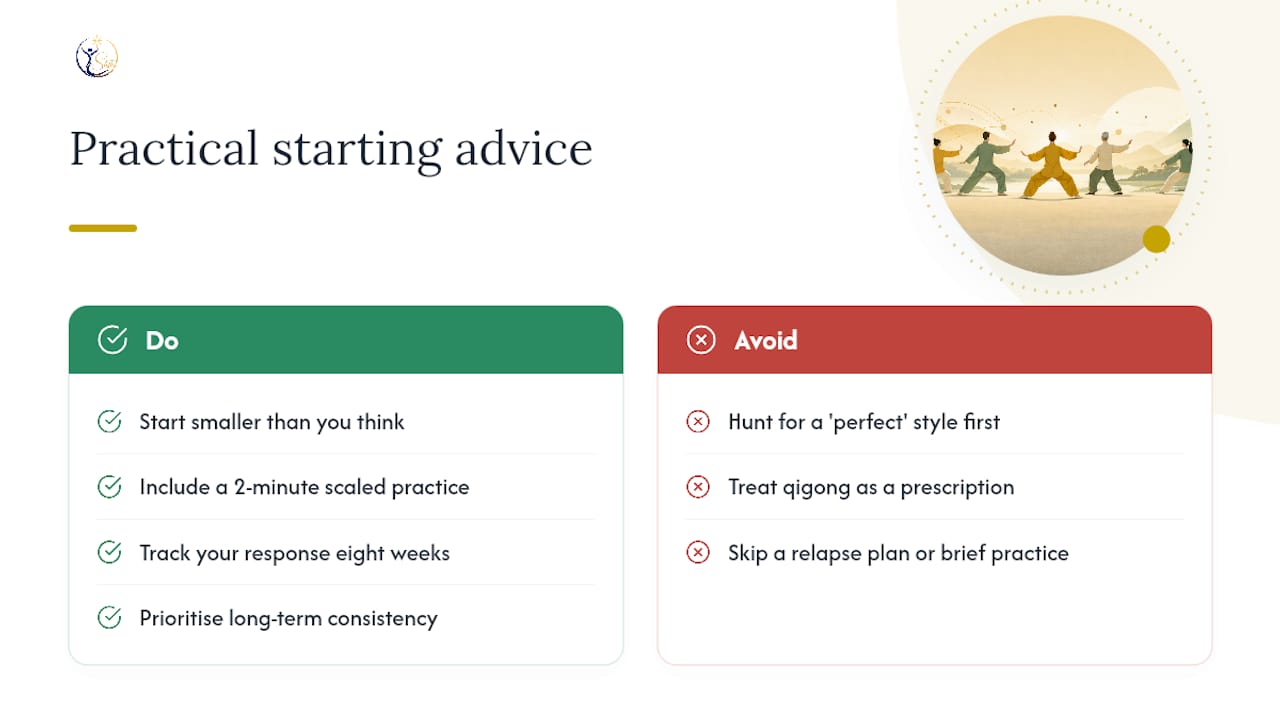
What's genuinely overrated is the emphasis on finding the "perfect" style before starting. What the trials actually reward is consistency over years, not the specific sequence you chose in week one. Where the conventional advice really fails people is adherence. Nobody hands you a relapse plan for the days your depression makes standing up for ten minutes feel impossible, yet that's exactly when a scaled-down two-minute practice matters most. Start smaller than you think you need to, track your response for a full eight weeks, and let the data, yours and the published trials, guide whether to go deeper.
— Stella
Ready to Practice with Guidance? Here's Where to Start
Reading about qigong protocols gets you the science. Practicing them with a certified instructor is what actually moves the needle on mood, and that's the gap Qigongstar closes for people who want structured, guided sessions instead of piecing together routines from articles alone.
If lethargy and low energy dominate your depression, the 5 Animal Qigong course builds circulation and vitality through varied movement sequences drawn from traditional animal forms. If you want a deeper, more progressive path rooted in the exact lineage behind Stella's own certification, the White Tiger Qigong program offers structured training for those ready to commit beyond the basics. Both are available as live virtual classes for real-time guidance or on-demand courses if your schedule and energy fluctuate week to week. Browse the full class schedule and formats to find the session that matches where you are right now, and start with whichever format makes showing up easiest.
Where This Evidence Comes From
- Qigong-Based Therapy for Treating Adults with Major Depressive Disorder: the meta-analysis behind the Hedges' g = −0.64 effect size and standard trial dosing.
- The Effect of Qigong on Depressive and Anxiety Symptoms: a broader systematic review noting a larger pooled effect alongside real limitations in trial quality.
- Neurophysiological and Psychological Mechanisms of Qigong: the mechanism review explaining parasympathetic activation and HRV changes.
- NCCIH's Qigong Overview: a neutral, clinically grounded summary of current evidence and safety.
Talk with your doctor or therapist before adapting any of these practices if you're managing a diagnosed mental health condition or a physical limitation. Qigong works best as one part of a broader care plan, not a replacement for it.
Sources
- Qigong-Based Therapy for Treating Adults with Major Depressive Disorder: A Meta-Analysis of Randomized Controlled Trials
- The Effect of Qigong on Depressive and Anxiety Symptoms: A Systematic Review and Meta-Analysis of Randomized Controlled Trials
- The Neurophysiological and Psychological Mechanisms of Qigong as a Treatment for Depression: A Systematic Review and Meta-Analysis
- Qigong: What you need to know — NCCIH