
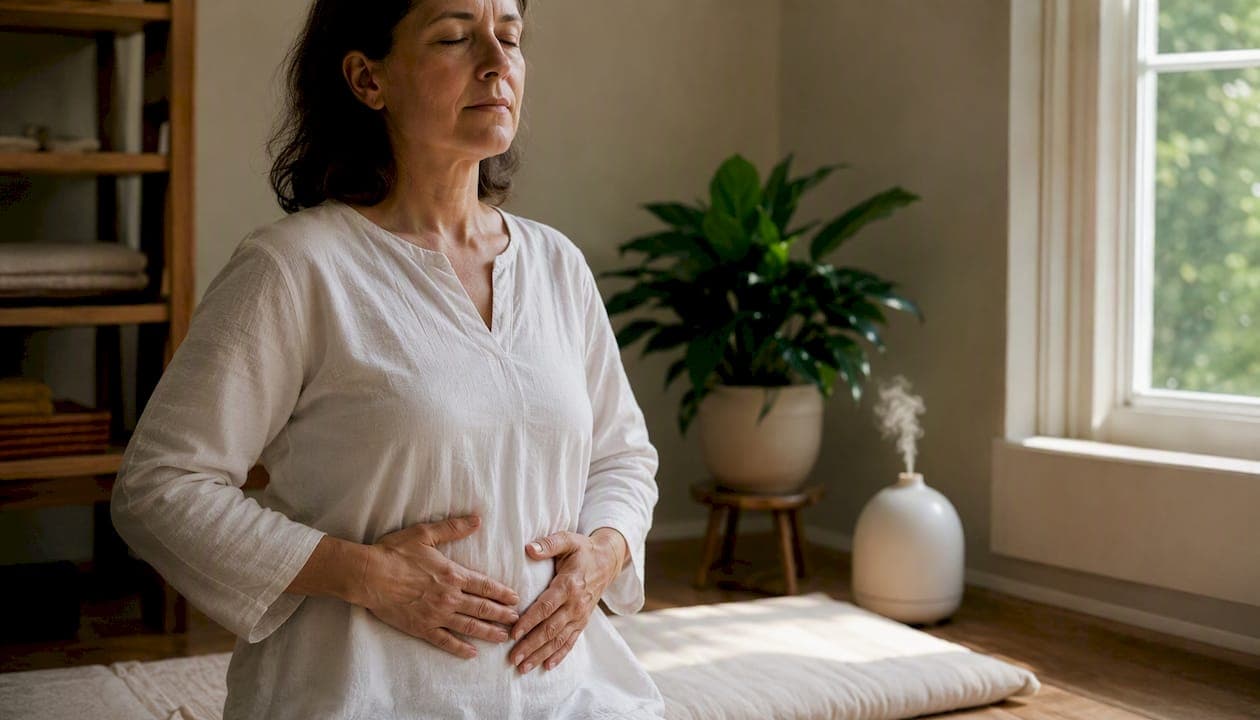
A consistent 5–10 minute qigong practice combining deep abdominal breathing, gentle abdominal massage, and slow torso rotations can ease bloating, soothe digestive discomfort, and support gut health. This approach works for most adults, including complete beginners, and requires no equipment.
Start with this simple three-move sequence:
- Deep abdominal breathing (2–3 minutes): breathe slowly into your belly, letting your abdomen rise on the inhale and fall on the exhale.
- Clockwise abdominal massage (2 minutes): warm your palms together, then circle them gently over your lower abdomen in a clockwise direction.
- Gentle torso rotations or "pebble in the pond" rocking (2–3 minutes): sway or rotate your waist softly, keeping your knees slightly bent and your spine relaxed.
Safety note: stop immediately if you feel sharp pain, and skip abdominal massage if you are pregnant, have had recent abdominal surgery, or have active inflammation.
Digestive diseases affect millions of Americans, making accessible, low-risk self-care practices like qigong genuinely worth your attention.
Key Takeaways
A daily 5–10 minute qigong routine combining deep abdominal breathing, clockwise abdominal massage, and gentle torso rotations is a low-risk, evidence-supported way to ease digestive discomfort and support gut health.
| Point | Details |
|---|---|
| Core routine length | 5–10 minutes daily covers deep breathing, abdominal massage, and torso rotations. |
| Mechanism | Diaphragmatic breathing stimulates the vagus nerve, supporting parasympathetic "rest and digest" activity. |
| Evidence note | An exploratory PLWNT trial showed within-group GI symptom improvements after eight weeks; no superiority over CBT was demonstrated. |
| Safety red flags | Stop and see a clinician for severe pain, unexplained bleeding, fever, or sudden weight loss. |
| Qigongstar courses | Structured video-led programs in 5 Animal Qigong and White Tiger Qigong are available online for guided digestive practice. |
Table of Contents
- How to do qigong for digestion: a step-by-step routine
- Why breathing and posture help your digestion
- Simple abdominal self-massage to ease bloating
- What research shows about qigong and gut health
- How often and when to practice for the best results
- When to pause practice and when to see a clinician
- Fitting qigong into your meals and daily life
- What I've learned about realistic expectations
- Structured learning with Qigongstar
- Sources
How to do qigong for digestion: a step-by-step routine
This four-move sequence is designed to be followed in order. Each move builds on the one before it, gently waking up your digestive system from the inside out.
Move 1: Centering breath (1 minute)
Stand with your feet shoulder-width apart, knees soft, arms relaxed at your sides. Close your eyes or soften your gaze downward. Take slow, natural breaths to settle your attention inward. This brief pause shifts your nervous system out of "go" mode before the deeper work begins.
Move 2: Deep abdominal breathing (2–3 minutes)
Place one hand on your lower abdomen, just below your navel. Inhale slowly through your nose for a count of four, feeling your belly press gently into your hand. Exhale through your mouth or nose slowly, letting your abdomen soften back. Repeat several cycles. The American Tai Chi & Qigong Association recommends keeping the focus on the lower abdomen, or dantian, for the most practical digestive benefit.
Beginner modification: sit in a chair with your feet flat on the floor if standing feels tiring. Keep your spine tall but not rigid.
Progression: extend the exhale to a count of eight as your breath deepens over several weeks.
Move 3: Clockwise abdominal tapping and massage (2 minutes)
Rub your palms together briskly until they feel warm. Place them flat on your lower abdomen and begin slow, clockwise circles, moving from the lower right, up toward the ribs, across to the left, and back down. Apply only light pressure. After 60 seconds of rubbing, switch to gentle fingertip tapping along the same path. This direction mirrors the natural flow of the large intestine and can feel immediately soothing after meals.
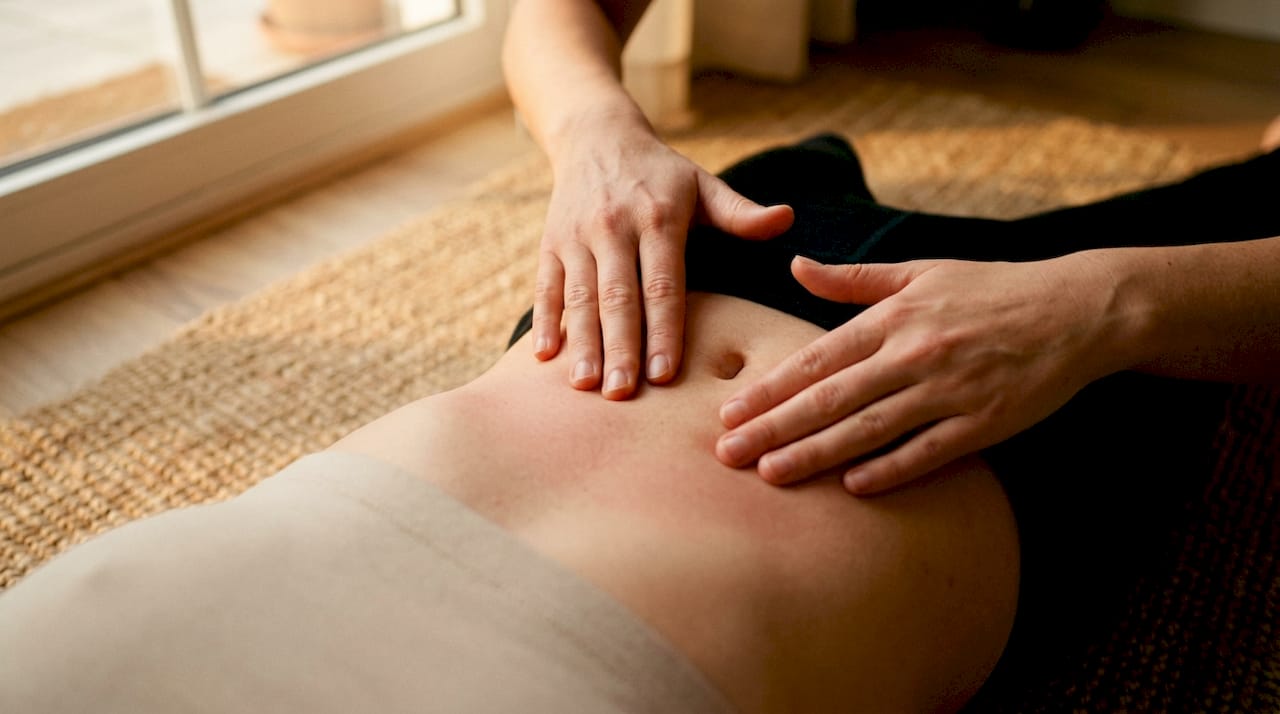
Beginner modification: use only one hand and keep the pressure feather-light.
Move 4: Gentle torso rotations (2–3 minutes)
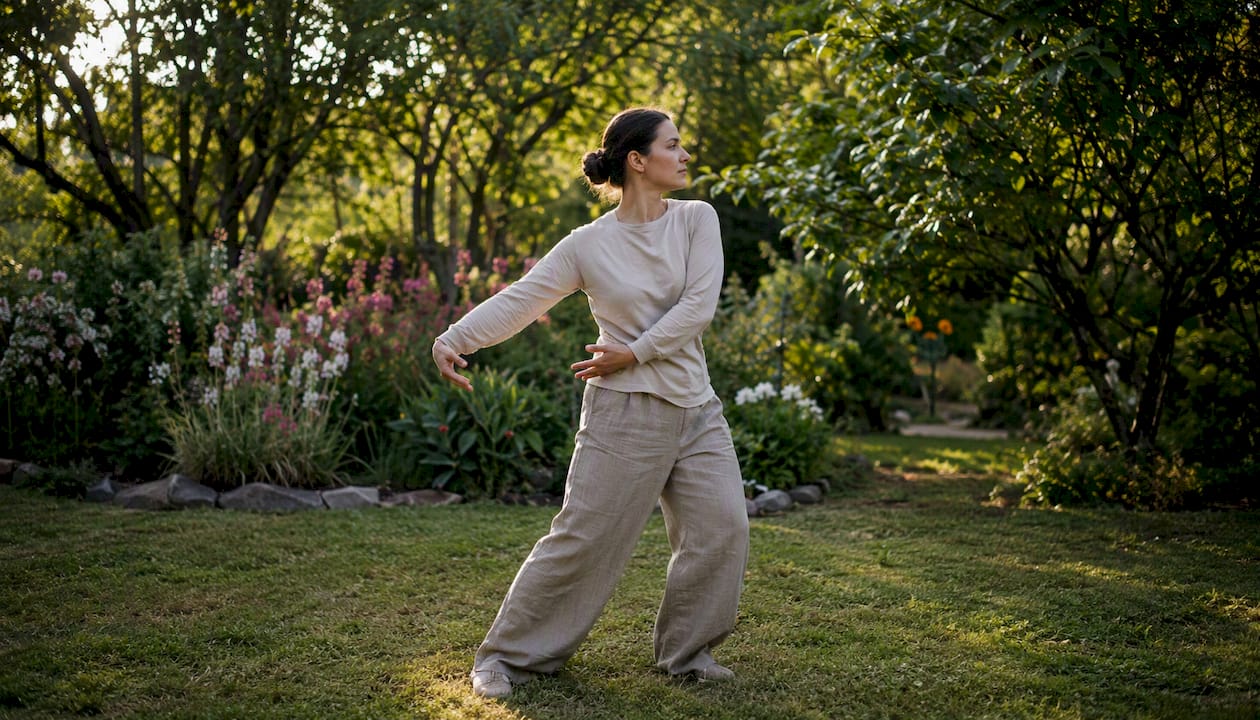
Stand with feet hip-width apart, hands resting on your lower abdomen or hips. Begin rotating your waist in slow, easy circles, as though your hips are tracing the rim of a large bowl. Keep your shoulders relaxed and your breath steady. After 60 seconds, reverse direction. This is the "pebble in the pond" movement: small, rippling, and calm.
Pro Tip: If you have access to a guided video, watching a certified instructor demonstrate the breath-to-movement coordination for Moves 2 and 4 makes a real difference in getting the timing right. Qigongstar's online classes include video-led digestive routines you can follow at your own pace.
Why breathing and posture help your digestion
Diaphragmatic breathing and an upright, relaxed posture directly support vagal tone and intestinal motility. That is the short answer, and it is worth understanding why.
Your gut and brain communicate constantly through the vagus nerve, a long nerve that runs from your brainstem down through your chest and abdomen. When you breathe slowly and deeply, the diaphragm moves downward on each inhale, gently massaging the organs below it. This movement stimulates the vagus nerve, nudging your body toward parasympathetic ("rest and digest") activity. Slow exhalation, in particular, tends to amplify this calming signal.
Posture matters too. Slouching compresses the abdomen and restricts diaphragmatic movement. A neutral spine, soft knees, and a relaxed belly give the diaphragm room to move fully. The PLWNT Qigong protocol frames these coordinated breathing and movement techniques as a pathway to autonomic balance and improved intestinal motility.
Practical posture cues to keep in mind:
- Neutral spine: imagine a gentle lift through the crown of your head.
- Soft knees: never locked, always slightly yielding.
- Relaxed lower abdomen: release any holding or bracing in the belly.
- Shoulders dropped away from your ears.
Pro Tip: To feel your diaphragm move, lie on your back with one hand on your chest and one on your belly. A correct diaphragmatic breath lifts the lower hand first; the upper hand barely moves. Practice this for two minutes before your standing routine.
Simple abdominal self-massage to ease bloating
Clockwise abdominal massage and light tapping just below the navel can ease bloating and gently stimulate motility. You do not need any tools, and the technique takes under three minutes.
Follow these steps:
- Warm your hands first. Rub your palms together for 10–15 seconds. Warm hands feel more soothing on the abdomen and may support a parasympathetic response.
- Start below the navel. Place both palms flat, fingers pointing toward each other, just below your navel.
- Clockwise circles. Move your hands in slow, clockwise circles, gradually widening the path to include the sides of your abdomen and the area just below your lower ribs.
- Gentle tapping. After 60–90 seconds of rubbing, switch to light fingertip tapping along the same path. Keep the taps soft, like raindrops, not percussion.
- Finish with stillness. Rest both palms flat on your lower abdomen for a slow breath in and out before moving on.
Safety cautions: avoid applying any pressure over areas of active pain or inflammation. Skip abdominal massage entirely if you are pregnant, have had abdominal surgery within the past six weeks, or have a known hernia. If you feel any discomfort during the technique, stop and consult your healthcare provider.
Pro Tip: Coordinate each circle with your breath: inhale as your hands move upward along the right side, exhale as they sweep across and down the left. This breath-movement pairing deepens the parasympathetic response and makes the practice feel genuinely calming rather than mechanical.
What research shows about qigong and gut health
The evidence for qigong's digestive benefits is promising but still early. Here is what the research actually says, without overstating it.
The most relevant clinical work centers on the Prolong Life With Nine Turn (PLWNT) Qigong method, a structured protocol combining abdominal massage, coordinated diaphragmatic breathing, and direction-specific movements designed to influence intestinal motility and autonomic balance. The proposed mechanisms include vagal nerve stimulation, reduced sympathetic arousal, and changes in gut microbiota diversity.
An exploratory randomized trial of PLWNT practice found that participants showed meaningful within-group improvements in fatigue and gastrointestinal symptom subscales, along with changes in gut microbiota alpha diversity, after eight weeks of practice. The important caveat: when compared directly to cognitive behavioral therapy, the qigong group did not demonstrate statistically significant superiority. This is a coherent but limited signal, not a definitive cure.
"Qigong practice showed potential benefits for fatigue and gut symptoms in chronic fatigue syndrome, with within-group improvements in GI symptom subscales and gut microbiota alpha diversity after eight weeks of PLWNT practice." — Acupuncture Times summary of exploratory trial findings
The plausible mechanisms are:
- Vagal tone improvement: slow, mindful movement and extended exhalation activate the parasympathetic nervous system.
- Reduced sympathetic arousal: calming the stress response allows the gut to function more freely.
- Gut microbiota changes: some studies suggest shifts in microbial diversity, though the clinical significance of these changes is not yet established.
- Improved intestinal motility: the physical movement of abdominal massage and torso rotations may directly stimulate peristalsis.
The honest summary: qigong for digestive issues is supported by plausible mechanisms and early positive signals. It is not a replacement for medical treatment, but it is a low-risk, accessible complement to it. You can also explore how mind-body practice heals your gut naturally for a deeper look at these brain-gut connections.
How often and when to practice for the best results
The American Tai Chi & Qigong Association's practitioner guidance is clear: practice smarter, not harder. Short, consistent sessions focused on the lower abdomen and diaphragmatic breathing outperform occasional long ones.
Recommended frequency:
- Daily 5–10 minute sessions for the core routine.
- Three to four longer sessions (15–20 minutes) per week as you build confidence.
Timing around meals:
- Wait at least 30 minutes after eating before practicing abdominal massage or torso rotations.
- Gentle abdominal breathing can be done at any time, including just before a meal to calm the nervous system.
- A short 5-minute breathing practice before your evening meal is a particularly effective habit.
A simple four-week progression:
- Week 1: 5 minutes daily, focusing only on deep abdominal breathing.
- Week 2: Add the abdominal massage (total 8 minutes).
- Week 3: Add gentle torso rotations (full routine, 10 minutes).
- Week 4: Extend to 15 minutes on three days; keep 5–10 minutes on the other days.
Track your progress by noting one simple thing each day: how your abdomen feels before and after practice. Bloating, discomfort, and regularity are the most useful markers to watch. Many practitioners report noticing a subjective shift in comfort within two to four weeks of consistent daily practice, though individual results vary.
When to pause practice and when to see a clinician
Qigong is low-risk for most adults, but some symptoms require medical attention before or instead of self-care practice.
Stop your practice and contact a clinician if you experience:
- Severe or sudden abdominal pain.
- Unexplained rectal bleeding or blood in your stool.
- Fever alongside digestive symptoms.
- Unexplained weight loss.
- Persistent vomiting or inability to keep food down.
- Symptoms that worsen significantly during or after practice.
The Cleveland Clinic notes that gastrointestinal symptoms range from mild and self-limiting to signs of serious underlying disease — persistent or severe symptoms always warrant professional evaluation.
Additional contraindications for abdominal massage and deep torso work:
- Recent abdominal or pelvic surgery (wait for full medical clearance).
- Active hernia.
- Pregnancy (gentle breathing is generally fine; skip abdominal massage and strong rotations).
- Severe inflammatory bowel disease flare-ups.
- Undiagnosed abdominal mass or unexplained swelling.
For context, digestive diseases are among the most common health concerns in the United States, which means many people are managing symptoms that genuinely need a diagnosis before adding any new physical practice.
Pro Tip: If you are managing a diagnosed condition like IBS or GERD, share your interest in qigong with your gastroenterologist before starting. Most will welcome it as a complement to your care plan, and a few may have specific modifications to suggest.
Fitting qigong into your meals and daily life
The most effective digestive qigong practice is one you actually do every day, not the most elaborate one you do occasionally.
A few practical ways to weave it in:
- Pre-meal breathing: two minutes of slow abdominal breathing before sitting down to eat activates the parasympathetic state that supports digestion.
- Post-meal walk: a gentle 10-minute walk after meals pairs well with qigong practice and supports motility independently.
- Midday breath break: set a phone reminder for a 3-minute abdominal breathing pause at midday, especially on stressful days.
- Hydration: drinking warm water in the morning before practice is a simple habit that supports gut motility.
Habit stacking makes consistency much easier. Attach your qigong routine to something you already do reliably: right after your morning tea, just before your evening meal, or immediately after brushing your teeth at night. The cue does not matter as much as the consistency.
Pro Tip: Stress is one of the most common triggers for digestive discomfort. Treating your qigong practice as a stress-management tool, not just a digestive one, helps you stay motivated on days when your gut feels fine. The benefits compound over time.
For readers who want a broader movement-based approach, the gut health improvement through movement guide covers complementary practices that work well alongside qigong.
What I've learned about realistic expectations
Most people come to qigong for digestion hoping for fast relief, and that is completely understandable. What I consistently find, though, is that the biggest gains come not from the most intense session but from the most regular one.
The single habit I recommend above all others: five minutes of deep abdominal breathing every morning before you eat anything. It is unglamorous, it takes no special equipment, and it works. Within two to four weeks of daily practice, most people notice a calmer gut response to stress, less post-meal bloating, and a general sense of ease in the abdomen. These are comfort improvements, not cures, and that distinction matters.
The most common beginner mistake is pressing too hard during abdominal massage, either physically or in terms of expectations. Gentle is the operative word. The abdomen responds to softness, not force. If you feel any resistance or discomfort, ease off immediately.
The second mistake is skipping practice on the days you feel fine. Those are actually the most valuable days, because you are building the nervous system habit that will serve you when symptoms flare. Consistency during the good days is what makes the practice available to you on the hard ones.
Qigong is not a replacement for medical care, and I would never frame it that way. If you have persistent or severe digestive symptoms, please work with a clinician. But as a daily self-care practice that calms your nervous system, supports gut motility, and gives you something gentle and grounding to do for your body every morning, it is genuinely worth your time.
Structured learning with Qigongstar
If the routine above resonates with you, a structured course gives you the video guidance, sequencing, and instructor support that makes the practice stick.
Qigongstar offers online qigong classes and courses specifically designed for stress relief and digestive wellness, taught by Stella, a certified White Tiger Qigong instructor trained through the White Tiger Qigong School and registered with Yoga Alliance. That certification matters because it means the techniques you learn are rooted in a verified, safety-conscious lineage, not improvised wellness content.
The 5 Animal Qigong course includes digestive-focused sequences within a structured program, while the White Tiger Qigong program offers a deeper dive into the breath, movement, and energy work that underpins everything in this guide. Both are available on demand, so you can practice at your own pace and return to any session as often as you need.
Ready to build a consistent gut-health practice with expert guidance? Explore Qigongstar's online courses and find the program that fits your life.
Sources
The following resources support the claims and guidance in this article:
- Effects of the Prolong Life With Nine Turn-Method Qigong on Fatigue, Insomnia, Anxiety, and Gastrointestinal Disorders in Patients With Chronic Fatigue Syndrome: Protocol for a Randomized Controlled Trial - PMC
- Qigong Practice Shows Potential Benefits for Fatigue and Gut Symptoms in Chronic Fatigue Syndrome
- A Qigong Method That Improves Fatigue and Gut Health - American Tai Chi & Qigong Association
- Niddk
- My
This article is general information, not a substitute for advice from a qualified doctor. Consult a qualified healthcare professional about your own circumstances before acting on anything here.