
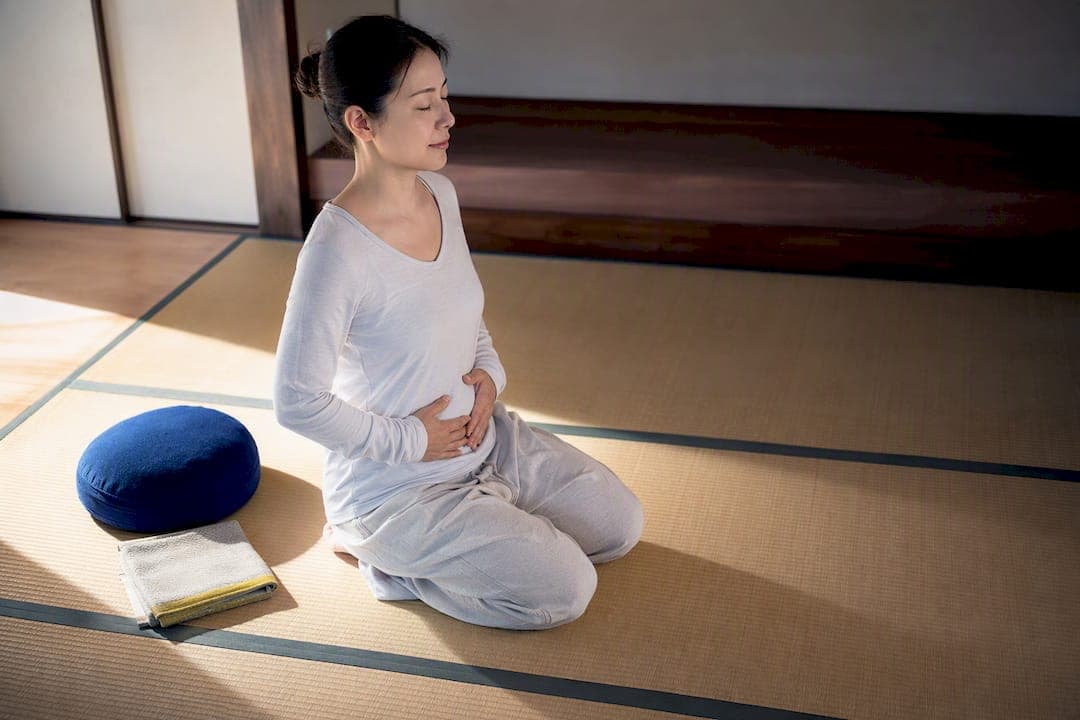
Yes, gentle, digestion-focused qigong can often help calm mild diarrhea and IBS related flare-ups by soothing an overactive nervous system. Start with slow abdominal breathing and light abdominal massage, done seated or standing, for three to five minutes. If symptoms are severe, bloody, or paired with fever, stop and seek medical care instead. For everything in between, the short routine below and the daily practice further on give you a real place to start.
TL;DR:
- Gentle digestive qigong can support gut regulation by promoting parasympathetic nervous system activation and encouraging natural muscle movements like peristalsis.
- Practice should be avoided if symptoms include blood, fever, severe weakness, dehydration, or diarrhea lasting over 48 hours without improvement.
- The most effective routines are short, done regularly, and ideally spaced one to three hours after a meal or first thing in the morning, with modifications during flare-ups.
- Long-term benefits depend on consistent daily practice, combining movement, breathing, and stress management techniques to enhance resilience and calm the nervous system.
- Qigong complements medical treatment but is not a substitute, especially for serious conditions like infections or inflammatory bowel diseases.
Table of Contents
- A Quick Qigong Routine For Diarrhea Relief
- How Qigong May Help With Diarrhea
- When To Avoid Or Stop Practicing
- When To Practice: Timing Around Meals And Flares
- Your Daily 10 To 15 Minute Gut Recovery Routine
- Eating Habits That Support Your Qigong Practice
- Building Lasting Digestive Resilience
- What The Evidence Actually Shows
- When Qigong Isn't Enough On Its Own
- Why Gentle Consistency Beats Intensity
- Learn Safe, Guided Digestive Qigong Routines
- Sources
- FAQ
A Quick Qigong Routine For Diarrhea Relief
When your stomach feels unsettled, you do not need a full class to find relief. This routine takes three to five minutes and works seated in a chair or standing, whichever feels more stable for you today.
- Grounding breath (30 to 60 seconds). Sit or stand tall, feet flat on the floor, and take five slow breaths through your nose, letting your shoulders drop with each exhale.
- Hand-on-belly breathing (1 minute). Rest both palms just below your navel and breathe into your lower abdomen so your hands rise and fall. Aim for a slow four-count inhale and six-count exhale.
- Clockwise abdominal circles (1 minute). Keeping your hands on your belly, trace gentle clockwise circles, following the natural direction of your intestines. A moderate number of slow circles is a good target.
- Gentle tapping below the navel (30 seconds). With loose fingertips, tap lightly just below your belly button, a small number of gentle taps, to encourage circulation without jarring your gut.
- Hand-on-Dantian rest (1 minute). Return both palms to rest below your navel, close your eyes if comfortable, and simply breathe. Picture warmth gathering under your hands.
If you feel light-headed, crampy, or notably worse at any point, stop and rest instead of pushing through. Chair practice works just as well as standing if you feel weak or unsteady, and there is no rule that says standing is the "correct" version.
Pro Tip: Keep your hand pressure feather-light. Digestive qigong works through calm, repeated contact, not deep massage, so if your belly feels tender, barely touching the skin is enough.
How Qigong May Help With Diarrhea
Slow, diaphragmatic breathing and unhurried movement shift your body out of fight-or-flight and into what is often called "rest and digest" mode, the parasympathetic state where digestion actually functions best. Chronic stress keeps many people locked in the opposite pattern, which is part of why Chinese medicine practitioners connect stress and an overactive nervous system to IBS-D symptoms.
Beyond the calming effect, gentle abdominal circles and hand pressure appear to encourage peristalsis, the wave-like muscle movement that keeps digestion moving at a steady pace rather than too fast or not at all. Practitioner guides frequently reference Ren 12, a point roughly midway between the navel and the base of the breastbone, along with Stomach 36 below the knee, as common focal areas in digestive-point traditions tied to abdominal complaints.
None of this treats an infection or a serious underlying condition. Qigong supports your body's own regulation. It does not substitute for treating the actual cause of diarrhea when that cause needs medical attention.
When To Avoid Or Stop Practicing
Most digestive discomfort responds well to gentle movement, but certain symptoms mean qigong is not the right tool and medical care is. Some practitioner and community reports describe temporary loose stools as a "cleansing" reaction when the body adjusts to newly increased circulation, but that explanation only applies to mild, brief, and improving symptoms, never to the warning signs below.
Stop practicing and contact a doctor if you notice any of the following:
- Blood or black, tarry stool
- A fever above 101°F
- Signs of dehydration such as dizziness, dark urine, or a dry mouth
- Fainting or severe weakness
- Diarrhea lasting longer than 48 hours without improvement
For everyday discomfort that does not fit those categories, simple self-care matters. Community guidance suggests drinking warm water, avoiding cold drinks, and staying out of direct wind or drafts while symptoms settle. Keep sessions gentle and brief on flare days, and if a routine ever makes you feel worse rather than calmer, that is your body's signal to rest instead of continuing.
When To Practice: Timing Around Meals And Flares
Standard qigong guidance recommends waiting one to three hours after a substantial meal before practicing, giving your body time to handle initial digestion without added movement. Digestive-focused qigong is something of an exception. Some practitioner traditions teach short routines performed directly after eating specifically to generate warmth for the stomach and spleen, which is different from a full standing practice on a full stomach.
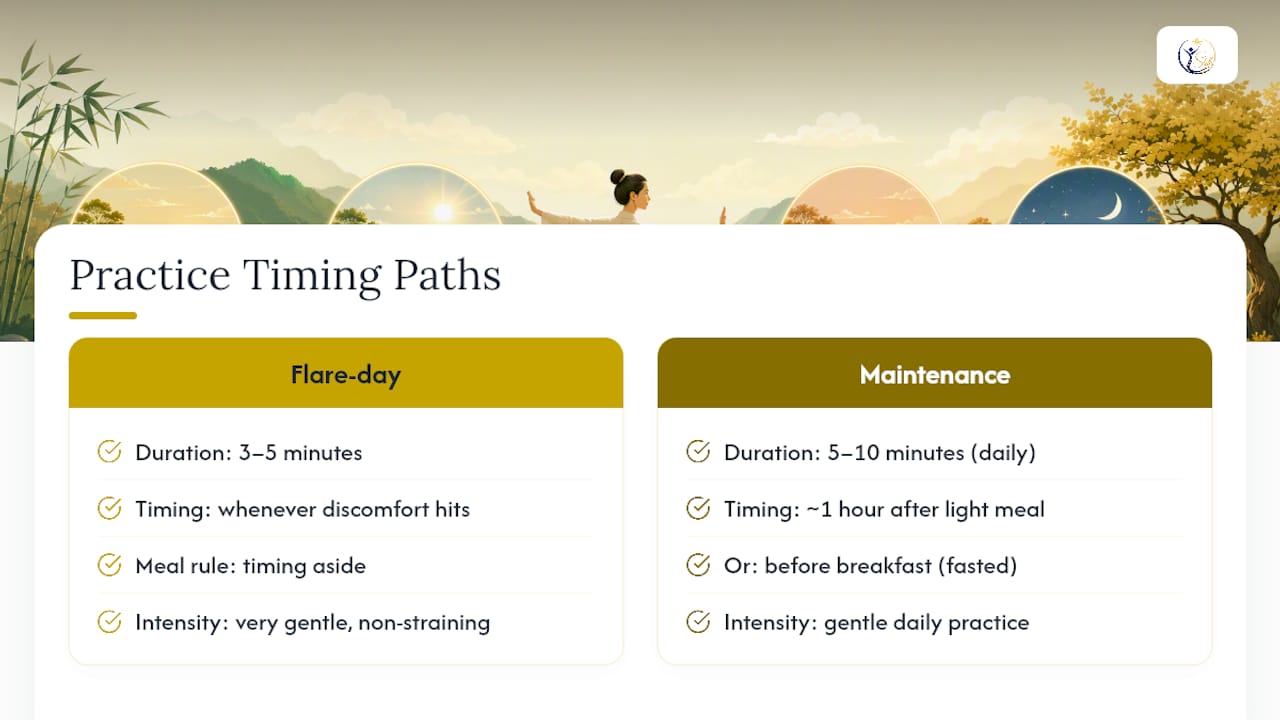
In practice, this means you have two reasonable paths depending on your symptoms. On a flare day, the three to five minute emergency routine works whenever discomfort hits, meal timing aside, since it is gentle enough not to strain active digestion. On steadier days, a daily five to ten minute maintenance practice fits well about an hour after a light meal, or first thing in the morning before eating. Consistency does more for long-term gut resilience than any single perfectly timed session.
Your Daily 10 To 15 Minute Gut Recovery Routine
Once acute symptoms have settled, a slightly longer daily practice builds real resilience over weeks rather than just addressing today's discomfort. This routine draws on movements taught in traditions like Five Animal Qigong and White Tiger Qigong, both built around slow, low-impact core engagement.
- Warm-up (2 minutes). Stand with knees soft, gently sway side to side, and let your arms swing loosely to loosen your lower back and hips.
- Diaphragmatic breathing (2 to 3 minutes). Place both hands below your navel and breathe slowly, extending each exhale a little longer than the last.
- Abdominal massage, 24 counts each direction. Trace circles first against digestion's natural flow, then with it, a technique some practitioners describe as "uncorking then flowing" to mobilize the gut before encouraging natural transit.
- Gentle core mobilization (3 to 4 minutes). Draw on slow torso rotations and low squats reminiscent of Five Animal Qigong's bear or tiger forms, keeping movement small and controlled.
- Centerline strokes (1 to 2 minutes). Use flat palms to stroke gently downward from your breastbone to your navel, repeating ten to twelve times.
- Hand-on-Dantian close (2 minutes). Rest both palms below your navel, breathe quietly, and let your system settle before returning to your day.
If you have IBS-D or a sensitive gut, keep every step gentle rather than vigorous, and shorten the routine to five minutes on harder days rather than skipping it entirely. Drink warm water afterward, not cold, and avoid jumping straight into strenuous activity right after.
Pro Tip: Progress slowly. Adding minutes or extra repetitions gradually over several weeks tends to produce steadier results than diving straight into a full 15 minute session, which can sometimes trigger the intense "cleansing" reactions beginners find discouraging.
Eating Habits That Support Your Qigong Practice
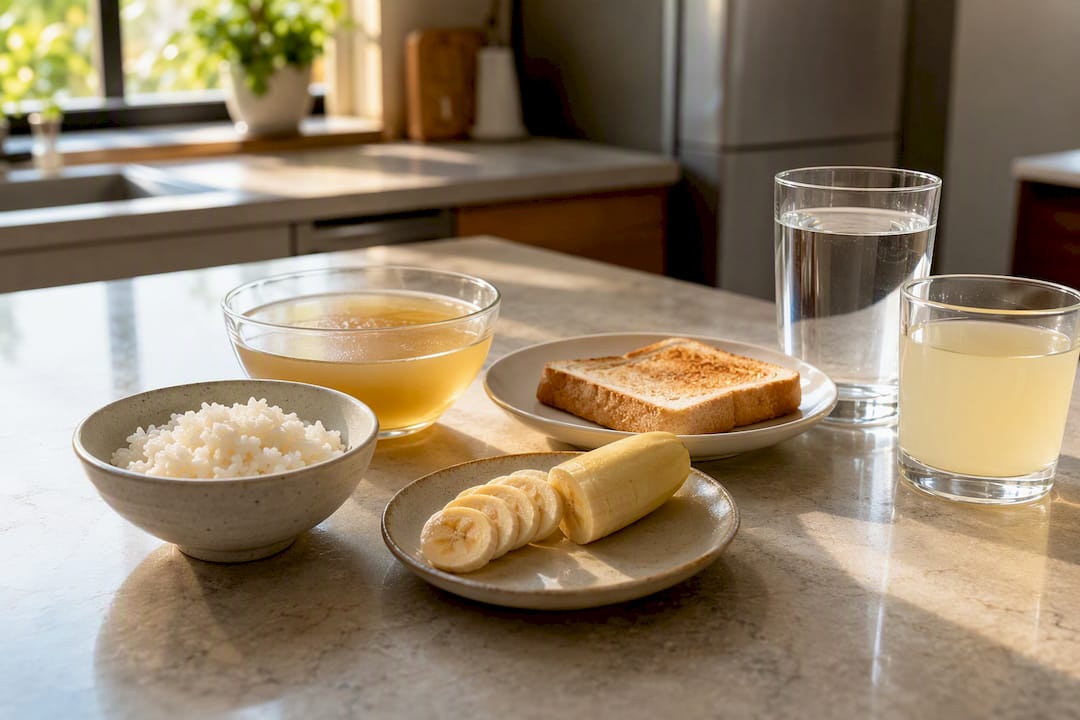
Qigong calms your nervous system and encourages steady digestive rhythm, but what you eat still shapes how your gut responds. During an active flare, bland, low-fiber foods like plain rice, bananas, toast, and broths give your digestive tract less work to do while it recalibrates. Cold foods and iced drinks are worth avoiding for the same reason many qigong traditions caution against practicing right after cold exposure: they can constrict digestive blood flow just when you want to encourage warmth and circulation.
Caffeine, alcohol, and very fatty or spicy meals tend to speed up intestinal transit, which works against the calming, regulating effect your breathing practice is trying to build. If IBS-D is part of your picture, common trigger categories include high-FODMAP foods such as onions, garlic, wheat, and certain dairy products, though sensitivity varies enough from person to person that keeping a simple food and symptom log often reveals more than any general list.
Staying hydrated with room-temperature water and electrolyte-replenishing fluids matters just as much as any breathing exercise, particularly if diarrhea has been frequent. Think of diet and qigong as working the same shift rather than competing priorities: one settles your nervous system and gut motility from the inside, the other reduces the raw material your gut has to process while it heals. Neither replaces the other, and combining both tends to produce steadier results than relying on just one.
Building Lasting Digestive Resilience
A single good routine on a bad day helps, but the real payoff from qigong shows up after weeks and months of steady practice. Treating digestive qigong as a five to ten minute daily habit, similar to brushing your teeth, tends to matter more than any single perfect session.
Sleep, stress management, and movement all feed into the same nervous system regulation that digestive qigong targets, so pairing your practice with consistent sleep timing and regular gentle movement compounds the benefit rather than working in isolation. People managing IBS-D in particular often notice that stress spikes precede symptom flares by a day or two, which makes daily practice a preventive habit rather than just a reactive one.
Rotating between different qigong forms also keeps a long-term practice sustainable. Five Animal Qigong emphasizes varied movement patterns modeled on the tiger, deer, bear, monkey, and crane, while White Tiger Qigong focuses more on breath-driven internal cultivation. Alternating between styles across a week can prevent the practice from feeling repetitive while still reinforcing the same core skill: a nervous system that recovers its footing quickly after stress.
The habit that sticks is rarely the most intense one. It is the one short enough to actually do on a tired Tuesday evening, which is exactly why the three to five minute routine earlier in this guide exists alongside the longer daily practice.
What The Evidence Actually Shows
The honest answer is that qigong's evidence base for diarrhea specifically is thinner than its evidence base for stress reduction generally. Most of what supports qigong for digestive symptoms comes from practitioner literature and Traditional Chinese Medicine frameworks rather than large randomized clinical trials targeting diarrhea as an endpoint.
What is better supported is the underlying mechanism. Traditional Chinese Medicine perspectives describe qigong as supporting gut motility and reducing inflammation partly through its effect on the gut-brain axis, the well-documented communication loop between nervous system state and digestive function. That connection, between stress and gut symptoms, is well established even outside TCM frameworks, which lends indirect support to why a calming practice would ease functional digestive symptoms.
For IBS-D specifically, the stress-symptom link is strong enough that stress reduction techniques of many kinds show benefit, and qigong fits that broader category. What is not established is qigong as a treatment for infectious or pathogen-driven diarrhea, food poisoning, or diarrhea tied to conditions like inflammatory bowel disease. The evidence supports qigong as a genuine complement for functional, stress-linked digestive symptoms, not as a cure-all for every cause of loose stool.
When Qigong Isn't Enough On Its Own
Qigong works best as one part of a larger picture, not a replacement for medical evaluation when something more serious is happening. If diarrhea persists beyond a couple of days, recurs frequently, or comes with unexplained weight loss, it deserves a conversation with a doctor rather than another week of breathing exercises.
Conditions like inflammatory bowel disease, celiac disease, bacterial infections, and parasitic infections all produce diarrhea that no amount of gentle movement will resolve, because the underlying cause needs targeted treatment: medication, dietary elimination, or antimicrobial therapy depending on the diagnosis. Qigong can support your nervous system and comfort level alongside that treatment, but it cannot substitute for it.
A reasonable rule of thumb: if your symptoms have a clear stress or dietary trigger, come and go, and respond even partially to calm and rest, qigong-based approaches are worth building into your routine. If symptoms are severe, persistent, or accompanied by red flags like blood, fever, or significant weight change, get evaluated first and treat qigong as a support tool once you understand what you are actually managing. Even well-managed IBS-D benefits from periodic checkups, since symptoms can shift over time in ways worth tracking with a healthcare provider.
Why Gentle Consistency Beats Intensity
Students often arrive expecting dramatic results from their first long session, then feel discouraged when a mild digestive upset shows up instead. In teaching settings, that reaction usually means someone increased their practice intensity too quickly rather than something being wrong with the approach itself. The fix is almost always to shorten the session, soften the pressure, and let the body adjust over days rather than minutes.
Guided instruction shortens that learning curve considerably. Working with someone trained in White Tiger Qigong and its lineage means the pacing, sequencing, and pressure cues are already calibrated for common digestive sensitivities, which matters more than most beginners expect. Private coaching in particular tends to catch small form issues, like pressing too hard during abdominal circles, that self-taught practice often misses for months.
— Stella
Learn Safe, Guided Digestive Qigong Routines
Reading a routine is one thing. Having someone watch your form, adjust your pace, and answer your specific questions about IBS-D or a stubborn flare is another. That is exactly the gap Stella QigongStar's online classes are built to close.
Courses range from focused five to ten minute digestive sessions to full programs built around Five Animal Qigong and White Tiger Qigong, taught live online or available on-demand so you can practice on your own schedule. Beginners get clear pacing cues from the start, which matters most in the early weeks when overdoing a new practice is the most common cause of those uncomfortable "cleansing" reactions. Private coaching sessions are also available for anyone who wants individual feedback on form or a routine adapted to IBS-D sensitivity rather than a generic template.
If you want a structured path instead of piecing routines together from articles, explore the current online class schedule and find a starting point that matches how your gut is feeling this week.
This article is general information, not a substitute for advice from a qualified doctor. Consult a qualified healthcare professional about your own circumstances before acting on anything here.
Sources
- Trust your Gut: Qigong for Digestion — Tai Chi Qigong
- Digestive Qigong: Simple Self Care — Heart Spring Health
- Conception Vessel 12 (Ren 12) — Acupuncture Points
- Chinese Medicine for Gut Health: Healing the Microbiome with Herbs, Qigong & Acupuncture — Empowered You Acupuncture
FAQ
Can Qigong Help With Digestion?
Yes, gentle qigong movements and diaphragmatic breathing can support digestion by calming the nervous system and encouraging steady peristalsis, particularly for stress-related symptoms like IBS-D.
What Emotion Is Connected To The Digestive System In Chinese Medicine?
Traditional Chinese Medicine frequently links the stomach and spleen, the organs most tied to digestion, with worry and overthinking, which is part of why calming, mindful practices are traditionally recommended for digestive complaints.
What Are The Negative Side Effects Of Qigong?
Some beginners experience temporary "cleansing" reactions like mild loose stools, fatigue, or light-headedness when starting or intensifying practice too quickly, though this should be brief and mild rather than severe or worsening.
Which Point Is Commonly Used For Digestion In Qigong Practice?
Ren 12, located between the navel and the base of the sternum, is a commonly referenced point in digestive-focused qigong, often used alongside Stomach 36 below the knee for abdominal symptoms.
How Soon After Eating Should I Practice Qigong?
General guidance recommends waiting one to three hours after a heavy meal, though some short, gentle digestive routines are specifically designed to be done right after eating to generate warmth for the stomach.