

Qigong can help reduce digestive inflammation and soothe digestion for many adults when practiced consistently. Clinical trials have measured meaningful drops in C-reactive protein (CRP), a key inflammation marker, and shifts in gut microbiota diversity after 8 to 10 weeks of regular practice. The vagus nerve is central to how this works: slow, diaphragmatic breathing activates the parasympathetic nervous system, calming the gut's stress response and creating conditions where healing can happen. To get started today, try this micro-routine: spend 3 minutes on deep abdominal (Dan Tian) breathing, 2 minutes on gentle navel-area tapping, and 2 minutes in quiet standing stillness. Practice daily, or at minimum twice daily for 5–10 minutes. Stella QigongStar offers structured courses in White Tiger Qigong and Five Animal Qigong if you want guided, progressive learning.
Safety note: If you have been diagnosed with inflammatory bowel disease (ulcerative colitis or Crohn's disease), or if you are experiencing severe abdominal pain, rectal bleeding, or unexplained weight loss, consult your gastroenterologist before starting any new movement practice. The NIDDK reports that digestive diseases affect tens of millions of Americans, and for many, Qigong can be a gentle, supportive complement to medical care — not a replacement for it.
Table of Contents
- A Gentle 5–15 Minute Qigong Routine for Digestion
- How Qigong Reduces Gut Inflammation: Evidence and Mechanisms
- What Traditional Chinese Medicine Teaches About Your Gut
- Adapting Qigong for IBS, Ulcerative Colitis, and Acid Reflux
- How to Choose a Qigong Teacher or Course for Digestive Health
- Key Takeaways
- Why Digestive Qigong Deserves More Attention Than It Gets
- Start Your Digestive Wellness Practice With Qigongstar
- Useful Sources and Further Reading
A Gentle 5–15 Minute Qigong Routine for Digestion
You do not need a large space, special equipment, or prior experience to begin. The four exercises below draw from digestive Qigong traditions, including movements found in White Tiger Qigong and Five Animal Qigong. Move slowly, breathe gently, and stop if anything feels uncomfortable.
| Exercise | Duration | Reps / Tempo | Key Cue |
|---|---|---|---|
| Dan Tian abdominal breathing | 3–5 min | Inhale 4 counts, exhale 6 counts | Belly rises on inhale, softens on exhale |
| Gentle navel tapping | 2–3 min | Light fingertip taps | Loose wrists, never forceful |
| Pebble-in-the-pond spinal twist | 3–4 min | 8–10 slow rotations each side | Initiate from waist, not shoulders |
| Standing stillness (Zhan Zhuang) | 2–3 min | Continuous, eyes soft | Feet shoulder-width, knees soft |
Dan Tian breathing is the foundation. Sit upright or stand with feet shoulder-width apart. Place one hand on your lower abdomen, just below the navel. Inhale slowly through the nose for four counts, letting your belly expand outward. Exhale through slightly parted lips for six counts, feeling the belly gently fall. The longer exhale is deliberate: it activates the parasympathetic branch of your nervous system, signaling safety to your gut.
Navel tapping follows naturally. Keep your wrists loose and use relaxed fingertips to tap lightly around the navel in a circular pattern. The intention is gentle stimulation of the abdominal organs, not pressure. Think of it as a soft internal massage that encourages circulation and motility.

Pebble-in-the-pond twists are standing rotations where you imagine a pebble dropped into still water, sending ripples outward from your center. Stand with feet shoulder-width apart, arms hanging loosely. Rotate your torso gently left and right, letting your arms swing naturally. Keep the movement slow and fluid, never jerky.
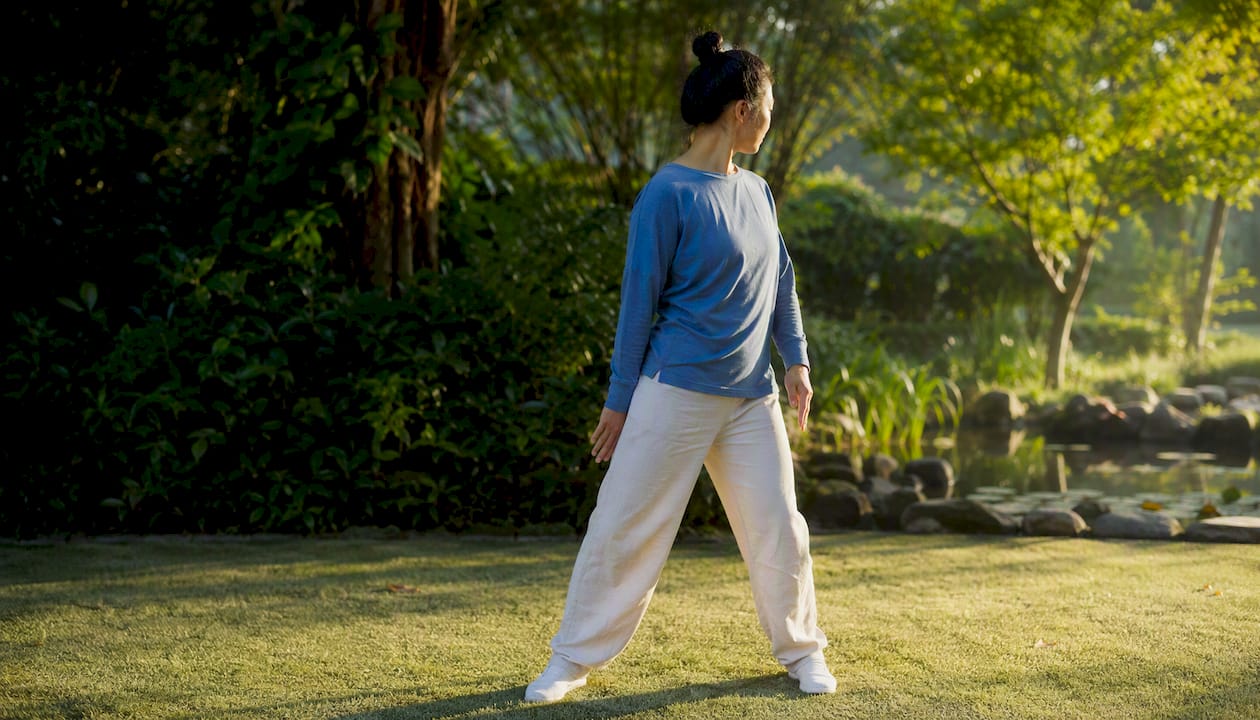
Standing stillness closes the routine. Simply stand quietly, breathe naturally, and let your awareness rest on the warmth in your lower abdomen. This brief pause supports vagal tone and allows the nervous system to settle.
Modifications:
- Pregnancy or recent abdominal surgery: Skip navel tapping and twists; focus only on Dan Tian breathing in a supported seated position.
- Hernia or severe reflux: Avoid any forward bending; keep the torso upright throughout.
- Limited mobility: All four exercises can be done seated in a chair with a straight back.
Pro Tip: If breath and movement feel hard to coordinate at first, practice the breathing alone for three days before adding the other exercises. Coordination comes naturally once the breath pattern feels familiar.
How Qigong Reduces Gut Inflammation: Evidence and Mechanisms
The idea that slow, mindful movement could calm gut inflammation might sound surprising. The biology behind it is more concrete than you might expect.
What the research shows
An 8-week Qigong intervention using the Prolong Life With Nine Turn method in 96 adults with chronic fatigue syndrome improved gastrointestinal symptom subscales and altered gut microbiota alpha diversity, with outcomes comparable to cognitive behavioral therapy. A separate randomized controlled trial of Medical Qigong in cancer patients found statistically significant reductions in CRP at 10-week follow-up, alongside improved quality of life and reduced mood disturbance. Memorial Sloan Kettering Cancer Center's integrative medicine program notes that Qigong is associated with lower IL-6 levels and improved mood and quality of life in chronic disease populations.
Early experimental work adds another layer. Ultrasound measurements taken during Qigong meditation showed rapid changes in gallbladder diameter and intestinal contractility within minutes of practice, suggesting that bile secretion and gut motility respond quickly to this kind of focused, meditative movement.
"Qigong training is associated with reduced peripheral IL-6 and neurocognitive improvements, with proposed mechanisms including autonomic and neuroendocrine modulation via vagal stimulation and HPA axis regulation."
Honest limits of the evidence
Most trials are small, protocols vary widely, and few studies use the same outcome measures. Larger, well-controlled RCTs with objective biomarker replication are still needed. What exists is promising and mechanistically coherent, but Qigong should be understood as a supportive practice within a broader care plan, not a standalone cure. For mind-body approaches in inflammatory bowel disease, the evidence base is preliminary and calls for careful integration with medical treatment.
When to stop and seek medical care
Qigong is gentle, but some symptoms require a clinician, not a movement practice. Stop and contact your provider if you experience:
- Blood in stool or rectal bleeding
- Severe or worsening abdominal pain
- Unexplained weight loss
- Fever alongside digestive symptoms
- Symptoms that worsen significantly after starting practice
Adapt intensity to your energy levels. On low-energy days, seated breathing alone is a complete and worthwhile practice.
What Traditional Chinese Medicine Teaches About Your Gut
In Traditional Chinese Medicine (TCM), the spleen and stomach meridians are the primary channels governing digestion. The spleen, in TCM terms, is responsible for transforming food into usable energy (Qi) and distributing it through the body. When spleen Qi is weak, digestion becomes sluggish, bloating arises, and the mind tends toward worry and overthinking.
The Dan Tian, located roughly two inches below the navel, is considered the body's central energy reservoir. Warming and activating this area through breath and gentle movement is thought to strengthen digestive fire and support the smooth flow of Qi through the stomach and intestinal channels.
TCM also draws a direct link between emotion and digestion that modern neuroscience increasingly supports. Worry and rumination are said to "knot" spleen Qi, disrupting the smooth downward flow of stomach energy. Translated into a modern cue: when anxious thoughts spiral, your gut tightens in response. Breath-focused Qigong interrupts that loop by giving the nervous system a different signal.
Three TCM-inspired practice cues to weave into your routine:
- While breathing into the Dan Tian, visualize gentle warmth spreading outward from your lower abdomen, like sunlight softening a knot of tension.
- During navel tapping, imagine the sound and sensation loosening stagnant energy and encouraging fresh circulation through the digestive organs.
- In standing stillness, let your awareness rest on the sensation of your feet on the ground. This "rooting" cue calms the upward scatter of anxious energy that TCM associates with digestive disruption.
Pro Tip: TCM imagery is a tool, not a requirement. If visualization feels unfamiliar, simply focus on the physical sensation of your breath. The physiological benefit is the same.
Adapting Qigong for IBS, Ulcerative Colitis, and Acid Reflux
Not every digestive condition calls for the same approach. The table below outlines condition-specific guidance so you can practice safely and effectively.
| Condition | Recommended Approach | Key Modifications | When to Pause |
|---|---|---|---|
| IBS | Low-intensity breath-based routine; track symptom triggers | Avoid deep abdominal pressure during flare; pace gently | Worsening cramping or diarrhea after practice |
| Ulcerative colitis / Crohn's | Conservative breathing only during flares; coordinate with GI team | No abdominal tapping or twists when actively inflamed | Any flare-up; resume only with clinician clearance |
| Acid reflux (GERD) | Upright posture throughout; slow exhalation emphasis | Avoid lying-down movements; wait 90 minutes after eating | Symptoms worsen during or after practice |
IBS
Qigong for IBS works best as a low-intensity, breath-centered practice. The goal is to reduce the gut hypersensitivity that drives IBS symptoms, not to stimulate the gut aggressively. Keep sessions short (5–10 minutes) during symptomatic periods, and pay attention to which movements feel soothing versus activating. Symptom tracking is genuinely useful here: small adjustments in timing, posture, or breath depth can make a noticeable difference.
Ulcerative colitis and Crohn's disease
During an active flare, abdominal manipulation of any kind, including tapping and twisting, should be avoided entirely. Gentle seated breathing is the safest option, and even that should be cleared with your gastroenterologist first. Adjuvant therapies for IBD show early promise for immunomodulatory effects, but the evidence remains preliminary. Qigong is a supportive complement to medical treatment, never a substitute.
Acid reflux
Upright posture is non-negotiable. Avoid any movement that compresses the abdomen or brings you into a forward fold. Emphasize the slow exhale in your breathing practice, which gently massages the diaphragm without increasing intra-abdominal pressure. Wait at least 90 minutes after eating before practicing.
This article provides general wellness information, not medical advice. Always confirm current guidance with your healthcare provider or a qualified specialist.
How to Choose a Qigong Teacher or Course for Digestive Health
A qualified teacher changes the experience significantly, especially if you are managing a specific condition. Self-practice from videos works well once you have a foundation, but a teacher can spot postural habits that undermine the breath, offer real-time modifications, and progress your practice safely.
What to look for in a course or instructor:
- Certification: Look for instructors certified through recognized lineages such as the White Tiger Qigong School or credentialed through Yoga Alliance. These credentials signal that the instructor has met structured training standards.
- Digestive-specific content: The course should include modules explicitly focused on gut health, not just general wellness. White Tiger Qigong and Five Animal Qigong both contain movement sequences with direct relevance to digestive function.
- Contraindication awareness: A good instructor will ask about your health history before your first session and know how to modify for IBD, recent surgery, pregnancy, or hernia.
- Access options: Small-group or private sessions allow for personalized feedback. On-demand courses offer flexibility, which matters when symptoms fluctuate.
- Evidence references: Instructors who can point you toward published research, or who acknowledge the limits of what Qigong can do, tend to be more trustworthy than those making sweeping medical claims.
Questions worth asking before you enroll:
- Do you have experience working with students who have IBS, IBD, or post-surgical restrictions?
- Can you modify the routine if I have a flare-up or low-energy day?
- Is there a trial class or refund policy?
Stella QigongStar offers White Tiger Qigong and Five Animal Qigong courses specifically designed with digestive wellness in mind, available online and in person, with modifications built into the curriculum.
Key Takeaways
Qigong reduces digestive inflammation by activating the vagus nerve, calming the HPA axis, and supporting beneficial microbiome shifts, with measurable changes in markers like CRP emerging over 6–10 weeks of consistent practice.
| Point | Details |
|---|---|
| Start with breath | Dan Tian abdominal breathing is the safest, most effective entry point for digestive Qigong. |
| Practice daily | A 5–10 minute daily micro-practice produces more consistent results than occasional longer sessions. |
| Expect early relief in weeks | Bloating and gut calm often improve within weeks; CRP-level changes typically take 8–10 weeks. |
| IBD requires medical clearance | Avoid abdominal tapping and twists during flares; always coordinate with your GI team first. |
| Learn with Qigongstar | Stella QigongStar's White Tiger Qigong and Five Animal Qigong courses offer guided, digestive-focused routines with certified instruction. |
Why Digestive Qigong Deserves More Attention Than It Gets
Most people who come to Qigong for gut health arrive after years of trying other things. They have adjusted their diet, managed stress as best they could, and still find their digestion unpredictable and exhausting. What often surprises them is how quickly the nervous system responds to something as simple as a longer exhale.
The conventional wellness conversation around gut health focuses almost entirely on what you eat. That matters, but it misses something. The gut does not operate in isolation from the nervous system. Chronic stress keeps the body in a low-grade fight-or-flight state that disrupts motility, increases gut permeability, and shifts the microbiome toward inflammatory patterns. Addressing that upstream driver, through breath, movement, and mindful stillness, is not a soft add-on. It is addressing a root cause.
What I find most meaningful about teaching digestive Qigong is that it gives people a practice they can do anywhere, on their worst days, without equipment or a perfect environment. The gut-brain connection is real, and Qigong is one of the most accessible tools we have for working with it. Certified through the White Tiger Qigong School and Yoga Alliance, I have seen students with IBS, reflux, and post-surgical digestive challenges find genuine relief through consistent, gentle practice. The key word is consistent. Qigong is not a quick fix, but for many people it becomes the most reliable thing in their gut-health toolkit. Stay curious, stay gentle with yourself, and keep your medical team in the loop.
Start Your Digestive Wellness Practice With Qigongstar
If the routine in this article resonated with you, structured learning will take you much further than self-practice alone.
Qigongstar offers online Qigong classes and courses built specifically for digestive wellness, stress relief, and gut health, available on demand or as live virtual sessions. White Tiger Qigong and Five Animal Qigong are both included, with digestive-focused modules, clear modifications for common conditions, and the option for private sessions when you need personalized guidance. Whether you are brand new to Qigong or returning after a break, the curriculum is designed to meet you where you are. Every course is taught by Stella, certified through the White Tiger Qigong School and Yoga Alliance, with a teaching approach grounded in both TCM tradition and current research. Browse the available courses and book your first session at qigongstar.com/online-qigong-classes.html.
Useful Sources and Further Reading
| Source | Why It's Worth Reading |
|---|---|
| Qigong Practice Shows Potential Benefits for Fatigue and Gut Symptoms | 8-week RCT data on gut microbiota diversity and GI symptom improvement in chronic fatigue syndrome. |
| Medical Qigong RCT: CRP and Quality of Life (Annals of Oncology) | Controlled trial showing statistically significant CRP reduction and improved mood at 10 weeks. |
| Experimental Research on Qigong and the Digestive Tract (Qigong Institute) | Ultrasound data on gallbladder and intestinal contractility changes during Qigong meditation. |
| Qigong Overview: Memorial Sloan Kettering Cancer Center | Authoritative integrative-medicine summary linking Qigong to lower IL-6 and improved quality of life. |
| Adjuvant Therapies for IBD (PMC / NIH) | Systematic review of complementary therapies in IBD, including safety and evidence quality. |
| Mechanistic Overview: Vagal and HPA Pathways (ScienceDirect) | Detailed mechanistic review of how Qigong modulates autonomic and neuroendocrine inflammation pathways. |
| Digestive Disease Statistics (NIDDK) | U.S. prevalence and burden data for digestive diseases, providing context for why supportive practices matter. |