
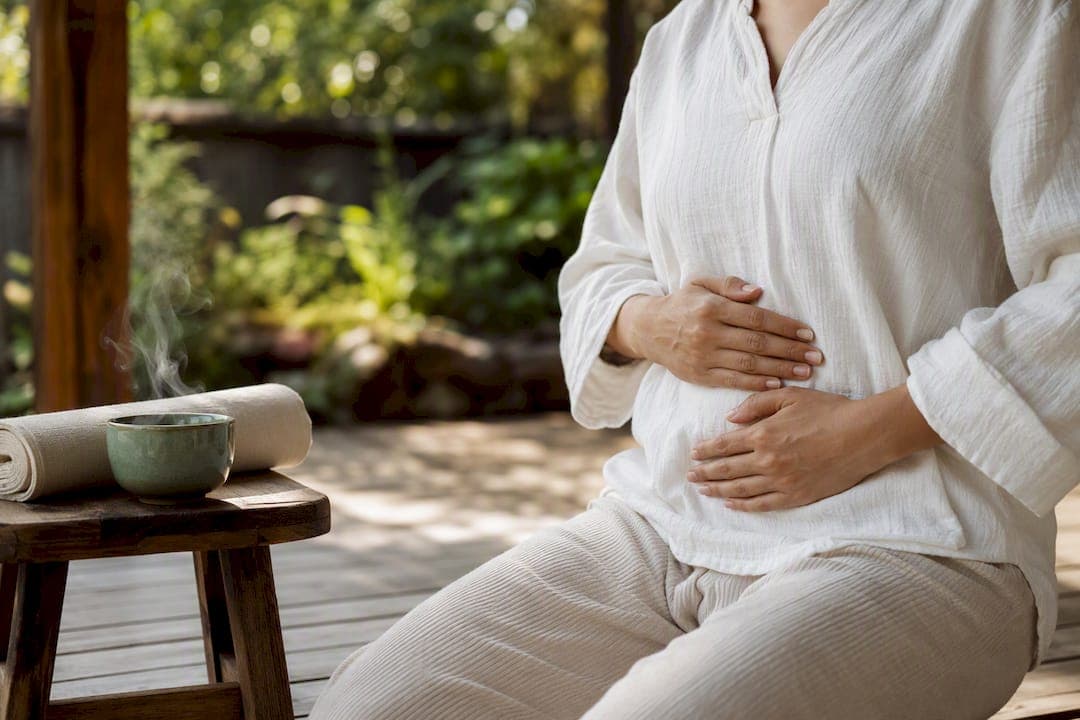
Qigong can reduce many common gastritis symptoms for people who practice gentle, digestive-focused routines alongside medical advice. Bloating, cramping, and that low, gnawing ache after meals often respond well to slow abdominal work and diaphragmatic breathing, which calm the nervous system and encourage smoother digestion. This isn't a replacement for a doctor's care. It's a warm, steady support that works alongside it.
Start with two simple moves today:
- Gentle abdominal massage: circular strokes around the navel, clockwise, for two to three minutes.
- Diaphragmatic breathing: slow inhales that expand the belly, not the chest, for five minutes.
A 1989 clinical case series of 103 chronic gastritis patients found a 97.1% total effective rate after consistent daily practice of Daoyin-Tuna qigong. That's a striking number for a gentle movement practice, though it comes from an older, uncontrolled study, so treat it as encouraging rather than conclusive.
If you notice black or bloody stools, unexplained weight loss, or vomiting that won't stop, pause your practice and call your doctor immediately.
Key Takeaways
Gentle, digestive-focused qigong routines like Daoyin-Tuna and abdominal massage can ease gastritis symptoms when practiced consistently and paired with medical guidance.
| Point | Details |
|---|---|
| Start with two moves | Try abdominal massage and diaphragmatic breathing for five to ten minutes daily. |
| Match routine to symptom | Use seated breathing for reflux, abdominal massage for bloating, and warming circles for cramping. |
| Time your practice | Do abdominal massage after meals; practice breathing-focused routines on a lighter stomach. |
| Watch for red flags | Stop practicing and seek care for bleeding, severe pain, or unexplained weight loss. |
| Learn with guidance | Qigongstar's Five Animal and White Tiger Qigong courses offer beginner-friendly, progressive instruction for safe digestive support. |
Table of Contents
- Specific Qigong Routines to Try for Gastritis
- How to Practice Qigong Safely for Stomach Issues
- What Does the Research Say About Qigong and Digestive Health?
- Pairing Qigong With Diet and Lifestyle for Gastritis Relief
- When to See a Doctor for Gastritis Symptoms
- Stella's Perspective on Practicing Qigong for Digestive Wellness
- How Stella QigongStar Can Help You Start Safely
- Sources
Specific Qigong Routines to Try for Gastritis
Different gastritis symptoms respond to different qigong approaches, and knowing which routine addresses which symptom saves you weeks of guessing.
Abdominal massage (digestive qigong) is the gentlest entry point. You place both palms over the navel and stroke in slow clockwise circles, following the natural path of the large intestine. Most people feel warmth build within a minute or two, sometimes with a soft gurgling as digestion stirs. This warming sensation is the whole point. In Chinese medicine terms, it nurtures the "spleen and stomach" system responsible for transforming food into usable energy.

Daoyin-Tuna is a structured breathing and stretching sequence traditionally practiced four times a day. The 1989 case series that tracked 103 chronic atrophic gastritis patients over 79 days found marked symptom improvement in 69.9% of participants, alongside measurable weight gain and increased daily food intake. That's a meaningful signal for a practice built almost entirely on breath and gentle rotation.
PLWNT (Prolong Life With Nine Turn) combines rhythmic abdominal manipulation with coordinated diaphragmatic breathing. A current randomized trial protocol is testing whether this method eases gastrointestinal symptoms alongside fatigue and anxiety, reflecting the idea that gut distress and nervous system strain often travel together.
Five Animal Qigong and White Tiger Qigong movements bring gentle spinal rotation and rib mobilization into the mix, which can loosen tension around the stomach and diaphragm without any deep bending.
- Reflux or heartburn: favor seated breathing and Five Animal shoulder rolls over any forward bends.
- Bloating or gas: lead with abdominal massage, then add White Tiger's gentle twists.
- Cramping: pair Daoyin-Tuna breathing with slow, warming abdominal circles.
Pro Tip: Warm your palms by rubbing them together for ten seconds before abdominal massage. The heat transfers directly and makes the warming sensation arrive faster.
How to Practice Qigong Safely for Stomach Issues
Timing matters more with digestive qigong than with most other styles. Abdominal massage and PLWNT-style routines work best about 20 to 30 minutes after eating, when gentle warmth and movement support the stomach's natural work. Breathing-focused practices like Daoyin-Tuna, on the other hand, are traditionally done on a lighter stomach, since deep diaphragmatic breathing feels more comfortable without a full belly pressing against it.
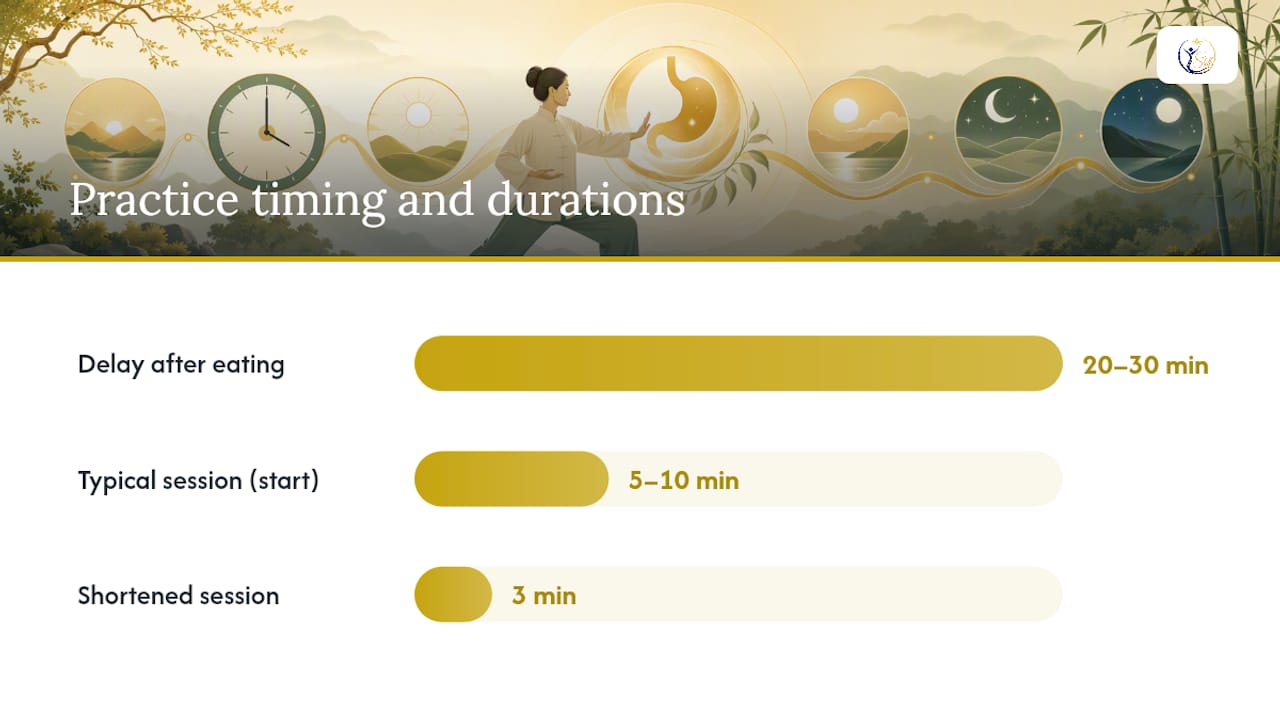
Begin with five to ten minutes once a day. After a week of steady, comfortable practice, most people can move to twice daily, once in the morning and once after the evening meal.
Keep these posture cues in mind:
- Sit or stand tall with your shoulders relaxed, not stacked stiffly.
- Let your belly soften and expand on the inhale rather than holding it tight.
- Keep movements slow enough that you could hold a conversation without losing your breath.
If mobility or reflux limits you, modify freely:
- Swap standing sequences for a seated chair version.
- Skip forward bends entirely if reflux flares with position changes.
- Shorten sessions to three minutes and build up gradually.
Stop practicing and contact your doctor if you develop sudden severe pain, vomiting, or any sign of bleeding.
What Does the Research Say About Qigong and Digestive Health?
The evidence for qigong and gastritis is real, but it's early-stage and mostly small in scale. That distinction shapes how you should think about it.
The strongest data point comes from the 1989 Daoyin-Tuna study, which followed 103 chronic atrophic gastritis patients practicing four sessions daily for 79 days. Those numbers are compelling for a practice that costs nothing and carries essentially no side effects.
A separate 33-case series using qigong alongside Xinxi Water reported 22 cures and 10 improvements across abdominal pain, flatulence, heartburn, and nausea. Small sample, no control group, but a consistent pattern worth noting.
The PLWNT trial protocol currently underway aims to measure gastrointestinal outcomes more rigorously within a broader symptom picture that includes fatigue and insomnia.
- Case series suggest promising symptom relief, not proof of cure.
- Qigong works best as a complement to medical testing and treatment, never a substitute for it.
Pairing Qigong With Diet and Lifestyle for Gastritis Relief
Qigong does its best work when your plate cooperates. Very cold or raw foods can counteract the warming effect you're building through abdominal massage, so favor cooked, warm meals when symptoms flare. Moderating caffeine and alcohol gives an irritated stomach lining room to calm down, and smaller, more frequent meals tend to sit easier than three large ones.
Stress and sleep matter just as much as food. Paced breathing before bed supports the same parasympathetic shift that digestive qigong triggers during the day, according to Harvard Health's overview of mind-body practices. For deeper reading on the diet and inflammation connection, Qigongstar's guide to reducing digestive inflammation walks through specific food choices.
A simple daily rhythm:
- Morning: five minutes of diaphragmatic breathing before breakfast.
- After meals: two to three minutes of gentle abdominal massage.
- Evening: a slow relaxation sequence to unwind before sleep.
Pro Tip: Practicing abdominal massage right before bed can settle a restless stomach and support deeper sleep, which in turn eases next-day digestive stress.
When to See a Doctor for Gastritis Symptoms
Qigong supports digestive comfort, but certain symptoms need medical attention right away, not a breathing routine. Watch for:
- Black, tarry, or bloody stools
- Persistent vomiting, especially if it contains blood
- Unexplained weight loss
- Severe or worsening abdominal pain
Doctors typically investigate gastritis with an endoscopy, an H. pylori test, and basic bloodwork to rule out ulcers, infection, or anemia. Mention your qigong practice at your next appointment. Most clinicians are comfortable with gentle movement and breathing work running alongside standard treatment, and it helps them track what's actually improving your symptoms.
Stella's Perspective on Practicing Qigong for Digestive Wellness
Teaching White Tiger and Five Animal Qigong for digestive wellness, I've watched students notice calmer digestion within a few weeks of steady, short daily sessions. Expect gradual ease, not overnight change, and always keep your doctor in the loop.
How Stella QigongStar Can Help You Start Safely
Reading about digestive qigong is one thing. Having someone guide your breath, your posture, and your pacing is another, especially when you're working around a sensitive stomach. Qigongstar built its Five Animal Qigong and White Tiger Qigong courses specifically around progressive, beginner-friendly lessons, so you're never guessing whether a movement is safe for your current symptoms.
Both courses are available on-demand, so you can start with a short five-minute routine tonight, or join live classes for real-time instructor feedback as you build confidence. Each lesson includes modifications for mobility limits and flare-ups, and instructor support is there if a movement doesn't feel right for your body. If you'd rather explore breathwork and mindfulness more broadly first, Unikiff's overview of yoga and meditation benefits makes a solid companion read.
Ready to try it? Visit the online qigong classes page to pick a starter course and begin your first gentle session this week.
Sources
- PubMed: Daoyin-Tuna Qigong study (1989)
- PLWNT trial protocol (PMC)
- Qigong Institute: Treatment of gastritis with qigong and xinxi water (33 cases)
- Harvard Health: The health benefits of tai chi
This article is general information, not a substitute for advice from a qualified doctor. Consult a qualified healthcare professional about your own circumstances before acting on anything here.