

Yes, gentle Qigong can offer real, supportive relief for mild constipation. Try this now: rub your belly in slow clockwise circles for one minute, layer in three slow diaphragmatic breaths, then rise into one gentle standing twist. This calms your nervous system and nudges digestion along, though ongoing or severe symptoms deserve a conversation with your doctor.
TL;DR:
- Gentle qigong can support digestion by calming the nervous system and shifting the body into rest-and-digest mode, particularly for stress-related constipation.
- A quick five-minute routine involving belly rubs, diaphragmatic breathing, and torso twists can provide immediate relief, especially when done first thing in the morning.
- Daily practice of 10 to 15 minutes, including abdominal massage and breathing exercises, can retrain your nervous system and improve bowel regularity over time.
- It is safe for most people but should be avoided after recent surgery, during a bowel obstruction, or with severe unexplained pain, and urgent medical attention is necessary if symptoms persist.
- Consistency and patience, along with personalized adjustments, are key for long-term benefits, and guidance from qualified instructors enhances results.
Table of Contents
- Can Qigong Help With Constipation?
- 5-Minute Quick Routine: Three Moves to Wake Up Your Gut
- Breathing and Abdominal Massage for Digestion
- The 10 to 15 Minute Daily Digestive Qigong Routine
- When Should You Practice for the Best Results?
- Safety, Contraindications, and When to See a Doctor
- Stella's Perspective: What I've Learned Teaching Digestive Qigong
- Practice With Guidance: Stella's Qigong Courses for Digestive Wellness
- Sources
Can Qigong Help With Constipation?
Qigong works on constipation through your nervous system, not through force. Slow, mindful movement paired with deep breathing shifts your body out of fight-or-flight and into what physiologists call rest-and-digest mode, a parasympathetic state where digestion is allowed to actually happen, supported by practical breathwork techniques and step-by-step breathing exercises. UCLA researchers note that qigong supports this shift, which plausibly helps bowel motility, especially for constipation rooted in stress, tension, or a nervous system stuck in overdrive.
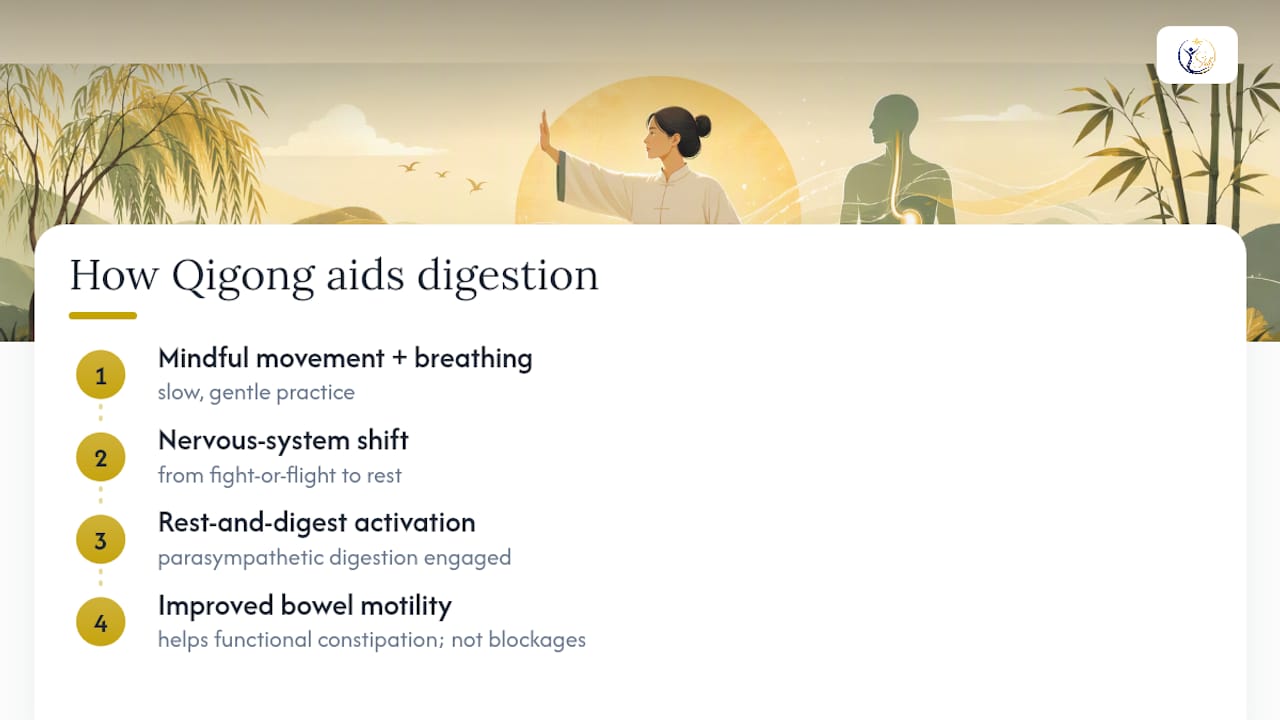
That distinction matters for how you approach this. Constipation shows up for different reasons: slow colonic transit, dehydration, low fiber intake, stress-driven tension in the gut, or side effects from medication. Qigong will not dissolve a physical blockage or treat an underlying medical condition, but for the everyday, functional kind of sluggishness so many adults live with, gentle movement and breath work can genuinely help move things along.
The standard term for this practice, if you want to search further, is "digestive qigong" or "abdominal qigong," a lineage of movement rooted in traditional Chinese medicine that specifically targets the belly, the diaphragm, and the meridians believed to govern gut function. Some guides refer to it as qigong exercises for digestion, but the underlying practice is the same gentle art you'll learn here.
A broad review of Tai Chi and Qigong research covering thousands of participants found consistently favorable outcomes across many health measures, with no adverse events reported in the monitored studies. That's a reassuring foundation for a practice this gentle.
5-Minute Quick Routine: Three Moves to Wake Up Your Gut
When you need relief now, this short sequence takes about five minutes and needs nothing but a little floor space.
- Belly rub warm-up (90 seconds). Stand or sit comfortably. Place your right hand over your navel, left hand on top. Circle clockwise, following the natural direction of your large intestine, for a moderate number of slow rotations. Breathe naturally as you go.
- Diaphragmatic breathing (90 seconds). Inhale through your nose for a count of four, letting your belly expand outward like a soft balloon. Hold for two counts. Exhale for six counts, drawing your navel gently toward your spine. Repeat for eight full breaths.
- Standing gentle twist (90 seconds). Feet shoulder-width apart, knees soft. Let your arms swing loosely as you rotate your torso side to side, allowing your hips to follow. Do 12 twists per side, exhaling on each turn to massage the abdominal organs from the inside.
You'll know it's working if you feel a gentle gurgle, warmth in your belly, or a softening of that tight, backed-up feeling. If standing twists feel like too much, do them seated with your feet flat and simply rotate your upper body instead.
Pro Tip: Do this routine first thing in the morning before coffee. Your gut is naturally more responsive right after waking, and you'll skip the caffeine-jitter interference with your breath count.
Breathing and Abdominal Massage for Digestion
Lower-dantian breathing, sometimes called abdominal or diaphragmatic breathing, is the engine behind most Qigong digestive work. Sit tall or lie on your back with knees bent. Inhale slowly through your nose for four counts, letting your lower belly rise while your chest stays quiet. Exhale for six counts, feeling your navel draw inward. Ten rounds is a gentle, effective dose.
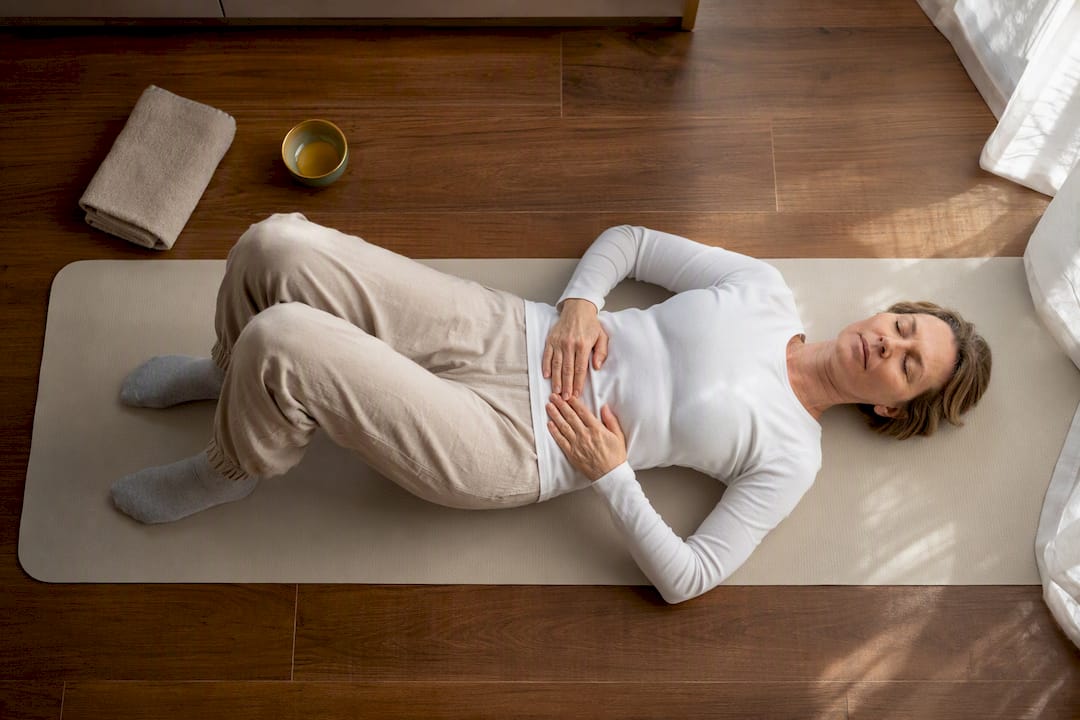
This isn't just relaxing. Cleveland Clinic points out that even ten minutes of qigong practice a day, blending movement, breath, and meditation, can be enough to produce noticeable benefits when done consistently.
Pair your breathing with these abdominal massage strokes:
- Circle clockwise around your navel multiple times to follow and stimulate your intestinal tract.
- Follow with several counterclockwise circles to release trapped tension, particularly if you feel bloated rather than sluggish.
- Use your fingertips, not your palm, over the point about three finger-widths below your navel, often called the lower dantian in qigong tradition.
- Press gently, never to the point of pain. Firm but soothing is the goal.
These specific counts, 24 and 36, show up again and again in traditional digestive qigong instruction, and having a number to count toward makes the practice much easier to stick with than a vague "massage your belly for a while."
The 10 to 15 Minute Daily Digestive Qigong Routine
For lasting improvement in bowel regularity, a short daily practice beats an occasional long one. Consistency is what retrains your nervous system over time.
- Warm-up (2 minutes): Gentle neck rolls and shoulder circles while breathing deeply, settling your mind before you begin.
- Standing abdominal breathing (3 minutes): Feet hip-width apart, hands resting on your belly, ten slow diaphragmatic breaths.
- Belly massage sequence (3 minutes): 36 clockwise circles, then 24 counterclockwise, as described above.
- Waist rotations and twists (3 minutes): Loose, swinging torso twists, letting your arms trail like ribbons, breathing out on each turn.
- Cooldown (2 minutes): Return to stillness. Rest your hands on your lower belly and take five slow breaths, noticing any warmth or movement.
If you have limited mobility or acute bloating, do the entire sequence seated, keeping the breathing and massage elements exactly as written. Skip the twists on days your abdomen feels tender and stick to breath and gentle strokes instead. As the routine becomes familiar, you can extend your breathing rounds or add a few extra minutes of walking afterward. Many readers find a simple 5 to 10 minute daily digestive routine is the easiest one to actually keep up.
When Should You Practice for the Best Results?
Timing changes what this practice can do for you.
- For urgent relief, the 5-minute routine can be done any time discomfort strikes, even sitting at your desk.
- For maintenance, aim for once daily, ideally at the same time so your body learns the rhythm.
- Most qigong is best practiced on a relatively empty stomach, but gentle digestive qigong is an exception. A short, calm session shortly after eating can actually support digestion rather than disrupt it.
- Pair practice with a glass of water beforehand, a short walk afterward, and shifting fiber-rich meals earlier in your day.
Safety, Contraindications, and When to See a Doctor
Qigong is a low-risk practice. The National Center for Complementary and Integrative Health notes that many studies monitoring for adverse effects reported none, though it should never replace medical care for a chronic condition.
Still, modify or skip abdominal work if any of these apply to you:
- Recent abdominal or pelvic surgery, where internal pressure could interfere with healing.
- A diagnosed or suspected bowel obstruction.
- Severe, unexplained abdominal pain rather than ordinary constipation discomfort.
- Pregnancy, without guidance adapted for your stage.
Stop and rest if a movement causes sharp pain rather than a gentle stretch or gurgle. Seek prompt medical review for constipation lasting more than three weeks, blood in your stool, unexplained weight loss, or severe pain, symptoms the NIDDK flags as reasons to see a clinician rather than manage things at home. For a fuller rundown of who should modify their practice, see this guide to qigong contraindications.
Pro Tip: If you're unsure whether your symptoms are "normal sluggish" or something that needs attention, treat persistent change in your bowel habits as your body asking you to check in with a doctor, not as something to breathe your way through indefinitely.
Stella's Perspective: What I've Learned Teaching Digestive Qigong
Teaching digestive qigong has taught me that people rarely need more intensity. They need more patience with a gentler pace. Most students arrive tense, breathing shallow and high in the chest, and the biggest shift happens the moment they finally let their belly move with the breath instead of holding it rigid.
Classes get adapted constantly: seated versions for anyone with IBS flare-ups or joint limits, shorter breath counts for beginners still learning to feel their own diaphragm. Nobody is expected to arrive advanced. This work rewards showing up consistently far more than showing up perfectly.
— Stella
Practice With Guidance: Stella's Qigong Courses for Digestive Wellness
Learning digestive qigong from written steps gets you started. Learning it with live feedback on your breath and posture is what makes the practice stick long term. Qigongstar's online qigong classes build on everything covered here, with routines specifically shaped around stress relief and gut health, delivered through live sessions and video replays you can revisit anytime.
The courses suit beginners and anyone managing IBS-type symptoms or stress-related digestive sluggishness, with formats such as single-purchase, self-paced programs or live bookings with instructor feedback. If you want a deeper, structured path, the White Tiger Qigong and Five Animal Qigong programs both include digestion-focused sequences within a broader system of practice. You can also learn more about Stella's background and certification before enrolling. Book a live class or start with an on-demand session to develop a gut-friendly routine.
This article is general information, not a substitute for advice from a qualified doctor. Consult a qualified healthcare professional about your own circumstances before acting on anything here.
Sources
- Qigong: What You Need To Know | NCCIH
- What are the health benefits of qigong? | Cleveland Clinic
- What is qigong? The ancient Chinese practice can provide real health benefits | UCLA
- Systematic review of Tai Chi and Qigong research (PMC)