
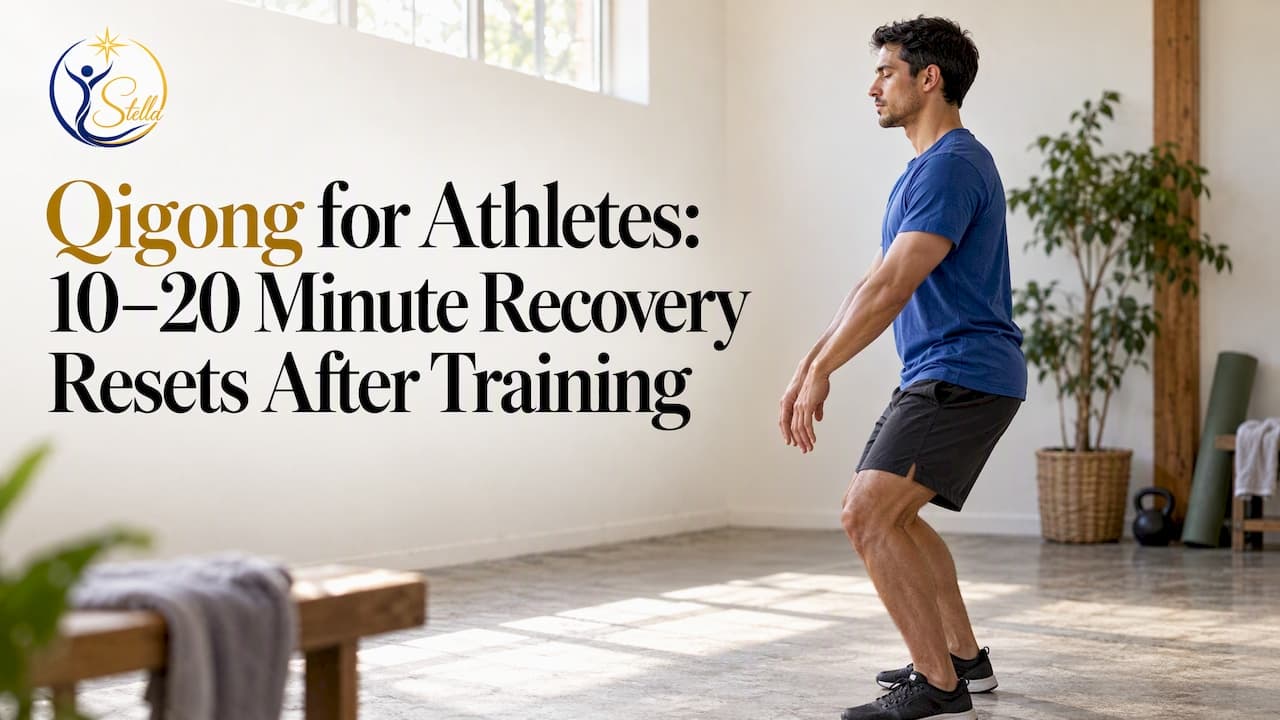
Qigong reliably supports athletic recovery by increasing gentle circulation, calming the nervous system, and improving mobility when practiced consistently. The main benefits for athletes include better blood flow to tired muscles, a calmer nervous system that supports deeper sleep, and gradual gains in range of motion. A randomized controlled trial and the NCCIH review back this pattern, and we offer a safe, instructor-led path to build the habit.
TL;DR:
- After high intensity training, use a 10 to 20 minute reset; reserve 20 to 40 minute mobility sessions for rest days or after heavy work.
- Begin with static postures and slow breathing for one to two weeks, then add gentle movement; shorten sessions if they leave you more tired.
- Athletes managing acute injuries, concussion, or balance or blood pressure conditions should consult a clinician before starting; qigong complements rehabilitation, not replaces it.
- A 24 week cancer trial found moderate to severe fatigue in 23.2% with qigong versus 59.1% with routine care, but it did not study athletes.
Table of Contents
- How Qigong Helps Your Body Recover
- How to Practice Qigong for Recovery: Session Length, Intensity, and Timing
- Sample Recovery Routines for Athletes
- Working Qigong Into Physiotherapy and Return-to-Play Plans
- What the Research Actually Shows
- Why Stella and QigongStar Are a Safe Place to Learn
- Nutrition and Hydration to Support Your Qigong Recovery Practice
- An Instructor's View on Qigong and Recovery
- Start Recovering With Guided Qigong Through QigongStar
- FAQ
- Sources
How Qigong Helps Your Body Recover
When you are deep in a training cycle, your tissues need steady circulation and a nervous system that can shift out of fight-or-flight mode. Qigong works on both fronts without adding mechanical load to joints that are already fatigued.
The slow, continuous movements in qigong increase blood flow and nutrient delivery to muscles without the impact or strain of another workout. Your body gets the circulatory benefit of movement while your tissues stay in repair mode rather than breakdown mode.
The breath-movement pairing at the center of every qigong form does something your muscles cannot do on their own: it nudges your nervous system toward parasympathetic dominance, the physiological state where digestion, sleep, and tissue repair get priority. The NCCIH overview notes that qigong and tai chi are generally safe, with trials reporting improvements in pain and quality of life even though qigong has fewer large trials than tai chi specifically.
For athletes, this translates into a few concrete outcomes:
- Lower perceived soreness after hard training blocks, since calmer nervous system states tend to reduce how intense muscle tension feels.
- Improved joint range of motion from slow, deliberate movement through full ranges rather than static stretching alone.
- Better sleep quality, which is where most meaningful tissue repair happens.
- Sharper focus and steadier mood heading into competition.
Not every athlete should jump straight into dynamic flows. If you are managing an acute injury, a recent concussion, or a condition that affects balance or blood pressure, review our qigong contraindications guide before starting and loop in your physiotherapist or physician.
How to Practice Qigong for Recovery: Session Length, Intensity, and Timing
Qigong rewards consistency over intensity, so the goal is to build a repeatable habit rather than chase a hard session.
- Choose your session type by need. Use a 10 to 20 minute parasympathetic reset after high-intensity training, and reserve 20 to 40-minute mobility sessions for rest days or the day after heavy leg or shoulder work.
- Keep effort low and pain-free. Treat qigong as a recovery tool, not a workout: stay well below any sense of strain, and let your range of motion expand gradually rather than forcing it.
- Coordinate breath with movement. Inhale as you expand or rise, exhale as you settle or lower. This pacing is what shifts your nervous system state, not the movement alone.
- Progress in stages. Start with static postures and slow breathing for one to two weeks, add gentle dynamic movement once that feels easy, then build toward longer flows as your body adapts.
- Track your response. Note your soreness level, sleep quality, and how ready you feel to train the next day. These three markers tell you whether the dosage is right.
Our guide on qigong breathing for beginners walks through the breath cues in more depth if you are new to coordinating breath with movement.
Pro Tip: If a session leaves you more tired rather than calmer, shorten it and slow the pace before adding more time.
Sample Recovery Routines for Athletes
These three routines cover the most common recovery scenarios: a general nervous-system reset, a lower-body flow for leg-heavy training days, and an upper-body option for shoulder and neck tension.
- Routine A: 10-minute parasympathetic reset. Sit or stand comfortably, hands resting on your lower abdomen. Breathe in for a slow count of four, out for a count of six, while making small circular movements with your shoulders or wrists. Repeat for 8 to 10 minutes, letting each exhale feel longer than the inhale. Skip this if you feel lightheaded with slow breathing and shorten the exhale count instead.
- Routine B: 20-minute lower-body mobility flow. Stand with feet hip-width apart. Shift weight slowly from one leg to the other while circling your arms in coordination with the shift, inhaling as you rise and exhale as you settle into each leg. Add gentle knee bends and ankle rotations in the second half of the session. Avoid deep squatting positions if you have an active knee or hip injury and keep movements shallow instead.
- Routine C: 15-minute shoulder-friendly cooldown. Standing or seated, raise your arms slowly to shoulder height on the inhale, then lower them with a long exhale, keeping the movement soft rather than held. Follow with gentle neck tilts paired with the same breath pattern. Stop and modify the range if you feel sharp pain rather than mild stretch, particularly after a recent shoulder injury.
Pro Tip: Pair Routine B with your post-leg-day cooldown and Routine A with your pre-sleep wind-down for the clearest results.
Working Qigong Into Physiotherapy and Return-to-Play Plans
Qigong is a complement to clinical rehabilitation, not a substitute for it. It supports the parts of recovery that physiotherapy alone does not always address: gentle mobility between clinical sessions, autonomic regulation, and the consistency that makes a graded-activity plan stick.
Clinical guidance on concussion and soft-tissue recovery increasingly favors controlled, low-intensity activity over strict rest, and this is where qigong fits naturally. The ACSM summary on exercise and concussion recovery supports introducing graded, low-intensity activity early in many recovery pathways when it is monitored properly.
If you are rehabbing an injury, a few steps keep qigong safely inside your clinical plan:
- Get sign-off from your physiotherapist or physician before adding qigong to a post-surgical, concussion, or acute soft-tissue rehab plan.
- Start with the lowest-intensity static sessions and report how your body responds at your next clinical check-in.
- Document soreness, sleep, and symptom changes so your care team can see the pattern over time.
- Pause and reassess with your clinician if any session increases pain, dizziness, or other symptoms rather than easing them.
Used this way, qigong becomes one input among several in a return-to-play plan rather than an independent treatment for a significant injury.
What the Research Actually Shows
The strongest qigong trial data does not come from sports settings, so it is worth being precise about what transfers and what does not. A 24-week Baduanjin Qigong randomized controlled trial in colorectal cancer patients found that only 23.2% of the qigong group experienced moderate-to-severe fatigue by week 24, compared with 59.1% in the routine care group, alongside better Karnofsky Performance Status scores and sleep quality. That is strong evidence that qigong can meaningfully reduce fatigue and improve sleep in a population under physical stress, even though it was not conducted in athletes.

The NCCIH review is the most useful general reference point: it reports that tai chi and qigong are generally safe, with mixed but promising results for pain, balance, and quality of life, while noting that qigong specifically has fewer large trials than tai chi.
Smaller, athlete-specific research adds a useful piece. A qualitative study of high school baseball players who completed a static qigong program reported reduced pre-competitive anxiety and improved emotional regulation. These findings are promising rather than definitive: qigong looks like a genuinely useful adjunct for recovery and mental readiness, not a standalone treatment for a significant injury.
Why Stella and QigongStar Are a Safe Place to Learn
Instruction is offered through programs focused on White Tiger Qigong and Five Animal Qigong. On-demand courses suit athletes who want to build a self-paced habit, while live classes and private sessions provide direct feedback on breath pacing and movement quality, which matters most when recovering from training load or injury.
Nutrition and Hydration to Support Your Qigong Recovery Practice
Qigong changes how your nervous system responds to stress, but it cannot replace the raw materials your body needs to repair tissue. Pairing your practice with sound nutrition and hydration habits makes the physiological shifts you are working toward more effective.
Protein intake spread across the day supports the muscle repair that recovery sessions are meant to protect, while adequate carbohydrate intake replenishes the glycogen stores your next training session will draw on. Dehydration independently increases perceived fatigue and muscle tension, which works directly against what a parasympathetic reset is trying to achieve, so drinking consistently through the day matters more than trying to rehydrate quickly before a session.
Timing also helps. A light snack an hour or so before a longer mobility session can prevent the lightheadedness some people feel during slow, deep breathing on an empty stomach, and winding down with water rather than caffeine in the evening supports the sleep benefits you are aiming for with an evening practice. None of this needs to be complicated: the goal is simply giving your body what it needs to use the calmer state qigong creates.

An Instructor's View on Qigong and Recovery
Qigong earns its place in a recovery routine because it asks so little of a tired body: just breath, gentle movement, and attention. We encourage you to treat it as a daily habit rather than an occasional fix, and to keep your physiotherapist or physician involved whenever an injury is part of the picture.
— Stella
Start Recovering With Guided Qigong Through QigongStar
We built our course offerings around exactly the recovery needs this guide covers. If you want a quick reset between training sessions, our 30-Min Clarity Session gives you focused, guided breathwork without a long time commitment. For a deeper dive into mobility and parasympathetic regulation, our 60-Min Deep Dive Online Session walks you through a full practice with live feedback, and our 60-Min Face-to-Face Qigong session suits athletes who want hands-on correction of posture and breath timing.
If you are newer to qigong altogether, our Qigong for Stress Relief and Digestive Wellness course builds the foundational skills this guide references, and Group Qigong Classes offer a lower-cost way to practice alongside others on a similar recovery path. Browse the full lineup on our online classes page and book the session that matches where you are in your training cycle.
FAQ
Does qigong heal the body?
Qigong supports the body's own repair processes by improving circulation and shifting the nervous system toward a calmer, parasympathetic state, which research summarized by NCCIH links to improvements in pain, sleep, and quality of life. It works as a complementary practice alongside medical care, not as a replacement for treatment of injury or illness.
What are the six healing sounds in Qigong?
The six healing sounds are a traditional qigong practice that pairs specific vocalized sounds with breath and organ-focused movement, each one associated with releasing tension linked to a particular organ system. Definitions and sequences vary somewhat between schools, so the exact sounds and order you learn will depend on your instructor's tradition.
Who should not do qigong?
Qigong is generally considered safe, though the NCCIH review and related safety summaries note it should be modified for people with certain balance disorders, acute injuries, or conditions affecting blood pressure. Check our contraindications guide and speak with your physician before starting if you have an existing health condition or recent injury.
Can qigong build muscle?
Qigong is a low-impact practice focused on circulation, breath, and mobility rather than muscular overload, so it is not designed to build muscle mass the way resistance training does. It works well alongside strength training as a recovery tool, and pairing it with dedicated strength or core work for runners covers both sides of a balanced training plan.
How often should athletes practice qigong for recovery?
Short daily sessions of 10 to 20 minutes tend to work better for recovery than longer, infrequent sessions, since the parasympathetic benefits build with consistency. Tracking your recovery progress alongside your practice can help you see whether your current frequency is giving you the sleep and soreness improvements you are after.
Sources
- Effect of Baduanjin Qigong Exercise on Cancer-Related Fatigue in Patients with Colorectal Cancer Undergoing Chemotherapy: A Randomized Controlled Trial
- Qigong: What You Need To Know | NCCIH
- High school baseball players' experiences with static qigong training: A qualitative approach
- Exercise, rest and concussion recovery — ACSM summary and discussion